You need to take Quebec’s raccoon rabies outbreak seriously, but there is no reason to panic. By June 9, 2026, the province had confirmed 71 cases of raccoon rabies. That number later rose to 171 confirmed cases since January 1, according to the Government of Quebec.
You should know that many early cases were found in Montérégie, south and east of Montreal. Quebec began a large vaccination campaign to slow the outbreak and build a barrier against its spread. These efforts matter because raccoons and skunks can move through parks, green spaces, alleys, and neighbourhoods.
You should never touch, feed, corner, or relocate them. If possible contact may have happened, speak with public health or a medical professional right away. If one has entered your home, attic, chimney, or another part of your property, contact our team at Skedaddle Humane Wildlife Control in Montreal.
In this blog, we explain what daytime activity means, how exposure may happen, what the vaccination program does, and how professional prevention can protect your home.
If a Raccoon Is Out During the Day, Does That Mean It Has Rabies?
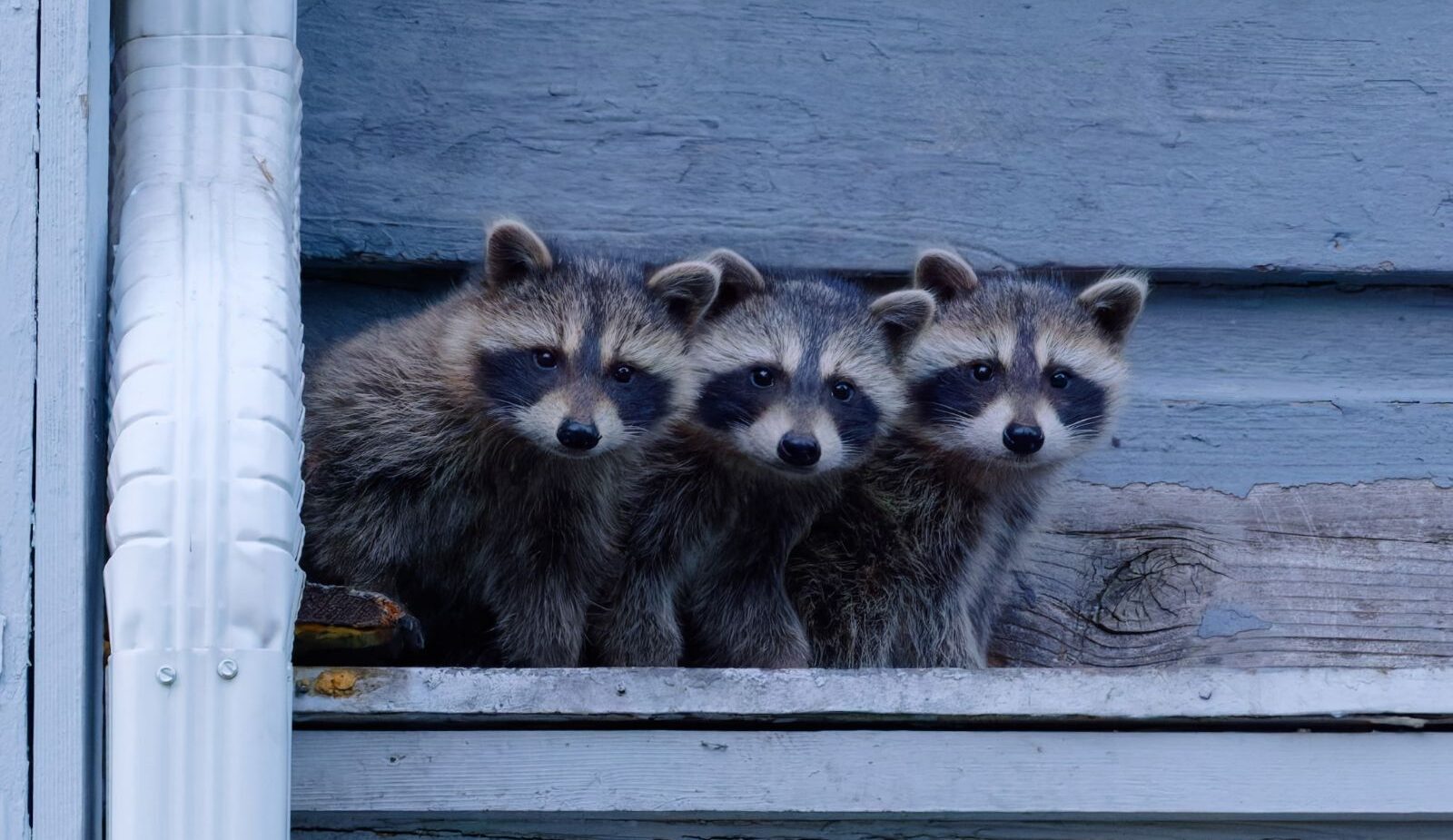
No, seeing a raccoon during the day does not automatically mean it has rabies. They may leave a den during daylight to find food, care for their young, or return home after being disturbed. A nursing mother may also need more time to search for enough food.
Still, unusual behaviour should never be ignored. Warning signs may include trouble walking, falling over, moving without a clear direction, unusual aggression, paralysis, or heavy drooling. One may also seem strangely calm around people or appear unable to move away.
You cannot confirm rabies by looking at behaviour alone. A healthy-looking raccoon may still create a risk, while a sick-looking one may have another health problem. Give it plenty of space and report concerning behaviour to the proper Quebec authorities.
Never approach it to take a closer picture or check whether it needs help. Keep children away and bring pets inside without moving toward the raccoon. If it is on or inside your property, allow our trained professionals to assess the situation.
Why the Outbreak Matters to Greater Montreal
The outbreak began outside central Montreal, but that does not make it a distant concern. Several factors make it important for people across the wider metropolitan area.
- The Number of Cases Has Increased: Quebec had confirmed 71 raccoon-rabies cases by early June 2026, according to CityNews Montreal. The provincial total later reached 171 cases since the start of the year. Dating these numbers is important because the outbreak continued to change as officials tested more animals.
- The Outbreak Is Near Montreal: Many cases were found in Montérégie, which borders communities on Montreal’s South Shore. Raccoons and skunks do not follow city or regional borders. Connected parks, wooded areas, riverbanks, rail corridors, and residential streets can help them move closer to densely populated neighbourhoods.
- The Virus Can Affect People and Pets: Rabies attacks the nervous system and becomes deadly once symptoms begin. It can pass through a bite or other contact with infected saliva. Preventing contact protects you, your family, your pets, and the wider community.
- No Confirmed Case Does Not Mean No Risk: Quebec warns that the lack of a confirmed case in one area does not prove that rabies is absent. Officials cannot find and test every raccoon or skunk. You should use the same care across Greater Montreal, even if your neighbourhood has not appeared on a recent case list.
How Possible Rabies Exposure Can Happen
Rabies usually spreads through infected saliva. You may not always know whether a brief encounter created a real exposure, so prompt advice matters.
- A Bite Breaks the Skin: A bite can carry infected saliva through the skin and into the body. The mark may be smaller than you expect, especially after a fast encounter. Contact public health or a medical professional promptly if you know or suspect that a bite occurred.
- A Scratch May Create a Risk: A scratch can become a concern when saliva is present on the claws or reaches broken skin. Even a small mark deserves attention after direct contact. Do not decide that the injury is harmless based only on its size.
- Saliva Reaches an Open Area: Possible exposure can happen if infected saliva reaches an open wound or the eyes, nose, or mouth. It does not always require a large or obvious injury. Public health can review what happened and tell you whether medical care is needed.
- A Pet Has Direct Contact: A pet may be bitten or scratched while chasing or fighting with a raccoon or skunk. Do not try to separate them with your hands because that may expose you as well. Move to safety and contact a veterinarian for instructions about your pet’s care and vaccination record.
Rabies is preventable when possible exposure receives prompt medical attention. Do not wait for symptoms or try to judge the risk by yourself. Skedaddle handles wildlife concerns at the property, while health professionals assess human exposure.
Why You Should Never Touch, Feed, or Relocate Them
Close contact is risky during an outbreak. It can also teach raccoons and skunks to return to places where people live.
- Touching Creates Needless Danger: Never touch one that appears calm, injured, trapped, or dead. A lack of movement does not make direct contact safe. Leave physical handling to the authorities or trained professionals who have the right equipment and information.
- Feeding Brings Them Closer: Food left for one visitor may attract several of them to the same yard. This creates closer contact between individuals and may help disease spread. It can also bring them near doors, decks, garages, and places used by children or pets.
- Regular Meals Change Their Behaviour: These animals may lose some of their natural caution when food appears in the same place each day. They may begin waiting near the home or approaching people who carry food. Even one that seems friendly must remain wild and should never be hand-fed.
- Relocation Can Spread the Problem: Never capture a raccoon or skunk and drive it to another area. You could be exposed while handling it and may carry a possible infection into a community without known cases. Skedaddle does not use live trapping and relocation as a solution.
Removing outdoor food does not require you to approach an active visitor. Wait until the area is clear before using it again. If one has made a den in or around the structure, call a trained wildlife team instead of blocking or disturbing the space.
What Quebec’s Vaccination Campaign Is Doing
Quebec’s campaign is designed to slow the outbreak before it moves farther toward Montreal. It gives free-ranging raccoons and skunks a chance to become protected against the virus.
- Oral Baits Deliver the Vaccine: The program places vaccine inside bait that attracts the target species. When a raccoon or skunk bites the packet, the vaccine reaches its mouth and begins the process of building protection. Officials can vaccinate a wide area without having to catch every individual.
- The Campaign Builds a Protective Barrier: Baits are placed in areas where the outbreak is active or likely to spread. Vaccinating more of the local population makes it harder for the virus to move from one individual to another. The goal is to reduce the chance of the outbreak reaching Montreal and other nearby communities.
- The Work Happens in Several Stages: Quebec planned vaccine-bait distribution in April and again from August into September 2026. A separate field operation also took place between May and July. The province’s rabies surveillance and control page provides current details about these operations.
- Baits Should Be Left Alone: Vaccine packets are placed for raccoons and skunks, not for people to collect or move. Do not open a packet or let children play with it. Follow provincial directions if you find one in a location where it may come into contact with people or pets.
The vaccination campaign lowers risk, but it does not make direct contact safe. Not every individual will find a bait, and protection does not appear the moment a packet is placed. Residents still need to keep their distance and report concerning behaviour.
What to Do When Contact May Have Occurred
You should move away without touching, chasing, or trying to capture the raccoon or skunk. Keep other people out of the area and prevent pets from approaching. Once everyone is safe, contact the proper health authority for advice.
A bite, scratch, or possible contact with saliva should be discussed with public health or a medical professional as soon as possible. Give them clear details about where the event happened, who was present, and what kind of contact may have occurred. They can decide what medical steps are needed.
Contact a veterinarian if a pet may have had direct contact. Its vaccination history and the details of the encounter will help the veterinarian guide you. Do not handle an injured pet near the mouth without professional advice.
You should also report a raccoon or skunk that appears dead, badly injured, unable to walk, unusually aggressive, or severely confused. Do not touch it or try to place it in a container. Quebec’s surveillance program depends on reports from the public, but trained personnel must handle the response.
Why Greater Montreal Properties Need Special Attention
Greater Montreal contains many connected routes that these animals can use. Parks, waterways, wooded strips, railway land, alleys, and rows of backyards can lead from quieter habitat into busy residential areas. A property does not need to sit beside a large forest to receive a visitor.
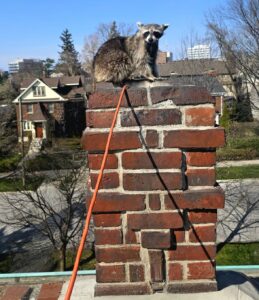
Urban homes can provide useful shelter. An uncapped chimney, damaged soffit, loose roof vent, opening beneath a deck, or weak spot near an addition may lead to a protected den. Garbage, compost, outdoor pet food, and other food smells may encourage repeated visits.
Seasonal needs also affect activity. Mothers may look for protected den sites when raising young, while colder weather can increase the value of a warm attic or chimney. A raccoon that finds a safe opening may use it again or leave scents that draw future attention to the same area.
You should not climb onto the roof, enter a tight attic, or reach beneath a deck to look for evidence. These areas can be unsafe, and an adult or dependent young may be hidden inside. Our professional inspection can determine what is present without putting you close to the den.
Raccoon Removal and Prevention with Skedaddle
When a raccoon enters your home, you should not search for it or try to remove it. Our professional wildlife team starts by inspecting the roofline, soffits, vents, chimney, attic, decks, and other possible den sites. We locate the active entrance and check whether dependent young are present. You do not need to climb, crawl, or enter a contaminated space.
We then create a humane removal plan based on your home and the family situation. When suitable, our one-way doors allow wildlife to leave but prevent them from getting back inside. We do not use live trapping or relocation. Our team makes sure the removal process does not leave an adult or its young trapped in the structure.
A den may contain droppings, urine, damaged insulation, and nesting material. You should never touch, sweep, or vacuum these materials because they may create health risks. Our team can clean and sanitize the affected space before securing damaged soffits, open vents, and other entry points. These lasting repairs help prevent another raccoon from using the same route.
Frequently Asked Questions
Can a healthy-looking raccoon still have rabies?
Yes, appearance alone cannot rule out infection. Clear signs may not be present during the early stage of the disease, and behaviour can vary. Keep your distance even when one appears calm and healthy. Contact public health if direct contact may have occurred.
Can pets catch rabies from raccoons or skunks?
Yes, pets can be exposed through bites, scratches, or infected saliva. Keeping their rabies vaccinations current provides an important layer of protection. If your pet has an encounter, bring it away from the area without touching the wild visitor. Contact a veterinarian promptly for guidance.
What should I do if I find a vaccine bait?
Leave the bait where it is unless provincial instructions tell you otherwise. Do not open it, carry it home, or let children play with it. Keep pets from chewing it when this can be done without touching the packet. Contact the provincial program if it appears damaged or is found in a concerning location.
Who should I call after a bite or scratch?
Contact public health or a medical professional promptly after any known or possible exposure. Tell them whether the skin was broken and whether saliva may have reached your eyes, nose, mouth, or an open wound. Do not wait for symptoms before seeking guidance. Skedaddle can address the wildlife problem, but we do not assess medical risk.
Can rabies spread through droppings?
Rabies is mainly spread when infected saliva enters broken skin or reaches the eyes, nose, or mouth. Droppings are not considered a usual route of rabies transmission. However, they may carry other health risks and should not be touched, swept, or vacuumed by homeowners. Our professional cleanup should be arranged when contamination is present.
Should an entry hole be sealed as soon as it is found?
No, an opening should not be closed until a professional confirms that the space is empty. An adult or dependent young may still be inside the attic, chimney, wall, or den. Sealing too soon can trap them within the structure and create a larger problem. Humane removal must come before lasting prevention work.
Keep Your Distance and Get the Right Help
Quebec’s rising case count shows why Greater Montreal residents must treat raccoon rabies as a real concern. Daytime activity does not prove that a raccoon is infected, but unusual behaviour, direct contact, bites, scratches, and saliva exposure require careful attention. You should never touch, feed, corner, capture, or relocate raccoons or skunks.
The province’s vaccination campaign helps build protection and slow the outbreak’s movement toward Montreal. However, vaccine baits do not remove every risk. Continue to keep your distance, protect your pets, and contact public health or a medical professional after possible human exposure.
If one has entered your attic, chimney, garage, or another part of your property, leave the physical work to our trained professionals. At Skedaddle Humane Wildlife Control in Montreal, we can inspect your home, complete humane removal, clean affected spaces, and secure vulnerable entry points.
Contact our team to schedule a professional assessment. You can also request an estimate to learn more about raccoon removal and long-term prevention for your Montreal home.

 Loading...