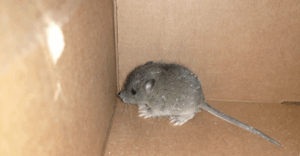
Your pets can help a little, but not enough to solve a real mouse problem. Cats and dogs can scare off the occasional visitor, but they can’t stop mice from nesting inside your walls, breeding in your attic, or finding their way back in through gaps you don’t even know exist. If you’re relying on your pet to keep your home mouse-free, the problem is likely already bigger than you think.
You might have noticed your cat acting strange near a wall or your dog sniffing around the baseboards, and that’s often one of the first signs something is going on inside your home. Pets can alert you to activity you wouldn’t have caught otherwise, and that’s genuinely useful. But alerting you is very different from fixing the problem.
At Skedaddle Humane Wildlife Control in Colorado, we get calls from homeowners who assumed their cat was handling it, until the signs became impossible to ignore. In this blog, we walk you through what your pets can and can’t do, why relying on them alone falls short, and what our team does to get these animals out completely and keep them out for good.
Does the Smell of Cats and Dogs Deter Mice?
The smell of cats and dogs does deter mice to some degree, but only in limited ways and only for a short time. Mice are smart and adaptable. They quickly figure out where a pet spends time and where it doesn’t and they use the spaces that are out of reach. A cat that can’t fit inside a wall cavity offers very little protection to what’s happening inside it.
The scent of a predator creates some caution in mice, especially when they first move into a new space. They may avoid open areas where a cat or dog roams freely. But as they grow more comfortable and as the population inside the home grows, that caution fades. They become bolder and more willing to take risks, especially when they’ve found a reliable food source or an established nesting spot that feels safe.
The bottom line is that scent alone won’t stop an active infestation. It might slow things down slightly or discourage casual visits to certain areas of the home, but it won’t drive out mice that are already nesting inside walls, attics, or crawl spaces. That takes a professional inspection and a complete exclusion plan, not a pet.
How Pets Can Deter Them
Pets do offer some real benefits when it comes to discouraging mice from getting too comfortable. Here’s where they actually make a difference:
- Cats Are Natural Hunters: Cats have strong hunting instincts and will chase, catch, and sometimes kill mice that venture into open areas of the home. This can reduce the number of animals you see in living spaces, but it doesn’t address the ones nesting inside the walls, which is where the real population lives. A cat that catches one animal is not solving the problem; it’s managing the visible surface of it.
- Dogs Alert You to Activity: Many dogs, especially terriers, which were originally bred to hunt rodents, will sniff out activity behind walls and under floorboards. If your dog is pawing at a baseboard or staring at a wall, that’s a signal worth taking seriously. Dogs can help you notice a problem early, which is genuinely useful, especially because the sooner you call our team, the easier the situation is to resolve.
- Pet Presence Creates Some Deterrence: The sounds, smells, and movement of a pet in the home do create some level of caution in these animals. They’re more likely to avoid areas where a pet is actively present and to stick to quieter, out-of-reach spaces. This won’t stop an established population, but in a home with no current problem, a pet can be one small part of an overall deterrence strategy.
What Pets Can’t Do
As useful as pets can be for alerting you to a problem, there are real limits to what they can do. Here’s where relying on a pet falls short:
- Pets Can’t Reach Nests Inside Walls and Attics: Mice don’t nest in the open. They build nests inside wall cavities, behind insulation, in attic spaces, and in crawl spaces – all places no pet can access. The visible mice your cat chases or your dog sniffs out are usually just a small fraction of the actual population. The nesting activity happening out of sight is where the real problem lives, and no pet can address it.
- They Can’t Keep Up With Fast Reproduction: A single female mouse can produce five to ten litters per year, with six to eight young in each litter. Even a highly active cat catching animals regularly can’t keep pace with that kind of reproduction rate. The population inside your home can grow significantly faster than any pet can reduce it. By the time the problem is obvious, it’s already well beyond what a pet can manage.
- They Can’t Find or Seal Entry Points: Mice are getting into your home through gaps and cracks – often ones as small as a dime. Your pet has no ability to find those entry points or stop new animals from coming in. Even if a cat catches every animal currently inside, new ones will follow the same scent trails through the same gaps and start the cycle over again. Sealing entry points is the only way to break the pattern.
- Pets Can Miss Hidden Activity Entirely: Some dogs and cats are very attuned to rodent activity. Others aren’t. A pet that doesn’t react to the signs doesn’t mean the problem isn’t there – it just means the activity is happening in an area the pet doesn’t access or pay attention to. Don’t assume a calm pet means a clean home.
Health Risks Pets Face From Mice
Having mice in your home doesn’t just create a problem for you – it creates real health risks for your pets too. Here’s what our team wants homeowners to know:
- Pets Can Pick Up Parasites: Mice carry fleas, ticks, and mites. When a cat or dog catches one or comes into contact with an area where they’ve been active, those parasites can transfer to your pet. A flea problem that starts with a rodent infestation is very common and very hard to trace back to the original source if you don’t know to look for it.
- Rodent Droppings Are Dangerous to Pets Too: Droppings and urine left behind by mice carry bacteria that can make pets sick. Dogs especially are likely to sniff or lick areas where droppings are present. Do not attempt to clean up any area where these animals have been active, call our team, and keep your pets away from affected areas in the meantime.
- Catching a Mouse Can Make Your Pet Sick: A cat or dog that catches and kills a mouse can be exposed to the diseases they carry, including leptospirosis and salmonella. Even pets with up-to-date vaccinations can be vulnerable to some of these illnesses. If your pet catches one, contact your veterinarian and let our team assess the home for the broader infestation.
How Pet Food and Habits Can Make the Problem Worse
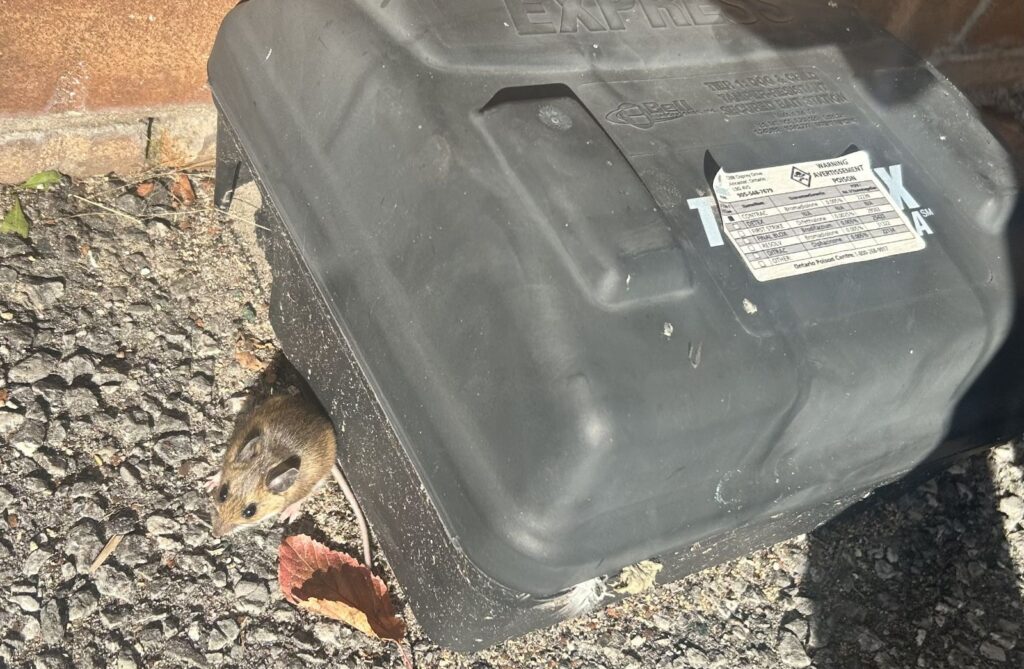
One of the things homeowners often don’t realize is that having pets can actually make a mouse problem worse if certain habits aren’t in check. Pet food is one of the most reliable attractants for mice and it’s something our team finds on almost every residential call. A bowl of dry dog or cat food left out after feeding time is an easy, reliable meal that will bring mice back night after night.
It’s not just the food itself that’s the problem – it’s the smell. Even an empty bowl that hasn’t been washed can carry enough scent to attract them. Food stored in bags or soft-sided containers in the garage or laundry room is another common issue. These animals can chew through bags quickly, which is why proper storage in sealed hard containers matters. But fixing the storage is only part of the picture, if these animals are already inside, the entry points that let them in still need to be found and sealed.
Pet doors are another overlooked risk. A pet door that allows your dog or cat to go outside at night also allows these animals to come inside. Small pet doors especially can be large enough for a mouse to squeeze through with ease. This is something our team flags during every inspection because a sealed home with an unsecured pet door is not a sealed home.
Mice Concerns in Colorado
Colorado’s climate creates year-round pressure from rodents. The state’s cold winters drive mice hard toward warm indoor spaces starting in the fall and once they find their way inside a heated home, they stay active and breed throughout the winter months. By spring, a problem that started small in October can be very significant if it hasn’t been addressed. Fall is the most critical time to have your home inspected and sealed in Colorado.
The Denver metro area’s mix of older homes, mature landscaping, and proximity to open space makes it a consistent source of rodent activity calls. Homes in neighborhoods like Lakewood, Arvada, Westminster, and Aurora tend to have older foundations with more natural gap points and the active squirrel and rabbit populations in surrounding open space create conditions where rodent pressure on residential properties is higher than in many other cities.
Colorado’s construction boom over the past decade has also played a role. When ground gets dug up and buildings go up in previously open areas, established rodent populations get displaced and move toward the nearest available shelter, which is often a residential property nearby. If there’s been significant construction activity near your home and you’ve noticed signs of activity, the two are likely connected. Our team works across Colorado and understands the local conditions, seasonal patterns, and property types that make this region such a consistent source of rodent calls.
Mice Removal and Prevention with Skedaddle
When mice have found their way into your home, whether your pet helped you notice it or you spotted the signs yourself – the right response is to call our team at Skedaddle Humane Wildlife Control. We start with a full inspection of your home, checking every potential entry point on the exterior and every area inside where these animals may be active. We look at the whole picture so nothing gets missed. You can see a short overview of how our process works here: Skedaddle, Mice Assess & Remove.
We use one-way door systems that allow mice to exit on their own without being able to get back in. Combined with thorough exclusion work that seals every entry point with materials that hold up over time, this approach resolves the problem completely. We never seal an entry point until we’ve confirmed what’s on the other side because sealing a gap with animals still inside makes the situation worse, not better.
Prevention is the final step and the most important one for long-term results. After removal and exclusion are complete, we address the conditions that made your home attractive in the first place, including anything related to pet food storage, pet doors, and other household habits that may be drawing mice in. Our goal is to give you a home that’s fully protected, not just temporarily cleared. We handle all of it so you don’t have to deal with any part of it yourself.
Frequently Asked Questions
Can a cat get rid of a mouse infestation on its own?
No. A cat can catch individual mice in open areas, but it can't access nesting sites inside walls, attics, or crawl spaces, which is where the real population lives. A cat is helpful for alerting you to a problem, but it's not a substitute for professional removal and exclusion.
Is it safe for my pet to catch a mouse?
It's not ideal. Mice carry diseases and parasites that can transfer to your pet through contact. If your pet catches one, contact your veterinarian and call our team to assess the broader infestation. Don't assume the problem is solved because your pet caught one.
Can mice get in through a pet door?
Yes. Small pet doors can be large enough for mice to squeeze through, especially the smaller flap-style doors. Our team checks pet doors during every inspection and advises on how to address this entry point as part of a complete exclusion plan.
My pet isn't reacting to anything. Does that mean there's no problem?
Not necessarily. Some pets are very attuned to rodent activity and some aren't. Activity happening inside walls or in areas the pet doesn't access won't always trigger a reaction. A calm pet is not a guarantee that your home is clear.
Will mice avoid my home because I have a dog?
The smell and presence of a dog creates some deterrence, but it's limited. Mice adapt quickly and learn to use the areas of the home the dog doesn't access. A dog is a minor deterrent, not a reliable barrier.
How do I know if my pet has been exposed to something from a mouse?
Watch for changes in your pet's behavior, appetite, or health after any known contact with mice or their droppings. If your pet has caught one or been near an active infestation area, contact your veterinarian for guidance.
Your Pet Is a Good Alarm, But Our Team Is the Solution
Pets are great at alerting you to a problem, but they can’t fix it. Mice nest inside walls, breed fast, and keep coming in through entry points your cat or dog can’t find or seal. Relying on your pet to handle a real infestation means the problem keeps growing while you wait for a solution that isn’t coming.
The right move is to call our team as soon as your pet, or any other sign, tells you something is going on. The sooner we get involved, the easier the situation is to resolve and the less damage you’ll be dealing with when it’s all said and done.
Skedaddle Humane Wildlife Control in Colorado is ready to help. We’ll inspect your home, find every entry point, and take care of everything from removal to sealing. Contact us today to request an estimate and get a complete, lasting solution in place.

 Loading...








