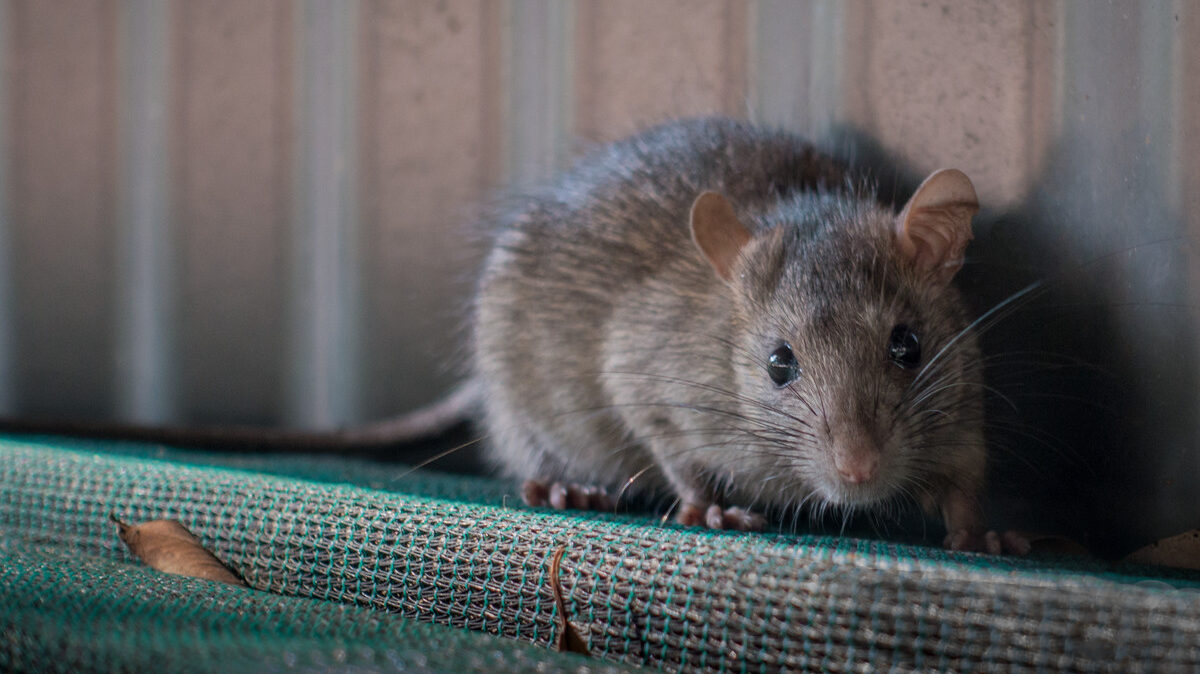
Scratching above the bedroom, chewed cereal packaging, or a new hole beside the foundation can all raise the same question: What is getting into my home? In Birmingham, roof rats, Norway rats, and house mice have different identifying features and typical habits.
Where you notice activity provides a useful starting point, but it cannot identify the animal by itself. Roof rats often use elevated spaces, Norway rats are commonly associated with ground-level activity, and mice can move through small openings throughout a building.
This fall, look at the evidence and the access routes together. Understanding the rodent involved helps guide an inspection, while appropriate exclusion addresses the openings that allow the problem to continue.
How do I know if I have roof rats or mice?
Roof rats are larger than house mice, with slender bodies, pointed noses, large ears, and tails longer than their heads and bodies combined. House mice are much smaller. Attic activity can suggest roof rats, but mice also climb. Identification requires considering appearance, damage, and access routes together rather than relying on noise location alone.
Three Rodents, Three Different Entry Patterns
A quick sighting may leave you with little more than an impression of size and movement. A clearer view can reveal useful differences, but there is no need to approach or capture an animal to identify it.
Roof rats tend to have slender bodies, pointed noses, and relatively large ears. Norway rats have heavier bodies, blunter noses, and smaller ears. House mice are much smaller overall, although a young rat can sometimes be mistaken for a mouse.
Alabama Extension describes these physical and behavioral distinctions:
| Rodent | Identification clues | Typical activity and access |
| Roof rat | Slender body, pointed nose, larger ears, tail longer than head and body combined | Often associated with attics, rafters, and elevated routes such as roofs or utility lines |
| Norway rat | Heavy body, blunt nose, smaller ears, tail shorter than head and body combined | Often associated with lower building levels and burrowing near foundations |
| House mouse | Much smaller overall, with smaller head and feet than a young rat | Can climb and enter small openings connecting different building spaces |
These are typical patterns, not fixed boundaries. Norway rats can climb, and house mice can reach elevated areas. An attic noise therefore does not automatically mean roof rats.
For homeowners looking into roof rats in Birmingham, AL, identification is most useful when it guides a broader inspection. The question is not simply which animal appeared, but where it enters, travels, and shelters.
Photograph an animal only if you can do so safely from a distance. Share that image alongside observations of damage, sounds, and possible openings.

Sounds Overhead Versus Sounds Inside Walls
Scratching overhead naturally draws attention toward the attic. Movement behind a kitchen wall may lead you to check nearby cabinets or plumbing openings. Both observations are useful, but neither establishes the species involved.
Connected wall and floor cavities can allow rodents to move between areas. An animal heard above a room may have entered elsewhere, while an opening beneath a sink may be an interior route rather than the original exterior entrance.
Sound also travels through framing and other materials. The loudest location may not sit directly beneath the source. Noise volume cannot reliably tell you an animal’s size or how many are present.
Before an inspection, record:
- Where sounds seem most noticeable.
- When they occur and how often they return.
- Whether the apparent location changes.
- Any nearby droppings or damaged materials.
- Sightings or visible exterior openings.
Household systems and other wildlife can also produce sounds. Recurring unexplained noises deserve investigation, especially when accompanied by visible evidence.
If you suspect rats in an attic in Alabama, include lower-level observations in your report as well. A professional assessment should follow the evidence through relevant building areas rather than stop at the ceiling where the sound was first heard.
Why Fall Makes Rodent Prevention Worth Prioritizing
Rodents can enter buildings throughout the year. Fall nevertheless offers a useful opportunity to check food storage, organize belongings, and arrange exterior maintenance before colder weather makes some tasks less convenient.
A garage may contain birdseed or pet food, while a pantry provides accessible packaging. Undisturbed boxes and concealed building spaces can offer shelter. These conditions deserve attention whether you have noticed activity recently or are preparing the property proactively.
Add these checks to your fall routine:
- Secure seed and pet food in sturdy, closed containers.
- Inspect pantry packaging for damage.
- Remove unnecessary cardboard and clutter.
- Check accessible door seals and exterior materials.
- Note openings around previous service installations.
Older homes closer to Birmingham may have repairs, additions, and utility installations from different periods. The relevant concern is the condition of those connections, not the building’s age alone.
The same principles apply in Homewood and Vestavia Hills. A newer home can have an unfinished service opening, while an older home may have well-maintained exterior protection.
If you notice mice in the house this fall, improving storage is worthwhile, but it should accompany assessment of suspected activity. A tidy pantry does not close a building entrance.
Inspect and Secure Access From the Roofline to the Foundation
Rodent prevention needs to account for access at different heights. Roof rats often prompt attention to elevated routes, while Norway rat signs may direct an inspection toward lower levels. Mice can use small openings and connected spaces across the building.
That makes a complete exterior assessment more useful than assuming one species uses only one area.
Relevant inspection locations include:
- Roof vents, soffits, and fascia.
- Roof-to-wall intersections.
- Gaps around utility penetrations.
- Garage-door seals and pedestrian doors.
- Basement windows and foundation transitions.
- Lower wall openings concealed by stored materials.
Alabama Extension states that rats can enter holes as small as ½ inch, while mice can enter openings of ¼ inch. Small gaps therefore deserve attention, even when they appear insignificant from a distance.
Observe accessible areas from the ground and photograph concerns. Leave elevated inspections and utility connections to qualified professionals.
Possible burrows near a foundation also need assessment. A hole alone does not identify the animal, and filling a suspected active entrance without understanding occupancy can leave part of the problem unresolved.
Permanent repairs should follow an appropriate sequence when animals may be inside. Materials must suit the opening while preserving ventilation, drainage, and other building functions.
Skedaddle’s rat removal and mouse removal services can help homeowners assess activity and develop a coordinated removal and prevention plan.
Address Droppings, Nesting Material, and Affected Storage
Identifying an entrance is important, but indoor evidence also needs attention. Droppings, gnawed packaging, gathered materials, and disturbed insulation may indicate areas that require assessment or cleanup.
One finding does not reveal the entire situation. A damaged box cannot establish the species, and the appearance of a single dropping should not be treated as a dependable diagnosis.
Share observations such as:
- Droppings along accessible wall edges.
- Chewed food packaging or storage boxes.
- Paper or fabric gathered in sheltered areas.
- Insulation that appears disturbed.
- Damage near visible interior openings.
Avoid dry sweeping or vacuuming suspected rodent waste. Follow appropriate public-health cleanup guidance or seek professional assistance before handling affected areas. Keep children and pets away from suspected contamination.
Do not enter an unsafe attic or crawl space simply to collect evidence. Accessible observations are enough to request an inspection.
Cleanup and restoration needs depend on the findings. Some belongings may need appropriate disposal or treatment, while affected insulation may require further assessment. Discovered wiring damage should be evaluated by a qualified electrician.
Removal and exclusion address activity and access. Assessing affected materials helps determine what additional work is appropriate for the spaces rodents have used.
Build a Plan That Addresses More Than Bait
Bait does not repair a roof vent, close a foundation gap, or restore affected insulation. Even when a control measure reduces activity, unresolved access points and food opportunities can allow problems to recur.
Alabama Extension emphasizes that poison alone does not provide lasting relief and that exclusion and sanitation are necessary parts of rodent management.
Skedaddle’s humane approach focuses on understanding existing activity and addressing building access. A property-specific plan can connect identification with appropriate removal, exclusion, and recommendations for affected materials.
A coordinated assessment considers:
- Evidence of the species involved.
- Current activity and shelter locations.
- Relevant exterior entrances.
- Connected interior routes.
- Additional vulnerabilities nearby.
- Cleanup or restoration needs.
Exclusion means securing appropriate openings against entry or re-entry. It must be coordinated with removal so suspected occupied routes are not closed prematurely.
For homeowners in Homewood and Vestavia Hills, continued maintenance supports that work. Check visible components after storms, renovations, or service installations, and maintain secure food and waste storage.
The strongest prevention plan addresses how rodents use the building and the conditions that support their activity.
Frequently Asked Questions
Does scratching in the attic mean roof rats?
Roof rats are one possibility, but mice and other wildlife can also use elevated spaces. Sound location helps guide an inspection without confirming the species. A professional assessment considers appearance when available, damage, droppings, sightings, and access routes together before determining what is happening and which areas need attention.
Can Norway rats climb into a building?
Yes. Although Norway rats are commonly associated with lower levels and burrowing, they can climb. Ground-level signs are useful observations, but they should not limit the inspection automatically. Relevant access points and connected spaces need assessment based on the evidence and the building’s construction.
How can I tell a young rat from a house mouse?
A young rat may resemble a mouse in overall size, but its head and feet are relatively larger. A brief sighting may not provide enough detail for reliable identification. If you can safely obtain a photograph, share it with a professional alongside evidence of damage, sounds, and possible entrances.
Will bait alone stop rodents from returning?
Bait alone does not close entrances or change accessible food and shelter. Those conditions may remain even when activity decreases. Lasting prevention requires attention to building access, housekeeping, and appropriate maintenance. A coordinated assessment helps determine what removal, exclusion, and cleanup steps suit the property.
Should I seal the opening where I saw a rodent disappear?
Have suspected active openings assessed before permanently sealing them. The gap may be an interior route into a concealed space, while the exterior entrance remains elsewhere. Coordinating removal and repairs helps avoid leaving animals inside and ensures that other relevant access concerns are considered.
Identify the Rodent and Address Its Access
Roof rats, Norway rats, and house mice differ in appearance and typical habits, but their routes can overlap. Sounds provide useful clues, while a broader inspection helps establish the species and access concerns involved.
Addressing those entrances, coordinating humane removal, and assessing affected materials supports a more complete solution than treating one sighting or noise in isolation.
Contact Skedaddle Humane Wildlife Control, serving Birmingham, Homewood, and Vestavia Hills for a professional inspection. Our team can help develop a removal and prevention plan suited to your home and the evidence found.

 Loading...