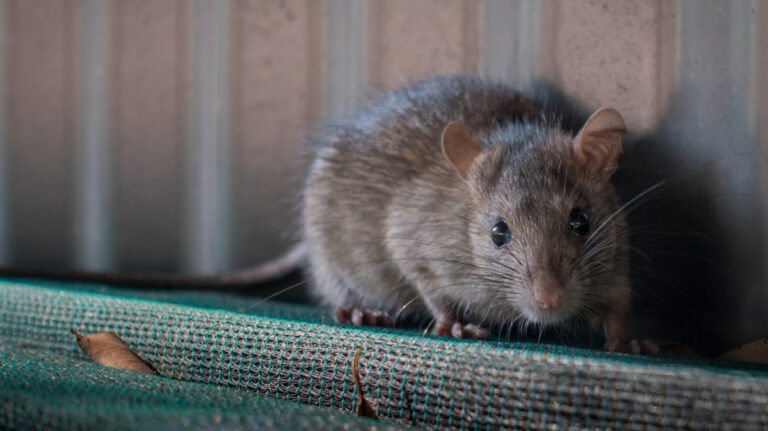
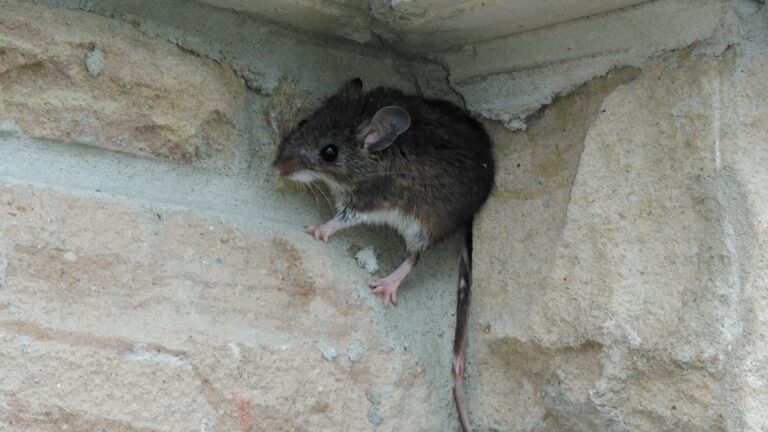
Alabama’s rodent-management guidance distinguishes Norway rats from roof rats. Norway rats have a heavier build and a tail shorter than the combined head and body; roof rats are more slender, with a longer tail and a stronger association with elevated nesting places.
That distinction changes where an inspection should look. Norway rats may burrow beneath foundations and concrete slabs, while roof rats use trees, vine-covered fences, attics, and rafters. These are useful tendencies, not a reason to rule out parts of the building before checking them.
The same Alabama guidance notes that rats can pass through openings as small as half an inch and climb wires, cables, vines, and rough exterior surfaces. A small utility gap therefore deserves attention alongside a more obvious damaged vent or foundation opening.
For the homeowner, the practical question is how those routes connect to the current activity. Ask the technician to explain the identification, show the relevant openings where possible, and distinguish removal, exclusion, sanitation recommendations, and affected-area cleanup in the written plan.