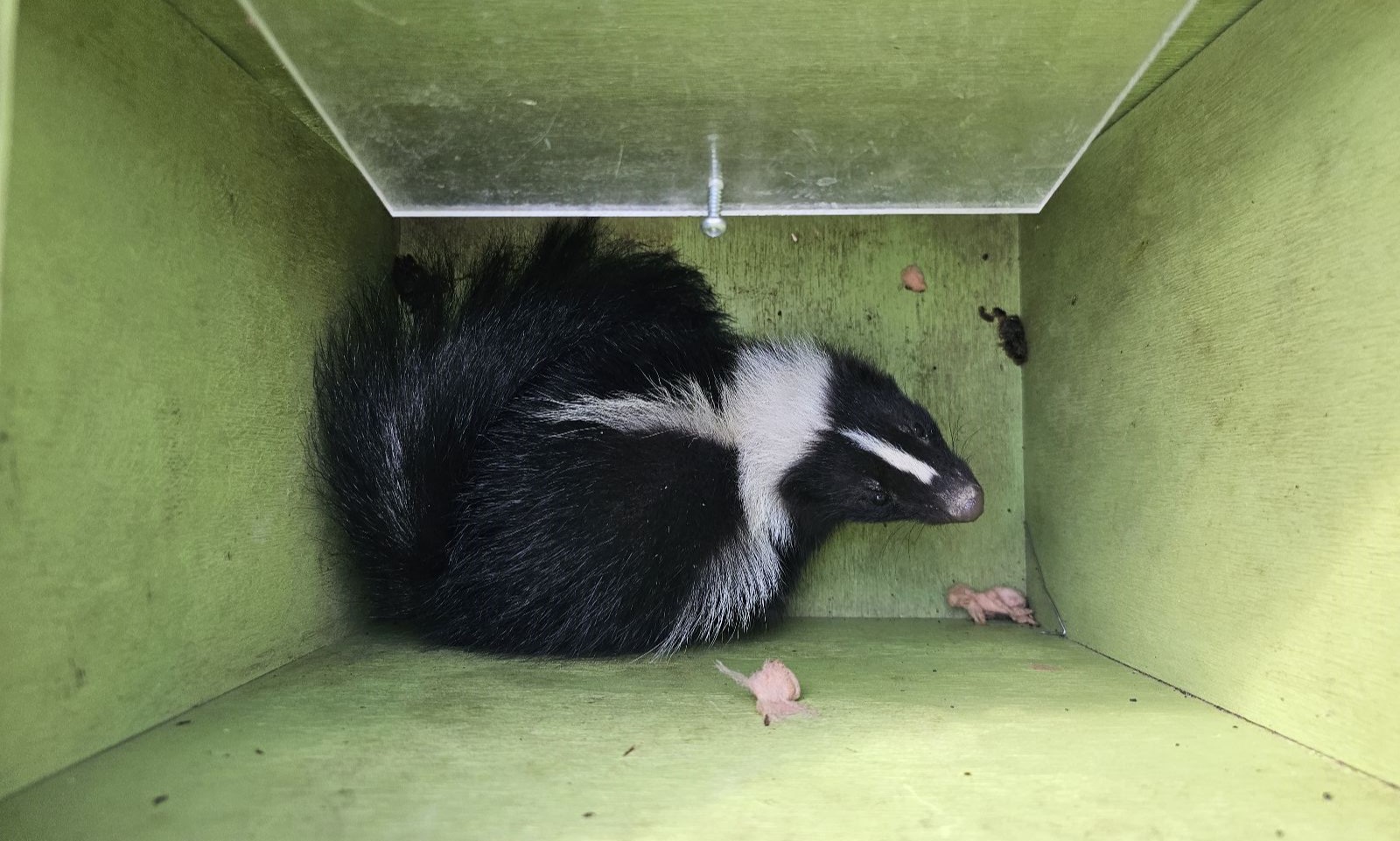
Colorado’s first confirmed animal rabies case of 2026 was a skunk found in Arvada’s Oak Crest neighborhood in February. Jefferson County Public Health confirmed the case and noted that warmer, drier winter conditions could lead to more encounters between people, pets, and wildlife. You can read the full report here: Jefferson County Public Health — Rabies Confirmation. If a skunk is visiting your property or living under your deck, this news is directly relevant to you.
You don’t need to panic, but you do need to take it seriously. Not every skunk you see is rabid, and daytime activity alone doesn’t mean an animal is sick. But any skunk that’s behaving strangely, moving slowly, or approaching people should be treated as a potential health risk. The worst thing you can do is try to approach it, feed it, or handle it on your own.
At Skedaddle Humane Wildlife Control in Denver, we help homeowners deal with these situations safely every season. In this blog, we walk you through where these animals den around Denver homes, what draws them to your property, and what to do if you think one is living on your land or if any contact has occurred.
Do Skunks Bite?
Yes. Skunks can and do bite, especially when they feel cornered, threatened, or handled by a person. Most of the time, spraying is their first line of defense, but if they feel trapped or are sick, biting can happen. This is one of the most important reasons why you should never try to approach, chase, or pick one up on your own.
Rabies is the most serious health concern associated with a bite from one of these animals. Colorado is one of the states where skunk rabies is most frequently reported, and the 2026 Arvada case is a reminder that these animals carry real health risks. Any bite or scratch – even a minor one – should be treated as a possible rabies exposure. Call Jefferson County Public Health or your local health authority right away and seek medical attention.
Bites aren’t the only concern. Spray from a rabid animal that gets into the eyes, mouth, or an open wound can also be a potential exposure route. If any contact occurs – bite, scratch, or spray to the face – do not wait and see. Call health authorities immediately and keep everyone away from the animal until our team can assess the situation.
Comon Places They Den Around Denver Homes
Skunks don’t need much to feel at home on your property. They look for dark, low-to-the-ground spaces that are sheltered and quiet. Here’s where our team finds active dens most often around Denver homes
- Under Decks and Porches: The space under a deck or porch is one of the most common denning spots in the Denver area. It’s dark, protected from the weather, and close to the food sources in your yard. Once they find a spot like this, they return to it season after season if it hasn’t been properly sealed. A den under your deck can go unnoticed for weeks until the smell or digging gives it away.
- Beneath Sheds and Outbuildings: Garden sheds, detached garages, and storage buildings with gaps at the base are easy targets. The space underneath is quiet, undisturbed, and sheltered, which makes it ideal for denning and raising young. These animals can squeeze through surprisingly small gaps at the base of a structure, and the entrance hole can be hard to spot without getting close.
- Along Foundation Edges and Retaining Walls: The base of a home’s foundation and the edges of retaining walls are also common den locations. Soft soil along these areas is easy to dig, and the structure above provides overhead protection. Burrow entrances along foundation edges are sometimes mistaken for erosion damage, which is one reason having our team assess the area is important before assuming no animal is present.
- Crawl Spaces: Homes with accessible crawl spaces are especially vulnerable. A gap in the crawl space cover or a damaged vent screen is enough for these animals to get underneath the home. Once inside a crawl space, they’re sheltered, warm, and very hard to detect without a proper inspection. Our team checks crawl space access points during every Denver-area property assessment.
Food Sources That Attract Them to Your Property
Before these skunks den on your property, something usually draws them there first. Here’s what our team looks for when checking what’s pulling them in:
- Unsecured Garbage and Compost: Skunks follow their noses, and garbage bins and compost containers produce strong smells that travel a long way. They’ll tip over bins, dig through bags, and come back night after night once they find a reliable food source. A bin left outside after dark or a compost pile without a tight lid is an easy target.
- Grubs and Lawn Insects: Skunks are natural diggers and love to forage for grubs, beetles, and other insects living just under the surface of your lawn. If your lawn has a grub problem, you may notice small cone-shaped holes dug into the turf overnight. This kind of digging is a clear sign skunks are feeding on your property and will keep returning.
- Pet Food Left Outside: Pet food left out after feeding time is one of the most overlooked attractants. It sits at ground level – right where skunks forage – and the smell carries well. Even a small amount of leftover food left outside overnight is enough to bring them back on a regular basis.
- Fallen Fruit and Garden Produce: Fruit trees, berry bushes, and vegetable gardens all produce food at ground level that these animals find appealing. Ripe or rotting produce that hasn’t been picked up is an easy, reliable meal. Properties with fruit trees or active gardens are at higher risk of regular visits, especially in late summer and fall.
Signs of a Den Beneath a Structure
Most homeowners don’t know a skunk has moved in until they smell one or until the damage from digging becomes obvious. Knowing what to look for before the smell hits can help you catch the problem earlier and call our team before the situation gets more complicated.
The most common sign is a small, round entrance hole dug along the base of a deck, shed, or foundation. These holes are usually two to four inches wide with loose, freshly moved soil around them. They can appear overnight and are easy to miss if you’re not looking closely along the perimeter of your structures. If you find a hole like this, do not attempt to fill it or block it – call our team first to confirm whether the den is active and whether young are present.
A persistent musky smell near a structure is the other key sign. Even without spraying, skunks produce a mild odor that becomes noticeable close to an active den, especially in the morning when the air is still. If you notice a smell near your deck, shed, or porch that you can’t trace to anything obvious, there’s a good chance one is living underneath. The smell alone is enough reason to call our team for an assessment.
Keeping Children and Pets Away
The most important thing you can do when you suspect skunks is on your property is to keep children and pets away from the area. This is especially important right now, given the confirmed rabies case in Arvada. An animal that looks calm or slow may be sick and a sick animal is more likely to bite when approached or startled.
Children are especially at risk because they move quickly, act unpredictably, and may not understand the danger. If you’ve seen one of these animals on your property or noticed signs of a den, keep kids out of the backyard until our team has assessed the situation. The same applies to pets – dogs especially will investigate a skunk den, which puts them at direct risk of a spray encounter or a bite. Keep pets on a leash or indoors when you suspect one is nearby.
If your pet has been sprayed or has had any contact with one of these animals, contact your veterinarian right away, especially if the animal was behaving unusually. Pets that are current on their rabies vaccination have a layer of protection, but any possible exposure still needs to be reported and assessed by a professional. Don’t assume that a spray encounter with no visible bite means everything is fine.
What to Do After Possible Exposure
If any contact has occurred between a person or pet and skunks, the steps you take right away matter. Here’s what our team recommends:
- Call Jefferson County Public Health or Local Health Authorities: If a person has been bitten or scratched, or if there’s been spray contact with the eyes, mouth, or an open wound – call your local public health authority right away. In Jefferson County, that’s Jefferson County Public Health. They will guide you through the next steps, including whether post-exposure treatment is needed. Do not wait and see.
- Get Your Pet to a Veterinarian: Any pet that has been bitten, scratched, or had direct contact with one of these animals needs to be seen by a vet as soon as possible. Bring documentation of your pet’s rabies vaccination history. Your vet will assess the situation and report the exposure to the appropriate authorities as required.
- Do Not Try to Catch or Handle the Skunk: Do not attempt to catch, corner, or handle the animal that made contact. Leave it where it is, keep everyone away, and call our team. We can safely contain and remove the animal so it can be assessed by authorities if needed. Trying to handle it yourself puts you at additional risk of a bite.
- Document What Happened: Note the time, location, and details of what occurred – what the animal looked like, how it was behaving, and exactly what kind of contact happened. This information is helpful for health authorities when they assess the exposure risk and determine the appropriate next steps.
Skunk Concerns in Colorado
Colorado has one of the highest rates of skunk rabies in the country, which makes the Arvada case less of a shock and more of a yearly reminder. These animals are the most common source of rabies in Colorado, and the Denver metro area sees confirmed cases most years. The 2026 case being the first of the year doesn’t mean it will be the last – it means the season has started.
Denver’s suburbs sit next to large areas of open space, which means these animals are active throughout the metro area in big numbers. Neighborhoods in Jefferson County, Arapahoe County, and Douglas County all see regular activity. Homes with yards, mature trees, and accessible structures are the most likely targets. Warmer, drier conditions like what Jefferson County Public Health noted in February 2026 – keep skunks more active than usual during winter months when they would normally be less of a concern.
The best thing Denver homeowners can do is pay attention and act fast. If you see signs that one of these animals has moved onto your property, call our team right away. Waiting to see if it leaves on its own is not a good plan and with rabies confirmed in the area, it’s not a risk worth taking.
Why Humane Removal Should Be Followed by Securing the Den Site
Getting one of these animals off your property is only part of the job. The den site also needs to be secured after removal. If it isn’t, the same animal may come back, or a new one will find the same spot the following season. Our team handles both parts of the process so the problem gets fully fixed and doesn’t keep coming back.
We use one-way door systems that let these animals leave on their own without being able to get back in. This is a humane approach that works without trapping, relocating, or putting anyone at risk of a spray encounter. Once we’ve confirmed the den is empty and that no young are trapped inside, we seal the entry point and reinforce the perimeter of the structure with materials that last.
Securing the den site means more than just closing the hole they got in through. It also means looking at what made your property attractive in the first place. Soft soil along structure edges, easy food sources, and gaps under other structures all get flagged as part of our assessment. Our goal is to make your property a place these animals pass through (not settle into) and to back that up with work that holds up through Colorado’s active wildlife seasons.
Frequently Asked Questions
Does seeing a skunk during the day mean it has rabies?
Not necessarily. These animals can be active during the day for reasons other than rabies, including hunger, disturbance, or the presence of young nearby. That said, daytime activity combined with other unusual behavior - disorientation, staggering, or unprovoked aggression - is a warning sign. Keep your distance and call our team.
How do I know if the one on my property is the same one from the Arvada case?
You don't and that's part of why the confirmed case matters. It's a signal that rabies is circulating in the local population. Any animal on your property should be treated with caution regardless of where it came from or how it's behaving.
Can these animals get into my home through the crawl space?
Yes. A damaged crawl space vent screen or an unsecured access point is enough for them to get underneath your home. Our team checks crawl space access points during every property inspection and addresses any gaps that could be used as entry points.
What should I do if my dog has been sprayed?
Keep your dog outside and away from your home's interior. Contact your veterinarian right away, especially if there was any direct contact beyond the spray. Let your vet know about the confirmed rabies activity in the area and bring your dog's vaccination records.
Are skunks protected in Colorado?
Colorado wildlife law covers many species, but these animals that are causing a nuisance or posing a health risk on your property can be addressed by a licensed wildlife removal company. Our team operates within all applicable regulations and handles every situation in a way that's both effective and compliant.
Will skunks come back after removal?
They can if the den site isn't properly secured and the attractants on your property aren't addressed. That's why our process includes both removal and exclusion work. Removing the animal without sealing the den and addressing what drew them in just sets the stage for the problem to repeat.
A Confirmed Rabies Case Is a Reminder – Don’t Wait to Act
Colorado’s first rabies case of 2026 was confirmed right here in the Denver metro area. That’s not a reason to panic, but it is a reason to take it seriously if one of these animals is visiting your property or living under a structure. Keep your distance, keep children and pets away, and call our team to handle the situation safely.
These problems don’t go away on their own. A skunk that has found a safe den and a food source on your property will keep coming back. And with rabies confirmed in the local population, the risk of leaving the situation unaddressed is higher than it’s ever been. Acting now is always smarter than waiting to see what happens next.
You don’t have to deal with this on your own and you shouldn’t. Our team at Skedaddle Humane Wildlife Control in Denver will assess your property, remove the animal humanely, and secure the den site so the problem doesn’t come back. Contact us today to request an estimate and find out how we can help protect your home and your family.

 Loading...