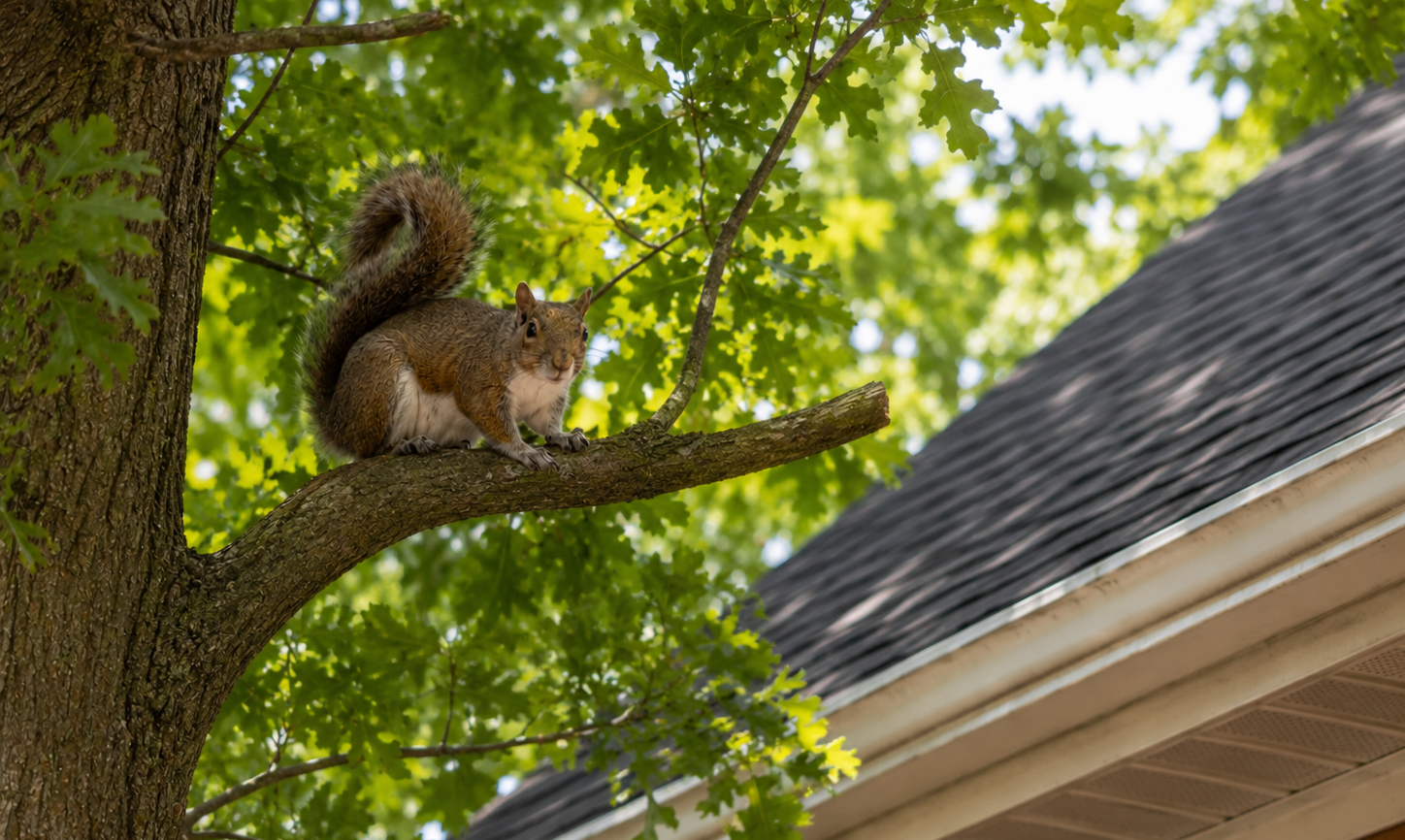
Attics are attractive to squirrels because they offer almost everything these animals look for – warmth, safety, quiet, and soft material to build a nest. Your attic feels a lot like a hollow tree from their perspective, except it’s warmer, drier, and much harder for predators to reach. Once they find a way in, they have very little reason to leave.
You might not think of your attic as prime real estate, but these animals absolutely do. The heat that rises from your living space collects up there, the insulation is perfect for building a nest, and most attics go weeks or months without anyone going inside. That combination makes it one of the most attractive spots on your property, and the only thing standing between them and your attic is the condition of your roofline, soffits, and vents.
At Skedaddle Humane Wildlife Control in Westerville, we deal with attic situations involving these animals regularly. In this blog, we walk you through exactly what makes your attic so appealing, how they get in, what the signs of activity look like, and what our team does to remove them and keep them from coming back.
Do Squirrels Chew on Wood in the Attic?
Yes. Squirrels chew on wood in the attic, and they do it constantly. Their teeth never stop growing, which means they have to chew regularly to keep them worn down to a usable length. Wood framing, rafters, and structural beams in your attic are all fair targets. The chewing isn’t limited to wood either: wiring, plastic pipes, and insulation facing all get gnawed on as these animals move through the space.
The chewing damage inside an attic is often worse than homeowners expect when they finally have an inspection done. These animals move through the full attic space, which means the damage isn’t confined to one small area. Multiple beams, wire runs, and structural elements can all show gnaw marks after even a short period of activity. Chewed electrical wiring is the most serious consequence – it creates a hidden fire hazard that can’t be seen from the living space below.
If you’re hearing sounds in your attic or noticing signs of activity, do not go up to investigate on your own. The droppings and nesting material left behind carry health risks, and disturbing an active nesting site can complicate the removal process. Call our team and let us assess the full situation safely and completely before anything is touched.
Why Attics Are So Attractive to Squirrels
Your attic checks every box these animals look for in a shelter. Here’s what makes it such a consistent target:
- Warmth and Dryness: Heat rises from your living space and collects in the attic, keeping it warm even during cold winter months. For an animal looking for somewhere to wait out cold weather or raise young, a warm, dry attic is far better than a tree hollow or an outdoor nest. The consistent warmth also makes it a comfortable year-round option, not just a seasonal one.
- Safety from Predators: Being up high is a big advantage for these animals. Your attic is well out of reach of most ground-level predators, and the enclosed structure protects them from aerial threats too. A nest raised inside your attic is far safer than one built in a tree, which is exactly why females in particular are drawn to attics when they’re getting ready to have young.
- Nesting Material: Attic insulation is soft, easy to tear apart, and ideal for building a nest. Squirrels pull it apart and pack it into a warm, cushioned nesting spot very quickly. The insulation they damage in the process loses its effectiveness, which raises your heating and cooling costs and contaminated insulation may need to be replaced entirely after an infestation.
- Quiet and Undisturbed: Most attics go days or weeks at a time without anyone entering them. That low level of human activity is exactly what these animals want when they’re nesting. A space that feels safe, quiet, and undisturbed is much more appealing than one that’s frequently accessed. The longer they go without being disturbed, the more comfortable and established they become.
How Squirrels Gain Access to Your Home
These animals are skilled at finding and using entry points that most homeowners never notice. Here’s how they get in:
- Strong Climbers With a Built-In Advantage: Mature trees, utility wires, and rough exterior walls all give squirrels direct paths to your rooftop. A branch that hangs close to or touches your roofline is essentially a bridge. From the roof, they have easy access to every gap, vent, and soft spot along the roofline. Properties with mature trees nearby are at significantly higher risk than those without.
- Powerful Teeth That Can Chew Through Almost Anything: Squirrels can chew through soft wood, plastic vent covers, vinyl siding, and thin aluminum edges. A small gap that looks too tight to squeeze through becomes a usable entry point after a few minutes of chewing. This is why plastic and aluminum vent covers don’t hold up, they need to be replaced with heavy-gauge materials that can’t be chewed through.
- Vulnerable Rooflines With Easy Entry Points: Loose soffits, damaged fascia boards, cracked vent covers, and uncapped ridge vents are all common entry points. These vulnerabilities develop gradually – through weather damage, age, and normal wear – and often go unnoticed until an animal has already found them. Our team checks the full roofline during every inspection so no gap gets missed.
Signs of Squirrel Activity in Your Attic
These animals leave clear signs behind when they’re active in your attic. Here’s what to look for:
- Scratching and Running Sounds During the Day: Squirrels are active during the day, which means daytime sounds in the attic or along the ceiling are a strong indicator. Fast, light scratching or thumping sounds in the morning or early afternoon often point directly to them. If you hear these sounds regularly at the same time of day, something is very likely living above you.
- Chewed Materials Around the Attic or Roofline: Gnaw marks on wood trim, vent covers, and the edges of roofline gaps are signs of active chewing. Fresh chew marks – where the wood looks light and clean compared to the surrounding material – mean the chewing is recent and the animal is still present. Do not try to seal any gap before our team has confirmed what’s inside.
- Disturbed or Compressed Insulation: Insulation that has been pulled apart, packed into a pile, or compressed by repeated foot traffic is a sign of nesting activity. These animals move through insulation as they explore and settle in, leaving visible trails and gathering spots where their nest has been built. This kind of damage reduces the insulation’s effectiveness and needs to be assessed by our team.
- Damage Near Roof Edges and Entry Points: Torn soffits, chewed fascia boards, and damaged vent covers along the roofline are visible signs of entry. If you notice this kind of damage from the ground or during a gutter cleaning, don’t assume it’s just weather wear, it’s likely an active entry point that needs to be inspected before anything is repaired or sealed.
Why Trimming Branches Alone Won’t Solve the Problem
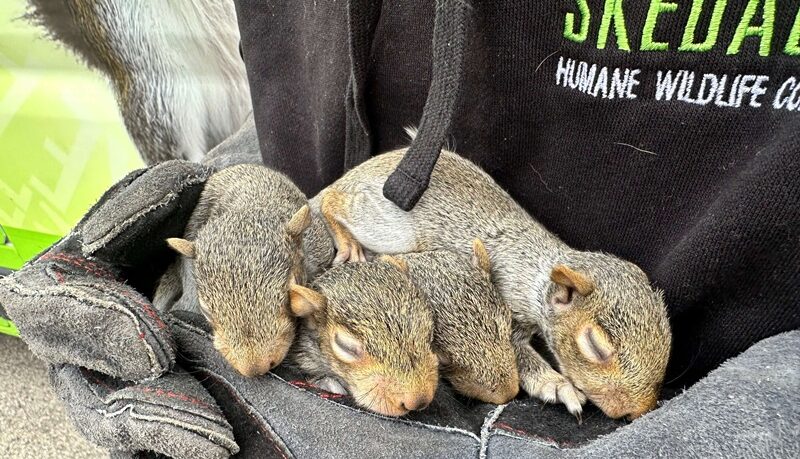
Trimming tree branches that hang over your roofline is a smart step, but it’s only one part of a complete solution. Squirrels are excellent climbers and don’t need a branch touching the roof to get up there. They can scale rough exterior walls, travel along utility lines, and jump from branches that are several feet away from the roofline. Removing one access route doesn’t remove all of them.
The bigger issue is that if these animals are already in your attic, trimming branches does nothing to address the situation inside. The animals that are already there will stay until they’re removed and the entry points are sealed. New animals may find the same entry points regardless of branch clearance, especially if the gaps that allowed the first animal in haven’t been found and fixed.
A complete solution requires our professional inspection of the full exterior, removal of the animals through our one-way door process, and sealing of every entry point with materials that can’t be chewed through or pulled apart. Branch trimming is a good preventive step after all of that work is done, not a replacement for it.
Squirrel Issues in Westerville
Westerville’s combination of mature trees, established suburban neighborhoods, and older housing stock makes it one of the more active areas for squirrel-related calls in the Columbus region. The city has a large tree canopy, which is part of what makes it such a beautiful place to live, but that same canopy gives these animals easy access to rooftops across the area. Properties with older trees close to the house are especially vulnerable.
Fall and late winter are the two most active periods for attic entry in Westerville. In fall, these animals are looking for warm places to shelter through the colder months. In late winter and early spring, females are searching for safe spots to raise their young and an attic that was accessed in the fall becomes a first choice when nesting season begins. Both of these windows are important times to have your home assessed.
Westerville’s housing mix includes a significant number of older homes with aging soffits, worn fascia boards, and roofline materials that have been through many weather cycles. These homes tend to have more natural entry points than newer construction and those entry points are exactly what these animals are looking for. Our team works across Westerville and knows the specific vulnerabilities that come with the area’s most common home styles.
Wildlife Removal and Prevention with Skedaddle
When squirrels have gotten into your attic, the right response is to call our team at Skedaddle Humane Wildlife Control. We start with a full inspection of your home: checking the attic for signs of activity, nesting, and damage, and checking the full roofline and exterior for every entry point that’s been used or could be used. Our professional inspection is the only way to know the full scope of what you’re dealing with before any work begins.
We use one-way door systems that let these animals leave the attic on their own without being able to get back in. This humane approach works without trapping, relocating, or using poison. Once we’ve confirmed the attic is clear and that no young are present in a nesting area, we seal every entry point with heavy-gauge materials that hold up against repeated chewing and pulling. Every gap gets addressed, not just the most obvious one.
Prevention is the final piece. After removal and exclusion are complete, we flag the conditions on your property that made the attic an easy target – overhanging branches, worn vent covers, loose soffits, and aging roofline materials all get assessed as part of a full prevention plan. Our goal is to make your attic a place these animals can’t get back into – and to back that up with work that holds through Westerville’s active wildlife seasons year after year. We handle all of it so you don’t have to deal with any part of it yourself.
Frequently Asked Questions
How long can squirrels live in an attic without being noticed?
Weeks or even months, especially if the attic isn't accessed regularly. These animals are active during the day when most people are busy, and the sounds they make can be easy to dismiss as house settling. By the time the signs become obvious, the problem is usually well established.
Can one squirrel cause significant damage?
Yes. A single animal can chew through multiple wire runs, tear apart a large section of insulation, and damage wood framing in a short period of time. The damage isn't limited to one spot - squirrels move through the full attic space as they explore and nest.
Do squirrels come back to the same attic every year?
Yes. If the entry points haven't been properly sealed. These animals remember locations that have worked for them before and return to them season after season. This is why exclusion work that closes every entry point is essential after removal.
What time of year should I be most concerned in Westerville?
Fall and late winter are the peak periods. Fall brings animals looking for warm shelter, and late winter brings females looking for nesting spots ahead of birthing season. Both windows are important times to have your home assessed.
Should I go into my attic to check for damage?
We recommend calling our team for an inspection rather than going up on your own. Droppings, urine, and nesting material carry health risks, and disturbing an active nesting site can complicate the removal process. Let our team handle the assessment safely and completely.
How do squirrels find their way into an attic in the first place?
They explore rooflines looking for soft spots, gaps, and weak materials they can chew through. Loose soffits, worn vent covers, damaged fascia boards, and any gap along the roofline are all targets. Our inspection covers the full roofline so every potential entry point gets found.
Your Attic Shouldn’t Be Their Home, Let’s Keep It That Way
Attics are warm, quiet, safe, and full of nesting material, which is exactly why squirrels find them so appealing. Once they move in, they don’t leave on their own, and the damage they cause builds up fast. The sooner you act on the signs, the smaller the problem stays.
Trimming branches helps, but it’s not enough on its own. A complete solution means inspecting the full roofline, removing the animals humanely, and sealing every entry point with materials that hold up over time. That’s what our team does on every job.
You don’t have to figure out how they got in or deal with any part of the removal yourself. Our team handles the full process, from the first inspection to the final seal, so you can get back to using your home without worrying about what’s living above your ceiling.
Westerville homeowners trust our team at Skedaddle Humane Wildlife Control to get the job done right the first time. Contact us today to request an estimate and find out how we can protect your attic from these animals for good.

 Loading...







