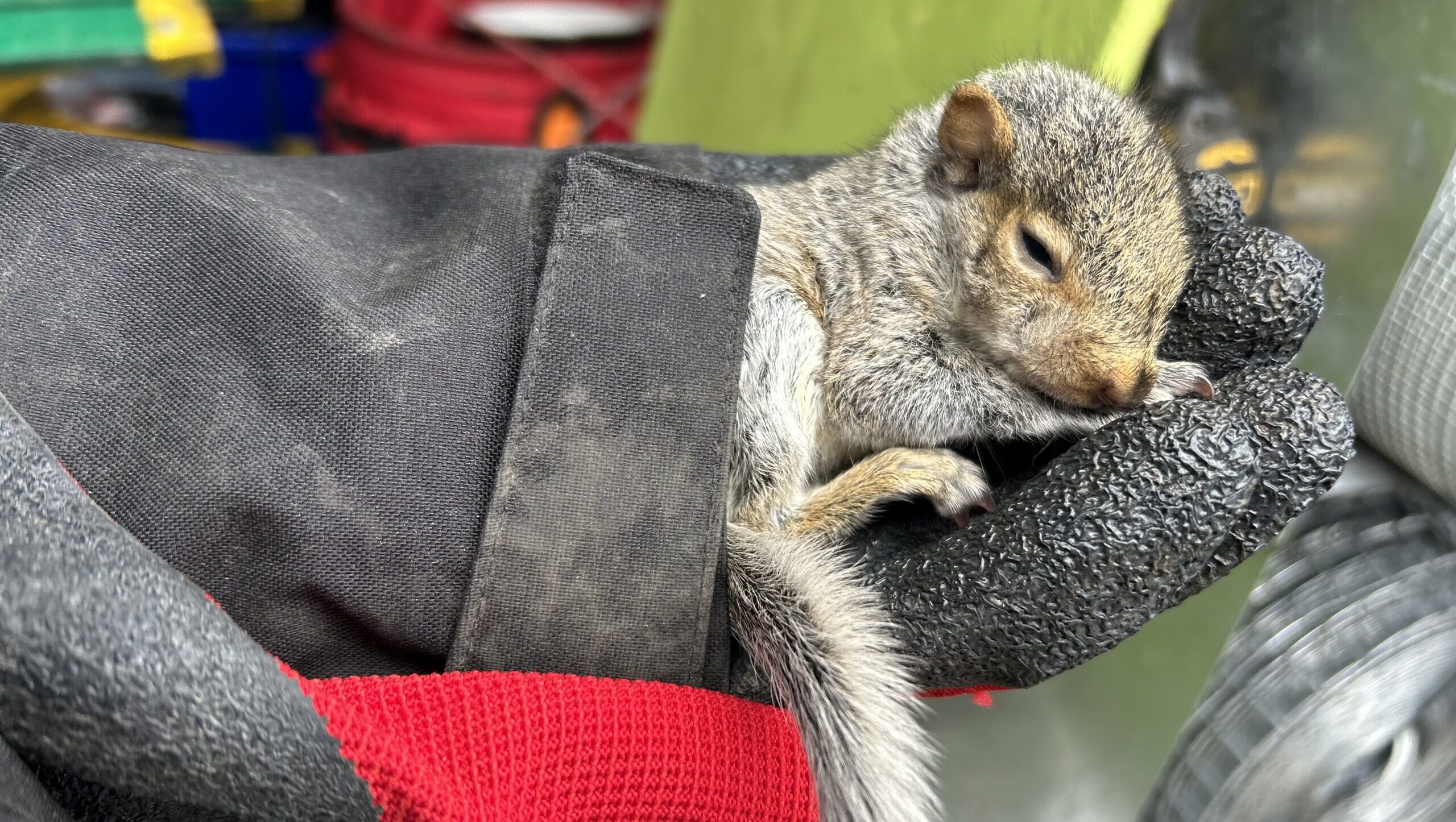
You toss a handful of nuts near the garden. You scatter some birdseed on the deck railing. A few squirrels show up, and it feels harmless, even enjoyable. But over time, you start noticing them on the roof. Then near the soffit. Then you hear something scratching above the ceiling. What started as a kind gesture in the backyard has turned into something much harder to deal with.
Yes, feeding squirrels in the backyard does encourage them into your home. When these animals find a consistent, easy food source in your yard, they stop passing through and start treating your property as their territory. The more time they spend in and around your yard, the more they explore the structures nearby and the more likely they are to find a weak spot in your roofline and move in. Backyard feeding is one of the most common reasons these animals end up in attics across Durham Region every spring and fall.
At Skedaddle Humane Wildlife Control in Durham Region, we see the connection between backyard feeding and attic infestations every season. In this blog, you will learn exactly how feeding wildlife in your backyard creates conditions that pull these animals toward your home, what happens once they get comfortable near your structure, and why calling our team is the right step the moment you notice signs of activity on or inside your home.
How Do Squirrels Get Into a House?
Squirrels get into a house by finding and using small gaps along the roofline, soffits, and exterior walls. They are strong chewers and can enlarge a gap that is barely noticeable into an entry point large enough to squeeze through in just a few days. Common entry spots include worn soffit panels, damaged vent covers, gaps where different building materials meet, and areas where wood trim has pulled away from the structure.
What brings them to those spots in the first place is usually a combination of food access, familiarity with the property, and the instinct to find enclosed, elevated shelter. A yard that provides regular food — nuts, seeds, scraps left near the deck or garden — keeps these animals in close proximity to your home for longer stretches of time. The longer they spend nearby, the more they explore the exterior of the structure, and the more likely they are to find and use a vulnerable spot.
Once they identify an entry point, they work at it persistently. Their front teeth never stop growing, which means they chew constantly to keep them worn down. A soft wood edge, a plastic vent cover, or a gap in the fascia all become targets. By the time the entry point is large enough to use, squirrels are already committed to moving in and stopping them requires more than just patching the hole. It requires finding every access point and sealing the full structure professionally.
Creates Food Dependence and Removes Natural Boundaries
Feeding wildlife in the backyard changes how squirrels behave around your home. What starts as an occasional visit becomes a daily routine, and that routine is the first step toward a much bigger problem. Here is what happens when a consistent food source is present in your yard:
- Hand-Outs Create Food Dependence: When nuts, seeds, or food scraps are available in your yard on a regular basis, these animals stop foraging widely and start relying on your property as their primary food source. They learn the schedule, they remember the location, and they keep coming back. That dependence keeps them present in your yard far longer than they would naturally stay if no food was available. The longer they are in your yard, the more comfortable they become with the whole property, including the structure.
- Easy Food Removes the Natural Urge to Move On: In the wild, squirrels cover a lot of ground searching for food. When food is reliably available in one spot, that search radius shrinks, and your yard becomes the centre of it. Instead of passing through your property on the way somewhere else, they settle in. Decks, porches, garden beds, and rooftops all become part of their regular territory. That shift from passing visitor to resident is what sets the stage for an eventual move into your attic.
- Backyard Feeding Attracts More Than Just One or Two Squirrels: When food is consistently available, word spreads through the local population. More animals from the surrounding area start showing up to take advantage of the source. What began with one or two visitors can become a much larger group of squirrels regularly spending time on and around your property. That increase in numbers means more pressure on your roofline and a greater chance that one of them finds and uses a vulnerable entry point.
Highlights Vulnerable Structures
The more time squirrels spend in your yard, the more they explore the structures around them. A yard with a reliable food source keeps them active and present in ways that naturally lead them to investigate fences, sheds, decks, and eventually the home itself.
Squirrels are agile climbers. They use fences, downspouts, and tree branches to access elevated surfaces, and once they are at roof level, they move along the roofline testing every surface they encounter. A vent cover that is slightly loose, a soffit panel that has warped away from the frame, or a gap where two roofline materials meet — all of these become noticed and tested when an animal is spending time on the roof regularly. The longer they are up there, the more likely they are to find the one spot that gives way.
Backyard feeding accelerates this process by giving squirrels a reason to stay near the property and keep exploring. A yard without food might see squirrels pass through occasionally. A yard with a regular food supply keeps them on the property every day, which means they are climbing on and around your home on a much more frequent basis. That frequency is what turns a vulnerable spot in your roofline from a potential problem into an active entry point.
Desensitizes Human Fear and Encourages Gnawing
One of the less obvious effects of regular backyard feeding is what it does to squirrels’ comfort level around people and structures. Here is how that shift in behaviour creates problems for your home:
- Regular Feeding Reduces Their Natural Wariness: Squirrels naturally keep their distance from humans. Regular feeding changes that. These animals learn to associate human presence and human structures with safety and food rather than with a threat to avoid. Once that wariness is gone, they behave very differently around your property. They move more boldly, explore more thoroughly, and are far less likely to retreat when they encounter something new on or around your home.
- Comfortable Squirrels Investigate Structures More Aggressively: A squirrel that is no longer wary of your property does not just take the food and leave. It lingers. It climbs. It tests surfaces. A comfortable animal near your home will chew on wood trim, plastic vent covers, and siding edges simply because those surfaces are there and chewing is what these animals do constantly. That exploratory gnawing is how entry points get created — not all at once, but gradually through repeated attention to the same spot over days or weeks.
- Gnawing Near the Home Leads Directly to Entry: Once squirrels start chewing on the exterior of your home, the progression toward entry is often just a matter of time. A small gap that gets chewed on every day grows quickly. Wood softened by weather or age gives way faster. Plastic vent covers crack under persistent pressure. The combination of a comfortable animal with strong teeth and a vulnerable structure is exactly how most attic entry situations develop in Durham Region. Our team finds the results of this pattern regularly during inspections across the area.
Triggers Scent Caching
Squirrels do not just eat the food they find; they store it. When a reliable food source is available in your yard, their instinct to cache food for later kicks in, and that caching behaviour has direct consequences for your home.
Caching means burying or hiding food in spots near where it was found. When the food source is in your yard, the caching spots are in your yard and very often, directly against the foundation of your home. Garden beds along the house, the gap between the deck and the foundation wall, and the soil near the base of exterior walls all become storage sites. These animals return to those spots repeatedly to check and add to their cache, which keeps them in very close contact with the structure of your home throughout the season.
That repeated contact along the base and lower exterior of your home creates familiarity with the structure itself. Animals that are regularly at foundation level also explore upward — along walls, up downspouts, and onto the roofline. The caching behaviour that started at ground level becomes a pattern of exploration that eventually reaches the roof. A yard that regularly produces food becomes a yard where caching drives these animals right up the side of your house.
The scent of buried food also attracts other animals to the same area. When caching sites are concentrated around the perimeter of your home, you are not just dealing with one or two squirrels who found a food source — you are dealing with a scent environment that draws more of them in over time. That accumulation of activity around the base and exterior of your home increases the pressure on the roofline from multiple directions at once.
Creates Rooftop Highways
The tree branches, fences, and structures that squirrels use to reach backyard bird feeders and food sources also give them a direct path to your roof. Here is how the routes they travel in your yard become a problem for your home:
- Low-Hanging Branches Are the Most Common Roof Access Point: A tree branch that hangs over the roof or comes within jumping distance of the roofline gives squirrels a bridge from the yard to the top of your home. These branches are often used to reach hanging bird feeders, which means they are already part of the squirrel’s regular daily route. Once a branch is being used regularly to reach a feeder, it takes very little additional exploration for these animals to follow that branch all the way to the roofline above.
- Fences and Sheds Create Stepping Stones to the Roof: A fence that runs alongside the house, a shed close to the exterior wall, or a deck railing near the roofline all become part of an elevated travel route. Squirrels use whatever vertical and horizontal structures are available to move around the yard at height. When a food source in the yard keeps them active and moving through the property regularly, these stepping stone routes get used often — and the roof becomes a natural extension of the path they are already on.
- Rooftop Travel Leads Directly to Entry Point Discovery: Once squirrels are on the roof regularly, they explore it. They move along the roofline, test vent covers, push at soffit edges, and investigate any spot that feels different from a solid, intact surface. The more time they spend on the roof, the more thoroughly they map every weak spot on the exterior. A roofline that would never have been explored by an animal just passing through the area gets examined in detail by an animal that has been using the adjacent tree branch every day to reach its food.
Promotes Nesting Proximity
A food source in the backyard does more than bring squirrels into your yard during the day. It also shapes where pregnant females decide to raise their young. When food is easy to find close to your home, your attic becomes one of the most attractive nesting spots available.
Pregnant females look for spaces that are warm, enclosed, elevated, and close to food. Your attic checks every one of those boxes. When your backyard is providing a steady food supply, she does not have to travel far from the nest to eat, which means she can focus more of her energy on keeping her young safe and warm. Your attic stops being just a space above the ceiling and starts being the best option in the area.
Once a female decides your attic is the right spot, she does not give up easily. She will work at a gap in the soffit or a loose vent cover until she gets through. A small weakness that another animal might have ignored becomes a focused target for a mother looking for a safe place to raise her young. That kind of persistence is what turns a minor roofline issue into a full entry point in just a few days.
Squirrel Issues in Durham Region
Durham Region has a large squirrel population, and the area’s mix of mature neighbourhoods, big trees, and older homes gives these animals plenty of ways to get close to and inside residential structures. Older homes with aging rooflines, worn soffit panels, and original wood trim are targeted most often. Our team at Skedaddle works across Durham Region every season and sees the same entry points and conditions repeat across the area year after year.
Population density plays a big role in the problem. When food is available in multiple yards across a neighbourhood — bird feeders, garden scraps, nuts left out for wildlife — more squirrels concentrate in residential areas than the natural environment would normally support. That overcrowding pushes some animals out of their regular outdoor spots and into homes. When outdoor competition is high, attics become the next best option for animals that have been pushed out of established territories.
Spring and fall are the busiest seasons for attic entry in Durham Region. Spring brings pregnant females looking for warm, safe nesting spots. Fall sends these animals looking for shelter before the cold sets in. Both seasons bring a big jump in calls to our team from homeowners across the region. Acting early — at the first sound of activity above the ceiling or the first sign of chewing along the roofline — is always simpler and less costly than waiting to see if the problem goes away on its own.
Squirrel Removal and Prevention with Skedaddle
When you call our team at Skedaddle, we start with a full inspection of your roofline, attic, and exterior. We find every active entry point, check for nesting and young, and assess the full extent of the situation before any work begins. In Durham Region homes — particularly older ones with large trees nearby — that inspection covers the complete roofline because entry points are rarely limited to just one spot.
Once we have a clear picture of what is happening, we install one-way doors over the active entry points. These let squirrels exit safely on their own but prevent them from getting back in. After the structure is clear, we seal every opening with professional-grade materials that hold up against persistent chewing. Homeowners should never attempt to seal entry points on their own — especially if young may still be present inside. Blocking an active entry without a professional assessment makes the situation significantly harder to resolve.
Cleanup and long-term prevention complete the process. Our team removes nesting material, treats contaminated areas, and addresses every roofline condition that made your home a target. We also talk through what is happening in the yard that may be contributing to the problem. You do not need to handle any materials or figure out where they are getting in. Call our team at Skedaddle Humane Wildlife Control in Durham Region the moment you notice signs of activity and let us handle every step from start to finish.
Frequently Asked Questions
Can feeding birds in the backyard also attract squirrels?
Yes. Bird feeders are one of the most common attractants for squirrels in residential yards. Seeds that fall to the ground and feeders that are accessible from nearby branches both provide easy food that keeps these animals active around your home. The routes they use to reach feeders often lead directly to the roofline.
How quickly can a squirrel chew through a roofline entry point?
A determined animal can enlarge a small gap into a usable entry point within a few days of focused chewing. Soft wood, aging plastic vent covers, and worn fascia boards are especially vulnerable. Once an animal has identified a spot and started working on it, the gap grows quickly.
Is it illegal to feed squirrels in Durham Region?
There are no blanket regional regulations prohibiting backyard feeding in Durham Region, but some municipalities have bylaws related to attracting wildlife in ways that create nuisance conditions. More importantly, feeding wildlife in ways that draw them toward residential structures creates a practical problem for your home regardless of local rules.
Will squirrels stop coming to my yard if I stop feeding them?
Reducing or eliminating the food source will decrease how much time these animals spend on your property over time. However, animals that are already established in your attic will not leave simply because the food source has been removed. Removal and sealing by our professional team is still necessary for any active infestation.
Can a squirrel in the attic damage my home's electrical wiring?
Yes. Squirrels chew constantly, and electrical wiring is one of the materials they chew through without any awareness of the risk. Chewed wiring inside a wall or attic is a serious fire hazard that is often not discovered until a professional inspection reveals it. This is one of the most important reasons to address an attic situation as early as possible.
How do I know if squirrels from my yard have gotten into my attic?
Common signs include scratching or running sounds above the ceiling in the early morning or at dusk, visible chew marks or damage along the roofline or soffit, droppings in the attic, and increased rooftop activity near specific spots on the exterior. If you are noticing these animals on your roof regularly, our professional inspection is warranted.
The Backyard Is Fine — The Attic Is Not. Call Skedaddle Today
Enjoying wildlife in your yard is completely understandable. But when that enjoyment starts pulling squirrels onto your roofline and into your attic, a pleasant backyard moment turns into an expensive problem faster than most homeowners expect.
Squirrels do not need much of an invitation. A food source in the yard, a branch that reaches the roof, and one small gap in the soffit is all it takes. Once they are inside, the chewing, the droppings, and the damage add up quickly and it does not stop on its own.
The sooner you call, the simpler the fix. Waiting gives these animals more time to settle in, cause damage, and raise young inside the structure. Every week the situation goes unaddressed makes the job bigger.
At Skedaddle Humane Wildlife Control in Durham Region, our team handles the full process — inspection, removal, sealing, and cleanup. We find every entry point, make sure no young are left behind, and seal your home with materials that hold up long-term. You do not need to get on the roof or handle any part of this yourself. Request an estimate today and let our team take care of it completely.

 Loading...