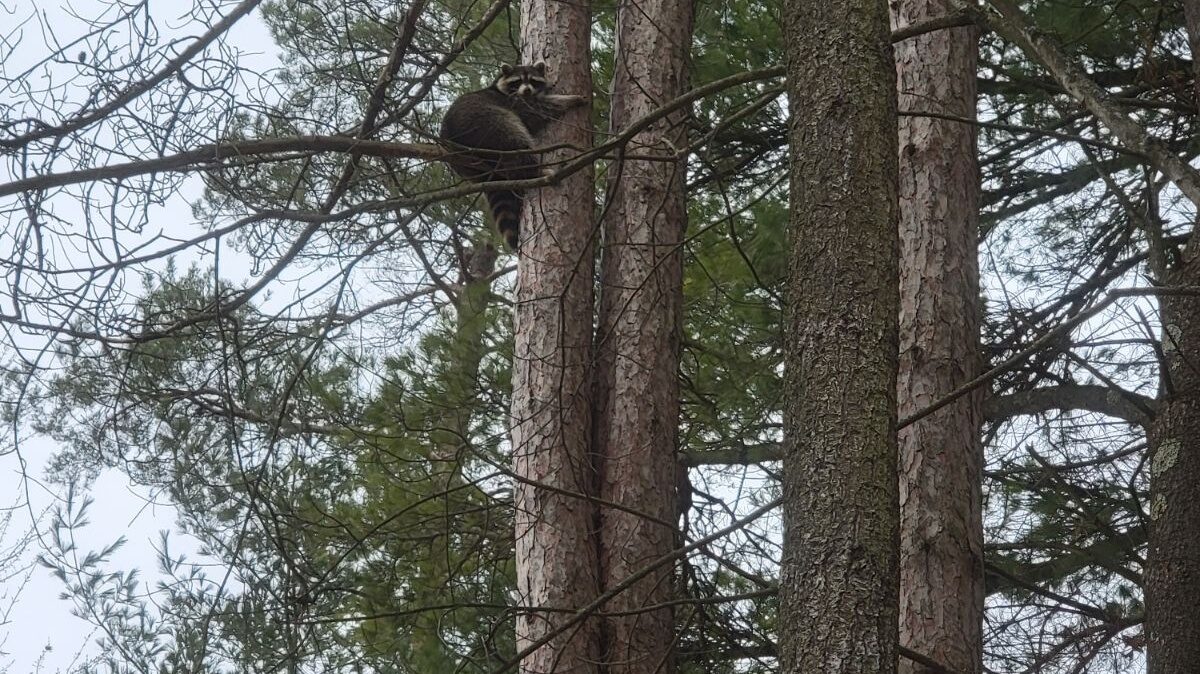
You may be sharing Guelph’s trails with raccoons and skunks more often than you realise. Researchers are studying how the city’s landscape relates to the spread of disease-causing organisms among these animals. The project is gathering evidence from parks and trail areas, rather than announcing final findings about local disease patterns.
You might have noticed research equipment or an unusual smell during a walk. A July 2026 GuelphToday report described roughly 30–50 humane research traps rotating through local locations. The work raises questions about how natural spaces and developed areas fit together. For homeowners, that wider landscape also helps explain why a visitor seen near a trail may later appear in a residential yard.
At Skedaddle Humane Wildlife Control in Guelph, we assess what happens when outdoor activity reaches decks, sheds, attics, or other sheltered spaces around your home. A passing sighting does not automatically mean an infestation. Repeated use of an opening, hidden sounds, or damage deserves closer attention. Below, we explain the research, nighttime activity, and the signs that call for professional inspection.
Are Raccoons and Skunks Active at Night?
Yes, raccoons and skunks are mainly active at night, although you may also see them during the day. They often search for food and move between sheltered places when neighbourhoods are quiet. You may therefore share nearby outdoor spaces without seeing much of their activity. A brief sighting tells you only part of the story.
You might notice signs in the morning after overnight visits. Disturbed materials, digging, or repeated movement beneath a structure can suggest that something happened while you were indoors. However, those signs do not reveal every route or identify a den by themselves. Our team compares the evidence before deciding whether a property is occupied.
Daytime activity does not automatically mean illness. Food needs, disturbance, and care of young can affect when these animals move around. You should keep your distance rather than approach to judge their health. If behaviour creates an immediate safety concern, seek guidance from the appropriate local authority.
What the Guelph Trail Study Is Investigating
The project examines how the arrangement of natural and developed spaces relates to disease patterns. Researchers use the word “pathogens” for organisms that can cause disease. Their goal is to gather evidence, so the questions being studied should not be presented as completed findings.
- How the Landscape Relates to Disease Patterns: Parks, wooded areas, roads, and neighbourhoods form different parts of the city’s landscape. Researchers are investigating how that layout may relate to pathogen spread among the species being studied. This does not mean a particular trail has been identified as a disease route. The work is intended to build a clearer picture through collected evidence.
- What Samples Can Reveal: The reported project collects swabs for laboratory testing. Those samples help researchers investigate active viruses among the individuals included in the study. A sample taken at one location does not establish the health of every raccoon or skunk nearby. Results need careful interpretation before wider conclusions can be drawn.
- How Local Evidence Can Build a Wider Picture: Information from different locations can help researchers compare conditions across the landscape. The July report described the project as being in its first year. It also noted plans to expand beyond Guelph into southwestern Ontario. That makes the local work one part of a developing research picture rather than a finished account.
The study is being conducted by Bryan Hughes, a PhD researcher at Trent University, alongside the Ministry of Natural Resources. You can read the original report here: That fishy smell on some Guelph trails is part of wildlife research.
Why Research Equipment Is Appearing Near Trails
The July 30 report described about 30–50 humane research traps rotating through Guelph parks and trail areas. At that time, the equipment was expected to continue rotating through November. Those details describe the reported schedule, not a guarantee that a particular location is active today. Posted project information provides context at participating sites.
The unusual smell mentioned in the news story comes from bait used by the research team. The equipment forms part of a supervised sampling project. You should not touch, move, open, or interfere with it. Leave any occupant undisturbed and follow the information posted by the researchers.
This research is separate from a wildlife concern at your home. Skedaddle does not operate the study, and its equipment should not be treated as a removal service for nearby properties. If you notice repeated activity beneath your deck or inside your roofline, contact our team for a property assessment. We investigate the residential issue based on the evidence found there.
What Green Corridors Can Explain About City Movement
A green corridor is a connected stretch of natural or planted space. Wooded edges, parks, and planted borders can link areas that might look separate on a street map. This provides useful background for city movement, but it is not a finding already proved by the Guelph study.
- Connected Cover Between Locations: Sheltered edges can provide routes through areas surrounded by development. A stretch of planting may connect a park boundary with fences and neighbouring yards. These routes can extend beyond the places where people usually notice activity. Their presence does not prove that nearby houses or sheds are occupied.
- Food and Shelter in Different Places: These animals do not need to find food and shelter in the same location. They may visit one area while resting somewhere else. A sighting in your yard therefore does not reveal where a den is located. Our team looks for signs of actual shelter use rather than assuming that every feeding visit means occupancy.
- Park Edges Meeting Residential Spaces: The edge of a green space may sit close to gardens, decks, sheds, and houses. That transition can bring outdoor movement near places people use every day. It helps explain why a trail visitor may also be noticed beside a fence or garage. It does not establish that public trails cause infestations in surrounding homes.
For you, the practical question is whether activity remains outdoors or reaches a sheltered space on the property. The research considers broader patterns across the landscape. Our inspection focuses on the openings, structures, and signs at your home.
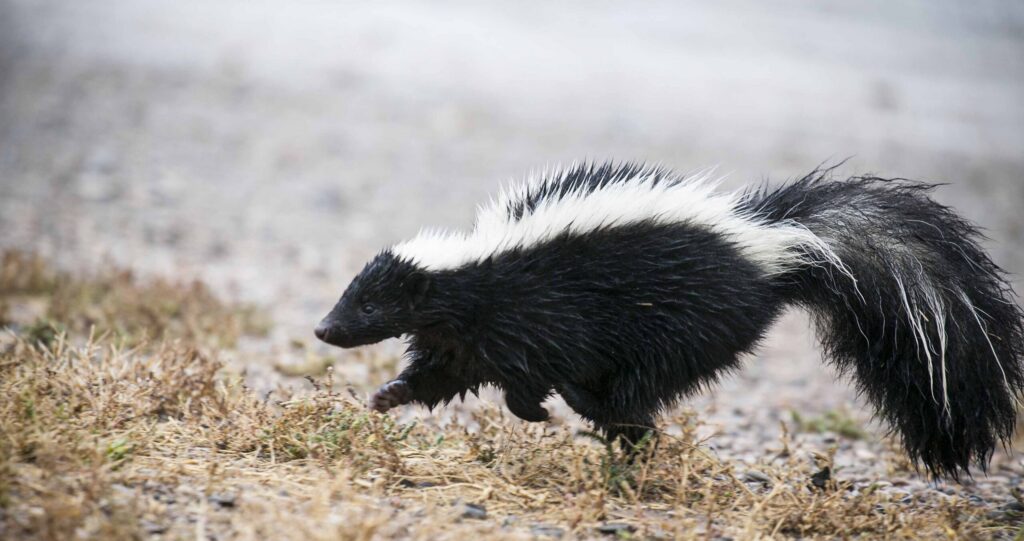
Why a Trail Visitor May Also Appear in a Yard
A yard can provide food, shelter, or simply a route to another location. You cannot tell which reason applies from one brief sighting. We consider repeated patterns and property conditions before recommending removal or prevention work.
- Accessible Food Around the Property: Unsecured waste, fallen produce, and other available food may encourage repeat visits. A visitor may return even when its resting place is elsewhere. That makes food access worth considering during the assessment. You should not handle waste or clean an area with suspected contamination to investigate the cause.
- Shelter Beneath Ground-Level Structures: Skunks may use suitable spaces beneath decks, porches, and sheds. Raccoons may also investigate sheltered areas around structures. A protected gap can offer more than a short resting stop when the surrounding conditions are suitable. However, a hole or opening does not confirm occupancy until it has been assessed.
- Openings Into Elevated Spaces: Raccoons can climb and may investigate rooflines, chimneys, and attic openings. Their ability to reach elevated spaces creates a different inspection focus from the mainly ground-level shelter associated with skunks. Movement on the roof does not automatically prove attic entry. Our team checks whether an accessible route connects with an occupied space.
Signs That a Passing Visit Has Become a Property Problem
Occasional outdoor activity and established shelter use are different concerns. You may see a visitor cross the yard without any need for removal. Concern grows when repeat entrance use appears alongside sounds, waste, or damage.
- Repeated Use of the Same Opening: Regular movement beneath one structure or through a roof gap can suggest more than a passing visit. You may notice an adult entering the same place several times. That pattern gives our team useful information about where to inspect. Do not follow it, reach into the opening, or block the route to test whether it is occupied.
- Sounds, Odours, or Waste Near Shelter: Sounds beneath a deck or above a ceiling may point to activity in a concealed area. Persistent odours or droppings already visible nearby can provide further clues. None of these signs identifies the source on its own. Leave waste and affected materials untouched while our team assesses the space.
- Damage or Signs of Dependent Young: Disturbed materials, widened gaps, or repeated calls may indicate an occupied shelter. Young can remain inside while an adult leaves temporarily. A quiet period therefore does not confirm that everything has gone. Inspection must account for the occupied space before removal or exclusion begins.
You do not need to gather more evidence before calling us. Share what you have already noticed during normal use of the property. Our team handles the closer inspection without asking you to enter hidden spaces or approach the occupants.
What the Research Means for Homeowners
The study’s interest in pathogens does not establish that every raccoon or skunk on a Guelph trail is ill. Sampling activity is not, by itself, proof of a local outbreak. The cited report describes a research project and its purpose. It does not announce completed results showing disease levels across the city.
The connection to residential properties is a separate practical point. Green spaces, yards, and buildings can sit close together, allowing outdoor movement to occur near homes. That does not prove a direct route from a research location to your attic or shed. Our inspection relies on the evidence at your property.
You should keep your distance and leave suspected dens or waste undisturbed. Our professional help can address occupied spaces, access points, and cleanup needs. The goal is to protect your home while responding appropriately to the conditions found. There is no need to treat every trail sighting as a residential emergency.
Keep Trail Activity From Becoming a Home Intrusion
At Skedaddle, we begin by inspecting the property for actual access points and signs of shelter use. Ground-level structures and elevated roof areas require different assessments. We determine whether the activity involves occasional visits or an occupied space. You do not need to search beneath a deck or enter the attic before contacting us.
When removal is needed, we plan humane methods around the species, location, and presence of young. Our one-way doors allow wildlife to leave but prevent re-entry where appropriate. These devices form part of our residential exclusion work and are separate from the study’s research equipment. We assess the occupied area before deciding how access should be secured.
Our team protects vulnerable openings with durable materials and identifies any need for professional cleanup. Droppings, nesting material, and affected areas should remain untouched by homeowners. Prevention focuses on the property conditions that allowed shelter or entry. Our goal is to keep your home protected, not to remove raccoons and skunks from public trails.
Frequently Asked Questions
Does a daytime sighting mean a raccoon or skunk is sick?
No, a daytime sighting does not automatically mean illness. These animals may move during daylight for several reasons, including disturbance or food needs. You should not approach to judge their condition or try to make them leave. If behaviour raises an immediate safety concern, contact the appropriate local authority for guidance.
Does living near a trail mean a home will have an infestation?
No, living near a trail does not mean your home will become occupied. Nearby green space can help explain outdoor activity, but it does not confirm access to the building. Shelter opportunities, openings, and repeated signs at the property matter more than proximity alone. Our inspection determines whether a passing visit has become an established problem.
Do skunks enter attics like raccoons?
Skunks generally use ground-level shelter, such as suitable spaces beneath decks, porches, or sheds. Raccoons can climb and reach roofline, chimney, or attic openings. That difference affects where our team looks during an inspection. We identify the species and occupied location rather than assuming both use the same parts of a home.
Does the study prove there is a disease outbreak in Guelph?
No, the cited report does not announce a disease outbreak. It describes research into how landscape structure relates to pathogen spread. The presence of sampling equipment does not prove disease at that location or throughout the surrounding neighbourhood. Findings must be supported by the research rather than inferred from the equipment alone.
Should a suspected den opening be blocked immediately?
No, a suspected den opening should be assessed before it is blocked. An adult may be outside while dependent young remain in the sheltered space. Closing access too soon can trap occupants or separate a family. Our team checks occupancy and plans suitable humane removal before completing exclusion work.
Share the Landscape Without Sharing the Living Space
You can view the Guelph trail study as an effort to build knowledge about the city’s landscape and disease patterns. Researchers are gathering evidence from these animals rather than announcing that every local sighting presents a health threat. The reported project is still a study, and its aims should not be confused with final findings.
Green spaces, yards, and buildings form parts of the same wider environment. A passing raccoon or skunk does not automatically create a home problem. Repeated use of an opening, hidden sounds, waste, or damage deserves a professional assessment. Leave suspected dens and affected materials untouched so the response can account for any occupants or dependent young.
At Skedaddle Humane Wildlife Control in Guelph, we identify occupied spaces and plan suitable humane removal. Our team uses one-way doors where appropriate, secures vulnerable areas, and assesses professional cleanup needs. You can leave the inspection and wildlife work to us without approaching, handling, or disturbing anything yourself. Contact us to schedule a professional assessment or request an estimate to learn more.

 Loading...