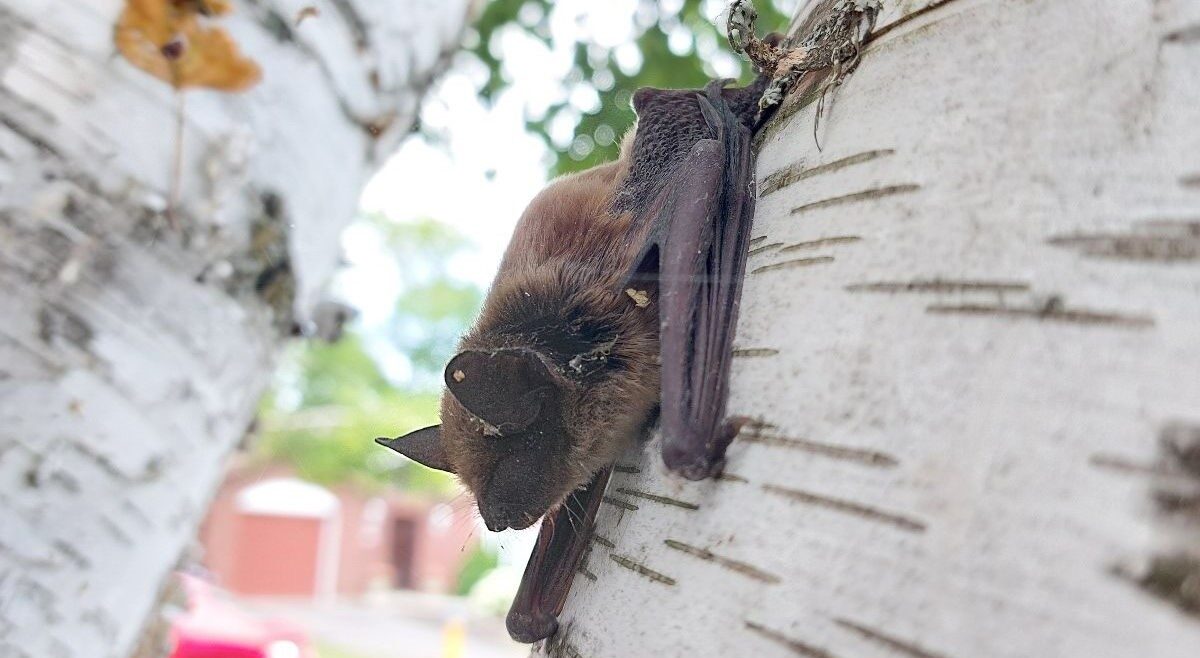
You should know that Hamilton Public Health confirmed two rabid bats on June 3, 2026. No people had contact with either one, so the cases did not create any known human exposure. However, the news is an important reminder that you should never touch a bat or ignore possible contact.
You do not need to panic if you see one flying outside. Rabies does not spread because one passes through your yard. The virus spreads when infected saliva enters the body through a bite, scratch, open wound, or the moist lining of the eyes, nose, or mouth.
An indoor sighting requires more care because it may bring a bat close to people or pets. It may also point to a hidden roost or small opening in the home. At Skedaddle Humane Wildlife Control in Hamilton, we can inspect the building and handle the physical removal. In this blog, we explain what the two confirmed cases mean, what counts as exposure, what to do after finding one, and how professional proofing can prevent another entry.
What Are the Odds a Bat in My House Has Rabies?
Most bats do not have rabies, but there is no reliable way to calculate the odds for one found inside your home. Public-health testing usually focuses on bats involved in unusual events or possible exposure. Those test results do not represent the entire local population.
You also cannot confirm rabies by looking at one. An infected bat may appear weak, move slowly, remain active during the day, or have trouble flying. However, some may not show signs that a homeowner can recognize.
The safest response depends on whether direct contact may have happened. A bite, scratch, or possible saliva exposure should be taken seriously, even when the overall risk seems low. Hamilton Public Health should assess the situation and provide medical guidance.
What the Two Confirmed Cases Mean
Hamilton Public Health announced the city’s first two confirmed bat rabies cases of 2026 in June. No human contact occurred in either case. The announcement was a safety reminder rather than proof of a large outbreak inside local homes.
- Two Positive Tests: Two bats tested positive for the rabies virus. They were the first confirmed bat cases in Hamilton during 2026. The number does not reveal how many bats across the city may be infected. It also cannot predict the risk from a specific indoor encounter.
- No Reported Human Contact: Hamilton Public Health confirmed that neither case involved contact with a person. This means the two cases did not create known human exposure. That detail should offer some reassurance. It does not change the need for caution during another encounter.
- Previous Local Cases: Local reporting stated that Hamilton had ten confirmed rabid bats during 2025. Annual totals may rise or fall based on the bats submitted for testing. They do not show the infection rate among all bats. Each possible exposure must be reviewed on its own.
- A Reminder About Distance: The city advised residents to avoid contact with bats and other possible rabies carriers. Simply seeing one outside does not create exposure. The concern begins when infected saliva may enter the body. People and pets should always keep a safe distance.
The full notice is available through the City of Hamilton.
What Counts as Possible Rabies Exposure?
Rabies spreads through the saliva of an infected mammal. There is no risk when no direct contact has taken place, according to Hamilton Public Health. However, uncertain contact should be reviewed instead of dismissed.
- A Bite: A bite can place infected saliva beneath the skin. Bat teeth are small, so the mark may be difficult to see. A person should not wait for pain or illness before seeking advice. Immediate medical or public-health guidance is required.
- A Scratch: A scratch can break the skin and create another possible route for saliva. The mark may look minor or fade quickly. Its size does not show whether exposure occurred. Public Health should decide what follow-up is needed.
- Saliva on Broken Skin: Saliva entering a cut, scrape, or open wound may create exposure. Contact with healthy, unbroken skin does not carry the same risk. You should still report the event if you are unsure. Do not try to assess the bat yourself.
- Saliva Near the Face: Exposure may occur if saliva reaches the eyes, nose, or mouth. These areas contain moist tissues through which the virus may enter. This type of contact needs immediate attention. A health professional should guide the next steps.
- Contact that Cannot Be Ruled Out: A sleeping person may not know what happened in the room. A young child or someone unable to explain the event may also provide an unclear account. This does not automatically prove exposure. Hamilton Public Health should assess the facts.
Rabies is preventable when medical care begins promptly, but it is fatal after symptoms start. That is why possible contact must be addressed right away.
What Residents Should Do After Finding a Bat
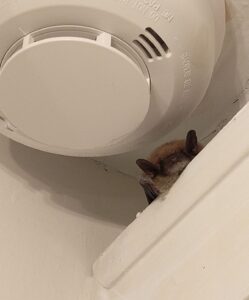 Finding a bat inside can be frightening, but a calm response protects everyone. The goal is to keep people and pets away while professionals assess the event. Homeowners should not capture, chase, touch, or release it themselves.
- Keep Everyone Away: People and pets should leave the immediate area without approaching the bat. Children should remain in another secure room. Do not touch it, even if it appears unable to fly. A frightened or sick bat may bite when handled.
- Limit Access to the Room: An interior door can be closed only when this can be done without moving near the animal. Do not chase it through the building or try to force it outside. This may increase the chance of contact. Skedaddle can handle the physical removal.
- Review Possible Contact: Consider whether anyone was bitten, scratched, touched, or exposed to saliva. The same review should include household pets. If the answer is unclear, contact Public Health. Do not assume that a missing bite mark means nothing happened.
- Contact the Right Professionals: A bite or possible saliva contact requires immediate medical care or a call to Hamilton Public Health at 905-546-2489. Contact a veterinarian promptly when a pet may have touched the bat. Hamilton Animal Services should be called about one that is dead, sick, or acting strangely. Skedaddle can address its presence inside the home.
- Do Not Release It After Possible Contact: Public Health may need the bat available for rabies testing. Releasing it too soon can remove that option. Keep people and pets away while waiting for instructions. Our trained professionals should coordinate the physical response.
An Indoor Sighting May Point to a Hidden Roost
One bat may fly through an open door or window by mistake. However, it may also have travelled from a roost hidden inside an attic, wall, soffit, chimney, or roof space. Finding the source is important because removing one from a room may not resolve the larger issue.
Warning signs can include repeated indoor sightings, soft chirping, fluttering sounds, droppings, and dark stains near a roof opening. You might also see these animals leaving the same part of the building around dusk. Do not enter the attic or inspect the waste closely.
A professional inspection can determine whether the event was isolated or connected to a colony. The answer affects removal timing, cleanup, and the proofing plan. It also helps identify other openings that could allow another entry.
Hamilton Homes Can Provide Suitable Roosting Space
Hamilton contains older houses in the lower city and established communities such as Dundas and Ancaster. It also has newer developments around Stoney Creek, Waterdown, and Binbrook. Both old and new buildings may contain small gaps around their roofs.
Little brown and big brown bats may use attics, walls, soffits, vents, and other protected spaces. They can enter through very small openings and may leave little evidence behind. A roof can look secure from the ground while still having several access points.
Summer heat can also change where they move inside a structure. A bat living in a hot attic or wall may travel toward a cooler basement or room. This is one reason indoor sightings may become more common during warm weather.
Professional Bat-Proofing Prevents Another Entry
Successful proofing requires more than closing the opening where one bat was last seen. Every active and possible entry point must be found. The timing must also protect any flightless young that may be inside.
- Complete Structural Inspection: Our technicians inspect roof edges, vents, chimneys, soffits, fascia, siding transitions, attics, and wall openings. Small gaps may be difficult to see from below. We identify active entrances and other weak areas. This creates a complete protection plan.
- Seasonal Assessment: Removal timing depends on the species, season, roost, and possible presence of young. Closing openings at the wrong time may trap bats inside. It could also separate mothers from flightless pups. Our team checks these factors before beginning exclusion.
- One-Way Doors: Our one-way doors allow bats to exit for food but prevent them from returning. This supports humane removal without live trapping or relocation. The devices remain until our technicians confirm that the roost is empty. Homeowners do not need to monitor or handle them.
- Permanent Protection: Once all activity has ended, we secure the openings with durable materials. We address vents, soffits, roof edges, and other vulnerable areas. This prevents the same entrances from being used again. The goal is long-term protection, not a temporary patch.
Contaminated Materials Require Professional Cleanup
A long-term roost may leave droppings, urine, odours, nesting debris, or damaged insulation behind. The amount of contamination depends on the size of the colony and how long it occupied the home. Removing the bats does not remove these materials.
You should not sweep, vacuum, touch, or move droppings. Disturbing dry waste can release contaminated dust into the surrounding air. Entering an attic may also place you near hidden bats or unsafe insulation.
At Skedaddle, we can remove affected materials and clean the space using professional procedures. Our team can also assess damaged insulation and nearby building materials. Homeowners are not asked to take part in this work.
Bat Removal and Prevention with Skedaddle
Our Hamilton team begins with a detailed inspection of the living space and the full building. We locate active entrances, possible roosts, secondary openings, contamination, and damage. This helps us determine whether one bat entered by accident or came from a colony.
We then create a humane plan based on the species, season, location, and possible presence of young. One-way doors allow the bats to leave but prevent them from returning when exclusion is appropriate. We confirm that the roost is empty before completing permanent protection.
Our technicians secure small roofline openings and clean affected areas when required. We can remove droppings, damaged insulation, and other contaminated materials. You will not be asked to touch a bat, climb onto the roof, enter the attic, or complete cleanup.
Frequently Asked Questions
Does every bat carry rabies?
No, most bats do not carry rabies. However, you cannot tell whether one is infected from its appearance or behaviour alone. A healthy-looking bat may still require testing after possible contact. Public Health should assess every known or uncertain exposure.
Can a bat bite without someone feeling it?
Yes, a bite may be difficult to notice because its teeth are small. A sleeping person, young child, or someone unable to describe the event may not know whether contact occurred. This does not mean exposure happened automatically. Hamilton Public Health should review the situation.
Does seeing a bat outside create a rabies risk?
No, watching one fly outdoors does not create rabies exposure. The virus spreads when infected saliva enters the body through a bite, scratch, wound, or mucous membrane. You should still keep your distance and prevent pets from approaching. Contact Hamilton Animal Services if it appears sick, dead, or behaves strangely.
Should a bat be released after possible human contact?
No, it should not be released before Public Health provides instructions. Testing may be needed to guide medical decisions. Releasing the bat could make testing impossible. Our professionals will manage its removal without direct homeowner contact.
What should happen if a pet touches a bat?
Keep yourself away from the contact area and call your veterinarian promptly. The pet’s vaccination history and the details of the encounter may affect the advice provided. Public Health or Animal Services may also need to become involved. Do not handle the bat yourself.
Who should remove a bat from a Hamilton home?
Our trained wildlife professionals should complete the physical removal. At Skedaddle, we can inspect the building, find roosting areas, identify entry points, and remove the bats humanely. Our team can also clean contaminated spaces and install prevention materials. Medical exposure questions should be directed to Public Health and health-care professionals.
Protect Your Home Before Another Entry
Hamilton’s two confirmed rabid bats did not have contact with any people. Still, the cases remind homeowners that every possible exposure deserves a careful response. Most of these animals do not carry rabies, but their appearance cannot tell you whether they are infected.
A bite, scratch, or contact with saliva through an open wound, eye, nose, or mouth requires immediate medical or public-health advice. You should also seek guidance when direct contact cannot be ruled out. Do not touch, capture, release, or clean up after a bat yourself.
Repeated sightings, chirping, droppings, stains, or regular flights from one roof opening may point to a hidden roost. At Skedaddle Humane Wildlife Control in Hamilton, we can inspect your home, complete humane removal, clean affected spaces, and prevent another entry. Contact our team to request an estimate and learn more about professional bat removal and proofing.

 Loading...







