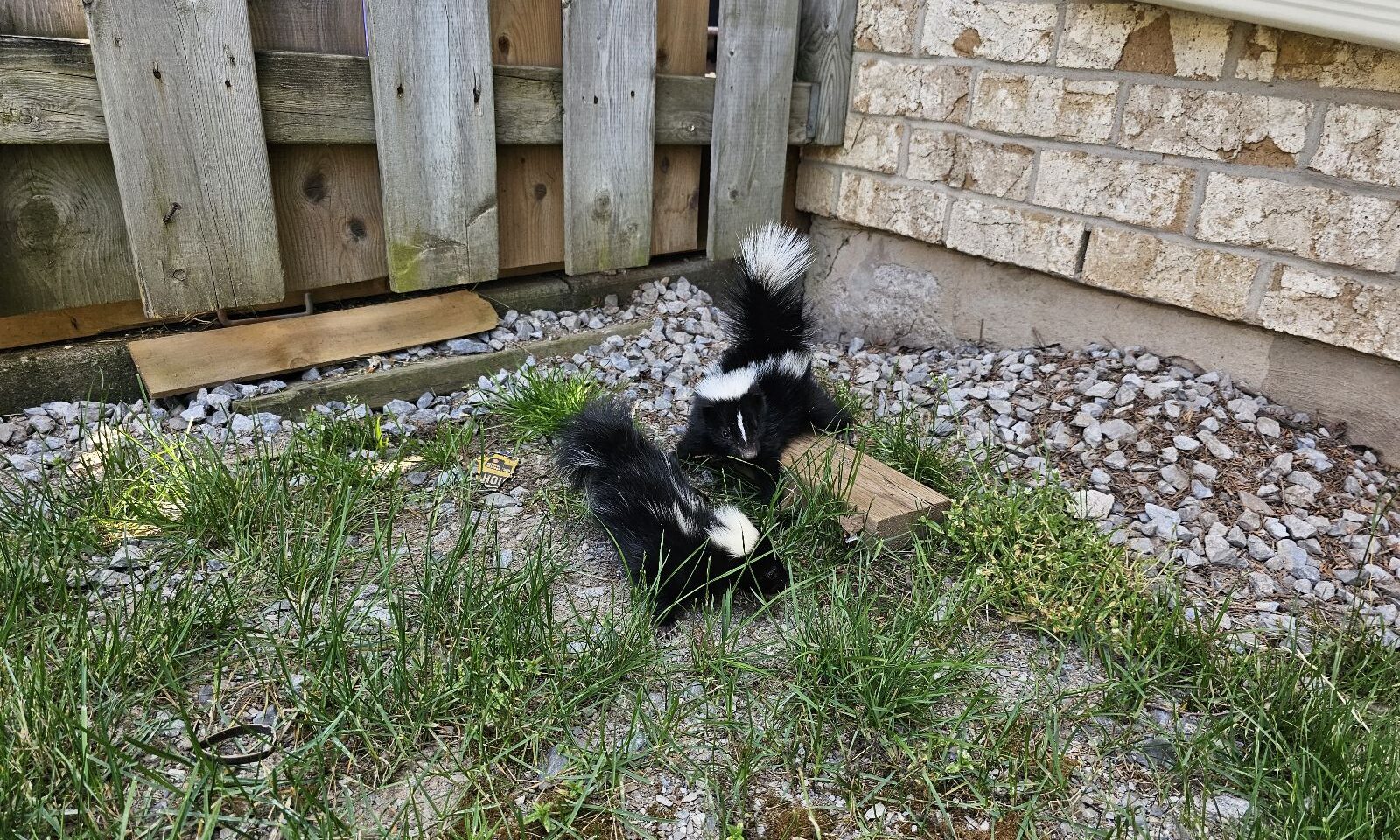
You see them and think, they’re just babies. How bad can it really be?
The answer is simple. It can get bad fast.
During baby skunk season, wildlife activity increases across yards, sheds, decks, and foundations. When young skunks appear on your property, it often means a den is nearby and an adult is close. What looks small and harmless can quickly turn into a bigger problem if it’s handled the wrong way.
You need to know what to do right away, what not to do, and why timing matters. Baby skunk removal help is not about rushing or reacting. It’s about protecting your home, keeping animals safe, and avoiding long-term issues that can follow you through the season.
In this blog, you’ll learn what to do if you find wildlife baby skunks on your property, how to tell when help is needed, and how wildlife baby season tips guide safe, humane outcomes. You’ll also see how our team at Skedaddle Humane Wildlife Control in Hamilton supports homeowners during baby season using proven, humane methods.
Why Baby Season Changes Everything
You may not realize how much spring and early summer change animal behaviour. Baby season is when adult skunks focus on shelter, safety, and quiet spaces to raise their young. Decks, sheds, and foundation gaps offer protection from weather and predators, which is why homes become attractive.
You might notice more daytime movement or hear sounds coming from below structures. That does not always mean something is wrong. In many cases, the mother is nearby and returning regularly. The risk begins when people interfere too soon or block access without understanding what’s happening.
This is why wildlife baby season tips always focus on observation, timing, and proper handling. When baby skunks are involved, the wrong step can cause separation, stress, or damage that lasts long after the season ends.
What Baby Skunks on Your Property Usually Mean
You might assume the babies are orphaned, but that is not always true. In most cases, the mother is still caring for them and will return when it’s safe.
Here’s what baby skunks on your property often indicate:
- The Mother Is Likely Close: Adult skunks are protective and will return at night to care for their young. Seeing babies during the day does not automatically mean they’ve been abandoned. Many mothers forage while babies explore nearby.
- Movement Can Increase Over Time: As babies grow, activity becomes more noticeable. Sounds, smells, and digging may increase, especially if the space feels disturbed. This is when early baby skunk removal help becomes important.
Knowing what these signs mean helps prevent panic and poor decisions that can make the situation worse.
Why Direct Interaction Creates Bigger Problems
You may feel tempted to help by moving the babies or blocking access to the den, especially if you’re worried about safety. While the intention is good, these actions often cause more harm than good. When changes happen too quickly, the situation can become harder to fix instead of easier.
Mothers can be off for hours at a time eating before returning back to the den site, most likely the mother will return to the baby skunks. Interference can also lead to defensive behaviour and damage to the home. Adult skunks may spray, dig, or force their way into new areas if they feel their young are at risk. Blocking access too early can trap animals inside, leading to odours, stress, and structural damage. This is why baby skunk removal help should always involve trained handling and proper timing.
What to Do If You Find Wildlife Baby Skunks
You don’t need to act fast, but you do need to act smart. The safest response focuses on protection and patience.
Here’s what matters most:
- Give Space and Time: Keeping people and pets away allows the mother to return naturally. Quiet environments reduce stress and encourage safe reunions.
- Avoid Blocking Access: Sealing or closing openings too soon can separate families. Proper exclusion only happens after young are mobile or safely removed.
- Get Expert Guidance Early: Even if you’re unsure, early contact prevents mistakes. Wildlife baby season tips always emphasize support before action.
This approach protects both the animals and your property.
How Humane Removal Works During Baby Season
You may wonder how removal is possible when babies are present. Humane removal focuses on timing, safety, and careful planning. The goal is to protect the young while also preventing long-term problems for the home.
During baby season, removal plans are based on the age and movement of the babies. Work is timed so families are not separated and stress is kept low. This careful approach avoids panic and reduces the chance of harm.
When conditions are right, one-way doors allow adult skunks to leave safely on their own. These doors stop re-entry while giving the family time to move on naturally. Once the den is no longer active, the structure is secured to prevent future use. This ensures baby skunk removal help solves the problem without creating new ones.
When Baby Season Is Handled Properly, Problems Don’t Return
You don’t need to navigate baby season alone. Timing, knowledge, and calm handling protect everyone involved. When baby skunks appear, the goal is not removal at any cost. It’s safe outcomes, long-term protection, and humane solutions that work with natural behaviour, not against it.
Avoid guesswork when it comes to baby skunk removal. Knowing what to do with orphaned skunks and following proven wildlife baby season tips keeps situations from escalating.
You can request an estimate to learn more about baby skunk removal help. Our team at Skedaddle Humane Wildlife Control in Hamilton is ready to help protect your property using humane, proven solutions designed for baby season.

 Loading...