You can keep birds out of vents and chimneys with professional inspection, removal, and exclusion. Once our team confirms that an opening is empty, we can install a secure chimney cap, vent cover, or screening. You should never block the opening before an inspection because an active nest, eggs, or dependent young may be hidden inside.
Minnesota’s fall bird migration can bring more activity around your roof during September and October. Songbirds begin heading south in early fall, while raptor movement becomes especially active from mid-September onward. During these long trips, they may rest on roofs, chimneys, gutters, vents, and other high parts of a home.
At Skedaddle Humane Wildlife Control in Minnesota, we inspect the structure and identify the species before any work begins. You will not be asked to climb onto your roof, reach inside a vent, touch droppings, or move nesting material. In this blog, we explain which species use chimneys, how to recognize an active nest, and how professional prevention keeps future visitors out without disturbing protected birds.
What Birds Nest in a Chimney?
Chimney swifts are the species most closely linked with nesting inside open masonry chimneys. Their small feet are designed to cling to rough vertical surfaces instead of sitting on a branch. A pair may attach a small nest made of twigs and saliva directly to the inner chimney wall.
Other species may enter a chimney, rest near the opening, or fall inside by mistake. That is why proper identification matters. Chirping, chittering, fluttering, and repeated flights to the opening can help our professionals determine what is happening.
Chimney swifts are protected by the Migratory Bird Treaty Act. According to the U.S. Fish and Wildlife Service, harming these birds, their eggs, or their nests is illegal. You should not light a fire, pull out nesting material, or cap the chimney while activity continues.
How Fall Migration Brings Birds Close to Minnesota Homes
Minnesota experiences major seasonal movement during September and October. The Minnesota Department of Natural Resources reports that raptor migration at Hawk Ridge runs from early September through mid-November and peaks around mid-September. Many smaller species also travel south during early fall.
These long trips require a great deal of energy. Roofs, chimneys, gutters, vents, and ledges can provide temporary places to rest. A bird sitting on the roof does not always mean that a nest is inside your home.
Repeated entry into the same chimney or vent is more concerning. It may point to a nest, roost, or opening that leads into an attic or wall. Our professional inspection can tell the difference between a short rest and an indoor problem.
Places Birds Rest Around Roofs and Exterior Structures
Fall activity may become noticeable before anything enters the building. These animals often pause on high areas where they have a clear view and an easy flight path. Some locations may also place them close to a damaged opening.
- Chimney Tops: A chimney offers height and a clear view of the area. An uncapped opening may also appear to provide shelter from wind and rain. Repeated movement into the chimney should be checked by our trained professionals.
- Roof Edges and Gutters: Roof ridges and gutters provide easy places to stop during migration. Gutters may also collect water, seeds, and leaves. Activity in these areas can bring them close to loose fascia, soffits, or roof gaps.
- Vents and Exterior Ledges: Vent covers, window ledges, and trim can provide protected resting spots. A loose cover may allow access to a duct, wall, or attic. Droppings beneath the same location may show that it is being used often.
You do not need to chase them away or search the roof for an opening. Our team can observe the activity and inspect the full exterior. This allows us to find damage without putting you at risk.
Damaged Vent Covers and Uncapped Chimneys
Vents and chimneys must release air, smoke, heat, or moisture while remaining protected from entry. Damage may be small and hard to see from the ground. Our professional inspection can find the weak area and determine whether anything is already inside.
- Missing Chimney Caps: An uncapped chimney provides direct access to a tall, enclosed space. Rough masonry may be especially attractive to chimney swifts. A cap should only be installed after our team confirms that no active nest or roost remains.
- Loose or Torn Vent Covers: Age, wind, moisture, and past repairs can loosen a vent cover or screen. A small gap may lead into an exhaust duct or attic. Our technicians inspect the cover and the materials around it before planning repairs.
- Damaged Soffits and Fascia: Loose roofline materials can create sheltered gaps near vents and gutters. These openings may lead behind insulation or into a wall. The visible damage may be only one part of a larger access route.
Bathroom, kitchen, and dryer vents may also become blocked by nesting material. A blockage can reduce airflow and interfere with the system. You should leave all inspection, removal, and repair work to our trained professionals.
How to Recognize an Active Nest
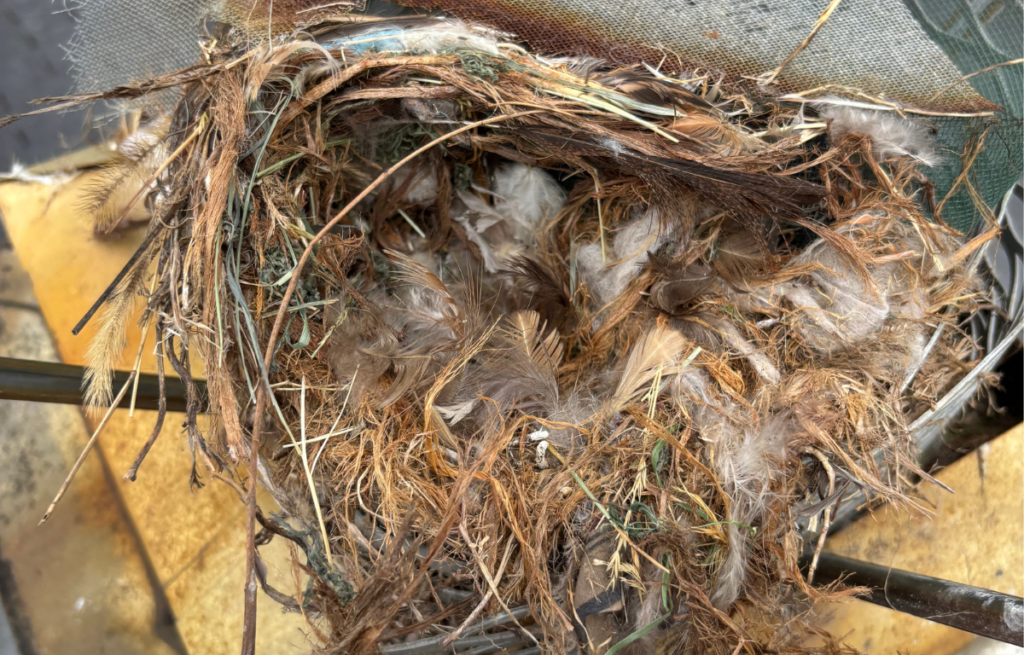
An active nest is often heard before it is seen. You may notice sounds through a fireplace, vent, ceiling, or nearby wall. Watch only from a safe location and avoid standing directly beneath the opening.
- Repeated Flights: Adults may enter and leave the same opening many times. These trips often become more frequent when they are bringing food to dependent young. Regular movement is a strong reason to schedule an inspection.
- Chirping and Fluttering: Young may call when an adult returns with food. Wings and feet can also create fluttering or scratching sounds inside a chimney or duct. Noise that continues for several days may point to an active nest.
- Nesting Material and Droppings: Twigs, grass, feathers, stains, or waste may appear near a fireplace or vent. Do not pull out the material or attempt to clean the area. Eggs or young may remain hidden farther inside.
A quiet opening is not always empty. An adult may be away gathering food, while dependent young remain out of sight. Our team checks the complete space before deciding whether removal or prevention can begin.
Why Inspection Must Happen Before Screening
You should never screen a vent or cap a chimney simply because you cannot see activity. An adult, active nest, eggs, or dependent young may still be inside. Blocking the opening could trap them or prevent a parent from returning.
Many native species receive protection under the Migratory Bird Treaty Act. The law prohibits the unauthorized capture, killing, or other taking of protected migratory species. Active nests containing eggs or chicks require special care and cannot simply be removed.
Our team identifies the species and determines whether the site remains active. We also inspect the chimney, vent, roofline, and connected interior space. Screening or a cap can only be installed after the opening is confirmed empty and the work is legally allowed.
What Happens When an Active Nest Is Present?
The opening must remain available while an active protected nest contains eggs or dependent young. Adults need to continue bringing food until the young can leave safely. You should not light a fire, pull down the nest, block the entrance, or create loud noise to force them out.
The amount of time required depends on the species and the stage of the nesting cycle. Our professional wildlife team can identify the activity and monitor the site. We then determine when removal, cleaning, and exclusion may safely begin.
Waiting for the correct time protects the birds and your home. It prevents young from being trapped inside a vent, chimney, attic, or wall. It also prevents a blocked adult from searching for another way into the building.
How Professional Prevention Stops Future Entry
Prevention begins after our team confirms that the opening is inactive. We check the full roofline instead of focusing only on one visible gap. Chimneys, vents, soffits, fascia, flashing, and roof joints may all require attention.
Old nesting material and droppings may remain after the site is empty. Our technicians remove contaminated material and clean affected areas when the work is permitted. You should not reach into the opening or handle the waste yourself.
We then install a suitable chimney cap, vent cover, or professional screening. The protection must stop entry without blocking the airflow the system needs. When appropriate, we may also use one-way doors that allow wildlife to leave but prevent re-entry.
Correct identification and timing are important parts of prevention. Installing a cover at the wrong time can turn a small opening into a serious problem. Our professional inspection, removal, cleanup, and exclusion work together to provide longer-term protection.
Minnesota’s Fall Bird Migration
Minnesota’s fall migration brings noticeable movement during September and October. Songbirds begin traveling south during early fall. Raptors pass through from early September into November, with peak movement around the middle of September.
You may see these animals resting on Minneapolis roofs, chimneys, gutters, vents, and exterior ledges. Many are only stopping before continuing their trip. A single sighting outside does not mean that anything has entered your home.
Repeated flights into one opening are different. Chirping, fluttering, droppings, and nesting material may point to an active site. Our team can identify whether the activity involves a temporary visitor, a seasonal roost, or a protected nest.
Seasonal movement is not a reason to block every opening right away. Eggs or young may remain hidden even when no adult is visible. Skedaddle can determine the right time to complete removal and future entry prevention.
How Do You Remove and Prevent Birds with Skedaddle?
Our professional wildlife team begins with a detailed inspection of the chimney, vents, roofline, and connected indoor areas. We identify the species and locate the active opening. We also check for eggs, dependent young, nesting material, and contamination.
We follow all legal and seasonal requirements before beginning removal or exclusion. We do not close an opening while protected birds remain inside. If the site is active, we create a plan based on the nesting stage and monitor it until work can safely begin.
Once the space is inactive, our technicians complete professional removal and cleanup where permitted. We can install durable vent covers, chimney caps, or screening designed for the structure. We also inspect nearby gaps that could become future entry points.
Skedaddle handles the inspection, timing, removal, cleanup, and prevention work for you. You will not need to climb onto your roof, enter a contaminated attic, or touch nesting material. Our goal is to protect your home without harming the birds using it.
Frequently Asked Questions
Why do birds enter chimneys?
An open chimney provides height, shelter, and protection from bad weather. Rough masonry also gives chimney swifts a surface where they can cling and attach a nest. Our professional inspection can identify the species and determine whether the chimney is active.
What do birds in a chimney sound like?
You may hear chirping, chittering, scratching, fluttering, or sudden wing sounds. Young birds may become louder when adults return with food. The noise may travel through the fireplace and into nearby rooms.
Can a fire be lit when birds are in the chimney?
No, you should not light a fire when activity is present. Heat, smoke, and flames could injure or kill anything inside. Keep the fireplace unused until a professional confirms that the chimney is empty and safe.
Can a vent be screened when a nest is inside?
No, screening an active vent could trap adults or dependent young. It might also block a parent from returning with food. Our professionals must confirm that the nest is inactive before exclusion begins.
Are bird nests protected in Minnesota?
Many native species receive protection under the Migratory Bird Treaty Act. Protected birds, eggs, and active nests must not be harmed or removed without proper authorization. Correct identification is important because legal rules can vary by species and situation.
How can birds be kept out of vents?
A professional vent cover or screen can prevent entry once the opening is empty. The product must block access without stopping needed airflow. Skedaddle can inspect the vent and install protection designed for that system.
Who should inspect a Minneapolis chimney or vent?
Our trained wildlife professionals should identify the species and inspect the full opening. At Skedaddle, we can determine whether an active nest is present, follow legal timing rules, and complete professional prevention. You will not need to climb onto the roof or handle contaminated material.
Protect Your Openings Without Disturbing Fall Migration
Minnesota’s fall migration can bring more bird activity around roofs, vents, chimneys, gutters, and ledges. Most sightings involve animals taking a short rest before continuing their trip. Repeated entry, steady chirping, nesting material, fluttering, or droppings may point to an active indoor site.
Damaged vent covers and uncapped chimneys can provide access to sheltered spaces. However, you should not light a fire, remove a nest, clean droppings, install screening, or cap an opening yourself. An adult, protected nest, eggs, or dependent young may remain hidden inside.
Correct identification and timing protect both your home and the birds. At Skedaddle Humane Wildlife Control in Minnesota, we handle the inspection, legal timing, humane removal, professional cleanup, and exclusion work. Once the site is empty, we can install durable protection that keeps future visitors out without blocking needed airflow.
If you hear chirping or notice repeated flights near an opening, contact us before the problem grows. Request an estimate to find out how our professional wildlife team can help protect your Minnesota home.

 Loading...