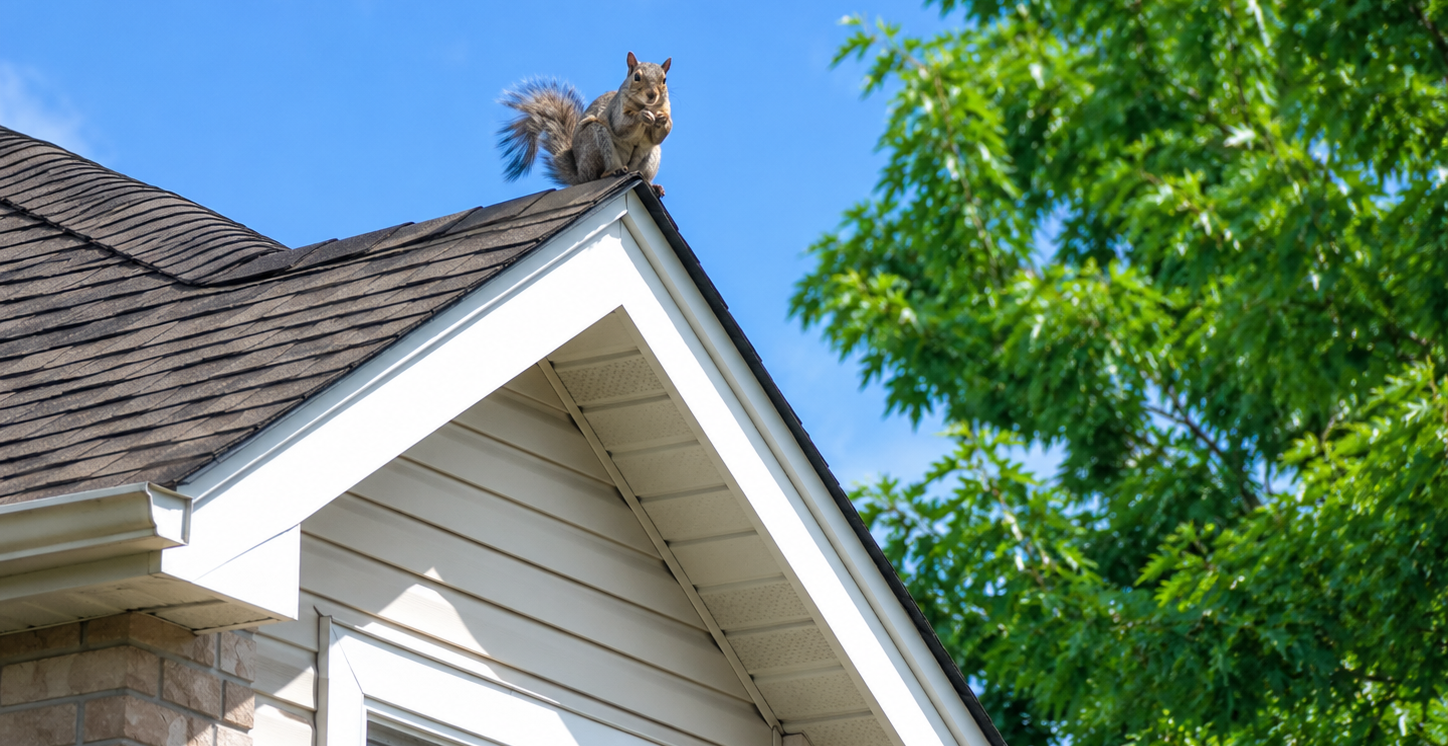
Your home might have a hole in it right now, and you probably don’t know it. Squirrels only need a gap about the size of a tennis ball to push their way into your attic. Once they’re inside, they can chew, scratch, and nest for months before anyone notices anything is wrong.
This is a bigger problem than most homeowners think. Squirrels are smart and strong. They can rip apart wood, bend metal, and squeeze through spaces that look way too small for them. Roofs, siding, and even chimneys can all have weak spots that let them in, and these spots are often hiding in plain sight.
Most people never think to check these areas until something goes wrong. By then, squirrels may have already chewed through insulation, wiring, or wood, leading to repairs that cost a lot more than expected. That’s why catching these hidden gaps early makes such a big difference.
This blog is for any homeowner who wants to keep squirrels out of their attic for good. You’ll learn where squirrels usually get in, why these gaps are so easy to miss, and what we at Skedaddle Humane Wildlife Control in London does to find and fix every entry point on a home, prevent future problems, and protect houses from costly damage.
How Do Squirrels Find Their Way Inside?
Squirrels find their way inside by testing every weak spot on your roofline until something gives. They have an amazing sense of smell, and they can sniff out warm air leaking from your attic. That warm air tells them there’s a cozy, dry space just waiting for them on the other side of your wall.
Squirrels also have incredible memory and climbing skills. They remember which trees and wires lead close to your roof, and they use their sharp claws to grip onto rough surfaces like wood siding or brick. Once they find a soft or damaged spot, they use their teeth to make the hole bigger.
Your home gives off more clues than you might think. Squirrels notice things like loose shingles, gaps around vents, and soft wood that has started to rot. They are patient too. A squirrel might test the same spot for days before finally breaking through.
Understanding this behaviour is exactly why a surface-level look at your home isn’t enough. These rodents don’t act randomly. They follow patterns, and our team knows how to read those patterns before they turn into a full-blown infestation.
Hidden Gaps You Might Be Missing
Most homeowners only check the obvious spots, like a big hole in the roof. But squirrels rarely use the obvious spots. They look for small weaknesses that blend in with the rest of your house. Here are some hidden gaps that often go unnoticed.
- Soffit and Fascia Gaps: Soffits are the panels under your roof’s edge, and fascia is the trim along the roofline. These areas are often made of thin wood or vinyl, so these animals can pry them open easily. A bent or loose soffit panel might look minor, but it can hide a tunnel leading straight into your attic. Our team checks every panel along your roofline, not just the ones that look damaged from the ground.
- Roof and Chimney Flashing: Flashing is the metal that seals the edges where your roof meets a chimney or wall. Over time, flashing can lift or rust, leaving a small gap. Squirrels notice these gaps right away and use them as an easy doorway. We inspect flashing closely because a small lift in the metal can hide a much bigger tunnel underneath.
- Old Vent Caps and Chimney Caps: Vents and chimneys often have caps to keep animals out, but these caps wear down over the years. A cracked or broken cap is like an open invitation for a squirrel looking for shelter. Once one cap fails, these animals often return to that same chimney year after year, which is why we replace old caps with sturdier, properly fitted covers.
- Siding and Trim Gaps: Even small gaps in your siding can lead to bigger trouble. Squirrels may chew through insulation hiding behind the siding, creating a path straight into your wall or attic. These gaps are easy to miss because the siding itself often looks completely fine from a distance.
What Our Inspection Process Looks Like
Finding these hidden gaps takes more than a quick look from the ground. Our team at Skedaddle walks your entire roofline and checks every section of your home, not just the spots that seem obvious. We know that one opening rarely tells the whole story.
During a real inspection, our technician might find squirrel droppings near a vent, but that doesn’t mean the vent is the only problem. We always keep looking, because these animals often use more than one entry point at the same time. A home can have an opening on the chimney and another on the siding, all happening at once.
Take a look at this video from our technician Ruben, who walks through a real inspection in London, Ontario. Watch how he finds clues most people would walk right past, and how he traces each clue back to its real source.
Watch Ruben’s full rooftop inspection below to see exactly how he traced the evidence back to the real culprit. This kind of careful, detail-by-detail process is exactly what separates a guess from a real diagnosis, and it’s the same level of care we bring to every home we inspect.
Signs You Might Have Squirrels in Your Attic
You don’t always need to climb on your roof to know something is wrong. Squirrels leave behind clues that you can often notice from inside or around your home. Catching these signs early can save you from bigger repairs later.
- Scratching or Running Sounds: You might hear quick scampering noises in your attic, especially early in the morning or around sunset. This is when squirrels are most active.
- Chewed Wood or Wires: You may notice chew marks on your roofline, in your attic, or even on wires. These animals chew constantly to keep their teeth from growing too long.
- Droppings or Stains: You might spot small droppings near vents, soffits, or attic insulation. Stains on your ceiling can also mean a squirrel has been nesting nearby.
- Strong Odours: You could notice a musky smell coming from your attic. This usually means a squirrel has been living there for a while.
Why These Gaps Are So Easy to Miss
You might wonder how a homeowner could miss something living in their attic. The truth is, most entry points are small, quiet, and tucked away in spots you rarely look at closely. A bent soffit panel or a small chimney gap doesn’t look dangerous from the ground.
Your roofline also changes with the seasons. Wood expands and shrinks with temperature changes, shingles lift slightly in the wind, and caulking dries out over time. All of these small shifts create tiny openings that weren’t there before. You could inspect your home in the spring and still end up with a new gap by fall.
Another reason these gaps go unnoticed is that squirrels are excellent at covering their tracks. They often enter and exit during quiet hours, and they avoid making a mess near the opening itself. This means your home could have an active entry point for weeks before you notice any real warning signs.
Squirrel Removal and Prevention with Skedaddle
Getting squirrels out of an attic safely takes more than blocking the hole you can see. A real fix means dealing with the animal, the entry point, and every weak spot left behind. Skedaddle handles each part of this process so squirrels leave for good and stay out.
- Humane One-Way Doors: Our team installs one-way doors that let squirrels leave your attic on their own schedule. These doors allow squirrels to exit freely but stop them from squeezing back inside once they’re out. This method keeps the whole process humane and avoids trapping any animals inside your walls. It also means squirrels aren’t forced out before they’re ready, which lowers the chance of them trying to break back in right away.
- Full Entry Point Repairs: Once the squirrels are gone, our technicians repair every entry point we found during the inspection, not just the main one. This includes smaller gaps near soffits, vents, or siding that a homeowner would likely never notice. Leaving even one opening unfixed gives these animals an easy way to return within weeks. Our team makes sure every weak spot gets sealed properly before the job is considered finished.
- Durable, Long-Term Materials: Weak areas on your home get reinforced with strong, chew-resistant materials instead of basic patches. This stops squirrels from simply gnawing their way back through the same spot a few months later. Using sturdier materials also helps protect against future weather damage, like rotting wood or rusted metal. The goal is a repair that lasts for years, not just until the next squirrel comes along.
- Long-Term Protection: Identifying every weak point, understanding squirrel behaviour, and repairing your home properly all work together as one complete solution. This combination is what actually stops these animals from coming back, rather than just removing the current problem. It also protects your home from the kind of costly damage that builds up when an entry point goes unnoticed for too long. This full approach is what separates a lasting fix from a temporary one.
Other Squirrel Challenges in London, Ontario
We know that squirrels in London, Ontario, face their own local challenges. Cold winters push them to look for warm shelter, and older homes in our area often have aging soffits, fascia, and roof vents that are easier targets. Because of this, we tailor every inspection to the specific risks your home might face.
Many neighbourhoods in London have mature trees lining the streets, and those trees often grow close to rooflines. This gives these animals an easy bridge from the branches straight onto your roof. Homes near parks, ravines, or wooded areas tend to see even more squirrel activity for this reason.
London’s mix of older character homes and newer builds also means roofing materials vary a lot from house to house. Some homes have softer, older wood trim that wears down faster, while others have gaps around newer additions that haven’t fully settled yet. Our team adjusts our inspection based on the age and style of your home, so nothing gets overlooked.
Frequently Asked Questions
Can squirrels chew through wood siding?
Yes, squirrels can chew through wood siding, especially if it's already soft or damaged. Their teeth are strong enough to widen small cracks into full entry points over time. Even a tiny crack can turn into a doorway within just a few days. This is why soft or rotting wood on your home should never be ignored.
How many entry points do squirrels usually use?
Squirrels often use more than one entry point at a time. They may enter through your roofline while also testing gaps near your chimney or siding. This is why a full inspection of your entire roofline is so important, rather than just patching one visible hole. Missing even one opening can mean squirrels are still getting inside.
Do squirrels come back to the same house?
Yes, squirrels often return to a home where they previously found shelter, especially if the original entry point isn't fully repaired. They remember exactly where they got in before and will try that same spot again. This is why proper sealing matters so much. A quick patch job rarely keeps them out for good.
What time of year are squirrels most active in attics?
Squirrels are most active in attics during the fall and late winter, when they search for warm shelter and safe places to nest before having young. Cooler temperatures push them to look for cozy, dry spaces close to home. Attics make the perfect spot because they stay warm and quiet. This is also when most homeowners start noticing strange noises overhead.
Can I just block the hole myself once squirrels leave?
Blocking a hole without a full inspection can leave other hidden entry points open. Squirrels are often using more than one spot at the same time, so one patched hole doesn't always solve the problem. Our team checks your entire home so nothing gets missed. This gives you a complete solution instead of a temporary fix.
Ready to Protect Your Home From Squirrels?
Hidden gaps on your roof, siding, or chimney can let squirrels into your attic without you ever noticing. These openings can be small, sneaky, and easy to miss if you’re just looking from the ground. That’s why a proper inspection matters so much.
The best way to protect your home is to have it checked by people who know exactly what to look for. Squirrels are clever, and they often use more than one entry point at the same time. A trained eye can spot the clues that most homeowners would walk right past, like bent soffits, loose flashing, or chewed insulation hiding behind siding.
At Skedaddle Humane Wildlife Control in London, Ontario, we offer full inspections, humane removal, and lasting repairs so squirrels don’t come back. We don’t just patch the hole you can see. We check your entire roofline so nothing gets missed, and we use one-way doors that let squirrels leave safely without letting them back in.
Your home deserves a real solution, not a quick fix. Request an estimate today and let our team take care of the problem from start to finish.

 Loading...