That scratching above your ceiling isn’t something you should sleep on. Whether it’s a thump in the night, a scurrying sound at dawn, or a flutter you can’t quite place, those noises are telling you something important: wildlife has found a way into your home. In this blog, we break down what those sounds mean, which animals are most likely behind them, and what happens inside your attic when they move in.
Wildlife activity in your attic almost always means one thing: an animal has found a vulnerable entry point and decided your home is a safe place to shelter, nest, or raise its young. The type of sound, the time of day you hear it, and the season all give clues about what’s up there. A heavy thump at night points to something very different than rapid daytime scurrying and knowing the difference matters when it comes to getting the right help fast.
You don’t need to figure it out alone. Our team at Skedaddle Humane Wildlife Control in Mableton, Georgia assesses the sounds, the entry points, the damage, and the species involved so the right plan goes into place from the start. Left unaddressed, attic wildlife causes insulation damage, structural problems, and serious health risks from waste and contamination. The sooner our team gets in, the less there is to repair.
What Animal Is Making Noise in My Attic?
The most common culprits behind attic noises in Mableton are raccoons, squirrels, bats, mice, and birds. Each one behaves differently, moves at different times of day, and causes different kinds of damage, which is why the sound itself is often the first clue our team uses when assessing a wildlife situation.
Heavy thumping or rolling sounds at night almost always point to raccoons. They are large, strong, and active after dark. Rapid scurrying and gnawing during daylight hours typically means squirrels, which are active during the day and notorious for chewing through wiring and wood. Light, fast scratching after dark suggests mice or rats moving along wall cavities and insulation. Fluttering or high-pitched squeaking near dusk points to bats leaving and returning through a small entry point.
The time of year also matters. Spring and summer noise often means a female has come in to have her young, which adds a layer of complexity to removal. Fall and winter activity usually means an animal is preparing to wait out the cold inside your home. Our team accounts for all of these factors before any work begins.
Loud Thumping and Heavy Movement at Night
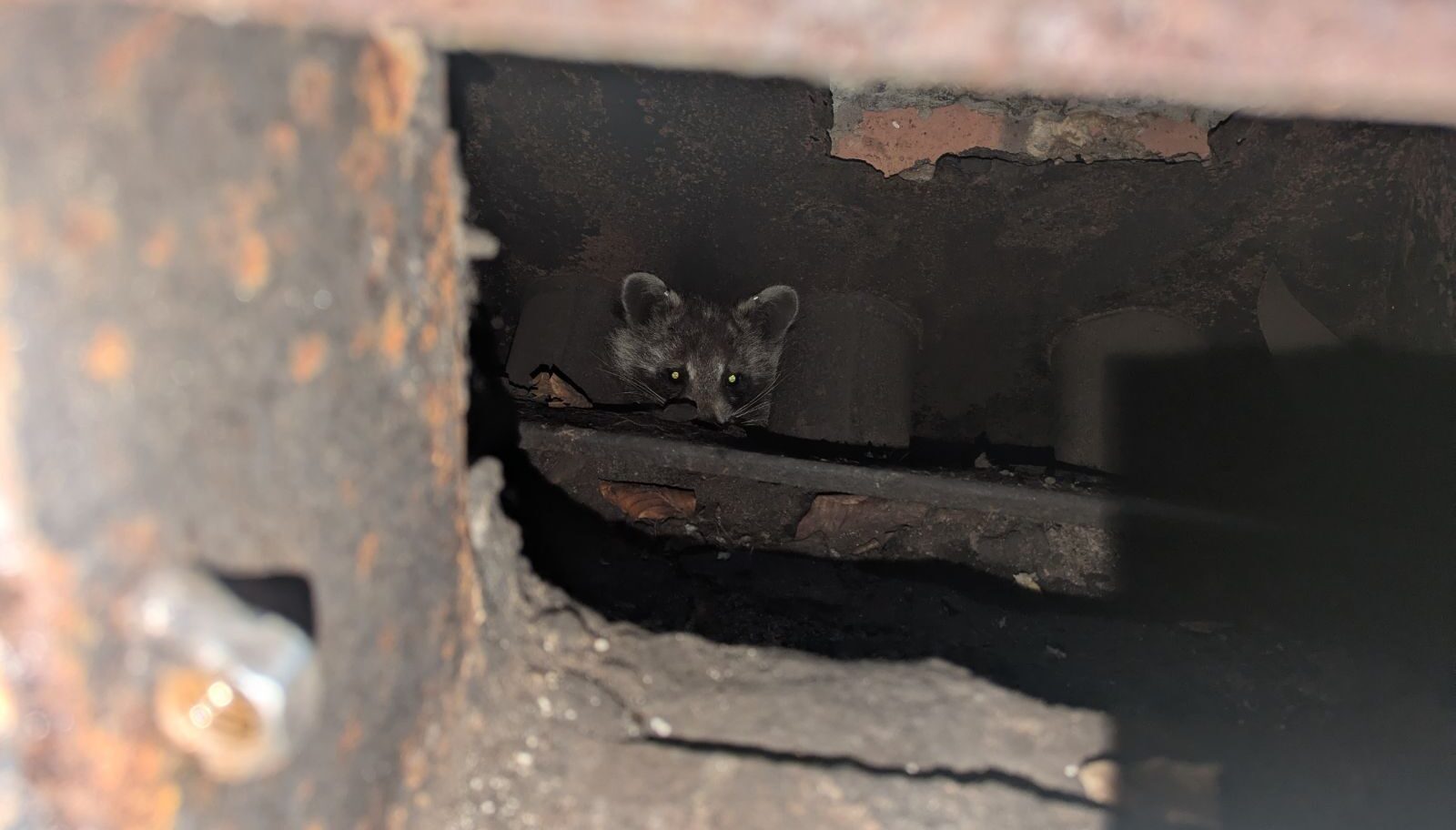
Heavy sounds from above, thumping, rolling, dragging, are hard to ignore and even harder to sleep through. These sounds almost always point to raccoons, one of the most common and most damaging attic intruders in the Mableton area. They are strong enough to rip open roof vents and tear back soffit panels to get inside, and once they’re in, they don’t move quietly.
Raccoons are nocturnal, so the noise tends to start after dark and continue through the early morning hours. A female raccoon will often choose an attic as a denning site to raise her young, which means the thumping you’re hearing at night may be accompanied by softer sounds of a litter during the day. The damage they cause goes well beyond the entry point – insulation gets flattened, waste accumulates quickly, and the structural materials around their nesting area take a beating.
Here is what heavy nighttime activity can signal:
- An Active Raccoon Den: Raccoons don’t just pass through, they settle in. A female with a litter can occupy an attic for weeks, and the waste produced during that time saturates insulation and creates a health hazard that requires professional remediation. Our team locates the den, assesses the extent of the damage, and builds a removal plan around what’s actually happening up there.
- Torn or Compromised Entry Points: Raccoons are strong enough to enlarge openings that other animals couldn’t use. A damaged roof vent or pulled-back soffit becomes a wide-open door that other wildlife can exploit after the raccoons are gone. Our inspection covers every entry point, not just the obvious ones, so nothing gets missed when we seal up the structure.
- Significant Insulation Damage: Heavy animals moving through an attic compress and displace insulation with every pass. Over weeks, this reduces your home’s thermal efficiency noticeably. Our team documents all insulation damage during the inspection and handles replacement as part of the remediation process.
Scratching, Scurrying, and Chewing During the Day
If the noise in your attic picks up in the morning and quiets down by late afternoon, squirrels are the most likely cause. They are diurnal, active during daylight hours. and they move fast. The sound of rapid scurrying combined with gnawing is one of the clearest signs that squirrels have taken up residence above your ceiling.
The gnawing is what makes squirrels particularly destructive. Their teeth never stop growing, so they chew constantly — on wood framing, plastic venting, and electrical wiring. Chewed wiring in an attic is a fire hazard, and it’s one that often goes undetected until something goes wrong. Squirrels also shred insulation to build nests, and they cache food in attic spaces, which can attract secondary pests.
Here is what daytime attic activity can mean:
- Active Squirrel Entry and Exit: Squirrels typically leave the attic in the morning to forage and return in the late afternoon. This predictable pattern helps our team identify the primary entry points they’re using. We install one-way doors at those points so they can exit on their schedule but cannot get back in.
- Chewed Wiring and Structural Materials: Squirrels cause some of the most serious hidden damage of any attic wildlife. Gnawed wiring creates fire risk, and chewed wood framing weakens structural integrity over time. Our inspection includes a check of all accessible wiring and wood in the affected area so the full picture of the damage is documented.
- Nesting Activity Near Insulation: Squirrels pull insulation apart to build warm nests, and the areas they nest in become contaminated with waste over time. Replacement of affected insulation is often necessary after a squirrel infestation, and our team handles that as part of the full remediation process.
Soft Scurrying and Light Scratching at Night
Fast, light movement that seems to travel along walls and through tight spaces after dark points to mice or rats. These animals are small enough to move through gaps you’d barely notice, and they use wall cavities, ceiling voids, and insulation layers as their main travel routes through your home.
The sounds are often subtle at first: a faint scratching, a soft rustle, something that’s easy to dismiss as the house settling. But mice and rats reproduce quickly, and what sounds like one animal moving around can become a much larger population within a few weeks. By the time the sounds become obvious, the infestation is usually well established.
Their presence in your attic also means waste is accumulating in areas you can’t easily see or access. Droppings and urine contaminate insulation, leave persistent odors, and carry health risks that make professional remediation essential. Homeowners should never attempt to clean up rodent waste themselves, our team handles all of it with the proper equipment.
Chirping, Fluttering, and High-Pitched Sounds
Sounds that are more fluttery or high-pitched than the typical scurry usually point to bats or birds. Bats tend to produce faint squeaking sounds and a leathery flutter, especially around dusk when they exit to feed and again around dawn when they return. Birds in an attic or wall cavity produce chirping, rustling, and occasional pecking sounds, often concentrated in one area near their nest.
Both bats and birds gain entry through surprisingly small openings. A gap the size of a dime is enough for a bat to squeeze through, and a damaged vent or open eave is all a bird needs to establish a nest. Once inside, both cause damage through waste accumulation — and bat guano in particular carries fungal health risks that make contaminated areas hazardous without professional cleanup.
Here is what these sounds can indicate:
- A Bat Colony Using a Roost Entry Point: Bats are creatures of habit and return to the same roost sites year after year. A colony that has established itself in your attic will continue to grow each season unless the entry points are properly sealed. Our team installs one-way doors that allow bats to exit but prevent re-entry, then seals every opening permanently once the colony has vacated.
- Bird Nesting in Vents or Eaves: Birds that nest in attic vents or open eave spaces block airflow and leave behind nesting material that becomes a fire hazard in dryer months. The waste they produce also accumulates quickly in the nesting area. Our team removes nesting material and addresses the entry points that allowed access in the first place.
- Health Risks from Waste Accumulation: Both bats and birds leave behind waste that carries real health risks. Bat guano can harbor histoplasmosis spores, and bird droppings carry their own set of pathogens. Homeowners should never disturb or attempt to clean these areas, our team manages all contaminated material professionally.
What the Activity Means by Season
The time of year shapes what wildlife is doing in your attic and why. Knowing the season helps our team understand not just which animal is up there, but what stage of activity they’re in, and that changes how we approach the situation.
Spring and summer activity almost always involves nesting and young. Females of nearly every species that enters homes choose this time of year to give birth and raise their litters in a warm, protected space. You may hear the sounds of adult animals moving combined with softer sounds: chirping, mewing, or chittering, from newborns. This stage requires extra care during the removal process to ensure young animals are not left behind.
Fall and winter activity is driven by shelter-seeking. As temperatures drop in Georgia. even moderately, wildlife looks for warm spaces to wait out the cold months. Attics offer exactly that. Animals entering in fall tend to settle in and cause the most insulation damage as they dig in, nest, and prepare for a long stay. Acting quickly when you first hear fall activity limits how much damage accumulates before our team can address it.
Wildlife Removal and Prevention in Mableton, Georgia
When our team arrives at your home, the first step is always a full inspection. We assess the exterior of your home from ground to roofline, identify every entry point in use, check for signs of nesting and waste, and determine which species is involved. That information shapes everything that comes next.
Our removal process centers on exclusion. We install one-way doors at the active entry points so wildlife can exit your home naturally but cannot get back in. Once our team confirms the structure has been vacated, we seal every opening permanently with materials that hold up against future intrusion attempts. No animals are harmed, and the colony or family unit exits on its own schedule.
After exclusion and sealing, our team handles all cleanup and remediation. Contaminated insulation gets removed and replaced, waste is cleared professionally, and all affected areas are treated. Homeowners should never attempt to handle any part of this process themselves — not the inspection, not the cleanup, and not the sealing. Our team takes care of all of it.
Wildlife Problems in Mableton, Georgia
Mableton has a lot of trees, older homes, and wooded streets and that combination makes it easy for wildlife to get into houses. When large trees grow close to rooflines, squirrels and raccoons use them like a ladder to reach the roof. From there, a worn vent cover or a loose soffit is all they need to get inside.
Georgia’s mild climate means wildlife stays active almost all year long. Raccoons, squirrels, and mice don’t slow down much in winter the way animals do in colder parts of the country. That means attic intrusions can happen in any season, not just fall, and the damage can build up for months before a homeowner notices anything is wrong.
Our team at Skedaddle Humane Wildlife Control knows Mableton well. We know the neighborhoods, the common home styles, and the wildlife patterns specific to this part of Georgia. That local knowledge helps us find entry points that are easy to miss if you don’t know what to look for, and it helps us put the right protections in place to keep your home safe going forward.
Frequently Asked Questions
Can squirrels chew through wood siding?
Yes, squirrels can chew through wood siding, especially if it's already soft or damaged. Their teeth are strong enough to widen small cracks into full entry points over time. Even a tiny crack can turn into a doorway within just a few days. This is why soft or rotting wood on your home should never be ignored.
How many entry points do squirrels usually use?
Squirrels often use more than one entry point at a time. They may enter through your roofline while also testing gaps near your chimney or siding. This is why a full inspection of your entire roofline is so important, rather than just patching one visible hole. Missing even one opening can mean squirrels are still getting inside.
Do squirrels come back to the same house?
Yes, squirrels often return to a home where they previously found shelter, especially if the original entry point isn't fully repaired. They remember exactly where they got in before and will try that same spot again. This is why proper sealing matters so much. A quick patch job rarely keeps them out for good.
What time of year are squirrels most active in attics?
Squirrels are most active in attics during the fall and late winter, when they search for warm shelter and safe places to nest before having young. Cooler temperatures push them to look for cozy, dry spaces close to home. Attics make the perfect spot because they stay warm and quiet. This is also when most homeowners start noticing strange noises overhead.
Can I just block the hole myself once squirrels leave?
Blocking a hole without a full inspection can leave other hidden entry points open. Squirrels are often using more than one spot at the same time, so one patched hole doesn't always solve the problem. Our team checks your entire home so nothing gets missed. This gives you a complete solution instead of a temporary fix.
Those Sounds Aren’t Going Away on Their Own – Call Skedaddle
Wildlife in your attic doesn’t resolve itself. The longer an animal stays, the more waste accumulates, the more insulation gets damaged, and the more entry points get used and widened. What sounds like a minor nuisance now can turn into a costly repair project if it goes unaddressed through another season.
The damage builds quietly. Most homeowners don’t realize how much has happened above their ceilings until the signs start showing up below: stains, odors, sagging materials, or a spike in energy bills. By that point, the animal has been there long enough to cause real harm to your home’s structure and air quality.
Acting early makes a significant difference in both the scope of the work and the cost of repairs. The sooner our team gets in, the less there is to fix and the faster your home is protected against the next intrusion.
At Skedaddle Humane Wildlife Control in Mableton, Georgia, we handle everything from inspection to exclusion to full remediation. We identify what’s up there, get it out humanely, seal every way back in, and clean up what’s been left behind. You don’t have to go near any of it, our team takes care of the whole process. Request an estimate today and let us figure out what’s making that noise before it does any more damage to your home.

 Loading...