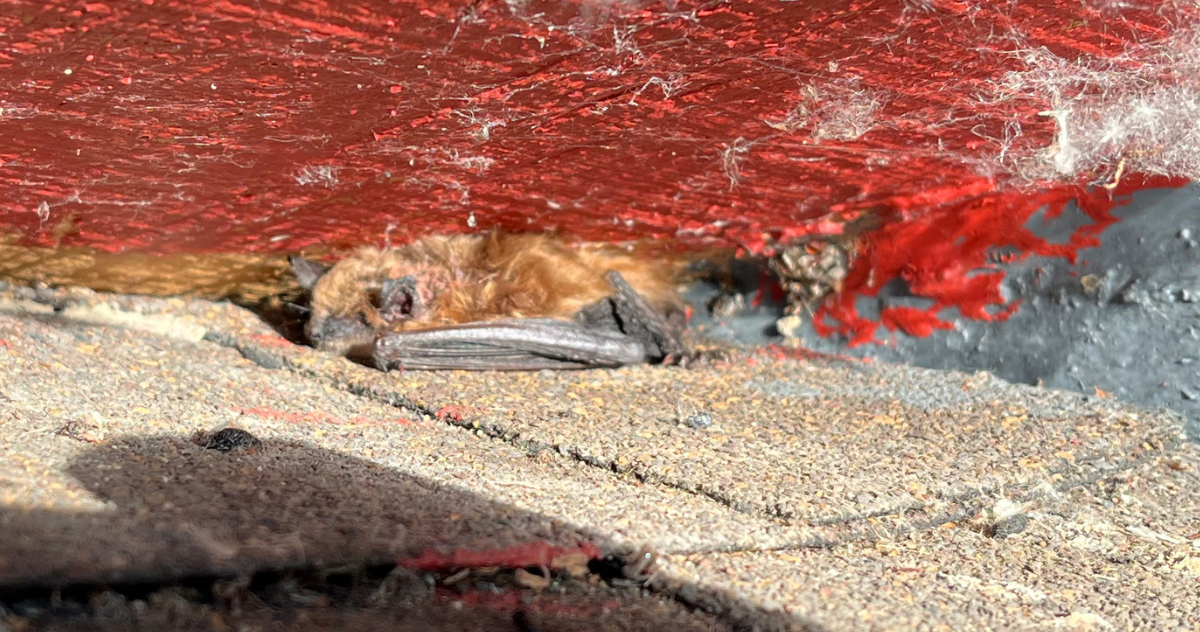
You might not think much of a bat squeezing into a small gap in your roofline. But that one entry can lead to a colony settling into your attic and the damage they leave behind is far more serious than most homeowners expect. Bats cause real, costly structural damage to homes through their waste, their presence, and the way they get in and out night after night. In St. Paul, where older homes and harsh winters are the norm, that damage can build up fast.
The structural damage bats cause comes primarily from their droppings and urine. Guano piles up over time, saturating insulation, rotting wood, and staining ceilings. Urine soaks into building materials and introduces an acid that corrodes and weakens whatever it touches.
A colony that has been in your attic for even one season can leave behind damage that costs thousands of dollars to repair. In this blog, Skedaddle Humane Wildlife Control in St. Paul walks you through the types of structural damage bats cause, the signs to watch for, and how our team handles removal and remediation so you don’t have to.
Can Bats Destroy an Attic?
Yes and they don’t need years to do it. A single bat produces a significant amount of waste every day. Multiply that by a colony of dozens or even hundreds, and the guano and urine accumulation in your attic becomes a serious structural threat in a matter of months.
The weight of accumulated guano alone can cause drywall to sag and ceiling materials to buckle. The uric acid in urine soaks into wood beams, weakens insulation, and eats through surfaces over time. What looks like a small stain on your ceiling or a faint odor in your attic can be the surface sign of much deeper damage already underway.
Attic restoration after a bat infestation is a significant undertaking. Insulation typically needs full replacement, affected wood may need treatment or repair, and all contaminated material must be handled professionally. Our team at Skedaddle assesses the full extent of the damage during our inspection so nothing gets missed.
Guano Buildup and Ceiling Damage
Bat droppings don’t just accumulate, they compress, hold moisture, and grow heavier over time. A colony roosting in your attic produces waste that piles up on the attic floor, which is also your ceiling. That weight stresses the drywall and structural materials below it, leading to visible sagging, staining, and in severe cases, collapse of ceiling sections.
You might first notice a dark stain spreading across your ceiling or a musty odor that doesn’t go away. Those are signs that guano has built up to the point where it’s saturating materials below. The longer a colony stays, the worse the buildup gets and the more extensive the repair work becomes once they’re gone.
Here is what guano buildup does to your home:
- Ceiling Staining and Sagging: Moisture from guano soaks through attic flooring and into drywall below. Over time, the weight causes drywall to bow, stain, and pull away from its supports. What starts as a small discoloration can grow into a serious structural failure that requires full section replacement.
- Compromised Attic Flooring: The floor of your attic takes the brunt of accumulation. Guano saturates wood subflooring, causing it to soften, warp, and lose its load-bearing strength. Our team removes all contaminated material and assesses whether structural repairs are needed before any restoration work begins.
- Spread of Moisture Damage: Guano holds moisture against every surface it contacts. That sustained moisture exposure leads to mold growth, wood rot, and deterioration that spreads well beyond the original deposit area. Our professional remediation is the only way to address the full extent of this damage safely.
Urine Corrosion and Material Breakdown
Bat urine contains uric acid, and uric acid is corrosive. It doesn’t just stain — it actively breaks down the materials it contacts. Wood fibers absorb the acid and begin to deteriorate from the inside out. Metal fixtures, fasteners, and supports in your attic can corrode over time as urine exposure continues.
The damage from urine is often harder to see than guano staining, which makes it more dangerous. By the time visible signs appear – soft spots in wood, rust on metal components, a persistent ammonia smell – the corrosion is already well advanced. This is one reason why a professional inspection is so important after any bat activity is discovered.
Here is how urine corrosion damages your home’s materials:
- Wood Rot in Support Beams: Uric acid works into the grain of wooden beams and joists, breaking down the fibers that give the wood its strength. Beams that look solid from the outside can be severely weakened beneath the surface. Our technicians check all structural wood in affected areas during the inspection process.
- Corrosion of Metal Components: Nails, brackets, ventilation components, and other metal elements in your attic are vulnerable to acid exposure from urine. Corrosion weakens their grip and function over time, compromising the connections that hold structural elements together. Replacing corroded hardware is part of the remediation process our team handles.
- Surface Etching on Durable Materials: Uric acid can etch glass, degrade certain coatings, and damage surfaces that would otherwise hold up for decades. Even materials that seem tough are not immune to long-term acid exposure from a roosting colony. Our team documents all affected areas so repairs are addressed completely.
Ruined Insulation
Insulation is one of the first casualties of a bat infestation. Guano and urine saturate insulation quickly, and once that happens, the material can no longer do its job. Compromised insulation loses its thermal efficiency, meaning your home loses heat in winter and struggles to stay cool in summer and your energy bills go up as a result.
Beyond the efficiency loss, saturated insulation becomes a health hazard. Guano carries the fungal spores that cause histoplasmosis, a respiratory illness that can be serious. Contaminated insulation cannot be cleaned or treated – it must be removed and fully replaced. Homeowners should never attempt to handle or remove this material themselves. Our team manages all insulation removal and replacement professionally, with the proper equipment and safety protocols.
The damage to insulation isn’t always obvious from below. Our inspection goes into the attic to assess exactly how much material has been affected and what full replacement will require.
Entry Point Damage and Structural Gaps
Bats can squeeze through an opening as small as a dime. They find their way in through gaps in fascia boards, cracks in mortar, spaces around vents, and openings where different materials meet along your roofline. Over time, repeated use of the same entry points and the accumulation of grease and waste around them causes those openings to deteriorate and widen.
As entry points expand, your home becomes more vulnerable to water intrusion, air leaks, and access by other wildlife. What started as a small gap becomes a structural weak point that affects your home’s envelope. Sealing these openings is a critical part of what we do, but it has to be done in the right order.
Here is how entry point damage develops:
- Widening of Existing Gaps: Repeated entry and exit wears away at the edges of small openings. Materials around the gap deteriorate from the friction and waste left behind. Over a full season, a dime-sized gap can grow large enough to allow more animals in and increase your exposure to weather and moisture.
- Grease and Waste Buildup at Entry Points: The oils from fur and the waste left at entry points stain and degrade the materials around them. This buildup also serves as a signal to other animals looking for access points. Our team cleans and treats all entry points as part of the exclusion process.
- One-Way Door Installation Before Sealing: Our team installs one-way doors at active entry points that allow the colony to exit on their own but prevent them from getting back in. Once we confirm the colony has vacated, we seal every opening permanently with materials that hold up against future attempts to re-enter.
Bat Removal and Prevention with Skedaddle
When our team arrives at your home, the first thing we do is a full inspection. We go through your property inside and out, identifying every entry point, every area of waste accumulation, and every surface that has been affected. That complete picture is what allows us to build a removal and remediation plan that actually works.
Our removal process is built around exclusion, not disruption. We install one-way doors at the active entry points the colony is using. These doors allow them to exit on their own but block any return. The colony vacates naturally over time, and no animals are harmed in the process.
Once our team confirms the colony has left, we move into remediation. Every entry point gets sealed with durable materials they cannot get back through. All guano and contaminated insulation is removed professionally, and affected structural areas are assessed and treated. Homeowners should never attempt any part of this process themselves – our team handles it all so you don’t have to.
Bat Issues in St. Paul
St. Paul’s older housing stock creates ideal conditions for bat colonies to get established. Aging foundations, worn fascia boards, gaps in mortar, and spaces around old venting systems all provide the kind of small openings these animals need to get inside. Many homeowners don’t know an entry point exists until a colony is already well settled in their attic.
The city’s climate adds to the problem. Cold Minnesota winters push colonies to seek the warmest spots available — and your attic is exactly that. Once a colony finds a warm, sheltered roosting site, they return to it season after season. Each year they stay, the waste accumulation grows and the structural damage gets more extensive.
St. Paul neighborhoods also see concentrated bat activity during late summer and early fall, when colonies are at their largest and most active. This is the time of year when our team gets the most calls from homeowners noticing stains, odors, and sounds coming from above their ceilings. The sooner you call, the less damage there is to deal with and the faster our team can get your home protected for the seasons ahead.
Frequently Asked Questions
How do I know if bats are causing damage in my attic?
Common signs include dark staining on ceilings, a strong ammonia or musty odor, soft spots in attic flooring, and visible guano near entry points or on exterior walls. These signs often mean the damage is already more advanced than it looks from below. The sooner you spot them and make the call, the better the outcome for your home. Contact our team right away if you notice anything and don't go into the attic yourself.
Is bat guano dangerous to my health?
Yes. Guano can carry the fungal spores that cause histoplasmosis, a respiratory illness that can become serious if left untreated. Disturbing dried guano releases those spores directly into the air, where they can be inhaled without you even realizing it. This is one of the biggest reasons homeowners should never attempt to clean up guano on their own. Our team manages all cleanup with the proper safety equipment and protocols to protect everyone in the home.
How long does it take for bats to cause serious damage?
A colony can cause significant damage within a single season. The larger the colony and the longer they stay, the worse the accumulation of guano and urine becomes and the more extensive the structural repairs turn out to be. Damage that might have been a straightforward cleanup in year one can become a full attic restoration by year two or three. Early action always limits both the scope of the damage and the cost of fixing it.
Do bats come back after they've been removed?
They can, especially if entry points aren't properly sealed after the colony exits. Scent trails and long-standing roosting habits draw them back to familiar spots season after season. That's why our process doesn't stop at exclusion, we permanently seal every opening with materials they can't get through. Thorough sealing is what turns a one-time removal into lasting protection for your home.
Will my homeowner's insurance cover bat damage?
Coverage varies depending on your specific policy, and some insurers exclude wildlife damage while others may cover certain repairs. We recommend contacting your insurance provider directly to find out what your policy includes. What our team can do is document the damage thoroughly during the inspection, including photos and a detailed assessment of all affected areas. That documentation supports any claim you choose to file and gives your insurer a clear picture of what needs to be repaired.
Your Home Deserves Better. Let Skedaddle Fix It Right
Bat damage doesn’t stay contained. It spreads through insulation, into wood, across ceilings, and through every surface waste touches. The longer a colony stays, the bigger the repair bill gets and the greater the health risk to your family.
The damage often goes deeper than what you can see from below. Guano piles up in attic spaces, urine soaks into beams and subfloor materials, and insulation becomes contaminated beyond the point of saving. By the time visible signs show up inside your home, the structural damage is already well underway.
You should never try to handle it on your own. Contaminated materials carry real health risks, and improper cleanup can make things worse. At Skedaddle Humane Wildlife Control in St. Paul, we handle everything inspection, exclusion, sealing, and full remediation, so you don’t have to go near any of it.
Our team does the work from start to finish. We inspect your home, exclude the colony using one-way doors, seal every entry point, and take care of all cleanup professionally. You don’t have to touch a thing – that’s our job.
Request an estimate today and let us assess the damage and put a plan in place before it gets any worse.

 Loading...







