Key Takeaways
- ✔Mice pose serious health risks inside homes. They contaminate living spaces with droppings, urine, and hair, which can spread bacteria, viruses, and allergens—even in areas you never see.
- ✔Diseases linked to mice can affect indoor air quality and food safety. Exposure to contaminated surfaces or airborne particles can lead to illnesses such as hantavirus, salmonella, and leptospirosis, particularly for vulnerable individuals.
- ✔Property damage from mice can become dangerous and expensive. Chewed wiring, damaged insulation, and structural wear increase the risk of electrical fires, energy loss, and costly repairs.
- ✔Mice reproduce quickly and remain active year-round. A single entry point can lead to a growing infestation in a short time, especially during colder months when homes provide warmth and shelter.
- ✔Mice rarely leave on their own once established. Without proper removal and exclusion, activity typically escalates rather than resolves.
- ✔Professional, humane removal is critical for long-term protection. Effective solutions focus on allowing mice to exit safely, identifying all entry points, and sealing the home to prevent re-entry—not just reducing visible activity.
- ✔Early action helps protect both health and property. Addressing mouse activity at the first signs can prevent widespread contamination, structural damage, and ongoing risks to your household.
Quick Answer:
Mice in a house are dangerous because they spread disease, contaminate food and air, damage wiring and insulation, and can increase the risk of fire. Once mice gain access to a home, they rarely leave on their own and often multiply quickly without proper removal and exclusion.
It often begins with a sound you can’t quite explain. A light scratching in the wall after dark, a soft thump in the ceiling, something that makes you pause and listen.
As a team that works in homes across London every week, we hear the same question again and again: what are the dangers of having mice in a house? The short answer is that mice put your health, safety, and property at risk, often in ways you don’t see until the damage is already done. From hidden contamination and structural damage to fire hazards and fast-growing infestations, problems escalate quickly once mice settle in.
At Skedaddle Humane Wildlife Control, we’ve seen how a small noise can turn into a serious issue, whether it’s a home near the Thames River, an older neighbourhood like Wortley Village, or a newer development on the city’s edge. The unsettling part is this: once mice find warmth, food, and shelter, they don’t plan on leaving on their own.
What Are The Dangers Of Having Mice In A House?
Mice are not just a nuisance. Once they settle inside, they begin to affect nearly every part of a home, including the health and safety of your family. What makes them especially dangerous is how quietly and efficiently they operate. Many homeowners don’t realize what’s happening until the signs are impossible to ignore.
Mice constantly explore and chew as part of their natural behaviour. Inside a house, that behaviour creates serious risks. Wiring, insulation, stored food, and structural materials are all vulnerable. Mice also reproduce quickly so that a single entry point can lead to a much larger problem in a short time.
Unlike seasonal wildlife activity that comes and goes, mice are persistent. If conditions are right, they will remain active year-round, especially during colder months when indoor spaces offer warmth and protection.

Can You Get Sick From Mice In Your House?
Yes, and it’s one of the most serious reasons mice should never be allowed to stay indoors. One of the biggest dangers of having mice in your home is the impact on your health. Mice contaminate the spaces they travel through, often without homeowners realizing it’s happening.
As mice move around a house, they leave behind droppings, urine, and hair. This contamination isn’t limited to obvious areas. We regularly find evidence of mouse activity in places such as:
- Kitchens and pantries where food is stored
- Cupboards, drawers, and under sinks
- Basements and crawl spaces
- Attics, wall cavities, and insulation
These materials can spread bacteria and negatively affect indoor air quality, especially when droppings and urine dry out and become airborne as fine particles. Even food that appears sealed can be compromised if mice access cupboards or chew through packaging. It’s common for homeowners to clean a countertop or sweep a floor, not realizing contamination is present behind walls, above ceilings, or under flooring.
We often tell homeowners that you don’t actually need to see a mouse to be affected by one. By the time signs are visible, mice may have already travelled through multiple areas of the home, leaving contamination behind.
Urine And Mouse Droppings Contamination
Mice constantly leave droppings and urine as they travel through a home. This type of contamination increases the risk of exposure to harmful bacteria and viruses. Simply cleaning visible areas does not eliminate contamination hidden in insulation, wall cavities, or hard-to-reach spaces where mice are most active.
Diseases From Mice In A House: Transmitting to Humans
According to the Public Health Agency of Canada (PHAC), rodents are known carriers of diseases which can be transmitted through exposure with contaminated surfaces, food, or airborne particles.
Some of the most concerning diseases associated with mice in a house include:
Hantavirus
Hantavirus can be transmitted when people inhale airborne particles from dried mouse droppings, urine, or nesting materials. Activities like sweeping or disturbing contaminated areas can increase the risk of exposure. While rare, the illness can be severe and highlights why professional handling is so important. Hantavirus symptoms from mice include fever, fatigue, muscle aches, headaches, dizziness, chills, nausea, vomiting, diarrhea, and, in severe cases, shortness of breath and respiratory distress.
Salmonella
Salmonella bacteria can be spread when mice contaminate food or food preparation surfaces. Even sealed food can be affected if mice chew through packaging or walk across countertops and storage areas. Infection can cause stomach cramps, fever, and digestive issues.
Leptospirosis
This bacterial disease is spread through contact with water, soil, or surfaces contaminated with mouse urine. It can enter the body through cuts in the skin or contact with the eyes, nose, or mouth. Basements, garages, and crawl spaces are common areas of risk.
Lymphocytic Choriomeningitis Virus (LCMV)
House mice harbour LCMV and can transmit it through exposure to urine, droppings, saliva, or nesting materials. While many infections are mild, it can be more serious for specific individuals, including those with weakened immune systems.
Poor Indoor Air Quality
Mouse activity can significantly reduce indoor air quality. As mice move through insulation and enclosed spaces, they disturb droppings, hair, and nesting debris. These particles can enter the air and spread throughout the home, primarily through ventilation systems.
Poor air quality can cause irritation, coughing, headaches, and breathing difficulties. For individuals with asthma, allergies, or other respiratory conditions, these effects can be more severe and persistent.
Food Contamination and Illness
Mice are constantly searching for food and will chew through containers, bags, and boxes to reach it. When they come into contact with food or food preparation areas, they leave behind bacteria through saliva, urine, and droppings.
Food contamination often goes unnoticed until illness occurs or widespread signs of mouse activity are discovered. Pantries, cupboards, and drawers are particularly vulnerable areas.
Allergic Reactions and Ongoing Exposure
Mouse hair, droppings, and nesting materials can trigger allergic reactions in some people. Symptoms may include sneezing, itchy eyes, skin irritation, or respiratory discomfort. Long-term exposure can worsen sensitivities, especially in children.
Because mice nest in hidden areas like attics and wall cavities, allergens can accumulate over time without obvious signs, posing ongoing health risks.
Higher Risk for Vulnerable Individuals
Young children, seniors, pregnant individuals, and those with weakened immune systems face increased risks when mice are present in the home. Exposure to contamination or disease can have more serious consequences for these groups.
Mice in the house are not just a nuisance. They pose hidden health risks and exposure to disease that can affect everyone living in the home. Humane, professional removal and proper exclusion are essential steps in protecting both your property and your family’s health.
Property Damage Adds Up Quickly
Now that we have discussed the health risks of having mice in your home, let’s shift our focus to the structural damage caused by rodents. Mice are relentless chewers. Their teeth grow continuously, so they gnaw on materials to keep them worn down. Inside a home, that can lead to damage that can be expensive and dangerous.
Common materials mice damage include:
- Electrical wiring
- Plastic pipes and plumbing lines
- Drywall and wood framing
- Insulation in attics and walls
Mice chewing electrical wires is one of the most serious risks we see. Exposed wires increase the chance of electrical failure or fire. Insulation damage reduces energy efficiency, leading to higher heating and cooling costs, something homeowners in London feel during cold winters.
What starts as minor damage often spreads as mice create travel routes throughout the home, nesting in multiple areas at once.
| Risk Type | What Happens | Why It’s Serious |
| Health | Droppings, urine, airborne particles | Disease transmission, respiratory issues |
| Fire | Chewed electrical wiring | Increased fire risk |
| Property | Insulation & structural damage | Higher energy costs, repairs |
| Infestation | Rapid breeding | Exponential growth |
How Mice Enter Homes In Winter: A Real Inspection Example
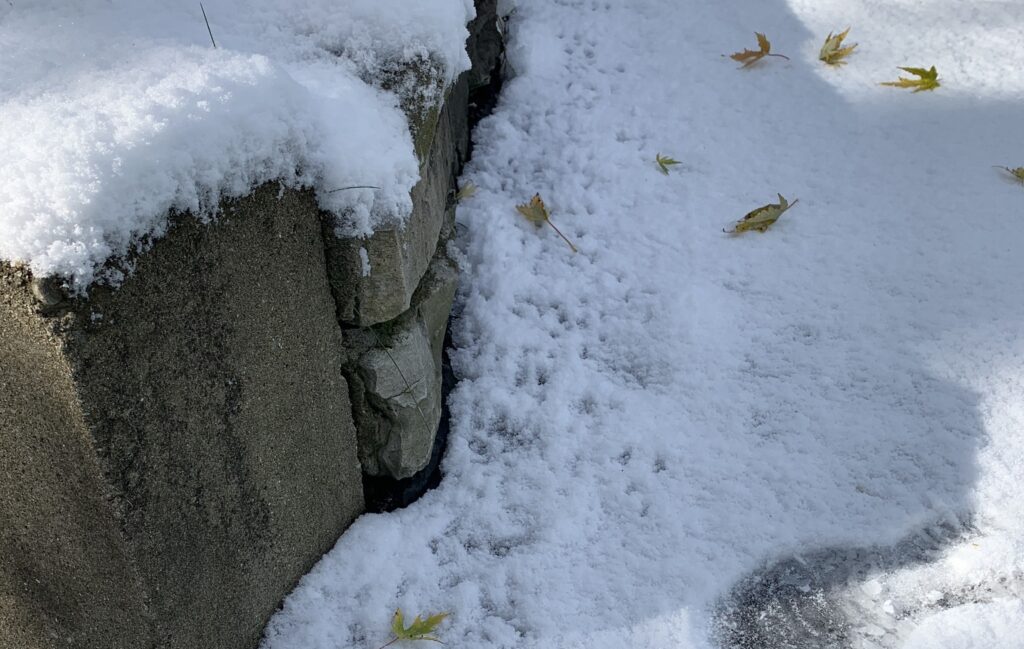
One of our recent jobs here in London stands out because it shows just how subtle mouse activity can be. It was early morning after an overnight snowfall, the kind of quiet winter day we’re used to. Our technician arrived at the property and did something we always do before even stepping inside: a complete exterior inspection.
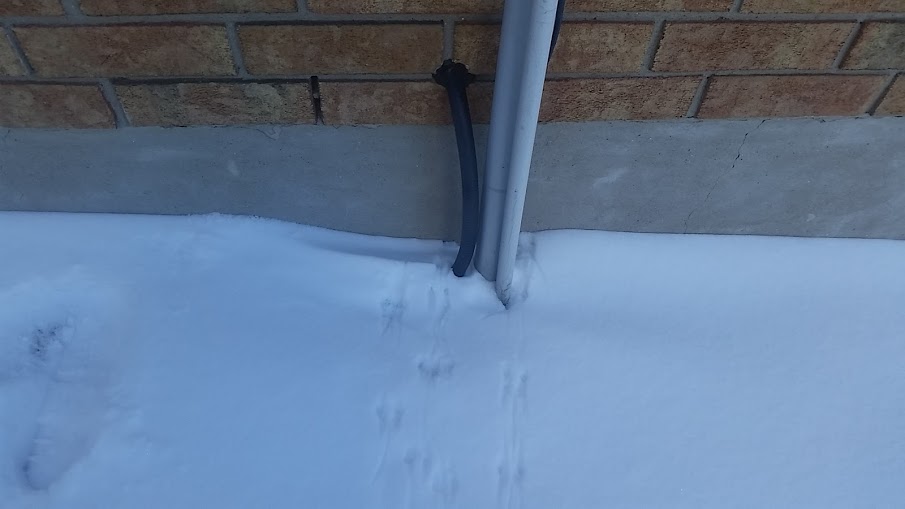
As he walked around the house, fresh snow covered the yard like a clean slate. That’s when he noticed it—tiny tracks leading from the edge of the property straight to the foundation wall. The tracks disappeared near a downspout.
Following them closely, he found a small gap where utility lines entered the home. It was just wide enough for a mouse to squeeze through. Inside, the homeowners had heard faint noises but couldn’t pinpoint the source.
That single trail in the snow told the whole story. From there, we installed one-way doors to allow the mice to leave safely, then permanently sealed the entry point. It’s a perfect example of why experience and attention to detail matter in wildlife removal.
Why Spring Brings Increased Mouse Activity
As winter fades and temperatures begin to rise, mouse activity often increases rather than disappears. Spring creates ideal conditions that push mice to actively search for safe places to nest, and homes provide precisely what they need. With easier access to food, shelter from unpredictable weather, and protection from predators, houses and businesses become prime targets.
Warmer spring weather also signals the start of the breeding season. Mice become more mobile as they expand their search for nesting sites, moving along foundations, rooflines, and utility connections. Even small gaps that went unnoticed during winter can quickly become active entry points as mice explore new areas.
Spring also brings increased moisture from melting snow and rainfall. This can expose weaknesses in foundations, siding, and rooflines, as well as missing silicone around windows, creating new openings that mice are quick to exploit.
At the same time, homeowners often open windows, doors, and garages more frequently, increasing the likelihood that mice can access indoor spaces.
The Complexities Spring Brings to Humane Wildlife Control
Spring is one of the most complex seasons for humane wildlife control. Many species, including mice, are actively nesting and raising young during this time. Effective removal requires careful planning, proper timing, and professional techniques that protect both the animals and the home’s structure.
Humane wildlife control in spring means understanding animal behaviour and ensuring removal methods allow mice to exit safely without creating new risks or unnecessary stress. It also means thorough inspections to identify all active and potential entry points before populations have a chance to grow.
At Skedaddle, our spring humane mouse removal services focus on proactive prevention. By identifying vulnerabilities early, installing one-way doors, and sealing entry points correctly, we help homeowners stay ahead of increased mouse activity. As spring unfolds, addressing the issue early can prevent a small problem from turning into a full-scale infestation during the warmer months ahead. Contact us today if you have mice or other wildlife encroaching on your property this season!
Signs You May Have Mice Indoors
Many homeowners suspect a problem before they ever see an animal. Knowing what to look for can help you act sooner rather than later.
Common signs include:
- Scratching or rustling sounds in walls or ceilings, especially at night
- Small droppings in cupboards, drawers, or along baseboards
- Gnaw marks on food packaging or wood
- Nesting material like shredded paper or insulation
- Unusual odours coming from enclosed spaces
If you notice one sign, there are often more hidden out of sight. Mice are experts at staying concealed, which is why professional inspections are so necessary.
Is It Safe To Live In A House With Mice?
Living in a house with mice is not safe, and it’s not a problem that resolves itself over time. Mice don’t simply pass through and move on. Once they find warmth, shelter, and food, they settle in and continue to use your home as long as they can.
That’s why our team at Skedaddle takes a thoughtful, humane approach that protects both homeowners and wildlife. Every mouse removal job we handle follows a proven process designed to resolve the issue, not just temporarily reduce activity entirely.
As previously mentioned, as part of our removal, we install specialized one-way doors over the exact entry points mice are using. These doors allow mice to leave the home safely but prevent them from reentering. As activity decreases, our team monitors the situation closely to ensure every mouse has exited.
The most important step comes next. Once removal is complete, we move into exclusion work. This is where long-term protection happens. By sealing entry points and reinforcing vulnerable areas, we prevent mice from reentering. It’s the difference between a short-term fix and the absolute peace of mind that comes with knowing your home is adequately protected.
Sealing Entry Points the Right Way
Mice are incredibly skilled at finding their way indoors. They can squeeze through openings as small as a coin, which means sealing a home properly requires far more than a quick patch or surface-level repair. At Skedaddle, our technicians focus on precision and durability, using materials designed to withstand constant chewing and the harsh weather conditions typical in Southwestern Ontario.
After mice have been humanely removed, correctly sealing the home ensures they can’t return. This step is customized to each property, based on its age, construction style, and location.
Reinforcing gaps around utility lines
Utility and service lines are some of the most common entry points we find. Small gaps often exist where cables, pipes, and meters enter the home. Over time, these openings can widen due to shifting foundations or exposure to the weather. Our technicians carefully reinforce these areas with chew-resistant materials and professional-grade sealants to seal gaps while maintaining proper utility function.
Securing roofline and soffit intersections
Rooflines, soffits, and fascia are common entry points for mice, especially in homes with aging materials or complex roof designs. Even slight separations at these intersections can provide enough space for mice to enter attics and wall cavities. We secure these vulnerable areas by repairing loose components, reinforcing weak spots, and ensuring tight, weather-resistant seals that blend with the home’s structure.
Repairing damaged siding or foundation cracks
Cracked siding, deteriorating mortar, and small foundation gaps create easy access at ground level. Mice often travel along foundations and use these weaknesses to get inside basements and lower walls. Our team identifies all structural damage, repairs compromised materials, and seals cracks to prevent further deterioration while blocking entry points completely.
Installing protective barriers in vulnerable areas
Some parts of a home are naturally more vulnerable to wildlife pressure, such as vents, roof openings, and transition points between materials. In these areas, we install protective barriers explicitly designed to prevent mice from chewing or pushing their way inside. These barriers are built to last and are selected based on the specific risks present at each property.
Every home presents unique challenges. Older houses near downtown London often have different vulnerabilities than newer builds in areas like Hyde Park or Masonville, where construction styles and materials vary. Our goal is always the same, regardless of the neighbourhood: identify every potential access point and close every opportunity for re-entry, providing long-term protection and peace of mind. If you are dealing with mice in your home, contact Skedaddle for professional mice exclusion services today!
Recent Trends and Statistics: Why Mouse Activity Is Increasing
Mouse activity is on the rise, and homeowners across Ontario are feeling the impact. Industry reports and pest control data across Ontario 2025 indicate a noticeable increase in rodent activity over the past several years, driven by warmer winters, urban expansion, and increased food availability.
In the Greater Toronto Area, some pest control providers reported a 35% increase in service requests for mice between 2024 and 2025. While London is smaller than the GTA, we’re seeing many of the same conditions locally. Ongoing construction, expanding neighbourhoods, and established green spaces are pushing mice closer to homes and businesses as they search for safe places to nest.
This trend isn’t limited to Ontario. Across Canada, rodent activity has increased by approximately 15% over the past three years, and that growth is expected to continue into 2026. Warmer winters play a significant role. When temperatures stay mild for more extended periods, mice experience higher survival rates and longer breeding seasons, allowing populations to grow more quickly and remain active year-round.
For homeowners, this means mouse problems are becoming more common, not less. Even well-maintained properties can be affected, especially during seasonal transitions when mice are actively searching for warmth and shelter. These trends highlight the importance of early detection, professional inspection, and proper exclusion. As mouse activity continues to rise, proactive, humane solutions are becoming essential for protecting homes and businesses across London.
Wildlife We Commonly See in London, Ontario
Mice are just one of many wildlife species that find their way into homes and businesses across London, Ontario. With extensive green spaces, wooded corridors, and waterways like the Thames River, this area provides ideal conditions for wildlife to thrive. As neighbourhoods continue to expand, wildlife activity around homes and commercial buildings is a reality many property owners face.
At Skedaddle Wildlife Control, we work with a wide range of species and understand their behaviours, seasonal patterns, and the specific challenges they create when they enter human structures. Our approach focuses on humane removal using one-way doors, followed by professional exclusion to prevent future access.
Squirrels are frequently found in attics and rooflines throughout London. They are intense, persistent, and excellent climbers, often accessing homes through roof vents, soffits, or damaged shingles. Once inside, squirrels can cause extensive damage by chewing wood, wiring, and insulation. Our technicians identify their entry points, install one-way doors to allow them to exit safely, and then reinforce those areas to prevent them from re-entering.
Raccoons are another common concern, especially in neighbourhoods near parks and ravines. They often target chimneys, garages, and roof openings, using their strength and dexterity to pull apart weak building materials. Raccoons can cause significant structural damage and leave behind contamination. We remove them humanely by installing one-way doors at access points and then repairing and securing those areas to withstand future wildlife pressure.
Skunks are most often found nesting under decks, porches, and sheds. These sheltered spaces protect from the elements and predators. Skunks can cause damage by digging and can create strong odours that affect the entire property. Our team installs one-way doors at den openings, allowing skunks to leave on their own, and then properly seals and reinforces the area to prevent re-entry.
Bats commonly roost in attics, wall cavities, and other high, quiet spaces. Because bats are protected wildlife, their removal requires careful timing and specialized techniques. We use exclusion methods that allow bats to exit safely while preventing their return. Once the structure is bat-free, we seal all potential entry points to protect the home while respecting wildlife regulations.
Birds can enter homes and businesses through vents, chimneys, and roof openings. Once inside, they may nest, block airflow, and create noise and mess. Our humane removal process allows birds to leave safely, after which we secure vents and openings to prevent future entry while maintaining proper ventilation.
Rats, like mice, are often found around foundations, basements, and lower levels of buildings. They are strong chewers and can access surprisingly small openings. Our technicians locate active entry points, install one-way doors to allow rats to exit, and then seal the structure to eliminate access moving forward.
Whether a property is located near Springbank Park, along Fanshawe Lake, or closer to London’s commercial and industrial areas, wildlife pressure is a common challenge. Our proven one-way door approach allows animals to leave safely and humanely while giving homeowners and business owners lasting protection and peace of mind. Contact us for more information about our humane wildlife control in London, or to book your home inspection.
Local Knowledge Makes a Difference
Being from the area truly matters when it comes to wildlife removal. Our team understands how seasonal changes, construction patterns, and local wildlife behaviour affect homes and businesses across London, Ontario. We’ve completed inspections near Victoria Park, driven past Covent Garden Market on our way to service calls, and worked in neighbourhoods where older homes, mature trees, and nearby green spaces create unique wildlife challenges.
That local awareness doesn’t come from a manual. It comes from years of being part of the community and seeing firsthand how wildlife activity shifts with the weather, development, and changing landscapes. It allows us to spot patterns others might miss, whether it’s common entry points along rooflines, foundation gaps in specific neighbourhoods, or increased activity during seasonal transitions.
That commitment to community is deeply reflected in franchise co-owner Jordan Spoelstra. Jordan has dedicated much of his life to service and helping others, long before joining Skedaddle. A member of the Canadian Armed Forces since 2004, Jordan served as a full-time reservist and completed an operational tour in Kandahar, Afghanistan, in 2006. In April 2025, Jordan officially transitioned to civilian life, bringing those same values with him.
Alongside his military service, Jordan also spent two years working closely with a homeless shelter, an experience that further deepened his commitment to supporting people in meaningful, hands-on ways. Helping others has always been central to who he is.
That same mindset carries into his work at Skedaddle. In October 2017, Jordan and his business partner, Reubin Kuc, took on the opportunity to operate Skedaddle’s London location. Since then, Jordan has continued his lifelong dedication to service by helping homeowners and business owners protect their properties from wildlife issues using humane, responsible solutions.
Our team understands the importance of community spaces, whether it’s a quiet residential street, a family home near a local park, or familiar places people enjoy around Anoka, like riverside paths and neighbourhood gathering spots that remind us of home and shared outdoor experiences. Protecting those homes and businesses isn’t just work for us, it’s personal.
That combination of local knowledge, hands-on experience, and a genuine desire to help others is what sets our team apart. It’s how we provide thoughtful, effective wildlife solutions that respect both people and the communities we live in every day.
What to Do If You Suspect Mice in Your Home
If you suspect mice may be in your house, the most crucial step is to act quickly. Mice problems rarely stay small, and the longer they’re left unaddressed, the more damage and health risks they can create. The sooner a professional gets involved, the easier it is to protect your home and prevent the issue from escalating.
At Skedaddle Humane Wildlife Control, we take a detailed, property-specific approach to every job. Our team conducts thorough 35–50 point inspections to identify active entry points, hidden vulnerabilities, and the conditions that allowed mice inside in the first place. From there, we develop a customized plan tailored to your home or business, not a one-size-fits-all solution.
Our hands-on, humane removal techniques are designed to minimize stress on animals while delivering practical, long-term results for homeowners. Once mice have exited using our one-way doors, we secure and reinforce your property to prevent re-entry. We stand behind our work with a lifetime guarantee on our workmanship and materials, giving you confidence that the problem has been appropriately resolved.
If you’re hearing noises, finding droppings, or have a feeling something isn’t right, don’t wait. Contact Skedaddle Humane Wildlife Control as soon as you suspect mice in your house. We’re here to protect your home, your health, and your peace of mind.
Frequently Asked Questions About Mice in the House
How fast do mice reproduce?
Mice reproduce extremely quickly. A single female mouse can have multiple litters each year, with several babies in each litter. Under the right conditions, a small mouse problem can grow into a much larger infestation in a matter of weeks. This rapid reproduction is one of the main reasons early detection and professional removal are so important.
How small a hole can a mouse fit through?
Mice can squeeze through openings as small as the size of a coin. If a mouse’s head can fit through a gap, the rest of its body can usually follow. Small cracks in foundations, gaps around utility lines, and openings along rooflines are all common entry points we find during inspections.
Do mice leave on their own?
Mice rarely leave a home on their own once they’ve settled in. If they have access to warmth, food, and shelter, there’s little reason for them to go elsewhere. Without proper removal and exclusion, mice will continue to use the home and may even return after short periods of inactivity.
Is it safe to clean mouse droppings yourself?
Cleaning mouse droppings can be risky if it’s not done properly. Droppings and urine can carry bacteria and viruses, and sweeping or vacuuming can cause contaminated particles to become airborne. For larger infestations or contamination in hidden areas like attics and wall cavities, professional assistance is the safest way to protect your health and ensure the home is properly addressed.


 Loading...







