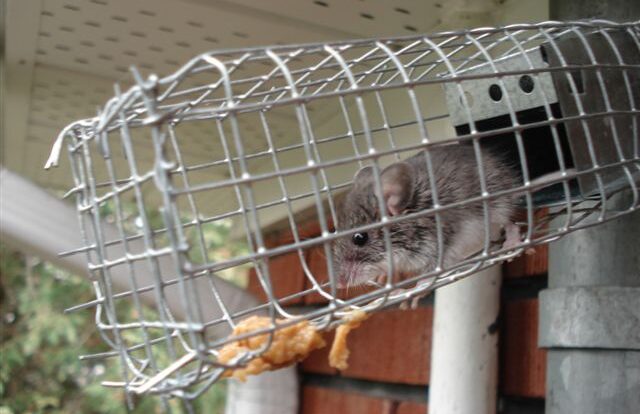
Getting mice out of your home for good takes more than setting a few traps. The only way to truly solve the problem is to find every entry point, remove the animals that are already inside, and seal everything up so they can’t get back in. Anything less is a short-term fix that leaves the door open for the problem to come back.
You might have already tried something on your own and noticed they keep showing up anyway. That’s because these animals use multiple entry points, breed fast, and spread through your walls before most people notice the signs. One hole sealed and one trap set won’t cut it when the population inside your home has already grown.
At Skedaddle Humane Wildlife Control in Milwaukee, we use a complete, step-by-step process to get these animals out and make sure they don’t come back. In this blog, we walk you through every step of that process, from the first inspection to the final follow-up, so you know exactly what professional removal looks like and why it works.
Where Do Mice Enter a Home?
These animals get in through gaps that are much smaller than most people expect. A mouse can squeeze through a hole the size of a dime, which means foundation cracks, gaps around utility lines, spaces under garage doors, damaged vents, and openings where different building materials meet are all potential entry points. Many of these spots are easy to overlook if you don’t know what to look for.
Common entry points include gaps around pipes and cables where they enter the home, cracks along the base of the foundation, worn weather stripping under doors, damaged or missing vent covers, and spaces where the siding meets the foundation. These animals follow the outside of the building looking for any opening they can find and once one gets in, others follow the same path.
This is why our professional inspection is the only way to be sure every entry point gets found. Our team checks the full exterior of your home, not just the obvious spots, using a systematic approach that covers every area these animals are likely to use. Finding every gap is the first and most critical step in solving the problem completely.
A Complete Inspection Comes First
Before anything else, our team does a full inspection of your home. This isn’t a quick walk around the outside, it’s a detailed check of every area these animals could be using to get in or live inside. Here’s what that looks like:
- Thermal Imaging to Find Hidden Activity: Our team uses thermal imaging cameras to detect heat signatures behind walls and ceilings. These animals give off body heat, and a thermal camera can pick up activity in spaces that aren’t accessible without tearing open walls. This step lets us find active nesting areas and confirm where these animals are living inside your home before we start the removal process.
- Entry Point Mapping Around the Full Exterior: Every gap, crack, and opening on the outside of your home gets documented. We check the foundation line, every utility penetration, the garage, vents, siding junctions, and the roofline. We’re looking for any opening a mouse could use — including ones that look too small to matter. Each entry point gets flagged so it can be addressed during the exclusion phase.
- Assessing the Full Scope of the Problem: The inspection also tells us how long these animals have been present and how far they’ve spread through the home. Droppings, chew marks, nesting material, and damage to insulation or wiring all give us a clearer picture of what we’re dealing with. This information shapes the rest of the removal plan so we’re not guessing at any point in the process.
Humane Extraction With One-Way Doors
Once the inspection is complete, our team puts a removal plan in place. We don’t use poison, we use one-way door systems that allow mice to leave on their own without being able to get back in. Here’s how that works:
- One-Way Doors at Active Entry Points: We install one-way door devices at the spots mice are actively using to move in and out of your home. These devices let them exit when they leave to look for food, but physically block them from getting back in. The process is humane, effective, and doesn’t leave dead animals inside your walls.
- No Poison, No Risk to Your Family: Poison-based approaches kill individual mice but create their own set of problems – dead animals inside walls, ongoing smell, and no solution to the entry points that let them in. Our one-way door approach removes the animals without poison, which means no risk to children, pets, or the people living in the home during the process.
- The Process Works With Their Natural Behavior: Mice leave their shelter regularly to find food and water. The one-way door system works with that natural behavior, they leave on their own schedule, and the device simply stops them from coming back. It’s a low-stress, effective method that gets results without unnecessary disruption.
Exclusion and Sealing Every Entry Point
After mice are out, every entry point gets sealed. This is the step that makes the removal permanent, and it’s where most incomplete solutions fall short. Here’s what proper exclusion looks like:
- Heavy-Gauge Steel Mesh Over Vents and Openings: Plastic vent covers and standard screens can be chewed through easily. Our team installs heavy-gauge galvanized steel mesh over all vents, weep holes, and other openings that can’t be sealed solid. This material can’t be chewed through or pulled apart, which means it holds up long-term against persistent animals.
- Professional-Grade Sealants on Cracks and Gaps: Foundation cracks, gaps around utility lines, and spaces where building materials meet get sealed with professional-grade materials that bond permanently and resist chewing. Standard hardware store caulk doesn’t hold up – our team uses industrial-strength products that are designed for this specific purpose and won’t be worked open over time.
- Every Entry Point Gets Addressed at the Same Time: Sealing one or two gaps without finding and closing all of them just redirects mice to another route. Our exclusion work covers every entry point identified during the inspection, all at once, so there’s no gap left open that can be used going forward. This is what makes the difference between a temporary fix and a lasting solution.
Sanitation and Cleanup
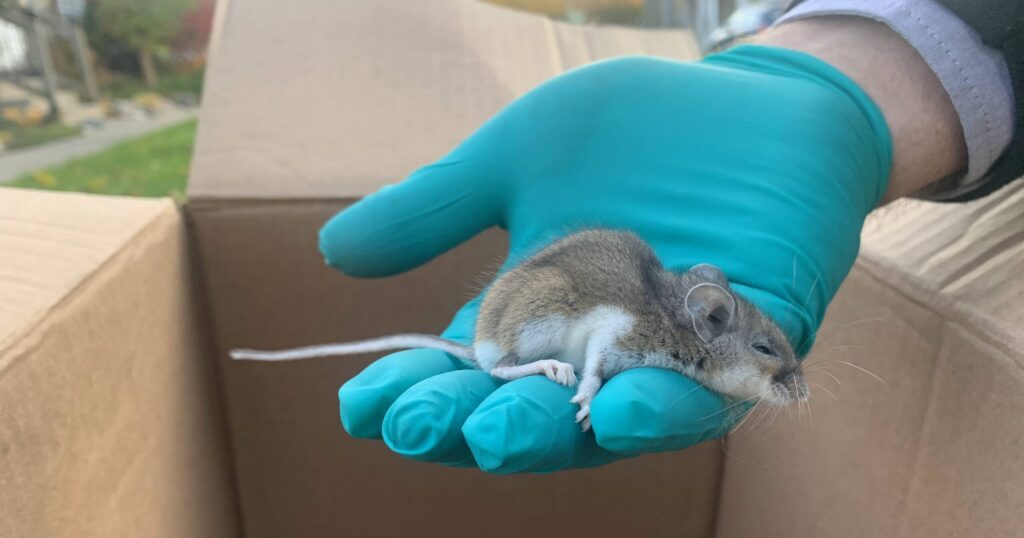
Once the mice are out and the entry points are sealed, the cleanup begins. This step is just as important as removal and exclusion, and it’s one that homeowners should never attempt on their own. Droppings, urine, and nesting material left behind carry harmful bacteria and parasites that pose real health risks to the people living in the home.
Our team removes droppings and contaminated materials using HEPA-filtered equipment that captures harmful particles instead of releasing them into the air. This is not a job for a regular vacuum or cleaning supplies – the pathogens in rodent waste require specialized removal methods to make sure the space is actually safe after the animals are gone. Do not attempt to clean up any area where these animals have been active before our team has assessed and handled it.
Scent trails are another part of the cleanup that most people don’t think about. Mice leave behind pheromone trails that attract new animals to the same spots. Even after the current animals are gone, those scent trails can pull in new ones if they’re not treated. Our team uses enzyme-based treatments that break down the scent trail completely, removing the chemical signal that would otherwise keep drawing new animals toward your home.
Monitoring and Follow-Up
Our professional removal doesn’t end when the exclusion work is done. Follow-up checks are an important part of making sure the solution has held and that no new activity has started. Our team returns after the initial work to confirm that the one-way doors have done their job and that no mice remain inside.
During follow-up visits, we check for any signs of renewed activity: new droppings, fresh chew marks, or any indication that something has found a way back in. If anything is found, we address it right away. The goal is to confirm that the job is fully complete before we close out the file, not to assume everything went as planned without verifying it.
Our work comes with a warranty on sealed areas. If animals get back in through a spot our team sealed, we come back and fix it. This kind of accountability is the difference between a professional service and a temporary patch. You shouldn’t have to keep dealing with the same problem, and with the right follow-up process in place, you won’t have to.
Mice Issues in Milwaukee
Milwaukee’s climate makes rodent pressure a year-round concern. The city’s cold winters drive mice hard toward warm indoor shelter starting in the fall — and once they’re inside a heated home, they stay active and breed through the winter months. By spring, a problem that started with a small number of animals can have grown significantly if it hasn’t been addressed. Fall is the most critical time to have your home inspected and sealed in Milwaukee.
The city’s older housing stock adds another layer of vulnerability. Many Milwaukee homes were built decades ago, and the materials used to seal gaps around foundations, utility lines, and rooflines break down over time. Older homes tend to have more potential entry points, and those entry points are often in spots that aren’t obvious without our professional inspection. If your home is more than 20 or 30 years old and hasn’t had a full exterior assessment, there’s a good chance entry points exist that you don’t know about.
Attached garages are especially common entry points in Milwaukee homes. The gap under a garage door, cracks in the garage floor, and utility penetrations in the shared wall between the garage and the living space all give these animals a clear path inside. A problem that starts in the garage becomes a problem throughout the home very quickly, which is why our inspection always includes the full garage and the shared wall, not just the main living areas.
What Are Other Benefits of Skedaddle?
Beyond the removal and exclusion process itself, working with our team at Skedaddle comes with several benefits that you don’t get from general pest control services. We specialize in wildlife, which means our approach, our tools, and our team are built specifically for situations like this one. We don’t apply a one-size-fits-all solution; we build a plan around what’s actually happening in your home.
One of the biggest benefits is the humane approach we take at every step. We don’t use poison, we don’t trap and relocate, and we don’t create situations where mice die inside your walls. Our one-way door systems remove the animals on their own schedule, without stress or harm, and the exclusion work that follows makes sure they have nowhere to come back to. This approach is better for the animals, better for your home, and better for your family.
We also bring a level of thoroughness that goes beyond what most services offer. Thermal imaging, full exterior mapping, professional-grade exclusion materials, enzyme-based scent treatment, and follow-up visits with a warranty on sealed areas. All of this is part of what we do on every job. You’re not just getting an animal out of your home. You’re getting a complete solution that addresses the problem from every angle so it doesn’t come back.
Frequently Asked Questions
How do I know if mice are still inside after removal?
Our team does follow-up checks to confirm the one-way doors have worked and that no mice remain inside. Signs of continued activity - new droppings, fresh chew marks, or sounds in the walls - would be caught during these visits. You don't have to guess whether the job is done.
Is it safe to stay in my home during the removal process?
Yes. Our one-way door approach doesn't involve poison or chemicals, and the process doesn't require you to leave your home. We work around your schedule and minimize disruption throughout.
How long does the full process take?
It depends on the size of the home and the scope of the problem. The initial inspection and exclusion work is typically completed in one visit, with follow-up checks scheduled after. Our team will give you a clear timeline before work begins.
Can mice get back in after sealing?
If every entry point is properly found and sealed with the right materials, they shouldn't be able to get back in through those spots. Our warranty covers sealed areas. If they get back in through something we sealed, we come back and fix it.
Why do I keep getting them even after trying to handle it myself?
Because not every entry point was found and sealed. Removing a few mice or setting traps doesn't address the routes they're using to get in. New mice keep coming through the same gaps. The only complete solution is finding and sealing every entry point, which is what our inspection and exclusion process does.
Do you handle the cleanup after removal?
Yes. Our team handles droppings, contaminated insulation, and nesting material with the right protective equipment and methods. Do not attempt to clean up any affected area yourself - the health risks from rodent waste are real and require our professional handling.
Done With Mice? Let’s Make It Permanent
Getting mice out of your home isn’t complicated, but it does need to be done completely. Finding every entry point, using one-way doors to remove the animals humanely, sealing everything with the right materials, and following up to make sure it held – that’s the process that actually works. Anything less leaves the problem half-solved.
You don’t have to figure out where they’re getting in or deal with any part of this yourself. That’s exactly what our team is trained and equipped to do, and we back our work up with a warranty so you know the job is done right.
At Skedaddle Humane Wildlife Control in Milwaukee, we’re there for you. Contact us today to request an estimate and get started on a complete, lasting solution that keeps your home mouse-free for good.

 Loading...