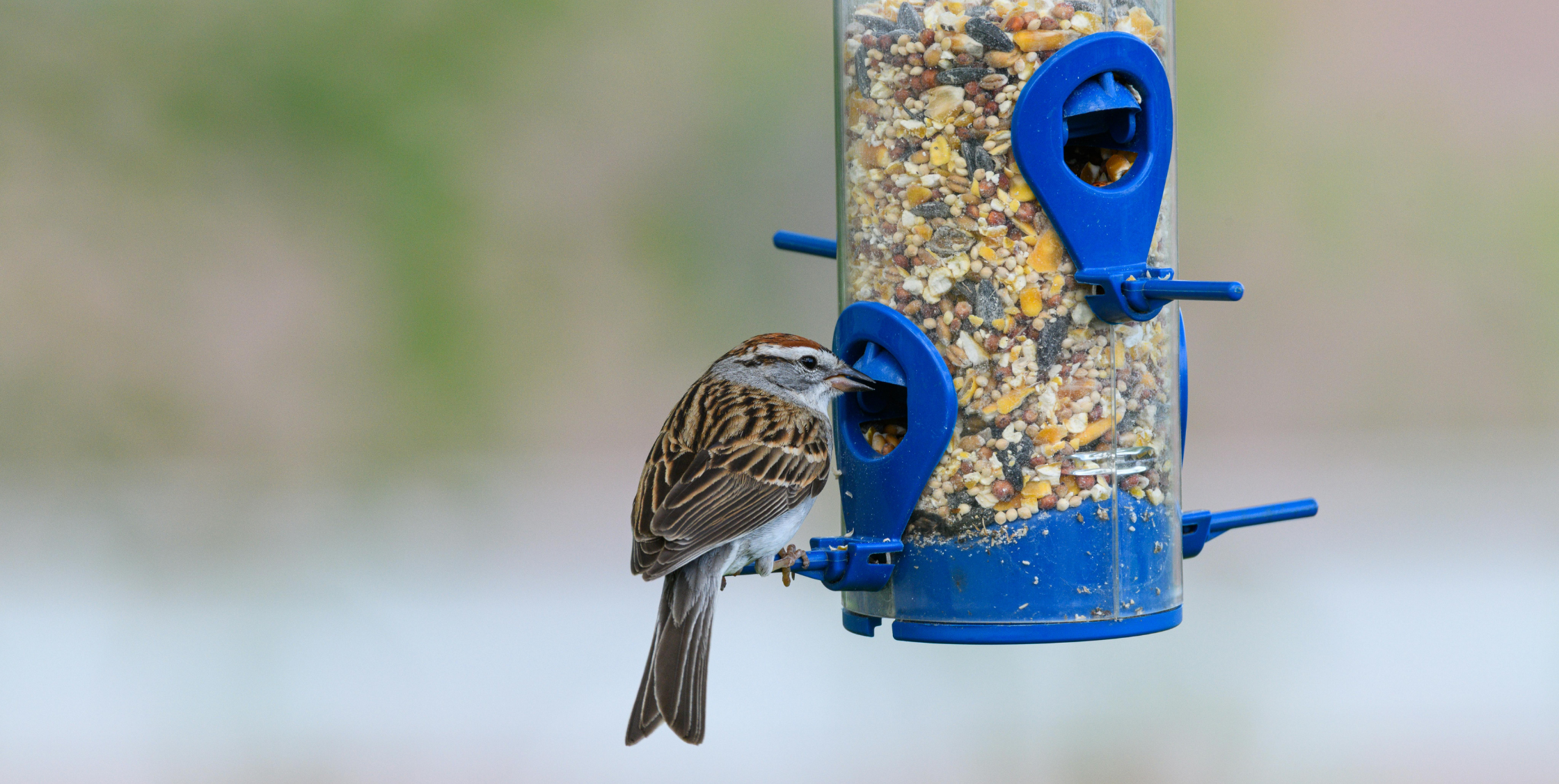
You put up a bird feeder to enjoy the cardinals and chickadees. What you probably didn’t plan on was the mice, rats, squirrels, raccoons, and skunks that showed up for the seed that falls on the ground. A backyard bird feeder is one of the most common things that pulls unwanted wildlife toward a home in summer, and most homeowners have no idea it’s happening.
The summer backyard habit that attracts more than just birds is simple – spilled seed on the ground. Birds are messy eaters. They pick through the feeder, toss out what they don’t want, and leave a pile of seed on the ground beneath it every single day. That pile is a steady, easy food source for mice, rats, squirrels, raccoons, and skunks that are active in your yard after dark. Once they find it, they keep coming back – and they start looking for shelter nearby too.
You don’t have to give up your bird feeder to protect your home. But you do need to know what the spilled seed underneath it is doing to the wildlife activity in your yard. Our team at Skedaddle Humane Wildlife Control in Mississauga can help you understand what’s been drawn to your property and what needs to happen to keep it from becoming a bigger problem. In this blog, we explain exactly how spilled birdseed becomes a wildlife magnet and what our team does when the visitors decide to stay.
Does Birdseed Attract Rats?
Yes. Birdseed is one of the most reliable things that attracts rats to a residential yard. The seed that falls from a feeder piles up on the ground and stays there, creating an easy nightly food source that requires no effort at all. Rats are nocturnal and opportunistic, which means a pile of spilled seed under a feeder is exactly the kind of free meal they look for after dark.
The problem goes beyond the seed itself. Once rats are regularly visiting your yard to eat, they also begin exploring the structure nearby for a place to nest. A garage with a small gap at the base, a shed with a loose board, or a crack near a foundation all become points of interest for an animal that has found a reliable food source close to your home.
The closer your feeder is to your home’s exterior, the higher the risk. Rats that are foraging under a feeder ten feet from your garage door are also checking that door for gaps on the same night. Our team assesses this full picture during an inspection, not just where they are getting in, but what drew them to the property in the first place.
The Spillover Effect
Every bird feeder creates a spillover zone on the ground beneath it. Birds pick through seed, toss out what they don’t want, and scatter shells and husks with every visit. By the end of a single day, the ground under a feeder can be covered with a significant amount of spilled seed that nobody intended to put there.
This spillover is the root of the problem. It is not the feeder itself that draws rodents and wildlife in; it’s the steady accumulation of food on the ground that no one cleans up. In summer, warm temperatures keep that seed fresh and smelling strong for longer, which increases how far the scent carries and how many animals it can pull in from the surrounding area.
The spillover effect also grows over time. A small amount of seed on the ground on Monday becomes a larger patch by Friday, especially if the feeder is popular and birds are visiting all day. By the end of a week, the area under the feeder has become one of the most consistent food sources in your yard and one that stays available around the clock.
Rodent Magnets
Mice and rats are drawn to birdseed faster and more consistently than almost any other backyard food source. Both species are small enough to hide easily, active at night when people aren’t watching, and smart enough to return to a food source they have found reliable. A feeder that spills seed every day is the kind of consistent opportunity they look for.
Mice are usually the first to show up. They are smaller, faster, and harder to spot, which means they can visit a feeder area regularly without being noticed. Rats tend to follow when the food source is established and plentiful. Both species will cache food, carrying seed back to a hiding spot nearby, which means they have extra motivation to stay close to the feeder area.
Here is how rodents use your feeder area to move toward your home:
- Nightly Foraging Under the Feeder: Mice and rats are most active after dark, which is when they move in to feed on the seed that has accumulated on the ground throughout the day. They follow the same routes night after night, creating worn paths along fence lines, walls, and garden edges that lead from the feeder to their shelter. A regular feeding location that goes unaddressed quickly becomes a nightly routine.
- Caching Seed Near the Structure: Rodents carry food back to wherever they are nesting, which means the seed under your feeder is being transported directly toward your home if they are sheltering nearby. A mouse that caches seed behind your garage wall or under your deck is establishing a reason to keep coming back — and to keep exploring the structure for better access. This behaviour is one of the ways a feeder problem becomes a home intrusion problem.
- Chewing Through Weak Spots to Get Inside: Once rodents are regularly active near your home, they begin investigating every gap, crack, and worn seal for a way in. Mice can squeeze through an opening as small as a dime, which means the exterior of your home does not need to have obvious damage to be vulnerable. Our team checks all of these points during an inspection and seals them off with materials that hold up against persistent chewing.
Larger Intruders
Spilled birdseed doesn’t just draw mice and rats. The smell of seed on the ground — especially when mixed with fallen fruit from nearby trees or other food smells in the yard — also pulls in squirrels, raccoons, and skunks. These larger animals are bold, persistent, and cause significantly more damage when they decide to stay.
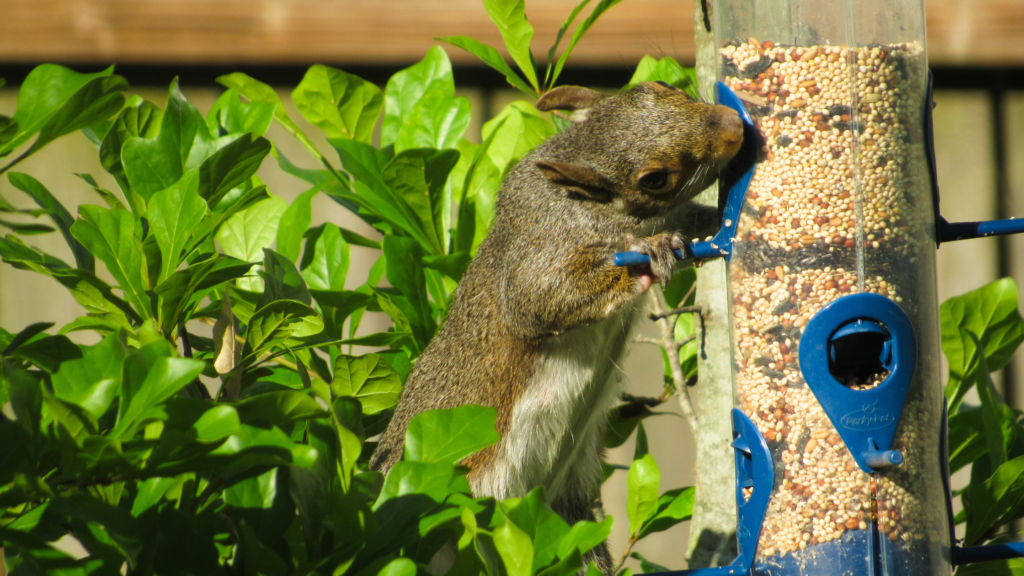
Squirrels are drawn to feeders directly, often raiding the feeder itself as well as cleaning up what falls below. A squirrel that visits your feeder regularly is also running along your roofline, checking soffits and vents for a way into your attic. The combination of a food source in the yard and a warm attic overhead is exactly what leads to a squirrel infestation.
Here is how larger animals use your yard’s food sources to move closer to your home:
- Raccoons Following the Scent at Night: Raccoons have an excellent sense of smell and can detect food from a long distance. A pile of spilled seed combined with the smell of other yard food sources – compost, fruit, garbage – creates a concentrated scent trail that pulls them into your yard and keeps them there. Once a raccoon is visiting your yard regularly, it also begins checking the rest of the property for shelter close to the food.
- Skunks Foraging Under and Around the Feeder: Skunks forage close to the ground and are attracted by the insects and grubs that gather around spilled seed, as well as the seed itself. They dig small holes near the feeder area looking for buried food and insects pulled in by the seed. A skunk that is regularly active near your home is also a skunk that may start digging under your deck or shed looking for a cool, sheltered spot to rest during the day.
- Squirrels Using the Feeder as a Base of Operations: A squirrel that has found your feeder has also found a reason to stay in your yard. They cache food in the soil nearby, return to the feeder multiple times a day, and explore the full perimeter of your property on every visit. That daily exploration is what leads them to roofline weak spots, loose soffits, and open vents that become entry points into your attic.
Insect Infestations and Yard Damage
The problems that come with a backyard bird feeder go beyond wildlife. Spilled seed and improperly stored birdseed bags can trigger insect problems that are separate from the rodent and wildlife activity, and in some cases, just as damaging.
Warm, humid summer conditions are ideal for insects that are attracted to stored grain and seed. Mediterranean meal moths and grain beetles can hatch inside birdseed bags stored in a garage or shed, and they can move from those bags into other stored food items. Once an insect infestation takes hold in stored seed, it tends to spread quickly.
Here is what seed spillage and storage can trigger:
- Stored-Product Pests in the Seed Bag: Birdseed bags can carry insect eggs that hatch in warm weather, filling the bag with beetles, moths, and larvae before the seed is even used. Storing a bag in a warm garage or shed speeds up this process significantly. Our team advises homeowners to flag any signs of insect activity around stored seed during our inspection so the full scope of the problem can be assessed.
- Ants and Wasps Drawn to the Feeder Area: Spilled seed and the sweetness of hummingbird nectar attract foraging ants and summer wasps quickly. Ant colonies can establish themselves under or near a feeder within days of it going up, and summer wasps are drawn to the concentrated food smell. These insects then create their own problems around the yard and near the home’s exterior.
- Weed Growth and Lawn Damage from Filler Seeds: Many budget birdseed mixes include filler seeds like milo and red millet that birds don’t eat and toss to the ground. These seeds take root and grow into weeds under the feeder, and the shells and husks that pile up block sunlight and trap moisture against the lawn underneath. The area beneath a bird feeder can become a dead, weedy patch within a single season of regular use.
Large Apex Predators
Bears are powerful animals that have an incredible sense of smell. In areas near woods or forests, the strong scent of birdseed and suet can travel a long distance and pull black bears directly into your backyard. This creates a very dangerous situation for both people and the bear. It can also lead to serious property damage, such as destroyed feeders, fences, and garbage cans.
Bird feeders can also attract birds of prey, like hawks and falcons. When lots of small songbirds gather in one spot to eat, they become easy targets for these larger hunting birds. A busy feeder is basically a flashing sign that says “free meal” to a raptor flying overhead. During summer, when hawks and falcons are especially active, this kind of concentrated activity makes your yard a regular hunting ground.
Avian and Environmental Toxicity
Summer weather creates a hidden danger inside your bird feeder. When temperatures are warm and humidity is high, uneaten birdseed can get wet and stay damp for hours or even days. This damp seed is the perfect environment for a harmful fungus called Aspergillus to grow and spread. Left unchecked, it can take over a feeder surprisingly fast.
This fungus produces a poison called aflatoxin, which is deadly to birds. Sadly, the very birds you are trying to help can get seriously sick or die from eating moldy seed. The danger is hard to spot because the mold is not always visible to the naked eye. Keeping your feeder clean and dry is one of the most important things you can do to protect the birds that visit your yard.
Wildlife Removal and Prevention with Skedaddle
When our team arrives at a property with feeder-related wildlife activity, the first thing we do is a full inspection. We assess the yard, the home’s exterior, the garage, the shed, and any other structure on the property for signs of activity and entry points. We also note the food sources present – the feeder, any fallen fruit, compost, and open bins – that are contributing to what’s being drawn in.
Our exclusion process uses one-way door systems at active entry points. These let wildlife leave the structure on their own but stop them from getting back in. Once the home is clear, we seal every opening with tough, long-lasting materials. All cleanup of droppings, nesting material, and contaminated areas is handled by our team; homeowners should never go near any of this without the right protective gear.
For Mississauga homeowners who want to keep feeding birds without the wildlife problems that come with it, we can assess your setup and advise on what changes to the feeder placement, seed type, and storage would reduce the attractant impact on your property. Enjoying your backyard and keeping wildlife out of your home are not mutually exclusive, but getting the setup right matters.
Wildlife Challenges in Mississauga
Mississauga’s mix of mature residential neighbourhoods, ravines, creek corridors, and green spaces creates strong conditions for wildlife activity throughout the summer. The Credit River valley and the many parks and natural areas across the city give raccoons, squirrels, skunks, and rats natural travel routes that connect directly to residential backyards.
Bird feeders are especially common in Mississauga neighbourhoods with mature trees and established gardens, and the combination of feeders, fruit trees, and compost in a single yard can create one of the most concentrated attractant profiles our team sees. Homes in these areas often deal with multiple species at once, each drawn in by a slightly different part of the food and shelter picture.
Summer is the busiest season for feeder-related wildlife calls in Mississauga, with activity peaking from June through August when populations are at their highest and food competition is most intense. Our team responds to calls across Mississauga year-round and understands the specific conditions that drive this kind of activity in different parts of the city.
Frequently Asked Questions
What types of seed attract the most wildlife?
Sunflower seeds, millet, and mixed seed blends are the most attractive to rodents and other wildlife because they are high in calories and have a strong smell. Nyjer seed tends to draw fewer unwanted visitors because it is smaller and less appealing to larger animals. But any seed that spills onto the ground consistently will attract activity over time regardless of the type.
How far away from my house should a bird feeder be?
The further from your home's exterior the better - ideally at least ten feet away and away from any structures like garages or sheds. The closer the feeder is to a structure, the more likely foraging animals are to investigate that structure for entry points while they are already in the area.
How do I store birdseed to stop it attracting rodents?
Birdseed should be stored in hard, sealed metal or thick plastic containers that rodents cannot chew through. Bags stored in a garage or shed are easy targets and can also harbour insect eggs that hatch in warm weather. Our team can flag storage vulnerabilities during an inspection.
Can squirrels get into my attic from a bird feeder?
Yes. A squirrel that visits your feeder regularly is also running along your roofline and checking for entry points on every visit. The combination of a food source in the yard and accessible roofline weak spots is one of the most common pathways to a squirrel attic problem. Our team inspects the full roofline and seals every vulnerable area as part of the exclusion process.
Should I stop feeding birds entirely if I have a wildlife problem?
Not necessarily, but pausing feeder use while an active wildlife problem is being addressed is a good idea. Continuing to provide a food source while exclusion work is underway makes it harder to reduce activity around the property. Our team can advise on how and when to resume feeding once the home is properly sealed.
Your Bird Feeder Shouldn’t Come With Unwanted Guests
A backyard bird feeder is one of summer’s simple pleasures, but the spilled seed on the ground beneath it is one of the most consistent wildlife attractants in any residential yard. Mice, rats, squirrels, raccoons, and skunks all find their way to that seed, and once they are regular visitors to your yard, the step from your yard to your home is a short one.
The damage that follows – chewed wiring, torn insulation, contaminated crawlspaces – is significant and gets worse the longer the activity goes unaddressed. Acting early when you first notice increased wildlife activity around your yard is always the right move.
At Skedaddle Humane Wildlife Control in Mississauga, we’ve got your back. Our team inspects your full property, identifies every entry point and attractant, excludes any wildlife present using one-way doors, and seals everything off permanently. We handle all cleanup professionally so you don’t have to go near any of it. Request an estimate today and let our team make sure your bird feeder is only feeding the birds.

 Loading...