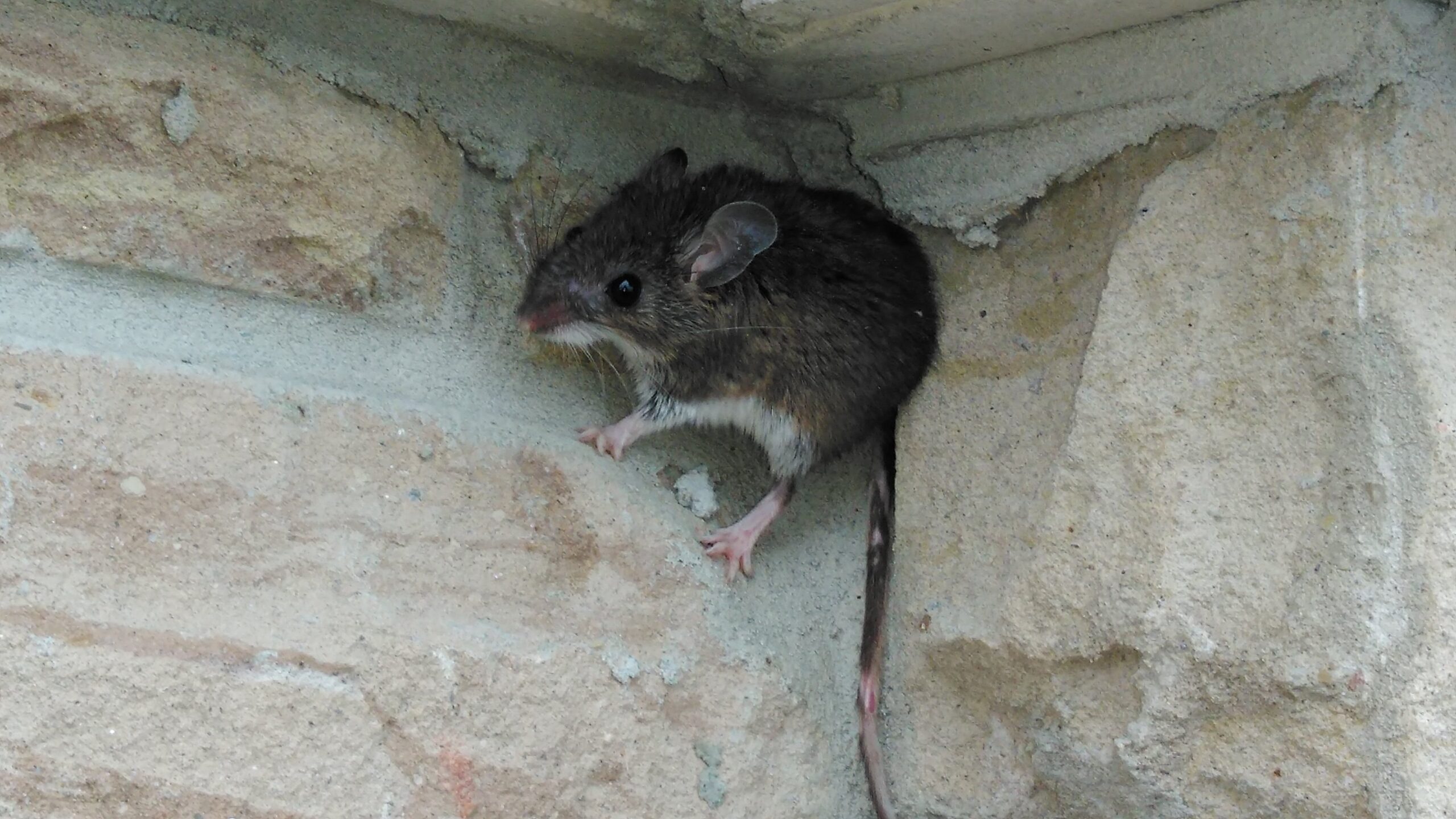
You hear something moving in the walls late at night. You find a small pile of droppings behind the stove. You spot a tiny hole near the baseboard that you never noticed before. These are not random events. They are signs of a very organized, very driven set of behaviors that mice follow every single day and those behaviors are exactly what turns a small problem into a big one fast.
Mouse behavior drives infestations because mice are built to find shelter, stay hidden, reproduce quickly, and keep coming back. They leave scent trails that guide other animals to the same entry points. They chew through almost any material to create or widen a gap. They can squeeze through a hole the size of a dime and climb surfaces most people would never expect them to reach. Every behavior they have is designed to help them get in, stay in, and multiply.
At Skedaddle Humane Wildlife Control in North Atlanta, we see the results of these behaviors in homes across the area every season. In this blog, you will learn exactly what mice are doing inside your home, why their natural instincts make infestations so hard to stop without professional help, and what our team does to fully resolve the situation.
Do Mice Have a Good Memory?
Yes, these animals have a surprisingly good memory, especially when it comes to routes and locations. They learn and remember the paths they travel inside your home very quickly. Once they find a safe route from an entry point to a food source, they use that same route again and again. They also remember where they have found food before and return to those spots consistently.
This memory is part of what makes them so hard to get rid of without addressing the full scope of the problem. Catching one on a trap does not erase the route it knew or the scent trail it left behind. Other animals in the same colony follow those trails and keep using the same paths. The route stays active even after individual mice are removed.
Their memory also means they are quick to notice changes in their environment. If something new appears like a trap, they often avoid it for days or longer before approaching. This cautious, adaptive behavior is part of why store-bought traps frequently catch a few animals early on and then stop working. Mice learn fast, and their memory helps them survive in environments where people are actively trying to remove them.
Rapid Reproduction
One of the most important things to know about a mouse problem is how fast it grows. Mice reproduce at a rate that most homeowners seriously underestimate, and that speed is one of the biggest reasons a small infestation becomes a large one so quickly. Here is what rapid reproduction looks like inside your home:
- Females Can Give Birth Every Three Weeks: A female can have a new litter as often as every 21 days. Each litter typically has five to six young. That means one female can produce dozens of offspring in just a few months. In a warm, safe attic or wall void with reliable food nearby, nothing slows that cycle down. The population inside your home can grow much faster than most people realize.
- Young Reach Breeding Age in Just a Few Weeks: The young from one litter can start breeding themselves in as little as four to six weeks. That means the offspring of the original pair are adding to the population before the season is even over. A pair that enters your home in early fall can be responsible for a very large colony by the time winter arrives. This compounding growth is what turns a small entry point into a serious infestation in a single season.
- Most of the Population Stays Hidden: Mice you see, the droppings on the counter, the one that darts across the kitchen floor, represent a small fraction of the total population. The rest are living in wall voids, attic insulation, crawlspaces, and other enclosed areas where they are completely out of sight. By the time the signs are obvious, the colony is usually already well established and spread throughout the structure.
Nocturnal Foraging and Scurrying
Mice are active at night, which is a big part of why infestations are so easy to miss in the early stages. While you are asleep, they are moving through the kitchen, pantry, and walls — foraging for food, marking their routes, and getting bolder with each successful night.
They move fast and stick close to walls and edges as they travel. This behavior keeps them out of open spaces where they might be spotted, and it is why you often find droppings along baseboards and behind appliances rather than out in the middle of a room. Their routes become very established over time, and they use the same paths night after night with increasing confidence.
The noise you hear at night, scratching, scurrying, or gnawing sounds, is mice doing what their biology tells them to do. The sounds are often clearest between midnight and early morning when household activity is lowest. If you are hearing those sounds regularly, the colony is already active and moving through the structure. That is when calling our team at Skedaddle makes the most difference, early, before the population grows further.
Relentless Chewing
Mice chew constantly — not just to get into your home, but to keep their teeth at a workable length. Their front teeth never stop growing, so chewing is a biological need that drives damage to your home every single day they are inside it. Here is what that looks like:
- They Chew Through Almost Any Material: Wood, drywall, plastic pipe, soft metals, rubber, and electrical wiring are all materials mice can chew through. Standard store-bought sealants like spray foam and caulk are no match for persistent gnawing. Entry points that were patched with soft materials often get reopened quickly. Only professional-grade sealing materials can stand up to this kind of persistent chewing over time.
- Chewed Wiring Creates a Fire Hazard: Mice chew through electrical wiring without any awareness of the danger it creates. Stripped wires inside a wall can arc against surrounding material and ignite. This is one of the most serious and most hidden risks of an active infestation. Our team checks for chewed wiring during every inspection because homeowners almost never know it has happened until it becomes a visible problem.
- Chewing Widens Entry Points Over Time: A gap that starts out barely large enough for mice to squeeze through gets wider every time they pass through it. That widening allows more mice to use the same entry point and eventually creates openings large enough to attract larger wildlife. The longer chewing goes on at an entry point, the harder it is to seal effectively without professional materials and technique.
Pheromone Scent Trails
Mice leave scent trails everywhere they go. They urinate constantly as they move, and those urine trails act as a map that guides other animals to the same paths, food sources, and entry points. This behavior is one of the most overlooked reasons why infestations are so hard to fully resolve without professional sanitation.
The scent trails mice leave behind do not disappear when mice are removed. They stay active in the insulation, wood, and wall surfaces for a long time after the population is gone. Those lingering trails signal to new mice that the route is safe and established, which is why the same entry points keep getting used season after season on homes that have not been professionally treated. The scent is doing the same job as a lit sign pointing new animals toward your home.
Our professional enzyme-based treatments are what actually neutralize these scent compounds. Regular household cleaners mask the smell temporarily but do not destroy the underlying pheromones. Our team treats all contaminated surfaces as part of the cleanup process to remove those signals completely. Without that step, even a fully sealed home can be re-targeted by new mice following the old scent trails from outside.
Elite Vertical Climbing and Extreme Contortion
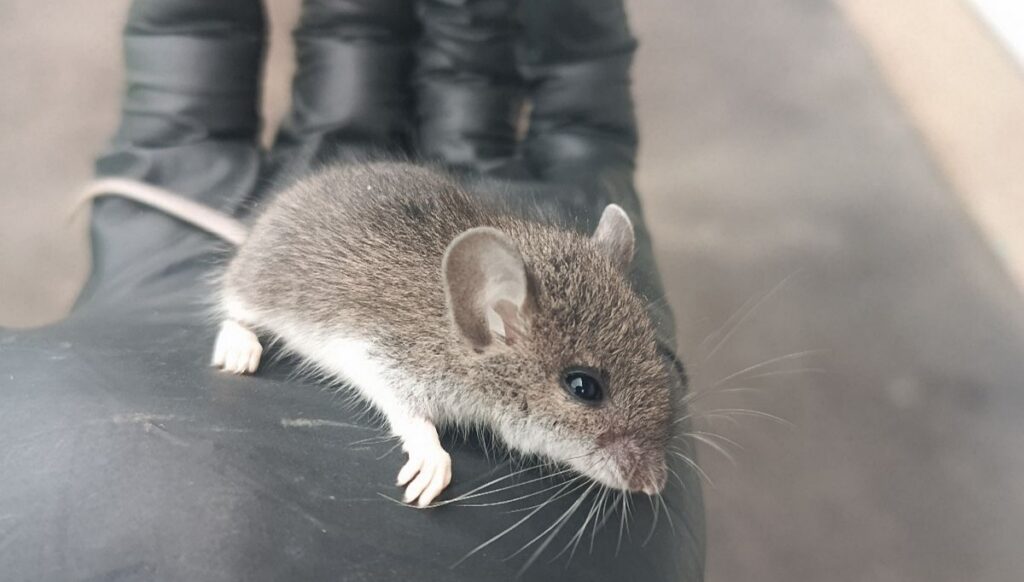
Mice are far more agile than most people expect. Their ability to climb and squeeze into tiny spaces is a core part of how they access and spread through a home. Here is what makes them such capable infiltrators:
- They Can Climb Almost Any Surface: Textured brick, siding, downspouts, interior pipes, and rough wood are all surfaces mice can scale without difficulty. They can move from your basement all the way up to the attic along the interior of your walls using pipes and framing as a climbing route. That vertical mobility means no part of your home is out of reach once they are inside. Our team checks the full height of a structure during an inspection, not just the ground level.
- They Can Squeeze Through a Gap the Size of a Dime: Mice can compress their bodies to fit through any opening as small as a quarter inch. If their head fits, their body follows. That means gaps around pipes, cracks in the foundation, worn door sweeps, and small openings between building materials are all viable entry points. Finding every one of them requires a trained eye and knowledge of where mice typically enter homes in North Atlanta.
- Their Agility Allows Them to Spread Throughout the Structure: Once inside, mice do not stay in one place. Their climbing ability and small size let them move through wall voids, across ceiling joists, and into every level of the structure. A colony that started near a basement entry point can be active in the attic within days. That spread is part of why a full inspection of the entire structure — not just the area where signs were first noticed — is essential before any work begins.
Seasonal Hoarding and Secondary Pest Attraction
Fall is when mice shift into a different gear. As temperatures drop in North Atlanta, their instinct to gather and store food kicks in and their activity inside the home increases significantly. They bring seeds, nuts, and other food items in from outside and cache them in wall voids, insulation, and other hidden spaces.
That hoarding behavior increases how much mice move through your home — more trips through more areas, carrying material back to their nesting spots. The noise level goes up, the droppings accumulate faster, and the damage to insulation spreads more quickly. Fall hoarding is often when homeowners in North Atlanta first realize something is seriously wrong inside their home.
The scent trails from an established mouse colony also attract larger wildlife to the same entry points. Rats, squirrels, and raccoons can detect the scent of mice from outside and will actively work to enlarge the small gaps mice use. A dime-sized hole that let a mouse in can become a much larger opening when a bigger mouse starts pulling at it from outside. This is one of the most important reasons to address a mouse infestation quickly and completely, leaving it in place creates conditions that invite additional and more destructive wildlife into your home.
Mouse Issues in North Atlanta
North Atlanta’s mild winters and warm summers mean mice stay active almost all year long. In places with very cold winters, harsh weather slows them down and cuts into their numbers. That does not happen here. The mild climate lets them keep breeding and moving through most of the year, which is why infestations in the area tend to grow faster and get worse than people expect.
North Atlanta has a mix of newer subdivisions and older neighborhoods, and both types of homes get targeted. Newer homes often have gaps around HVAC lines, garage door frames, and utility connections that were never properly sealed when the home was built. Older homes have worn weatherstripping, settling foundations, and aging materials that open up new gaps over time. Our team at Skedaddle works across North Atlanta every season and sees this pattern repeat in neighborhoods throughout the area.
Fall is still the busiest entry season, even with North Atlanta’s milder weather. As it starts to cool down, these animals move from wooded areas and green spaces toward the warmth of nearby homes. North Atlanta has a lot of properties that back up to woods, creek corridors, and parks — and those natural areas push large numbers of these animals toward residential streets every fall. Our team knows where this pressure shows up most and what to look for during an inspection.
Mouse Removal and Prevention with Skedaddle
When you call our team at Skedaddle, we start with a full inspection of your home, inside and out. We find every active entry point, check for signs of nesting and damage, and figure out how far the activity has spread through the structure. In North Atlanta homes, that means checking everything from the foundation and crawlspace all the way up to the attic and roofline because mice move through the full height of a home once they are inside.
Once we know the full picture, we seal every entry point with professional-grade materials that hold up against persistent chewing. Where needed, we use one-way doors that let mice already inside get out on their own but stop them from coming back in. After the home is clear, every opening gets sealed permanently. Homeowners should never try to seal entry points on their own — without a full inspection, gaps get missed and the problem keeps going.
Cleanup and prevention are the last steps. Our team removes nesting material, treats all contaminated surfaces with professional enzyme cleaners and disinfectants to get rid of scent trails, and fixes every condition that made your home a target. You do not need to handle any droppings, touch any nesting material, or figure out where they are getting in. Call our team at Skedaddle Humane Wildlife Control in North Atlanta the moment you notice signs of activity and let us handle every step from start to finish.
Frequently Asked Questions
How do I know if mice are nesting in my attic?
Common signs include scratching or scurrying sounds in the attic or ceiling at night, a strong musky odor from above, and visible droppings near the attic hatch or along the top of interior walls. You may also notice insulation that has been flattened, shredded, or displaced. Our professional inspection is the only reliable way to confirm how far the activity has spread.
Can mice travel between floors inside my walls?
Yes. Mice use the inside of wall cavities as travel corridors and can move from the basement to the attic by climbing along pipes, wires, and framing. A problem that appears to be limited to one area of the home is often spread much further through the structure. Our team inspects the full height of the home during every assessment for exactly this reason.
Do mice stay in a house year-round in North Atlanta?
Yes. North Atlanta's mild climate means mice do not face the same winter pressure that reduces populations in colder regions. They can remain active and continue breeding through most of the year inside a heated home. This is one of the reasons infestations in the area tend to grow larger and last longer than homeowners expect.
How do mice find their way back to the same entry points?
Through scent trails. Mice leave urine trails along every route they travel, and those trails guide them and other animals, back to the same spots repeatedly. Even after mice are removed, those scent signals remain active in the structure and keep attracting new mice from outside. Our professional enzyme treatment is what removes those trails and breaks the cycle.
Can a mouse infestation attract other wildlife?
Yes. The scent of an established mouse colony can draw larger wildlife, including rats, squirrels, and raccoons, to the same entry points. These larger mice can widen the small gaps that mice use, creating entry points large enough for themselves to get through. Addressing a mouse infestation promptly reduces the risk of a secondary wildlife situation developing.
What is the fastest sign that I have more than a few mice?
If you are finding droppings in multiple rooms or in areas away from the kitchen — in closets, behind furniture, near the attic hatch, or along baseboards throughout the home — that spread indicates an established colony rather than one or two mice. Multiple droppings in multiple locations means the population has already spread well beyond the entry point.
The Behavior Won’t Change But the Outcome Can
Mice are doing exactly what their biology tells them to do. They are finding warmth, food, and shelter and they are reproducing, chewing, climbing, and leaving scent trails every single day they are inside your home. That behavior does not stop on its own, and it does not slow down while you wait to see what happens.
The longer the situation goes without professional attention, the more the population grows, the more damage accumulates, and the harder the full resolution becomes. A problem that could have been sealed and cleared in one visit early in the season becomes a much bigger job by mid-winter.
At Skedaddle Humane Wildlife Control in North Atlanta, our team handles every step: inspection, sealing, removal, scent treatment, and cleanup. You do not need to figure out where they are getting in, handle any droppings, or deal with any part of this yourself. Request an estimate today and let our team take care of the problem completely before it goes any further.

 Loading...







