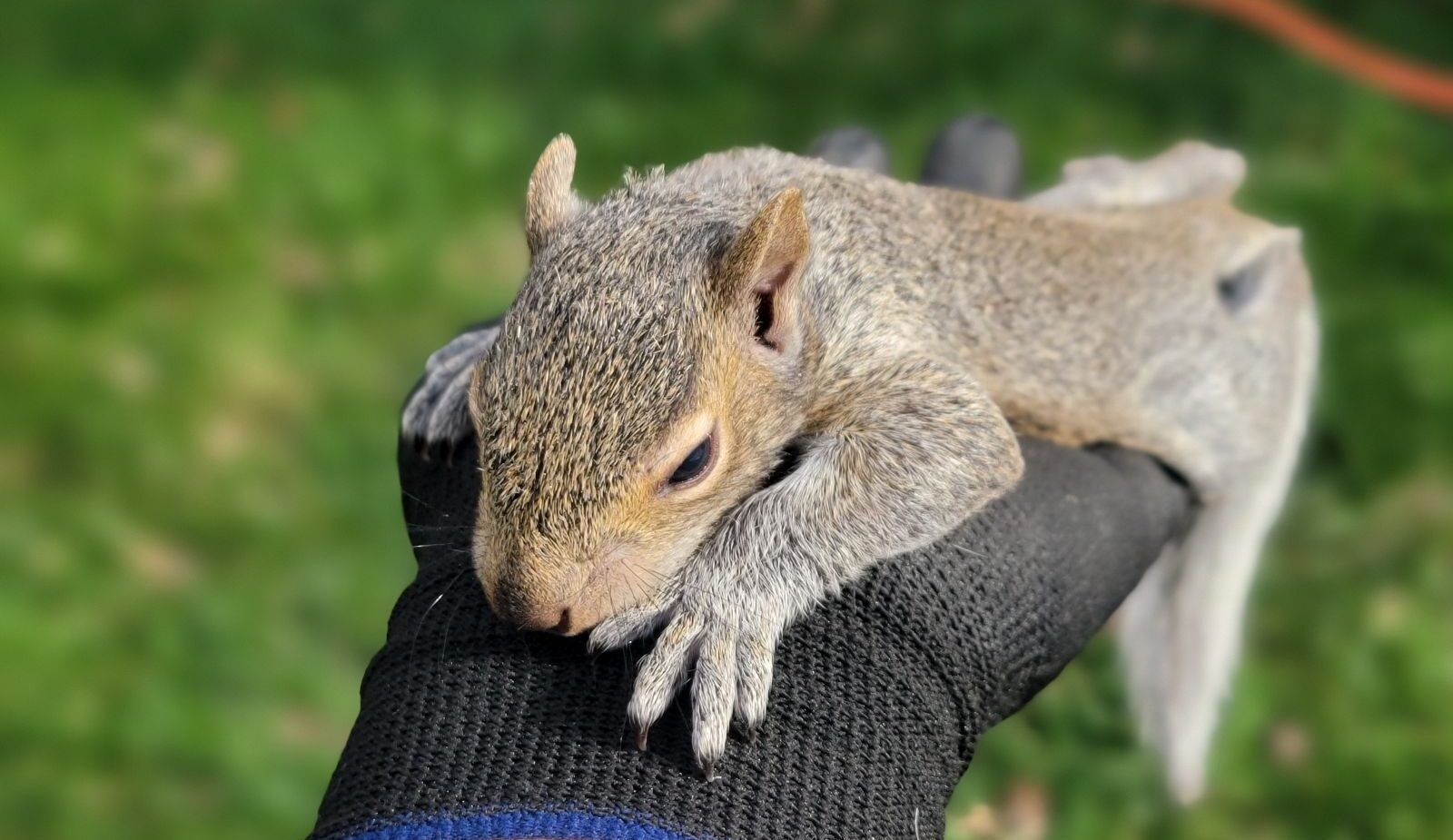
In February 2025, a squirrel caused a power failure at a downtown Toronto transmission station, knocking out electricity for thousands of people across the city. Hydro One confirmed that the animal made contact with electrical equipment and triggered the outage. It was a headline that surprised a lot of people, but to our team, it was not surprising at all. These animals and electricity are a dangerous combination, and it happens more often than most people realize.
A squirrel inside your home can knock out your power by chewing through the plastic coating on electrical wires in your attic or walls. These animals chew constantly, not out of curiosity, but because they have to. Their front teeth never stop growing, and chewing is how they keep them at a usable length. Electrical wiring is exactly the kind of material they chew through without any idea of the risk it creates. When that coating is stripped away, bare wires can touch, spark, and trip your breaker, cutting power to part or all of your home.
At Skedaddle Humane Wildlife Control in Oakville, we inspect attics across the area every season and find chewed wiring regularly. In this blog, you will learn exactly how squirrels damage your home’s electrical system, what warning signs to watch for, and why calling our team at the first sign of activity is the most important step you can take to protect your home and your family.
Should You Let Squirrels in Your Home?
No, and not just because of the noise and the mess. Squirrels cause real damage to your home’s electrical system, insulation, and structural materials. Letting them stay in your attic, even for a short time, creates risks that go well beyond what you can see from the outside. Chewed wiring, fire hazards, and contaminated insulation are all common outcomes when an active squirrel situation is left alone too long.
Squirrels are not safe to have inside your home. They chew through almost any material – wood, drywall, plastic, rubber, and electrical wiring – because their teeth grow continuously and need to be worn down. That constant chewing happens inside your walls and attic at all hours, and the damage it creates is largely invisible until something goes wrong. A tripped breaker, a burning smell, or flickering lights are often the first sign a homeowner gets that something serious has been happening inside the structure.
Beyond the electrical risks, squirrels leave behind droppings and urine that soak into insulation and create health hazards for the household. They also keep coming back. Once a nesting spot is set up in your attic, the same animals and their young return to it season after season if the entry points are not professionally sealed. The longer the situation goes on, the more damage builds up and the harder the removal and repair process becomes.
Chewing Through Wiring
Squirrels chew constantly, and the wiring inside your attic and walls is one of the materials they target. Here is how that chewing leads to electrical damage:
- Their Teeth Never Stop Growing So They Never Stop Chewing: Unlike human teeth, the front teeth of squirrels grow throughout their entire lives. That means they have to chew on hard surfaces every day just to keep their teeth at a usable length. Wood, plastic, rubber, and the coating on electrical wires all give them the resistance they need. Your attic has all of these materials in one place, which is why it becomes such an active chewing zone once one of these animals moves in.
- Gnawing Strips Away the Protective Coating on Wires: The plastic or rubber coating on a household wire is what keeps the current safely inside the conductor. When these animals chew through that coating, the bare copper wire underneath is exposed. One wire with stripped insulation is already a serious problem. Multiple stripped wires in the same area, which is common in an active nesting zone, create multiple points of risk that are very hard to find without a professional inspection.
- Chewed Wiring Is Often Hidden Deep Inside the Attic: The damage does not always happen near the attic hatch where it could be spotted easily. These animals travel throughout the full attic space, chewing on wiring wherever they come across it. Damage can happen along the roofline, near the peak of the attic, or inside wall cavities, spots that most homeowners never check and that need professional tools and experience to assess properly.
Short Circuits and Tripped Breakers
When stripped wires make contact with each other or with metal framing, the result is a short circuit that can cut power to part or all of your home. Here is how that plays out:
- Bare Wires Touching Each Other Create an Instant Surge: When the coating is stripped from two wires running close together, there is nothing stopping them from touching. That contact creates an immediate surge of current that your home’s electrical panel responds to by tripping the breaker. A tripped breaker that you cannot trace to an obvious cause, a specific appliance or an overloaded circuit is one of the warning signs that chewed wiring may be the source.
- Contact With Metal Framing Can Trigger the Same Result: A bare wire that touches a metal roof truss, joist hanger, or other structural metal creates the same kind of short circuit as two wires touching each other. Attics have a lot of metal framing and fasteners, and these animals move through all of it. Every surface they touch while travelling through the attic is a potential spot where a stripped wire could make dangerous contact with a grounded metal surface.
- Squirrels Can Also Cause Outages From Outside the Home: As the February 2025 Toronto incident showed, squirrels can knock out power from outside the home as well. When one of these animals climbs onto a pole-mounted transformer and touches both a live wire and a grounded surface at the same time, their body completes a circuit that creates an instant short. That surge trips utility fuses or damages neighbourhood transformers, cutting power not just to one home but to an entire block. It is a dramatic example of what squirrels can do to electrical equipment, and it is the same basic mechanism that plays out inside your attic every time a stripped wire makes contact with something it should not.
Fire Hazards From Chewed Wiring
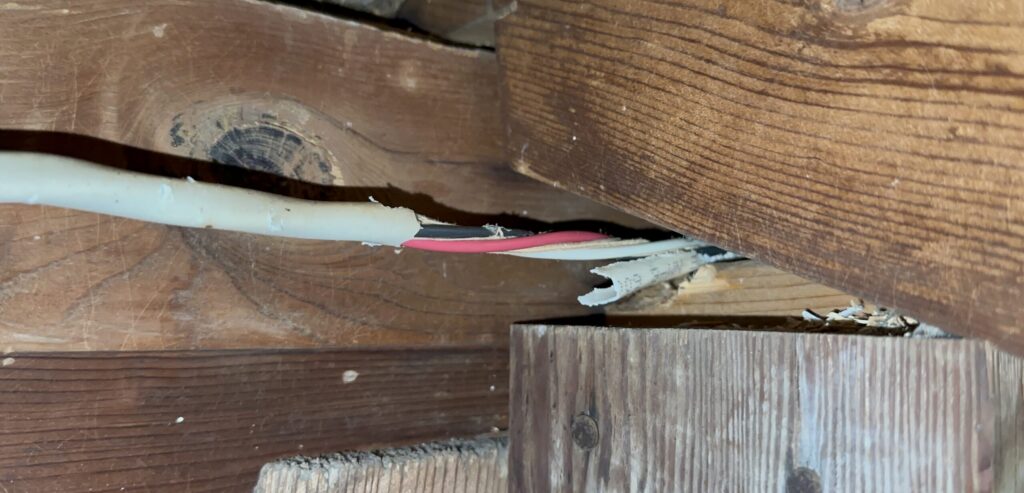
Chewed wiring does not just trip breakers; it can start fires. This is one of the most serious risks of having these squirrels in your attic, and it is one that most homeowners do not think about until it is too late.
When a bare wire arcs against nearby material, whether that is insulation, wood framing, or the dry nesting material squirrels bring into the attic, the spark can ignite. An attic fire that starts in the wiring is especially dangerous because it often goes undetected for a while before it reaches a part of the home where smoke detectors are located. By the time the alarm sounds, the fire may already be well established inside the roof structure.
Nesting material makes the situation worse. Squirrels build nests from dried leaves, grass, shredded insulation, and other dry, flammable material. When a nest is built near or around electrical wiring, which happens regularly in active attics, the combination of a potential spark source and highly flammable material creates exactly the conditions that start attic fires. Our team finds nests in contact with wiring during inspections on a regular basis, and it is one of the situations we treat as most urgent.
The risk does not go away when squirrels leave. Chewed wiring stays chewed. If the damage is not found and repaired by a licensed electrician after the animals have been removed, the hazard stays active inside your walls and attic. Our team notes all wiring damage found during an inspection so that homeowners can get the right repairs done safely and completely. You should never try to inspect wiring in an attic where these squirrels have been active; call our team first.
Warning Signs to Watch For
Most homeowners do not know they have a wiring problem until something electrical goes wrong. Here is what to watch for that could mean these animals have been chewing on your home’s electrical system:
- Unexplained Tripped Breakers or Power Interruptions: If a breaker trips without an obvious cause. No new appliance, no overloaded circuit. Treat it as a potential sign of chewed wiring rather than a random electrical issue. A single unexplained trip may not seem serious, but repeated trips on the same circuit are a strong sign that something in the wiring has been damaged. Do not just reset the breaker and move on without looking into it further.
- A Burning Smell From the Attic, Walls, or Electrical Panel: A burning smell anywhere in your home that you cannot trace to an obvious source, especially one that comes and goes or seems to come from the ceiling or walls, is an urgent warning sign. Burning plastic or a hot electrical smell can mean a bare wire is arcing against nearby material. Do not ignore this smell. Call an electrician and call our team to check the attic for active wildlife damage at the same time.
- Flickering Lights or Appliances That Cut Out Without Reason: Flickering lights or appliances that lose power for no clear reason can be signs of an intermittent short circuit caused by damaged wiring. These symptoms may come and go depending on how the stripped wires are sitting relative to each other or to metal framing. Intermittent symptoms are often harder to trace than a full outage, which is why a professional inspection of the attic is the most reliable way to find out whether wildlife damage is the source.
Other Damage Beyond Electrical
Electrical damage is the most urgent concern when squirrels are in your attic, but it is not the only kind of damage they cause. Here is what else our team commonly finds during inspections:
- Insulation That Has Been Torn Apart for Nesting: Squirrels pull insulation apart to build their nests, leaving big gaps in the layer that keeps your home warm in winter and cool in summer. When that layer is missing or damaged, your heating and cooling system has to work harder, and your energy bills go up. Insulation that has been soiled by droppings and urine cannot be cleaned and has to be fully removed and replaced. Our team handles all of that as part of the full restoration process.
- Structural Wood That Has Been Chewed and Weakened: Roof rafters, fascia boards, and other wood in the attic are all targets for these animals. They chew on wood the same way they chew on wiring because their teeth need to be worn down. In spots where the same area gets chewed repeatedly, the wood gets weaker over time. Wood that has been heavily gnawed may need to be looked at by a contractor after the infestation has been resolved to make sure it is still structurally sound.
- Droppings and Urine That Contaminate the Attic Space: Squirrels leave droppings and urine all through the areas they use. That waste soaks into insulation and wood and creates real health risks from bacteria and parasites. The contamination does not go away when the animals leave; it stays in the attic and keeps posing a risk to anyone who goes up there without the right protective gear. Our team handles all cleanup and decontamination safely as part of every removal job.
What are Squirrel Problems in Oakville?
Oakville has a lot of mature trees, established neighbourhoods, and older homes and that combination creates steady pressure from squirrels on residential properties across the area. Tree branches that hang over the roof give squirrels direct access to the roofline. Once they are up there, they test every surface until they find a weak spot. Aging fascia boards, worn vent covers, and soft soffit panels on older Oakville homes are exactly what they are looking for.
Fall is the busiest season for attic entry in Oakville. As it gets colder, these animals look for warm, enclosed spaces to nest and store food for winter. Attics become prime targets from September through November, and chewing activity inside homes goes up a lot during this period. By the time winter sets in, a squirrel that got in during fall is fully settled and chewing through the structure on a daily basis.
The electrical risks are highest in older Oakville homes where the wiring may already be aging. Knob-and-tube or aluminum wiring that has been in place for decades is more at risk from chewing damage than newer copper wiring. If you live in an older Oakville home with large trees close to the roofline and you hear scratching or scurrying from your attic, do not brush it off. Treat it as a potential electrical risk and call our team right away.
Squirrel Removal and Prevention with Skedaddle
When you call our team at Skedaddle, we start with a full inspection of your roofline, attic, and exterior. We find every active entry point, check for signs of nesting, and look at the full extent of the chewing damage, including any wiring that shows signs of being damaged. That full picture is what lets us tell you exactly what has happened inside your attic and what needs to happen next.
Once we know what we are dealing with, we put one-way doors at the active entry points. These let the squirrels get out on their own but stop them from getting back in. After the attic is clear, we seal every opening with strong materials that hold up against future chewing. Homeowners should never try to seal entry points on their own and should never go into an attic with active wildlife or damaged wiring without calling a professional first.
Cleanup, wiring notes, and long-term prevention finish the job. Our team removes nesting material, records all wiring damage for follow-up by a licensed electrician, and takes care of every roofline condition that made your home a target. You do not need to go into the attic or handle any part of this yourself. Call our team at Skedaddle Humane Wildlife Control in Oakville the moment you hear sounds from your attic or notice any of the electrical warning signs described in this blog.
Frequently Asked Questions
How do I know if a squirrel has chewed wiring in my attic?
The most common signs are unexplained tripped breakers, flickering lights, a burning smell from the ceiling or walls, and sounds of movement or chewing in the attic. A professional inspection of the attic is the only reliable way to assess what has been damaged.
Is chewed wiring covered by home insurance?
It depends on your policy. Some home insurance policies cover sudden damage caused by wildlife, while others do not. Our team documents all damage found during an inspection, which can help support an insurance claim if coverage applies. Check your policy and speak with your insurer to find out what is covered.
How quickly can a squirrel cause serious electrical damage?
Significant damage can happen within a few weeks of a squirrel becoming active in an attic. These animals chew constantly, and wiring damage can build up faster than most homeowners expect. The sooner an inspection is done after activity is first noticed, the less damage there is to find and repair.
Can I smell chewed wiring before a fire starts?
Sometimes. A burning plastic smell or a hot electrical smell can mean a bare wire is making contact with nearby material and generating heat. This smell may come and go or start out faint. Any burning smell that cannot be traced to an appliance or clear source should be treated as an urgent warning sign.
Do squirrels cause more electrical damage in older homes?
Older wiring is generally more at risk from chewing damage than newer copper wiring. Homes with aging electrical systems may see more serious consequences from the same amount of chewing. If you live in an older home and think wildlife may be active in the attic, treat it as a potential electrical issue right from the start.
Will the electrical damage repair itself after the squirrels are removed?
No. Chewed wiring stays damaged until it is professionally repaired. Removing the animals resolves the active threat but does not fix the wiring that has already been compromised. A licensed electrician should check and repair all damaged wiring found during a professional attic inspection.
Small Animal, Big Risk, Call Skedaddle Before It Gets Worse
One squirrel knocked out power for thousands of people in downtown Toronto. Inside your attic, the stakes are more personal, and the damage is often invisible until something goes seriously wrong.
Chewed wiring does not fix itself. Stripped insulation does not grow back. And the fire risk that comes with bare wires sitting next to dry nesting material does not go away when these animals leave. The damage stays in your attic until a professional finds it and gets it repaired.
Every week the situation goes without attention is another week of chewing, another week of damage building up, and another week closer to a tripped breaker, a burning smell, or something worse. These animals are small, but what they do to your home’s electrical system is not a small problem.
At Skedaddle Humane Wildlife Control in Oakville, our team finds every entry point, removes the squirrels humanely, documents all wiring damage, and seals your home against future entry. You do not need to go into the attic or deal with any of this yourself. Request an estimate today and let our team protect your home before a small problem turns into a serious one.

 Loading...