Living beside a Toronto ravine means your home needs a full wildlife-proofing checklist. You need more than a quick look at the yard. A professional should check the roof, vents, chimney, soffits, foundation, decks, sheds, garbage storage, trees, and other areas that may draw wildlife close to the house. The goal is to find weak spots before raccoons, squirrels, skunks, bats, mice, rats, or birds use them to get inside.
You may live near the Don Valley, Humber River, High Park, or another green corridor. These areas give wildlife water, food, shelter, and safe paths through the city. Your house may sit close to one of those paths, even if you do not see much activity during the day. At Skedaddle Humane Wildlife Control in Toronto, our wildlife-proofing checklist helps our team find the places where they may climb, dig, squeeze, or chew their way into your home.
You should not inspect high roofs, reach into dark spaces, handle droppings, or seal an opening on your own. Wildlife or babies may already be inside. In this blog, we will explain what our team checks from the roof to the ground, why ravine homes need added care, and how we can protect your home.
Does Water Attract Raccoons?
Yes, water can attract raccoons. They need water to drink, and they often search for food near rivers, ponds, creeks, storm drains, and wet ground. A Toronto ravine may offer many of these things in one place. Homes beside that space can become part of their nightly travel route.
A swimming pool, pond, birdbath, or bowl left outside may also catch their attention. However, water may not be the only reason they visit. Garbage, fallen fruit, birdseed, pet food, thick plants, and easy shelter can make a yard even more appealing.
Raccoons are good at remembering where they found food, water, or a safe place to rest. They may return to the same property night after night. A secure attic, chimney, deck, or shed can look like a good den once they reach your yard.
Water near a ravine cannot simply be removed, so the home must be made harder to enter. Our professional team looks at the full property and the way wildlife may move across it. We then build a plan based on the home, the nearby land, and the signs we find.
High-Level and Roofline Exclusion
Many wildlife problems begin above the ground. Raccoons and squirrels can climb trees, fences, brick walls, downspouts, and deck posts. Bats, mice, and birds may use gaps that are very hard to see from below.
Our team checks the full roofline instead of looking at only one damaged spot. One open vent may be the active entrance, but other weak areas could become the next way inside. The following roof checks form an important part of the plan.
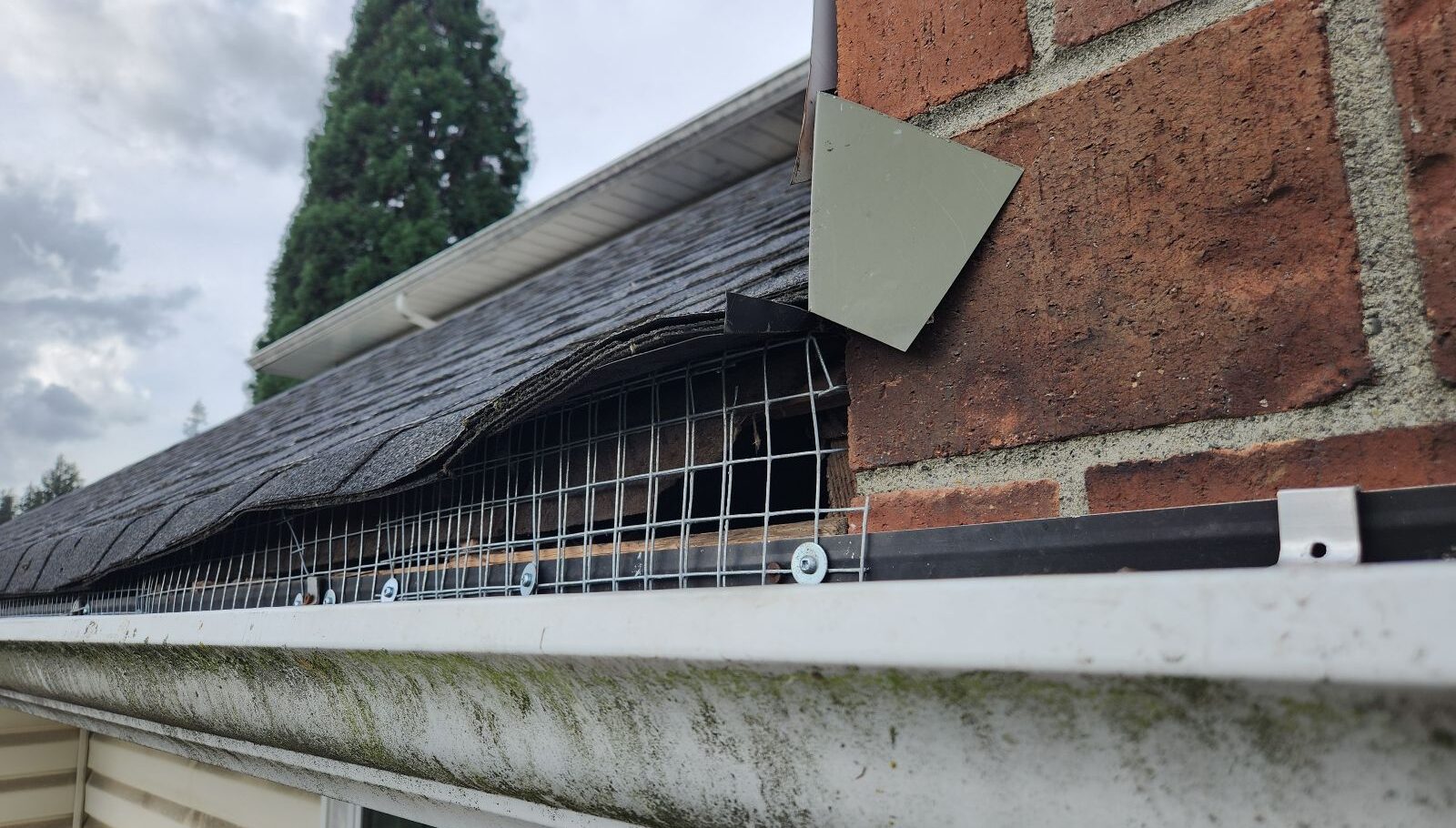
- Protect Roof Vents and Chimney Openings: Our team checks roof vents, plumbing vents, exhaust openings, and chimneys for loose or weak covers. We can install strong screens and caps that allow air or smoke to move as needed while blocking wildlife. The material must stand up to chewing, pulling, and Toronto weather. A light plastic cover may not offer enough protection against a determined raccoon or squirrel.
- Reinforce Roof and Wall Meeting Points: The places where two rooflines meet can hide small building gaps. Soffit corners, dormers, roof returns, and wall joints may look closed from the ground while leaving space behind the outer material. Our technicians inspect these areas closely and shape durable barriers to fit the home. This work closes the weak point without blocking needed airflow or drainage.
- Check Tree and Roof Jump Zones: Trees beside a ravine can form a bridge from the green space to your roof. Long branches may allow squirrels to jump onto shingles, while raccoons may climb strong trunks and move across the canopy. Our team looks at how the yard connects to the roof and points out branches that may need attention from a qualified tree professional. The aim is to reduce easy travel routes without harming healthy trees.
- Guard Fascia and Roof Edges: Fascia boards, drip edges, and the lower edges of a roof can loosen with age, snow, ice, and water. A small opening may give bats or mice enough room to enter. A raccoon or squirrel may also pull at a weak edge and make the gap larger. Our team can reinforce these areas with strong materials that fit the shape and needs of the house.
The roof inspection also looks for lifted shingles, stains, chew marks, bent vents, and damaged soffits. These signs may show where wildlife has already tested the home. You may hear movement above you before you can see any damage outside.
A roof can look fine from the driveway and still have several weak points. That is why this part of the checklist needs trained technicians with the right safety gear. Our team knows how to inspect hard-to-reach areas without asking you to climb a ladder or enter the attic.
Low-Level and Foundation Exclusion
Not every visitor comes from above. Skunks may dig below a deck, shed, porch, or addition. Mice and rats can enter through very small gaps near pipes, doors, vents, and foundation walls.
Our team checks the full lower edge of the home. We also look at nearby structures that may provide a quiet place to den or nest. The work must block entry while still allowing the building to drain and breathe as designed.
- Install Below-Ground Screening Where Needed: Open ground below a deck, porch, or shed can offer a dry and hidden space. Our team may install heavy screening below the soil to stop wildlife from digging underneath. The barrier must reach the right depth and follow the shape of the structure. This is professional work because poor placement can leave gaps, cause damage, or trap wildlife below the structure.
- Use an Outward-Facing Barrier Against Digging: Some locations need an L-shaped section of strong mesh. The lower part extends away from the structure beneath the soil, which makes it harder for a skunk or other digging visitor to pass underneath. Our technicians measure and secure the barrier so it protects the full edge. We first make sure no wildlife or babies will be sealed inside.
- Secure Basement Window Wells: A deep window well can become a hiding place or a fall risk for wildlife. Thin plastic covers may crack, lift, or bend under weight. Our team checks the well, the window frame, and the space where the cover meets the wall. When needed, a strong and well-fitted cover can protect the opening while still meeting the needs of the window.
- Protect Gaps, Vents, and Weep Holes: Brick homes often have weep holes that let moisture escape from behind the wall. These openings should not be filled with foam, caulk, or another material that stops airflow. Our team can fit proper covers that help block mice and insects while allowing the wall to work as planned. We also inspect pipe gaps, utility lines, foundation vents, and worn seals around lower doors.
Foundation cracks can grow after years of freezing, thawing, rain, and soil movement. A gap that once seemed too small may become a path into a wall or basement. Older Toronto homes may also have several additions built with different materials, which can leave hidden meeting points.
You should call our team if you see digging, dark rub marks, droppings, chewed surfaces, or tracks near the foundation. Do not reach below a porch or place a temporary cover over an opening. A mother and her young may be hidden inside.
Ravine-Specific Property Management
A strong house is only one part of the plan. A yard may keep bringing wildlife close if it offers easy food, water, cover, or a clear path to the roof. Properties beside ravines often have thick plants, mature trees, steep slopes, and damp ground.
Our team studies the space between the ravine and your house. We then point out conditions that may increase activity and arrange professional protection where needed. These checks help reduce the chance that a passing visitor will stop and test your home.
- Review Garbage and Green-Bin Storage: Raccoons can tip, pull, and open many weak containers. Rats and mice may feed on small spills around the storage area. Our team checks whether waste sits close to the house and whether the enclosure shows signs of damage. Strong lids and secure storage can reduce smells and access, while professional exclusion protects the nearby building.
- Check Bird Feeders and Fallen Seed: A feeder may be meant for birds, but the food below it can also draw squirrels, mice, rats, and raccoons. Seed may collect under decks, beside foundation walls, or within thick plants. Our technicians look for feeding areas that bring wildlife too close to possible entrances. We can explain which conditions are adding pressure to the home so you can make an informed choice about the feeder.
- Assess Dark Paths and Outdoor Lighting. Ravine-facing yards may become very dark at night. That darkness can make it easier for wildlife to cross the property without being noticed. Our team may suggest having suitable motion lights placed in key areas by a qualified professional. Lighting alone will not solve an entry problem, but it may support a larger prevention plan.
- Inspect Brush, Woodpiles, and Ground Cover: Thick plants can hide digging, droppings, tracks, and weak points along the home. Woodpiles and stored materials may also create cover near a garage, shed, or foundation. Our team checks these areas for signs of nesting or regular travel. If yard work is needed, we can explain which zones should be cleared by the right service after wildlife concerns have been addressed.
Outdoor food and shelter can keep bringing them back even after one entrance has been closed. That does not mean the whole yard must become bare. It means the space should be reviewed with the same care as the house.
Ravine properties may also have fences, retaining walls, stairs, or decks that connect different levels of the yard. These features can act like travel lanes. Our team follows those paths during the inspection to see where they lead and which part of the home they place at risk.
Why Ravine Properties Need a Different Approach
A Toronto ravine is not an empty strip of land. It forms part of a large living corridor that runs between parks, waterways, streets, and neighbourhoods. Wildlife can follow tree cover and low ground while staying away from busy roads for part of the trip. A home beside that route may receive more visits than a home several blocks away.
The land itself can create special problems. Slopes may direct water toward a foundation or make one side of a house easier to reach. Tree branches may hang over the roof, while thick growth can hide decks and lower walls. A garage or shed near the rear property line may become the first structure they find after leaving the ravine.
Many nearby homes also have more than one roof level. An addition, sunroom, porch roof, or attached garage can create easy steps to the main roof. Each meeting point may have its own vents, soffits, flashing, and small gaps. Our team checks the whole building as one connected structure.
Seasonal changes add another layer. Spring brings nesting and the birth of young. Summer offers more food and water, while fall sends many species looking for safe shelter before winter. Cold weather can make a warm attic, wall, crawlspace, or space below a deck even more appealing.
The same family may use an area across more than one season or generation. They can remember safe food sources, travel paths, and old den sites. If a weak spot is repaired with a light material, they may pull it open again or test another place nearby.
That is why our plan does not focus on one hole alone. We look at the active entrance, other weak areas, the path from the ravine, and the signs left around the home. This wider view helps us build long-term protection for the property.
Wildlife Issues Around Toronto Ravine Homes
Early signs can be easy to miss. You may hear light scratching in the morning, a heavier thump at night, or chirping from a wall. You might also notice a vent that looks bent, a soffit panel that has moved, or shingles that no longer sit flat.
Different sounds can happen at different times. Squirrels are often active during the day, while raccoons may make more noise after dark. Mice and rats can move within walls and ceilings, and bats may be seen leaving near dusk. Birds may call from vents, chimneys, or roof spaces where they have built nests.
Odours can also point to a hidden problem. Urine, droppings, nesting material, or a visitor that has died inside a wall can create a strong smell. You should not enter the area or try to clean it. Our professionals have the training and equipment needed to inspect contaminated spaces safely.
Damage may spread beyond the entrance. Wildlife can tear insulation, chew wood, damage ducts, or gnaw electrical wires. Nesting material may block vents and affect airflow. Moisture and waste can also harm building materials if the issue continues.
The yard can offer clues before the house does. A tipped green bin, dug soil, tracks, repeated movement along a fence, or a new space below a shed may show that wildlife is spending time on the property. These signs do not always mean they are inside, but they give our team useful places to inspect.
You should act quickly if the noises become louder or you see an entrance being used. However, the opening should not be blocked before the inside is checked. Closing it at the wrong time can separate a mother from her babies or leave wildlife trapped inside the building.
Toronto Homes Face Changing Seasonal Pressure
Toronto weather can be hard on roofs and foundations. Snow, ice, wind, heavy rain, and summer heat can loosen covers and open small gaps. Water can move behind damaged boards, while freeze-and-thaw cycles may make cracks wider over time.
Older neighbourhoods may have brick homes with wood soffits, large chimneys, and several roof sections. Newer builds may still have gaps around vents, roof joints, or utility lines. No home is protected by age alone. The exact weak points simply change from one building style to another.
- Spring is a key time because many species look for safe places to raise their young. A quiet attic or space below a deck may protect a family from rain and other dangers. Extra care is needed during removal so mothers and babies are handled humanely.
- Summer activity can stay high around water and food. Ravines, rivers, gardens, green bins, and outdoor eating areas may all play a part. Open windows and doors can also bring wildlife closer to living spaces, especially if screens or frames are damaged.
- During fall, many of them search for shelter from colder weather. Small gaps may become active entrances as temperatures drop. Winter does not always end the problem, since some wildlife may remain inside a warm part of the house for long periods.
A year-round plan is therefore more useful than a one-time repair. Our team considers the season, the species involved, the age of the home, and the nearby green space. This helps us choose the right time and method for humane removal and prevention.
Humane Wildlife Removal and Prevention with Skedaddle
A humane approach begins with a detailed inspection. Our professional wildlife team checks the roofline, attic, vents, soffits, chimney, walls, foundation, decks, and other likely entry areas. We identify what is present, how it entered, and whether babies may be inside.
Our removal plan depends on what we find. When suitable, we install one-way doors over active entry points. These doors allow wildlife to leave but prevent them from getting back inside. Our team watches the situation and confirms the space is empty before the final repair is completed.
Young families need added care. If babies are present, our technicians use methods designed to keep them safe and support reunion with their mother outside the home. This avoids leaving young wildlife behind or separating the family without a plan.
Once the space is clear, we close entry points with durable materials suited to the building. We also protect other weak areas that could become new entrances. This step matters because a raccoon or squirrel may return to the same roof and test another nearby gap.
Our team can also clean and treat affected spaces. Droppings, urine, nesting material, and damaged insulation may create odours or health concerns. You should never handle these materials or enter a tight space where contamination may be present.
At Skedaddle, we join removal, cleanup, repair, and prevention into one plan. We do not ask you to climb onto the roof, reach into a den, or guess whether wildlife has left. You receive a clear explanation of what we found and what the home needs for long-term protection. This approach reflects the inspection, humane removal, cleanup, and permanent exclusion process described by Skedaddle Humane Wildlife Control.
Frequently Asked Questions
What parts of a ravine home need to be checked first?
The whole outside of the home should be inspected, but the roofline and foundation often need close attention. Vents, soffits, chimneys, roof joints, decks, porches, sheds, window wells, and utility openings can all provide access. Our team also checks the yard for paths that lead toward those weak areas. Tree branches, fences, retaining walls, thick plants, and stored items can help wildlife move close to the building. Looking at the home and yard together gives us a clearer picture.
How can I tell if wildlife is living in my attic?
Common signs include scratching, running, thumping, chirping, or squeaking above the ceiling. You may also notice bad smells, stains, damaged vents, lifted shingles, or material sticking out from a roof gap. Do not enter the attic to look for the source. Droppings, damaged wires, frightened wildlife, and weak surfaces may create serious risks. Our technicians can inspect the attic and roof safely.
Should an opening be sealed as soon as it is found?
No. An opening should be checked before it is sealed. Wildlife or babies could still be inside, even if you have not heard noise for several hours. Our team identifies the active entrance and checks for nesting activity. We can then use the right humane removal method, including one-way doors when suitable, before closing the opening with strong materials.
Are garbage bins the main reason raccoons visit ravine homes?
Garbage is a common draw, but it is not the only one. Water, birdseed, fallen fruit, pet food, gardens, compost, thick cover, and safe den spaces can also bring them close. A raccoon may first enter the yard for food and then notice a weak roof vent or chimney. That is why secure waste storage should support professional exclusion rather than replace it.
Can wildlife return after an entry point has been repaired?
Yes, they may return and test the old entrance or another weak area. Wildlife can remember a safe den and may work hard to get back inside, especially if young were raised there before. A lasting plan should cover more than the visible hole. Our team closes the active entrance and protects nearby areas that may become the next target.
How often should a ravine property be inspected?
You should arrange an inspection when you hear sounds, see damage, notice droppings, or spot repeat activity near the house. An assessment can also help after roof work, storm damage, or changes to trees and outdoor structures. Homes beside green corridors face steady pressure across the seasons. Our professional inspection can find new weak areas before they turn into larger problems.
Keep the Ravine Outside Your Home
Living beside a Toronto ravine gives you easy access to trees, trails, water, and green space. It also places your home close to the routes wildlife uses to find food and shelter. A full checklist should cover the roof, foundation, decks, sheds, yard, waste storage, and every possible entrance between them.
You do not need to inspect dangerous spaces or handle the problem yourself. At Skedaddle Humane Wildlife Control in Toronto, we can find active entrances, remove wildlife humanely, clean affected areas, and install long-term protection.
Contact us to schedule a professional assessment. You can also request an estimate to learn more about protecting your ravine-side home.

 Loading...







