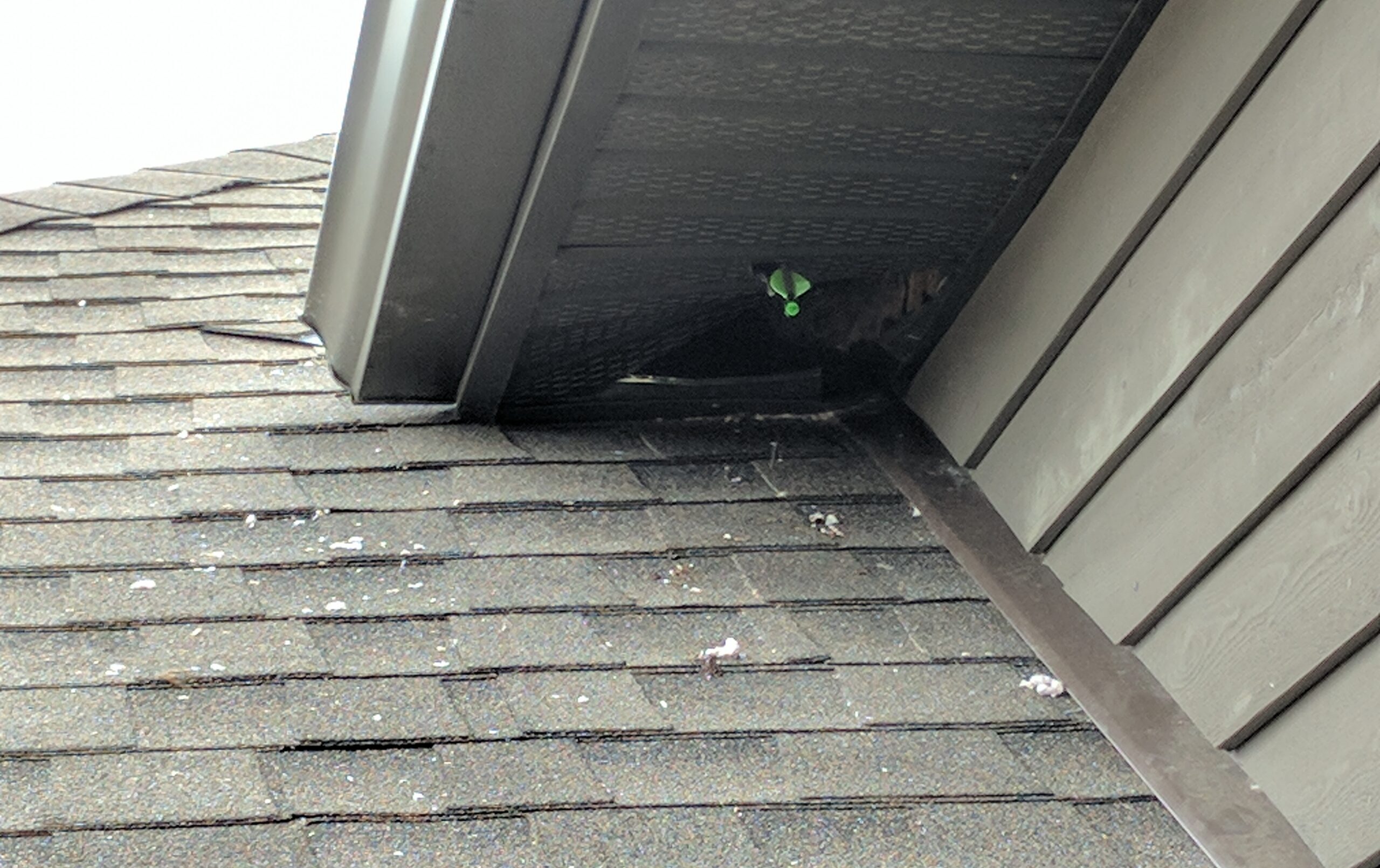
You may see a loose soffit panel and think it only affects how your home looks. However, damaged soffits can allow rain into the roof edge and give squirrels, raccoons, birds, or bats access to your attic. A small exterior gap may connect to a large, warm space above your ceiling.
Wind, aging materials, moisture, and small construction weaknesses can all damage soffits. Once an edge becomes loose, these animals may push, pull, or chew it to create a larger entrance. The opening can then lead to nesting, contaminated insulation, damaged wiring, and moisture problems.
Homeowners should observe the area from the ground but should not climb, close the panel, handle droppings, or remove nesting material. Dependent young may be hidden inside even when an adult is away. At Skedaddle Humane Wildlife Control in Oakville, we inspect the complete area and handle the work for you. In this blog, we explain common soffit problems, signs of entry, attic damage, water concerns, professional removal, and lasting prevention.
What Are the Common Problems With Soffits?
Common soffit problems include loose panels, missing sections, cracks, water stains, blocked vents, rot, and gaps caused by poor installation. Wind can lift lightweight panels, while age and moisture may weaken the material. A small defect can grow as weather continues to affect the roof edge.
Damage can also create an opening into your attic. Squirrels may chew weak materials, raccoons may pull down loose panels, and birds or bats may enter narrow gaps. Once inside, they can build nests and contaminate the space.
The visible damage may not show the full problem. Waste, nesting material, damaged insulation, or wiring concerns could be hidden beyond the opening. Skedaddle inspects the soffit and connected attic before recommending removal, cleanup, restoration, or exclusion.
What Can Cause Soffit Damage?
Soffit damage may happen during one strong storm or develop slowly over several years. A panel that looks slightly loose from the ground may hide a much larger weakness. Several common causes can leave the roof edge exposed.
- Wind and Storm Damage: Strong winds can bend, lift, or remove lightweight panels. Wind-driven rain may then enter the roof edge and reach nearby wood or insulation. Our team checks whether the damaged area has also become an active entry point.
- Aging and Moisture: Older materials can crack, warp, rot, or pull away from nearby trim. Repeated moisture may weaken the panel and the wood supporting it. A professional inspection can determine how far the damage has spread.
- Construction Weaknesses: Poorly fitted corners, loose fasteners, and small installation gaps can leave an exposed edge. These issues may appear in newer homes as well as older ones. An animal may enlarge the original gap by pushing, pulling, or chewing it.
- Previous Wildlife Activity: Squirrels and raccoons may return to an opening they have used before. Chewing, claw marks, bent materials, or dark stains can show repeated activity. The panel should not be repaired until our professionals confirm that the attic is empty.
How a Small Opening Can Lead Into the Attic
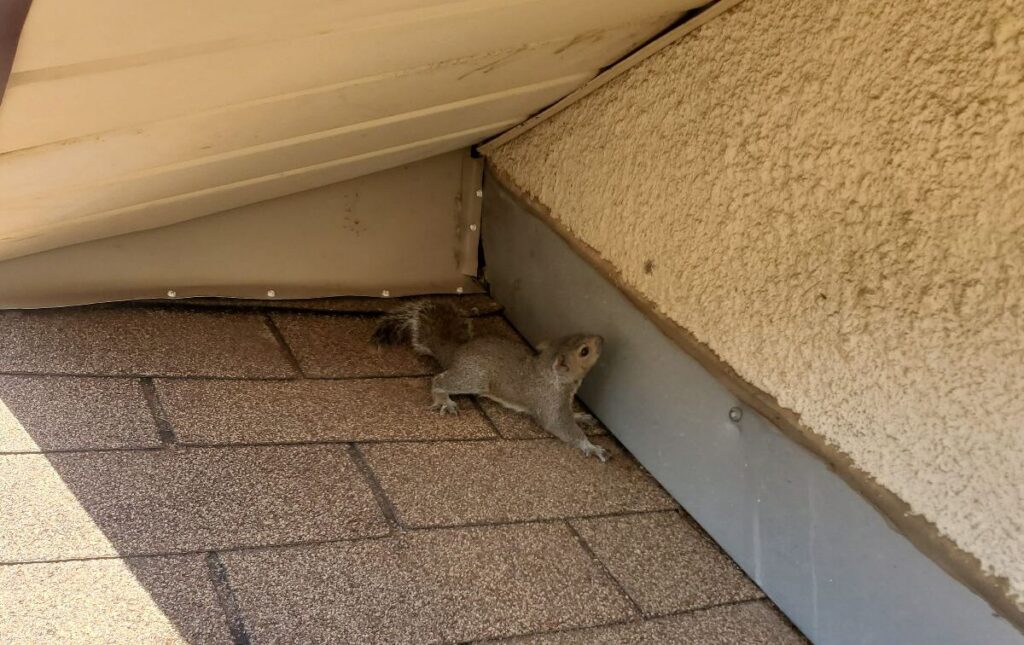
Soffits cover the underside of the roof edge, and the space behind them may connect directly to the attic. A narrow opening can therefore lead into a much larger area. Warmth, insulation, and protection from weather can make that space appealing.
Different species use damaged soffits in different ways. A squirrel may chew around an edge, while a raccoon may pull down a loose panel with its paws. Birds and bats can use smaller openings that may be difficult to see from the ground.
The entrance may be far from the place where sounds are heard. These animals can move through soffits, attic spaces, roof voids, and areas above attached garages. Skedaddle traces the full route without asking you to enter the attic or open a wall.
Signs That the Opening May Be Active
A damaged soffit does not always mean that something is living inside. However, several signs together may point to regular use. Activity can happen while you are sleeping, at work, or in another part of the home.
- Scratching or Movement: You may hear scratching, chewing, fluttering, rolling, or heavy movement above the ceiling. The time and type of sound can help our team identify the likely species. We confirm the source through a complete inspection.
- Repeated Roof Activity: You may notice an animal using the same tree, gutter, fence, or roof edge each day. Frequent visits to one soffit corner are a strong warning sign. Homeowners should watch only from a safe location on the ground.
- Nesting Material: Grass, leaves, paper, feathers, or pieces of insulation may appear near the opening. The visible debris could be only a small part of a nest farther inside. You should not pull it out because eggs or young may remain hidden.
- Droppings and Staining: Waste or dark marks may appear on siding, brick, windows, or the ground below the soffit. These materials should not be touched, swept, or vacuumed. Skedaddle assesses the contamination and handles the required cleanup.
- Unusual Odours: Urine, droppings, damp nesting material, or a deceased animal can create a strong smell. Air movement may carry the odour away from its true source. An attic inspection helps us locate the affected area.
Attic Damage Can Extend Beyond the Soffit
The soffit opening may be only the beginning of the problem. Once inside, these animals can move throughout the attic and affect areas far from the entrance. The damage may remain hidden until noise, odours, or other signs become noticeable.
- Damaged Insulation: Nesting and regular movement can flatten, tear, or move insulation. Urine and droppings may also contaminate large sections. Our team assesses whether professional removal and restoration are required.
- Chewed Materials: Squirrels and mice may gnaw wood, plastic, stored belongings, or electrical wiring. Damaged wiring can create a hidden fire concern above the ceiling. Our professional inspection identifies affected areas without asking you to search for them.
- Urine and Droppings: Waste can collect around nests and common travel routes. Odours and contamination may remain after the occupants have left. At Skedaddle, we handle the material with suitable equipment and professional sanitation methods.
- Nesting Debris: Leaves, twigs, food remains, feathers, and torn insulation may collect inside the attic. This material can hold moisture or attract insects. Clearing only what is visible near the opening will not address the whole nesting area.
Water, Ventilation, and Structural Problems
Not every damaged soffit begins with wildlife activity. Moisture, poor ventilation, or aging materials may create the original weakness. That damaged area can later become an easy entrance.
- Water Entering the Roof Edge: A missing or bent panel may allow wind-driven rain to reach wood and insulation. Moisture can travel beyond the visible opening. Water stains in the attic may reveal a wider affected area.
- Wood Rot: Repeated moisture can weaken fascia, rafters, and roof decking. Soft wood may be easier for animals to pull apart or chew. Our inspection checks the condition of the opening and nearby building materials.
- Mould Concerns: Damp wood, insulation, and nesting material may support mould growth. The problem can remain hidden above the ceiling for a long time. Homeowners should not disturb the area because professional assessment may be required.
- Poor Airflow: Soffit vents help fresh air move through the attic. Damage or nesting material may block this airflow and trap moisture or heat. Professional restoration must protect the opening without stopping the ventilation the roof needs.
Why the Soffit Cannot Be Repaired Before Inspection
You should not push a loose panel back into place before the connected space has been inspected. An adult may be outside searching for food while eggs or dependent young remain inside. Closing the gap could trap them or separate a family.
A trapped animal may cause further damage while searching for another exit. It could move deeper into the attic, wall, or ceiling. The original panel may also be forced open again.
Correct timing depends on the species, season, nesting stage, and location. Skedaddle confirms whether the space is active before any repair begins. Permanent exclusion is completed only after the occupants have been removed humanely.
How Professional Inspection Finds the Full Problem
Our team begins by checking the soffit, fascia, vents, roof junctions, shingles, gutters, and nearby exterior materials. We also inspect the attic or connected roof space. This tells us whether the damaged panel is the main entrance or one of several weak areas.
Chewing, claw marks, staining, droppings, nesting material, sounds, and travel patterns help us identify the likely species. We also check for eggs or dependent young. You will not need to approach the opening or search through a contaminated attic.
The findings guide the removal, sanitation, restoration, and exclusion plan. We inspect similar soffit corners and roof vents around the home as well. Protecting nearby weak points reduces the chance of another entry.
Soffit Problems Around Oakville Homes
Oakville’s mature trees, ravines, lakeside areas, creeks, and growing subdivisions support regular wildlife movement. Branches and connected roofs can place squirrels and raccoons close to soffits. Birds and bats may find narrow openings near vents and roof edges.
Local weather can also affect exterior materials. Wind, rain, snow, ice, and changing temperatures can loosen panels or widen existing gaps. Even newer houses may have construction weaknesses around soffits, vents, and roof junctions.
The season can change what is happening behind the panel. Spring and summer activity may involve nesting families, while fall and winter can bring a search for warm shelter. At Skedaddle Humane Wildlife Control in Oakville, we consider the home, season, species, and surrounding property before service begins.
Wildlife Removal and Prevention with Skedaddle
Our professional wildlife team starts with a complete inspection of the interior and exterior. We locate the active opening, identify the species, check for dependent young, and document damage or contamination. We also examine other soffit sections, vents, and roof junctions for similar weaknesses.
The removal method depends on what we find. When appropriate, we use one-way doors that allow wildlife to leave but prevent re-entry. If young are present, our technicians use a humane family-focused method instead of blocking their mother outside.
Once the space is empty, we remove contaminated material, sanitize the area, restore damage, and reinforce the opening. Our exclusion work protects the soffit while keeping required attic airflow open. Skedaddle handles every stage without asking you to climb, approach these animals, or touch their waste.
Frequently Asked Questions
Can a loose soffit panel let animals into the attic?
Yes, a loose panel may expose a direct route into the roof or attic. A small gap can sometimes be enlarged through chewing or pulling. Our professional inspection should confirm whether the connected space is already occupied.
What does activity in a soffit sound like?
You may hear scratching, chewing, fluttering, chirping, or movement above the ceiling. Sounds can travel through wood, insulation, and roof framing. The animal may not be directly above the room where the noise is heard.
Can soffit damage cause water problems?
Yes, rain may enter through a missing, cracked, or loose panel. Moisture can affect wood and insulation beyond the visible opening. A complete assessment should identify both water damage and possible wildlife activity.
Should a damaged soffit be sealed right away?
No, it should not be sealed when there is a chance that something is inside. An adult, eggs, or dependent young may remain in the attic. Skedaddle inspects and clears the space before completing exclusion.
Can wildlife damage attic insulation?
Yes, nesting, movement, urine, and droppings can flatten or contaminate insulation. This may affect temperature control and create lasting odours. Homeowners should not enter the attic or remove the material themselves.
Who should inspect a damaged soffit in Oakville?
Our trained wildlife-control professionals should inspect both the roof edge and connected attic. Skedaddle can identify the species, locate the entrance, check for young, and assess contamination. You will not need to climb or enter an unsafe area.
Repair More Than the Visible Panel
A damaged soffit can mean much more than a loose or unattractive exterior panel. Wind, moisture, age, construction weaknesses, and animal activity may expose the roof edge. That opening can lead to nesting, damaged insulation, chewed wiring, water entry, wood rot, mould, contamination, and poor ventilation.
Scratching, roof activity, nesting material, stains, droppings, and odours can signal that the opening is already active. Homeowners should not climb, remove debris, touch waste, push the panel closed, or seal the gap. An adult or dependent young may still be inside the attic.
At Skedaddle Humane Wildlife Control in Oakville, we inspect both the visible damage and the hidden space behind it. Our team handles humane removal, one-way doors when appropriate, professional cleanup, attic restoration, soffit repair, and lasting prevention. We also protect nearby weak points that could provide another route inside.
Contact us to request an estimate and learn more about protecting your Oakville home before a small soffit problem becomes a larger attic concern.

 Loading...