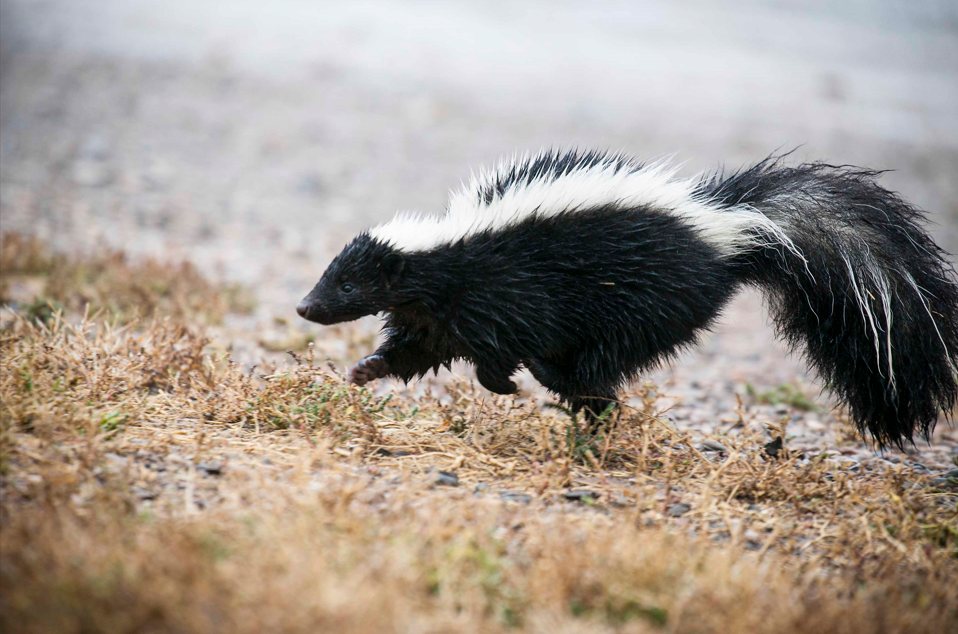
You may find skunks on your London property when food, water, and shelter are easy to reach. Spaces below decks, sheds, porches, and steps can offer dark, quiet places for a den. Lawns filled with grubs, open garbage bins, fallen produce, compost, and outdoor pet food can also bring these animals closer to your home.
A visit may begin with a few small holes in the lawn or a musky smell near one part of the yard. Over time, the activity may move closer to a shed, deck, garage, or foundation. A female may also choose a protected space for her young, which makes professional inspection especially important.
Homeowners should never approach a den, block its entrance, reach beneath a structure, or try to trap the occupant. At Skedaddle Humane Wildlife Control in London, Ontario, we inspect the property, find the den, check for dependent young, remove the family humanely, and protect the opening. In this blog, we explain seasonal activity, common food sources, likely den sites, warning signs, professional removal, and lasting prevention.
What Time of Year Are Skunks Most Active?
Skunks can visit residential properties throughout the year, but activity often becomes more noticeable from late winter through fall. Mating can increase movement during late winter, while females seek safe den sites for their young during spring. In summer and fall, these animals spend more time searching for food and suitable shelter.
Most activity happens from evening through early morning. They may cross lawns, gardens, driveways, and other open areas while people are inside. A quiet property can give them enough time to search for grubs or explore gaps below outdoor structures.
Season also affects the right response. A den that appears empty during the day may still be active at night, and young may remain hidden inside while their mother searches for food. Our professional team confirms the den’s status before deciding how and when removal should take place.
Ground-Level Shelter Makes a Property Appealing
Skunks are skilled diggers that usually seek shelter close to the ground. A narrow gap can lead to a larger space beneath a deck, porch, shed, or home addition. These areas may offer cover from rain, cold temperatures, wind, and daily human activity.
Soft soil can make a property even more inviting. They may enlarge an existing opening or dig beneath the edge of a structure to create a protected den. Once inside, the low and enclosed area can be difficult for a homeowner to inspect safely.
A sheltered location may be used for resting, escaping harsh weather, or raising young. The den entrance might be only one part of a longer space beneath the building. Skedaddle examines the complete area without asking you to crawl beneath a structure or approach the occupant.
Decks, Sheds, and Porches Can Become Den Sites
Many outdoor structures contain shaded spaces that are rarely disturbed. Damage, settling soil, and open edges can provide ground-level access. Our inspection checks the full structure and nearby ground for signs of regular use.
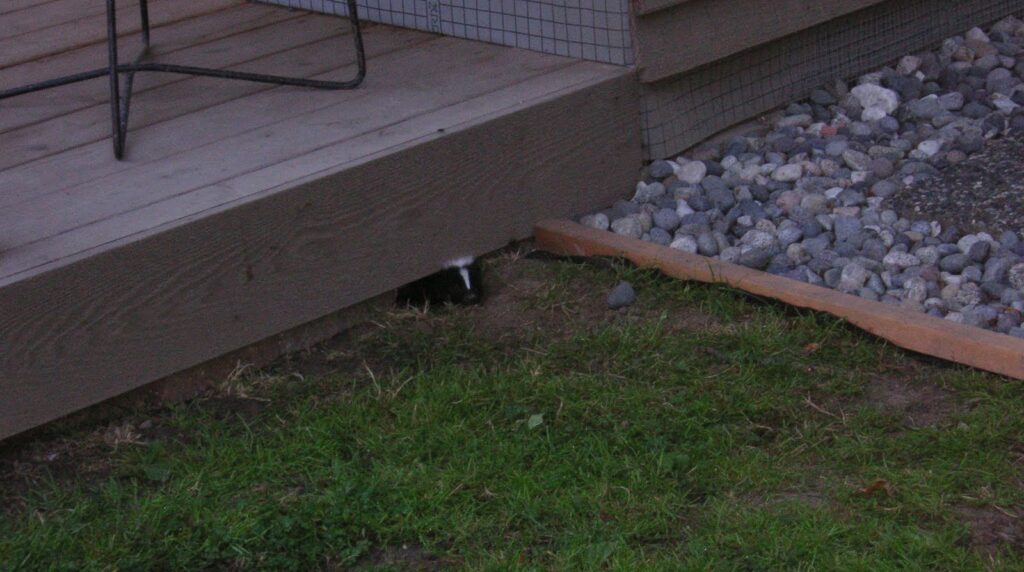
- Spaces Beneath Decks: A low deck can create a dark and quiet cavity that feels protected from weather and people. An opening along the edge may allow easy entry into a much larger space. We inspect the perimeter and determine whether a den or dependent young are present.
- Areas Beneath Sheds: Loose soil below a shed can be easy to dig, especially when the base is not fully protected. The building above provides a solid roof and limits disturbance from the yard. Our technicians look for digging, tracks, disturbed soil, and other signs around the foundation.
- Open Porch Edges: Gaps beneath a porch may lead to a dry space beside the home. These areas can stay warmer than open ground and may offer several hidden routes. We examine each side of the porch before creating a humane removal plan.
- Spaces Beneath Steps: Raised steps can leave a small cavity close to a door, walkway, or driveway. Even when the entrance looks too narrow, the space behind it may be wide enough for a den. Homeowners should keep away and let our team inspect it safely.
- Home Additions: Sunrooms, room extensions, and other additions may have spaces beneath their floors. Settlement or damaged exterior materials can create an entry point over time. We check how the opening connects to the building before recommending exclusion work.
Gardens, Lawns, and Garbage Provide Easy Food
A property becomes more attractive when it offers several dependable food sources. These animals have a varied diet and will search wherever food is easy to find. One meal may be enough to encourage another visit.
- Grubs Beneath the Lawn: Grubs can live below healthy-looking grass and provide a rich source of food. Skunks dig small, cone-shaped holes as they search beneath the surface. Several holes appearing overnight may point to regular feeding activity.
- Worms and Insects: Damp lawns and garden beds may hold worms, beetles, and other insects. These food sources can be especially common after rain or regular watering. Repeated digging may spread across the yard as the visitor follows them.
- Gardens and Fallen Produce: Vegetables, berries, and fruit that has fallen from nearby plants may provide an easy meal. Strong smells can guide a hungry visitor toward the garden. Damage may appear in more than one bed when the food remains available.
- Accessible Garbage: Bags, loose lids, and bins that can be tipped may expose food waste. Odours from meat, leftovers, and other organic material can carry beyond the property. Once a dependable source is found, the same route may be used again.
- Pet Food and Compost: Food left outdoors and open compost can attract attention after dark. A feeding area near a deck or shed may also lead the visitor toward a possible den site. Our inspection considers both shelter and nearby food when tracing activity.
Signs That Point to Regular Activity
A strong smell is one warning sign, but it is not the only clue. Physical evidence may show where these animals feed, travel, or shelter. Homeowners should observe from a safe distance and avoid touching waste or reaching into openings.
- Cone-Shaped Lawn Holes: Small holes may appear in groups where the soil has been searched for grubs. The grass can look rolled back or disturbed around the edges. Our team can compare the digging pattern with other evidence on the property.
- Digging Near Structures: Fresh soil beside a deck, porch, shed, or steps may mark an active entrance. The opening may become larger as it is used. You should never fill or cover it because an adult or young may still be inside.
- A Steady Musky Odour: A smell that remains near one structure may suggest a nearby den rather than a passing visit. Odour can travel through vents, gaps, and open windows. Our inspection helps locate the source instead of relying on smell alone.
- Tracks and Travel Routes: Repeated paths may appear through grass, soil, garden beds, or snow. Tracks can lead from a feeding area to a hidden opening. We follow this evidence while keeping a safe distance from the den.
- Droppings Near a Den: Waste may appear beside an entrance, feeding site, or common route. Homeowners should not touch, sweep, vacuum, or remove it. Skedaddle assesses contamination and includes professional cleanup in the service plan when needed.
Why a Den Opening Cannot Be Blocked Immediately
An opening should never be covered simply because no activity is visible. The occupant may be resting inside or searching for food elsewhere. A mother may also be away while dependent young remain below the structure.
Blocking an active entrance could trap the family inside. It could also separate the mother from young that cannot yet leave on their own. The adults may dig a new opening or cause additional damage while trying to regain access.
Our team first determines whether the site is active and whether babies are present. The timing and removal method depend on the season, location, and family status. Durable exclusion is completed only after the space has been cleared humanely.
Safe Responses to Activity on the Property
You can protect your household by keeping people and pets away from the area. Do not stand near the entrance, test the opening, place an object inside, or try to force the occupant out. Sudden movement or close contact may make the visitor feel threatened.
A musky smell does not always show the exact den location. The scent can move across a yard or pass through spaces around a building. Professional inspection connects odour with tracks, digging, waste, food sources, and structural access.
Skedaddle handles the investigation and removal without asking homeowners to take part. We also assess whether contamination or building damage is present. This approach protects both the household and the animals using the space.
How a Professional Inspection Finds the Full Problem
The visible entrance is only one part of an investigation. Our professional wildlife team checks the den, surrounding structures, food sources, contamination, and other possible access points. This creates one plan for removal and prevention.
- Den Assessment: We inspect spaces below decks, sheds, porches, steps, and additions. Fresh soil, tracks, odour, hair, and waste can help confirm use. Homeowners do not need to approach or look inside the opening.
- Family Assessment: Our technicians determine whether one adult or a mother with dependent young is present. Young may be quiet and hidden far beyond the entrance. Finding them is essential before removal or exclusion begins.
- Property Inspection: We examine nearby garages, foundations, fences, garden beds, and other sheltered areas. A property may contain more than one suitable den site. Protecting the full area helps prevent a quick move to another opening.
- Food-Source Review: Digging patterns and travel routes can reveal where feeding occurs. We consider lawns, gardens, garbage storage, compost, and pet feeding areas during the assessment. This explains why the property continues to receive visits.
- Contamination Review: Waste, nesting material, and odour may affect the den or nearby building materials. Our findings guide professional cleanup and restoration. You will not be asked to touch or remove contaminated material.
Skunk Problems in London, Ontario
London contains mature neighbourhoods, green spaces, gardens, parks, and waterways. These features can support natural food sources while placing residential properties close to common travel routes. Homes with decks, sheds, lawns, and gardens may offer both shelter and food in one small area.
Seasonal weather also affects activity. Spring can bring denning and the birth of young, while wet lawns support worms and grubs. During fall, these animals may feed more often and explore protected spaces before colder weather arrives.
Different property styles require different inspection plans. Older homes may have settled structures and open edges, while newer properties may include raised decks, additions, or landscaped garden beds. Skedaddle Humane Wildlife Control in London considers the home’s design, the season, and the evidence found before recommending removal and prevention.
Skunk Removal and Prevention with Skedaddle
Our professional wildlife team begins by inspecting the den site and the rest of the property. We identify the active entrance, check for young, trace travel routes, and review nearby food sources. These findings allow us to plan the work around the full problem.
When appropriate, we use one-way doors that allow wildlife to leave but prevent re-entry. A different hands-on method may be required when dependent young are present so the family is not separated. We complete removal at the correct time and never seal an occupied space.
After the den is clear, we secure the opening with durable materials suited to the structure. Our team can also address contamination, damaged areas, and other weak points around the property. We handle inspection, humane removal, cleanup, restoration, and prevention without asking you to crawl beneath a building or work near these animals.
Frequently Asked Questions
Why do skunks dig holes in lawns?
They often dig small holes while searching for grubs, worms, and insects beneath the grass. Damp or well-watered soil can make these food sources easier to reach. Several fresh holes appearing overnight may show that the property has become a regular feeding area.
Do skunks live under decks?
Yes, the dark and quiet space beneath a deck can provide a protected den. A small gap along the edge may lead to a larger sheltered cavity. A professional should inspect the site before the opening is covered because adults or young may remain inside.
Does a skunk smell always mean it sprayed?
No, a mild musky smell can be present around a regular travel route or den. A strong, sudden odour may be linked to spraying, but scent can move away from its source. Inspection is the safest way to determine whether the property contains active shelter.
Will they return to the same property?
They may return when the property continues to provide food, shelter, and an open route. A familiar den or dependable feeding place can support repeated visits. Removal should therefore be followed by professional exclusion and protection of nearby weak points.
Should droppings near a den be cleaned?
Homeowners should not touch, sweep, vacuum, or handle droppings near a suspected den. Waste may contain germs or parasites, and the occupant may still be close by. Our team can inspect the material and determine what professional sanitation is required.
Who should inspect a den in London?
Our trained wildlife professionals should inspect the opening, connected space, and surrounding property. Skedaddle can identify active use, check for dependent young, address contamination, and plan humane exclusion. You will not need to enter a confined space or approach the den.
Keep a Feeding Stop From Becoming a Permanent Den
Skunks choose London properties when they find easy food and quiet shelter near the ground. Grubs, insects, garden produce, garbage, compost, and outdoor pet food can support regular feeding. Decks, sheds, porches, steps, and home additions may then provide protected places to rest or raise young.
Cone-shaped lawn holes, disturbed soil, tracks, droppings, and a steady musky odour can point to ongoing activity. One visible opening may lead far beneath a structure, and a female may have dependent young inside. Homeowners should not approach the den, handle waste, block the entrance, or attempt removal.
Skedaddle Humane Wildlife Control in London, Ontario, can inspect the full property and determine why these animals are returning. We handle humane removal, professional cleanup, restoration, and durable exclusion, including one-way doors when appropriate. Contact us to request an estimate and learn more about protecting your home from repeat activity.

 Loading...