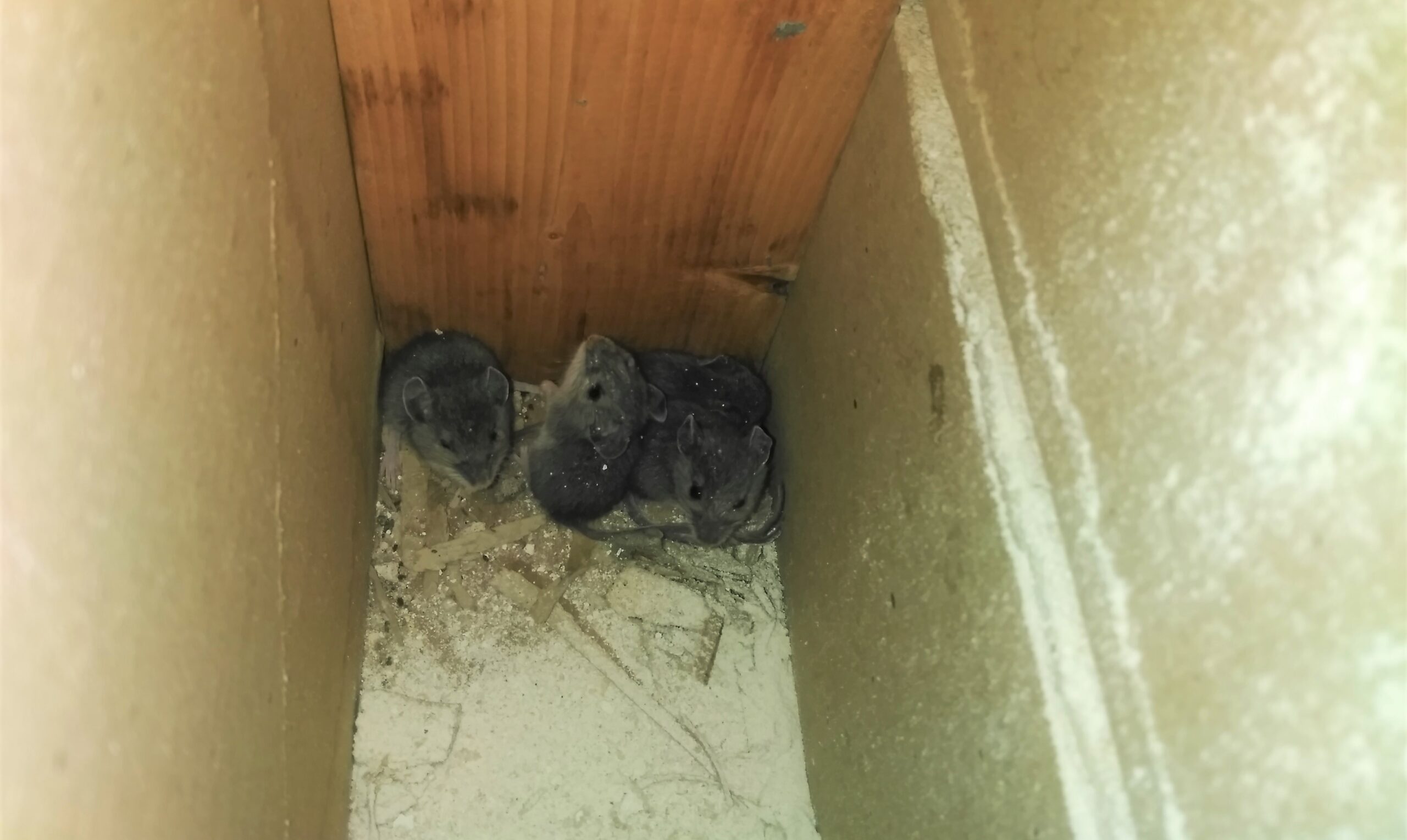
The house is quiet, the evening temperatures are dropping, and you hear a faint scratching sound behind the living room wall. A few nights later, it happens again. Then you notice chewed packaging in a cabinet or catch a glimpse of a mouse disappearing along a baseboard.
For Clintonville homeowners, these observations can raise questions. Is there a mouse inside the wall? How did it enter? Could activity be happening elsewhere in the house?
Fall is a useful time to pay attention to these clues while preparing your home for colder weather. Sheltered indoor spaces can provide mice with places to hide, while accessible food gives them another reason to visit.
Sounds, droppings, damage, and sightings each provide information, but none reveals the entire situation alone. Understanding the warning signs—and identifying the openings that allow access—helps you take appropriate action before the problem continues.
What is the number one thing mice hate?
There is no single smell or household substance that reliably keeps mice out of a home. Although mice may avoid certain disturbances, scents and noise devices do not address entry points or concealed shelter. If you suspect mice in your walls, focus on securing food and arranging a professional inspection rather than relying on repellents.
Scratching and Rustling: What Sounds Inside Walls Can Tell You
Scratching, rustling, or light scurrying may be the first indication of activity in a concealed space. You might notice it behind a bedroom wall, near a kitchen cabinet, or above the ceiling when the rest of the house becomes quiet.
These sounds deserve attention when they recur, but they do not confirm mice on their own. Other animals, plumbing, and mechanical equipment can produce noises that seem to come from inside a wall.
Sound also travels through building materials. The place where you hear it most clearly may be some distance from the source. That makes it difficult to identify an entrance or shelter location simply by listening.
Before an inspection, note:
- Where the sound seems loudest.
- What time you usually hear it.
- How often it returns.
- Whether it seems to move between locations.
- Whether you have noticed nearby droppings, damage, or sightings.
A short recording may help communicate what you are hearing, although it cannot replace an inspection.
Avoid opening a wall or knocking repeatedly in an attempt to locate an animal. Instead, share your observations with a professional. Recurring noises become more meaningful when considered alongside other evidence and the layout of your home.
Droppings and Other Evidence Along Indoor Travel Routes
Droppings can reveal activity in places where mice have gone unnoticed. Homeowners may discover them along baseboards, inside lower cabinets, or among belongings in a basement storage area.
Their location helps guide an inspection, but it does not necessarily identify where mice entered or where they are sheltering. A mouse may travel between concealed spaces and accessible food, leaving evidence along the way.
During a safe visual check, pay attention to:
- Pantry shelves and the edges of cabinets.
- Accessible areas beneath the kitchen sink.
- Wall edges near stored belongings.
- Basement shelving and storage boxes.
- Garage areas where seed or pet food is kept.
Look for related clues, such as damaged packaging or scattered food. Several observations together can provide a clearer reason for investigation than one unexplained mark.
Do not use the number or appearance of droppings to estimate how many mice are present. Their distribution, other evidence, and a professional assessment provide a better basis for understanding the situation.
Suspected rodent waste also needs different handling from ordinary dust or crumbs. Avoid dry sweeping or vacuuming it, and follow appropriate public-health cleanup guidance or seek professional assistance. Keep children and pets away from affected areas while you arrange the next steps.
Gnawing and Nesting Materials: Signs of Concealed Activity
Chewed packaging is an obvious clue, but damage may also appear on cardboard boxes, stored fabrics, or materials around accessible openings. Finding these signs can indicate that something has been active even when you have never seen a mouse.
Shredded paper or fabric gathered in a sheltered location may be nesting material. Disturbed insulation can also warrant assessment, although it has several possible causes and should not automatically be attributed to mice.
Watch for:
- Chewed corners on boxes or food packages.
- Shredded materials collected in a hidden area.
- Gnawing around visible pipe or cable openings.
- Damage that returns after a small repair.
- Similar signs in more than one part of the home.
Wall voids are the concealed spaces around framing, insulation, and some building services. They can provide routes between areas. Depending on the home’s construction, they may connect with a basement, crawl space, garage, or attic. Damage in a room may therefore be associated with activity elsewhere.
Photograph accessible evidence without pulling apart building materials or disturbing suspected nests. Leave concealed areas and utility connections to appropriate professionals.
Mice can also damage wiring through gnawing. If you discover damaged wiring, have a qualified electrician assess it. A mouse sighting alone does not establish that electrical damage has occurred, but visible damage should be addressed separately from the wildlife inspection.
Why Even One Indoor Mouse Sighting Deserves Attention
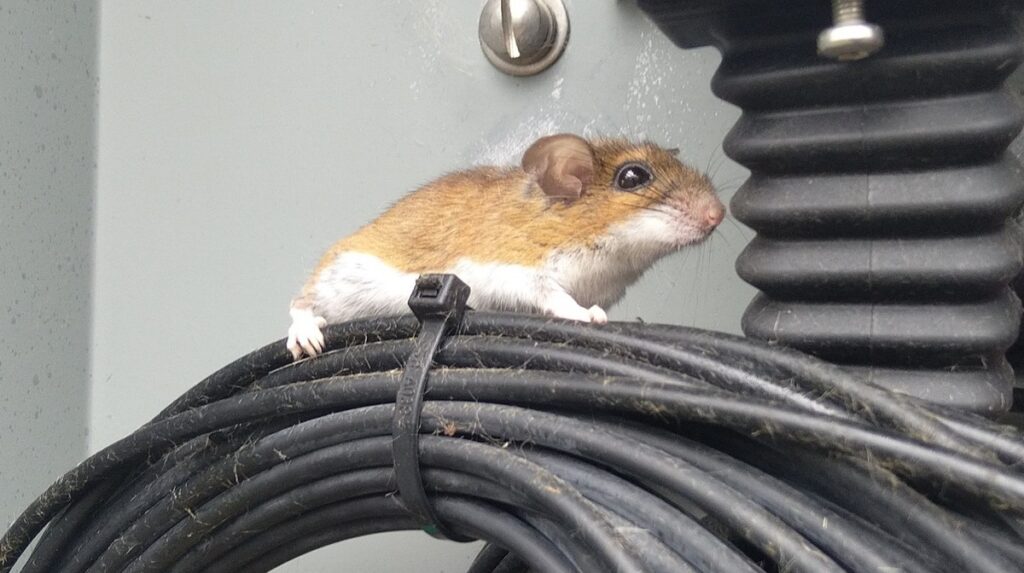
A mouse darting across the floor confirms that a mouse was inside at that moment. It does not tell you how many others are present, how long activity has been occurring, or where the animal entered.
That uncertainty is a reason to investigate rather than wait for repeated encounters. A sighting may provide the first visible clue to activity in areas you rarely access.
The location matters, but it is only part of the picture. A mouse seen in the kitchen may have traveled from another level or concealed cavity. One disappearing beneath a cabinet may be using an interior route rather than an opening directly outdoors.
After a sighting:
- Put exposed food in sturdy, tightly closed containers.
- Secure pet food and clean up ordinary spills.
- Check packaging for chewing or contamination.
- Record where the mouse appeared and disappeared.
- Note accompanying sounds, droppings, or damage.
- Arrange an inspection to assess access and activity.
Avoid assuming that a daytime sighting proves a large infestation. Timing alone cannot establish the extent of the problem.
Likewise, a clean home can still be entered if accessible openings remain. Housekeeping reduces food opportunities and makes evidence easier to spot, while inspection helps determine what additional action is needed.
Where Mice May Enter Clintonville Homes
Once indoor activity is suspected, the exterior deserves attention. Small openings can be easy to overlook, especially where building materials meet or services pass through a wall.
A worn garage-door seal might leave a gap at a lower corner. Deteriorated material around a utility penetration may create another route. The opening closest to an indoor sighting is not necessarily the entrance the mouse originally used.
Accessible areas worth observing include:
- Garage-door bottom seals and side weatherstripping.
- Exterior door thresholds and frames.
- Basement window surrounds.
- Foundation and siding transitions.
- Openings around pipes, cables, and other services.
- Loose or damaged vent covers.
Keep your observations at ground level and avoid disturbing utility connections. Photograph concerns and clear nearby clutter so inspection areas are accessible.
Higher openings may also need consideration because mice can climb. Roofline and other difficult-to-reach areas should be evaluated by trained professionals when appropriate.
Distinguish an exterior entrance from an interior travel route. A gap beneath a sink may lead into a wall cavity while a separate opening elsewhere provides access from outside.
Suspected active entrances should be assessed before permanent sealing. Repairs must also preserve necessary ventilation, exhaust, and drainage functions. Filling every visible space without understanding its purpose can create additional problems while leaving the actual entrance unresolved.
How Professional Exclusion Helps Prevent Recurring Problems
Exclusion means securing openings to prevent animals from entering or re-entering a building. For a home with suspected mouse activity, effective exclusion begins with understanding the situation rather than immediately patching the first visible gap.
An assessment considers current activity, possible exterior access points, and relevant connected spaces. This helps determine how humane removal and sealing should be coordinated.
Closing one opening may leave other entrances available. Sealing a suspected active route too soon can also leave mice inside the home. The order of the work matters.
A professional plan may involve:
- Assessing visible evidence and accessible building areas.
- Identifying entrances and potential access concerns.
- Coordinating humane removal with exclusion work.
- Selecting durable materials suited to each opening.
- Explaining maintenance that supports future prevention.
At Skedaddle Humane Wildlife Control, we approach mouse problems by considering both existing activity and the conditions that allow it to recur. Securing relevant access points addresses a part of the problem that household scents cannot resolve.
Homeowners still have a useful role after exclusion. Secure food storage, reduced clutter, and attention to worn seals help support prevention. Future renovations, service installations, or ordinary deterioration can create new openings, so ongoing maintenance remains important.
The goal is a coordinated solution that addresses how mice access the home, supported by practical habits that make new concerns easier to notice.
Frequently Asked Questions
Does scratching inside a wall always mean mice?
No. Other animals, plumbing, and mechanical systems can create noises that seem to come from walls or ceilings. Recurring sounds deserve attention, especially when accompanied by droppings, damage, or sightings. A professional assessment can consider these observations together before determining what is causing the noise and which areas need inspection.
Does one mouse sighting mean there is an infestation?
One sighting cannot establish how many mice are present or how long they have been active. It does confirm that a mouse was inside, which warrants investigation. Checking for additional evidence and assessing possible access points helps clarify the situation without assuming either a large infestation or an isolated incident.
Can mice get inside even if my home is clean?
Yes. Cleanliness reduces accessible food but does not close openings through the building exterior. A well-maintained kitchen may still receive visits if mice can enter and reach connected spaces. Food storage, regular housekeeping, and appropriate exclusion serve different roles and work together as part of a broader prevention approach.
Will peppermint oil keep mice out of the walls?
Peppermint oil should not be relied on to resolve activity inside walls. A scent does not close entrances or address concealed shelter, and its presence cannot confirm that mice have left. If you notice warning signs, prioritize secure food storage and an assessment of access points rather than repeatedly applying household deterrents.
Should I seal an opening as soon as I notice mouse activity?
Have suspected active entrances or travel routes assessed before permanently sealing them. An opening may lead into a concealed interior space, while other entrances remain available elsewhere. Coordinating humane removal and exclusion helps address current activity without leaving animals inside or overlooking the routes that could allow the problem to continue.
Address the Signs and the Access Points
Scratching sounds, droppings, gnawed belongings, possible nesting materials, and sightings all deserve attention. They help guide an investigation, even when they cannot reveal the full extent of activity on their own.
For Clintonville homeowners, addressing the problem means looking at both indoor evidence and the openings that allow access. Professional exclusion, coordinated with humane removal, helps reduce the opportunity for recurring problems.
If you suspect mice in your walls this fall, contact Skedaddle Humane Wildlife Control serving Clintonville, Ohio. Our team can assess the activity and develop a removal and prevention plan suited to your home.

 Loading...