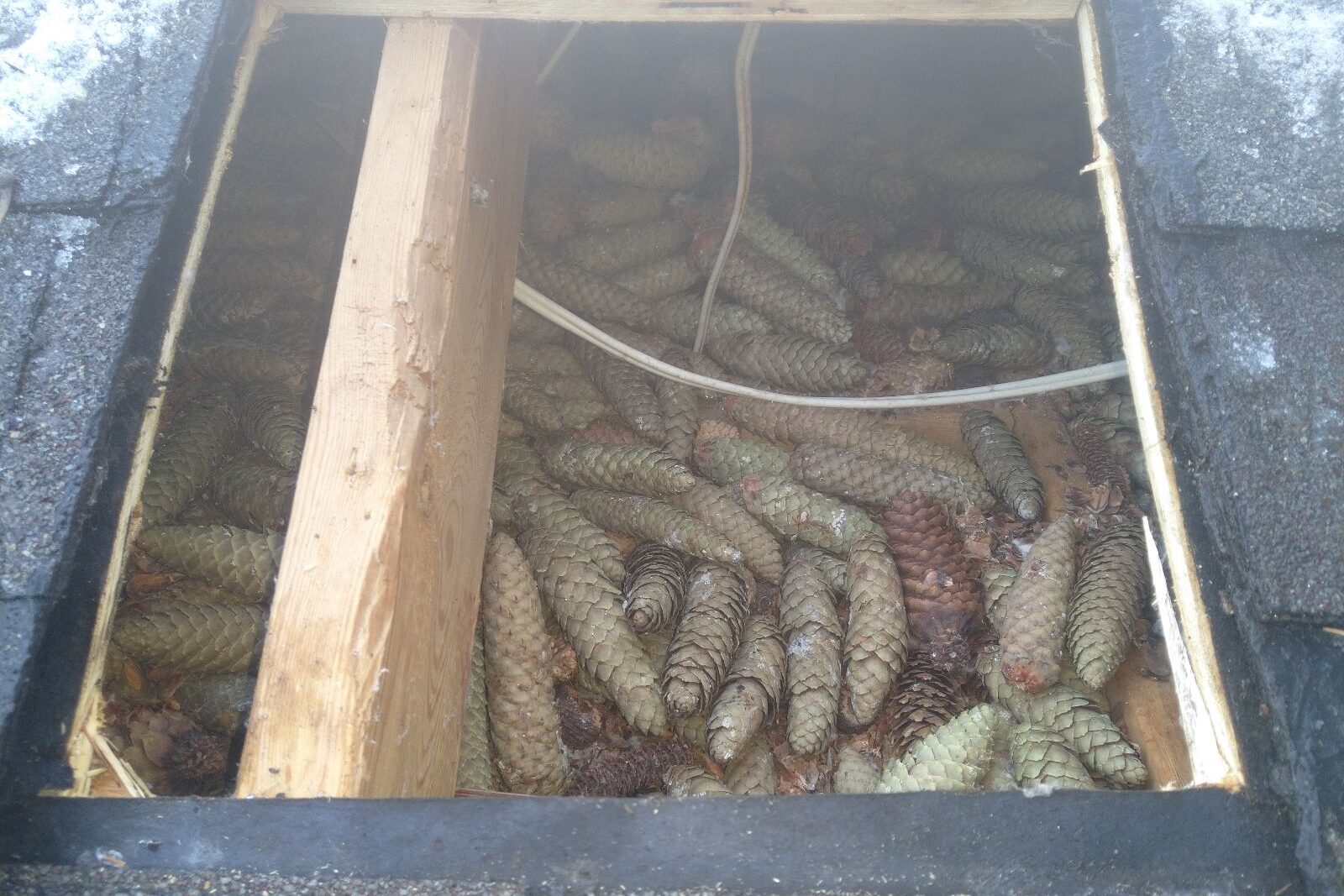
You may have more than a nest in your attic if squirrels have entered your home. These animals can carry nuts, seeds, fruit, and other food into attics, wall spaces, and insulation before winter. The protected space keeps their supplies dry and close to a safe resting area. One small roof opening can give them access to several hidden parts of the structure.
Repeated trips across your roof may be one of the first clues. You might also hear food rolling above the ceiling, notice disturbed insulation, or find nuts and empty shells in the attic. A hidden cache may remain unnoticed until the food begins to spoil or becomes mixed with urine, droppings, and nesting material. Removing one visible pile will not solve the problem if the active entrance remains open.
At Skedaddle Humane Wildlife Control in Okanagan, we inspect the full structure to locate entry points, nesting areas, travel routes, and stored food. You should not enter an attic, open a wall, move damaged insulation, or touch contaminated material yourself. Our professional team can identify how far the activity has spread and determine whether dependent young are present. In this blog, we explain how squirrels bring food inside, where they hide it, and how professional removal protects your home.
Do Squirrels Remember Where They Store Food?
Yes, squirrels can remember many of the places where they store food. They use memory and nearby sights to return to their caches. However, they do not recover every item they hide.
Outdoor storage often involves spreading single items across many locations. This behaviour is known as scatter hoarding. It reduces the chance of losing all their food at once.
Indoor storage can look different because the attic or wall already protects the food. These animals may place many items together in one sheltered area. This larger collection is often called a larder.
Why Food Storage Activity Increases Before Winter
Fall brings colder nights and changes in available food. Squirrels respond by gathering supplies that can support them during harder weather. When they find an opening in a home, the protected space inside may become part of their winter plan.
- Preparing for Colder Weather: Food may become harder to reach after snow, heavy rain, or freezing temperatures arrive. Gathering it during fall gives them a supply for difficult days. A warm attic can place shelter and food in the same location.
- Making Repeated Collection Trips: They normally carry one nut, seed, or piece of fruit at a time. This can create many trips between an outdoor food source and one roof opening. You may hear quick movement across the shingles several times each day.
- Protecting Food from Weather: Food hidden outside may be exposed to moisture and changing temperatures. An attic or wall cavity keeps a cache dry and sheltered. Indoor storage can therefore become useful even when plenty of food remains outdoors.
- Returning to a Known Shelter: A home that provided safe shelter before may attract activity again. An unchanged opening creates a familiar route back inside. Previous nesting scents may also help them recognize the location.
Fall collection does not always stop once a small pile has formed. A steady outdoor supply can support repeated trips for several weeks. This gives the indoor cache time to grow before you notice a problem.
Attic Spaces Can Become Large Indoor Pantries
An attic provides warmth, darkness, and many places to hide food. Nuts and seeds can disappear beneath insulation or behind stored belongings. The cache may be located far from the exterior entrance.
- Food Beneath Insulation: Loose insulation provides many soft pockets where food can be hidden. Items may be pushed below the surface until they are no longer visible. Digging through the insulation can also reduce its ability to protect your home.
- Caches Along Roof Edges: Attic corners and spaces near the eaves provide quiet storage areas. These locations may sit close to openings in soffits, fascia, or roof vents. A short indoor route makes each collection trip easier.
- Storage Behind Boxes: Containers, decorations, and other stored items create hidden spaces in an attic. Food can collect behind them without being seen during a quick look. You should not move these items when active wildlife or contamination is present.
- Food Near a Nest: A cache may be placed close to the area used for sleeping or raising young. Food, nesting material, urine, and droppings can become mixed together. This can make professional cleanup more involved.
Our technicians do not stop after finding the first visible pile. They examine movement paths, insulation, corners, and the area around the active entrance. This helps reveal how much of the attic has been affected.
Wall Voids Can Hide Food From View
An opening near the roof may connect with a space inside a wall. Food can be carried into that gap or dropped down the vertical cavity. It may then fall far below the place where the squirrel entered.
You could hear rolling, dropping, scratching, or chewing inside one wall. The sound may appear on another floor or far from the exterior opening. This can make the problem difficult to locate based on noise alone.
Food inside a wall cannot always be reached from the attic. Homeowners should not cut into drywall or place a hand inside an opening. Our professional team can trace the route and determine what part of the structure requires attention.
Insulation Provides Hidden Storage Pockets
Attic insulation gives these animals both nesting material and concealed storage. Food may be buried beneath the surface or placed inside a tunnel. Damage can spread well beyond the first cache our technicians find.
- Tunnels Through Loose Insulation: Repeated movement may create narrow paths across the attic floor. These trails can connect the exterior entrance with a nest and food cache. Technicians may use them to follow the full activity pattern.
- Compressed Insulation: Regular travel can flatten the material over time. Stored food and nesting activity may add more weight to the same area. Compressed insulation may not control indoor temperatures as well as it once did.
- Food Below the Surface: A visible inspection may miss items hidden deep inside the insulation. Nuts and seeds can remain covered until movement brings them back to the surface. Finding one shell does not show the full size of the cache.
- Contamination Around Storage: Food may become mixed with urine, droppings, and damaged nesting material. Homeowners should never touch, sweep, or vacuum the affected insulation. Our trained team can remove contaminated material safely when required.
Replacing only one damaged patch may leave other affected areas behind. The entire movement route must be assessed before restoration begins. Professional inspection helps determine how far the activity has spread.
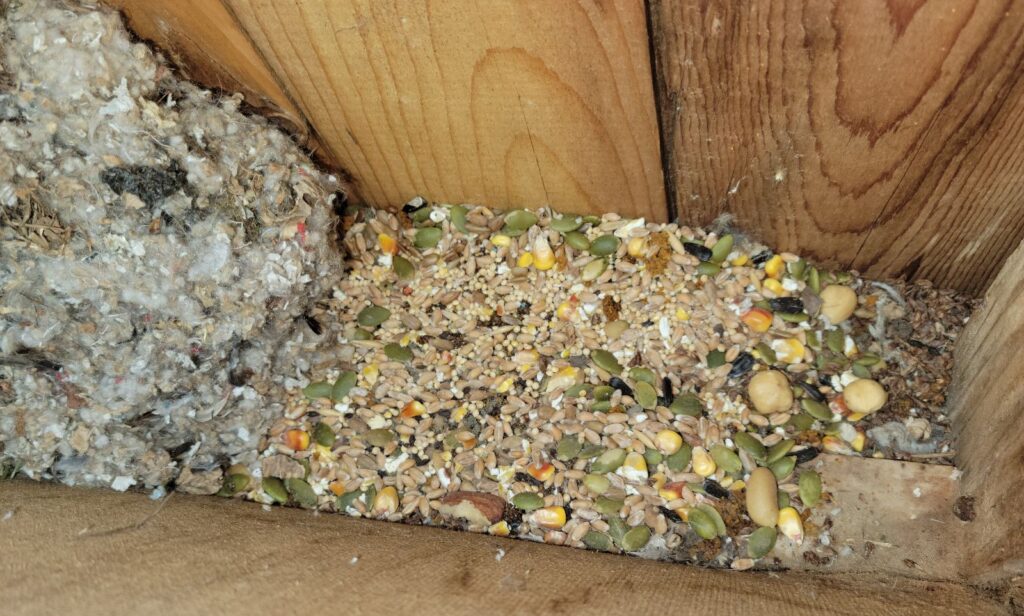
Outdoor Food Sources May Lead Them Inside
The storage area may be indoors, but the food usually begins somewhere around the property. Mature trees, gardens, outdoor feeders, and unsecured food containers can support many collection trips. A nearby roof entrance makes it easier to carry each item into the home.
Nuts from trees may be gathered from the yard and carried along branches, fences, or rooflines. Fallen fruit and garden produce may also become part of an indoor supply. These animals can move food much farther than homeowners might expect.
Spilled seed or poorly secured outdoor food can create a concentrated source. The same individual may return every day while the supply remains available. Our assessment considers both the indoor cache and the outdoor route that supports it.
Hidden Food Caches Can Affect Your Home
Stored nuts and seeds may look harmless, but they can become part of a larger attic problem. Food may spoil, hold moisture, or create odours that reach the rooms below. A cache can also become mixed with waste and damaged insulation.
Chewing often occurs near the nesting and storage area. Wood, vent covers, drywall, and other materials may be damaged during regular activity. Electrical wiring can also be affected, creating a possible fire risk inside the home.
Removing one pile does not close the entrance or clear food hidden elsewhere. The occupied space, contamination, damage, and access route must all be addressed. This is why professional service focuses on the whole problem instead of one visible cache.
Signs Food May Be Stored Inside Your Home
One rolling sound or empty shell does not confirm a large indoor cache. Several signs in the same part of the home provide stronger evidence. Our technicians compare sounds, damage, stored food, and exterior activity during an inspection.
- Rolling or Dropping Sounds: Hard items may roll across attic floors or fall through wall spaces. The noise may happen soon after quick movement on the roof. Repeated sounds can suggest that food is being carried to the same location.
- Regular Daytime Movement: Squirrels are commonly active during daylight hours. You may hear repeated trips in the morning or later in the afternoon. Activity that stops near one roof opening may point to an indoor route.
- Shells or Food Piles: Loose shells may appear near an attic hatch or become visible through disturbed insulation. A concentrated pile can suggest feeding or larder storage. You should not enter the attic to search for more.
- Disturbed Insulation: Tunnels, flattened sections, and loose piles may reveal regular movement. The damage can connect an entrance, nest, and food cache. A professional must inspect the area before the opening is sealed.
- New or Lasting Odours: Spoiled food may create a stale smell inside the attic or walls. Urine and droppings can make the odour stronger. Our team can locate the affected area and determine what cleanup is needed.
You may notice more than one of these signs at the same time. Rolling sounds can occur with roof activity, chewing, and disturbed insulation. A professional inspection can connect these clues without requiring you to enter the space.
Fall Squirrel Activity Around Okanagan Homes
The Okanagan contains tree-lined neighbourhoods, parks, orchards, vineyards, and wooded spaces. These areas provide food and travel routes close to homes. Properties in Kelowna, West Kelowna, Vernon, Penticton, and nearby communities may experience more activity during fall.
Branches, fences, roof edges, and exterior fixtures can help squirrels reach upper parts of a building. Cool nights may then make a sheltered attic more appealing. Seasonal homes may face added concerns when repeated activity goes unnoticed.
Our Skedaddle Humane Wildlife Control team in Okanagan understands how the local landscape and changing seasons affect homes. We examine the surrounding property as well as the building. This helps us find the full route from the outdoor food source to the indoor storage area.
Skedaddle Handling Your Squirrel Problems
Our professional wildlife team inspects the roofline, attic, soffits, vents, fascia, wall spaces, and surrounding property. We locate the active entrance, food caches, nesting areas, damage, contamination, and signs of dependent young. You do not need to enter the attic or search through insulation.
We create a humane removal plan based on the structure, season, and family situation. When appropriate, our one-way doors allow squirrels to leave but prevent them from getting back inside. We do not use live trapping and relocation.
After removal, our team clears stored food and contaminated material from affected spaces. We then secure the entry points with durable materials and restore damaged insulation when required. This complete process addresses the occupants, hidden cache, contamination, and opening that allowed the problem to begin.
Frequently Asked Questions
What kind of food may be stored inside?
Squirrels may carry nuts, seeds, fruit, and other available food into a home. What they store often depends on the trees, gardens, and outdoor food sources near the property. A professional inspection can determine whether a visible pile is connected to current activity.
Does finding one nut mean there is an infestation?
One nut or shell does not prove that squirrels are living inside your home. However, several piles, repeated sounds, damaged insulation, or regular trips through one opening provide stronger evidence. Our technicians assess the full pattern before recommending removal.
What does food storage in a wall sound like?
You may hear rolling, dropping, scratching, chewing, or quick movement inside the wall. These sounds may occur during the day when squirrels return with food. Noise alone cannot reveal the exact location or size of the hidden cache.
Should stored food be removed from the attic?
Stored food should be professionally removed when it has become mixed with droppings, urine, or damaged insulation. Homeowners should not touch, sweep, or vacuum any contaminated material. Trained technicians have the equipment needed to clean and sanitize the area safely.
Can the roof opening be sealed immediately?
An active opening should never be sealed before a professional checks the attic. An adult or dependent young may still be inside, even when the space seems quiet. Humane removal must take place before lasting exclusion work begins.
Keep an Indoor Food Cache From Becoming a Winter Problem
Squirrels may carry nuts, seeds, and fruit into attics, wall cavities, and insulation as they prepare for winter. Repeated roof activity, rolling sounds, empty shells, new odours, and disturbed insulation may all point to indoor storage. The food you can see may represent only one part of a much larger hidden cache.
You should not enter the attic, open a wall, move damaged insulation, or handle food that may be contaminated. An adult or dependent young may still be inside, so the active entrance must not be sealed too soon. A professional must inspect the space, locate the occupants, and complete humane removal before cleanup or repair work begins.
At Skedaddle Humane Wildlife Control in Okanagan, we can inspect your property and trace the full route from the roof opening to the nesting and storage areas. Our team can remove squirrels, clear food and contaminated material, restore affected spaces, and secure vulnerable openings with durable materials. Contact us to schedule a professional assessment or request an estimate to learn more about humane removal and long-term prevention for your home.

 Loading...








