
You may find skunks exploring your shed because the space beneath it offers cover, little disturbance, and an easy place to rest. A gap along the base can provide access without entry through the door. Nearby food may give them another reason to visit the same part of your yard.
A sheltered space is not automatically warm, dry, or occupied. Its appeal depends on the shed’s design, the ground beneath it, and how often the area is disturbed. Digging, repeat visits, and odour can suggest activity, but none of these signs proves that a den is present on its own.
At Skedaddle Humane Wildlife Control in the Okanagan, we assess the space and its access routes before planning removal or prevention. You should not reach underneath, move materials near a suspected den, touch waste, or block an opening. We explain why quiet sheds can attract attention, which signs deserve assessment, and how our team handles confirmed shelter use.
How Do You Know if a Skunk Is Living Under a Shed?
Repeated use of an opening, fresh digging, tracks, or nearby odour may indicate a skunk is sheltering under your shed. Since individual signs like lawn digging or a strong smell can stem from feeding or an encounter elsewhere, a single sighting does not confirm a den. Our team checks base access and physical evidence to assess occupancy safely, so please call us instead of inspecting underneath yourself.
A Shed Floor Can Provide Cover Without a Built Den
An existing structure can offer shelter without requiring an entirely new burrow. The floor may provide overhead cover, while supports and enclosed edges create quieter corners below. Our inspection considers those features alongside drainage and access instead of assuming every shed offers a suitable den.
- Overhead Protection: A shed floor can provide cover from rain, snow, and direct sun. However, water may still enter around the edges or collect on the ground beneath it. A sheltered corner may be more useful than the rest of the space. Our team assesses the actual cover and ground conditions when investigating why the area receives attention.
- Sheltered Ground-Level Corners: Supports, skirting, and nearby walls may reduce exposure along part of the shed base. These features can create a protected place without heating the area. The space may remain cool while still offering useful cover from weather. We consider the layout rather than describing every enclosed gap as a warm, secure den.
- Room to Rest Out of View: Low-clearance areas can conceal an occupant from normal use of the yard. An opening along one edge may lead much farther beneath the floor than it appears. You might see entry or exit without being able to view the resting place. Our professionals assess that space without asking you to crawl under the structure.
Low Disturbance Can Make Shelter Worth Returning To
A shed used only occasionally may have long periods with little movement nearby. The space beneath it can remain undisturbed even when the building itself is well maintained. That quiet setting may make a sheltered spot useful for daytime rest.
Seasonal changes in yard use can affect how often the area is disturbed. A storage shed may receive less attention after gardening work slows down. However, reduced use does not mean the space will become occupied.
Our team assesses whether the area is being used for resting, denning, or passage through the yard. We do not judge occupancy from the shed’s location alone. You do not need to create noise or repeatedly approach the space to help us investigate.
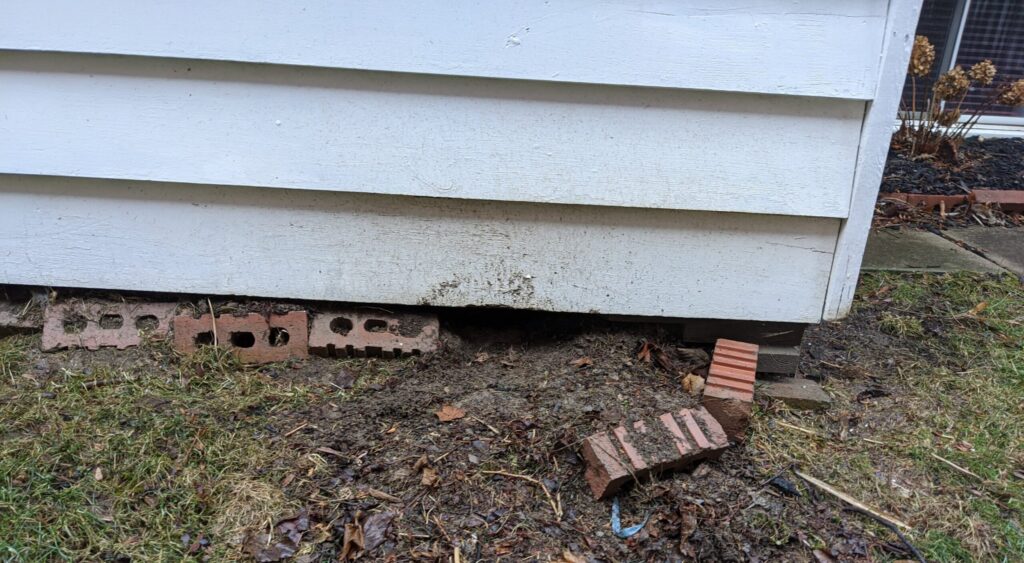
Open Edges and Soft Ground Can Make Access Easier
A sheltered area must also be reachable before it can be used. Existing gaps may provide access, while suitable soil can allow digging beneath an edge. Our team examines how the route developed and where it leads before deciding how to protect the shed.
- Gaps Beneath the Shed Base: Spaces may exist beside supports or between the building and the ground. These openings can provide access before any new digging occurs. Their presence shows a vulnerability, but it does not prove that the space is currently occupied. We compare the gap with signs of repeated use and evidence beneath the structure.
- Loose or Damaged Skirting: Decorative panels may hide the space beneath a shed without preventing entry. A loose corner or missing section can leave an opening that is difficult to notice. Weather wear may contribute to the weakness before it is used for shelter. Our assessment considers both the damaged area and the surrounding base.
- Diggable Soil Along the Perimeter: Digging can enlarge a route beneath a shed edge when the ground allows it. Freshly displaced soil may draw attention to an opening that was previously hidden. The digging alone does not identify the occupant or establish how long the route has been used. Our team checks its connection with the space beneath the floor.
Nearby Food Can Support Visits Without Proving a Den
Lawn insects, fallen fruit, accessible food waste, and food left outdoors can support visits to the yard. A quiet shed nearby may then receive attention as a possible resting place. Food and shelter can contribute to the same pattern without proving occupancy.
Feeding and resting do not have to happen in the same location. A visitor digging in the lawn may leave the property afterwards. An occupant sheltering beneath the shed may travel elsewhere to feed.
Our team considers food access alongside evidence of shelter use. We explain which conditions may contribute to repeat visits without assuming one food source caused the entire problem. If waste or nesting material is present, leave it untouched so we can assess appropriate handling.
Seasonal Needs Can Change How the Space Is Used
A protected area may be useful at different times of the year. Shade and cover can matter during warmer months, while shelter from weather may become more useful during colder periods. The same space may not be used in the same way throughout the year.
During colder conditions, skunks can spend longer periods resting and reduce their activity. A quiet entrance therefore does not confirm that the space has been abandoned. Movement may resume when conditions become more favourable.
Females may also use suitable shelter to raise young during spring and early summer. Our team considers the season while checking the actual space for dependent young. The calendar alone cannot establish who is present or whether everyone can leave independently.
Signs Around the Shed Need to Be Read Together
You may notice digging before seeing movement, or smell an odour without finding an obvious entrance. Each clue provides useful information, but its location and repetition matter. We compare the evidence before deciding whether the shed is being used for shelter.
- Fresh Digging Near an Opening: Displaced soil beside a route beneath the base deserves closer assessment. It differs from scattered feeding holes across the lawn, although both may occur on the same property. Hole size alone does not reliably establish the source or confirm occupancy. Our team assesses where the opening leads and whether there are other signs of regular use.
- Repeated Entry or Exit: Several sightings using the same gap suggest ongoing use of that route. They do not reveal how many occupants are present or how far the sheltered area extends. You can tell us what you noticed from normal use of the property without approaching the opening. We use that information to guide the inspection and assess the space beyond it.
- Tracks and Disturbed Ground: Prints in mud or soft soil may help us identify activity around the shed. Weather and ground conditions can blur their shape or leave only part of a track visible. A print also does not show whether the visitor remains beneath the structure. Our team compares tracks with entry routes and other physical evidence rather than relying on them alone.
- Odour or Sounds Near the Structure: A musky smell or faint movement may draw attention to the area beneath the floor. Odour can come from elsewhere, while an occupied resting place may remain quiet for long periods. Neither clue confirms a den’s exact location or the number of occupants. You should leave the space undisturbed while our professionals assess the source.
A Passing Visitor and an Occupied Shelter Need Different Plans
A single yard sighting does not automatically require removal from beneath the shed. The visitor may be feeding, travelling, or briefly exploring the area. Our first task is to establish whether the structure provides occupied shelter.
Regular entry, evidence beneath the floor, and the presence of dependent young affect the removal plan. Activity below the shed also differs from entry into its storage area. Our team assesses those spaces separately when the evidence suggests both need attention.
Prevention recommendations follow the findings rather than the sighting alone. An empty but vulnerable space may need protection, while an occupied area requires removal before closure. We explain the difference so you know what each part of the work addresses.
The Space Must Be Assessed Before an Opening Is Closed
A quiet opening may still lead to an occupied resting place beneath the shed. Blocking it too soon could trap an occupant or separate a mother from dependent young. Our team checks the space and relevant routes before permanent exclusion begins.
- Hidden Resting Areas: An occupant may be well back from the entrance and impossible to see from outside. No visible movement does not prove that the entire space is empty. Our team assesses accessible areas and the evidence available around the structure. You should not reach beneath the shed or move nearby materials to get a closer view.
- Dependent Young: One adult leaving through an opening does not mean every occupant has departed. Young may remain in a sheltered area because they cannot yet travel or use an exit independently. Closing the route could prevent the mother from returning to care for them. Our humane removal plan accounts for their needs before permanent protection is completed.
- Other Access Routes: The opening you noticed may be only one route beneath the structure. Another gap could remain available along a different edge or behind damaged skirting. Securing one entrance alone may therefore leave the space accessible. We assess the shed base as a whole before deciding how to complete exclusion work.
Okanagan Shed Conditions Vary Across Properties
Garden sheds, detached storage buildings, and seasonal properties have different designs across the Okanagan. Some sit close to the ground, while others leave open space beneath the floor. Those differences affect access and the amount of cover available.
Summer heat, colder seasons, and drainage conditions can change how useful a sheltered area is. A shaded space may provide cover during warm weather without being suitable throughout winter. Poor drainage may also make some areas less appealing than nearby protected corners.
Our team assesses the individual property rather than assuming every shed creates the same concern. Skedaddle’s Okanagan team identifies digging beneath sheds and decks as a local skunk issue. The inspection establishes whether that pattern applies to your structure.
Secure the Shed Base with Skedaddle’s Humane Approach
Our professional wildlife team begins with an inspection of the shed base, access routes, and shelter evidence. We establish whether skunk removal is needed and check for dependent young. The plan follows the occupied space and the condition of the structure.
Where suitable, our one-way doors allow wildlife to leave but prevent re-entry. Occupants unable to exit independently require an approach that accounts for their needs. We confirm that the space is clear before completing permanent exclusion.
Our team assesses affected materials for professional cleanup and sanitation. Durable ground-level protection can then help prevent access beneath the shed. At Skedaddle Humane Wildlife Control in the Okanagan, we explain the work needed without asking you to handle waste or install barriers.
Frequently Asked Questions
Does a strong smell mean the shed is occupied?
No, a strong smell does not prove that the space beneath the shed is occupied. The odour may come from an encounter elsewhere in the yard. Its apparent location can also be affected by air movement. Our team considers the smell alongside access routes and other evidence before confirming shelter use.
Can a shed be occupied without fresh digging?
Yes, an existing gap may provide access without a new burrow. A route beside a support or loose panel can allow entry with little visible soil disturbance. The absence of fresh digging does not establish that the space is empty. We check the structure and available evidence before recommending closure.
Do small holes across the lawn prove a den is nearby?
No, scattered holes may reflect feeding activity rather than a den beneath the shed. A visitor can search for food and then leave the property. Hole size and shape alone do not show where it rests. Our team distinguishes lawn disturbance from a route leading into sheltered space.
Will a quiet week mean the occupants have left?
No, quiet periods do not confirm that every occupant has departed. Resting and movement at unnoticed times can make activity seem absent. Cold conditions may also reduce how often an entrance is used. Occupancy needs professional assessment before a suspected route is permanently secured.
Get the Space Beneath the Shed Checked Before Closing It
You may find skunks exploring a quiet shed because its base offers cover, low disturbance, and accessible sheltered corners. Nearby food can encourage visits, but those conditions do not prove a den is present. A passing visitor and an occupied resting place need different responses.
Fresh digging, repeated entry, tracks, and odour should be assessed together. You should not reach beneath the structure, move materials near a suspected den, touch waste, or block an opening. An adult or dependent young may remain hidden even when the entrance looks quiet. Our team checks occupancy before removal and permanent closure.
At Skedaddle Humane Wildlife Control in the Okanagan, we assess the structure and explain what the evidence shows. We provide humane removal when needed, professional cleanup, and exclusion suited to the shed’s vulnerable areas. The work addresses confirmed shelter use and access routes around the base. Contact us to schedule a professional assessment or request an estimate to learn more.

 Loading...