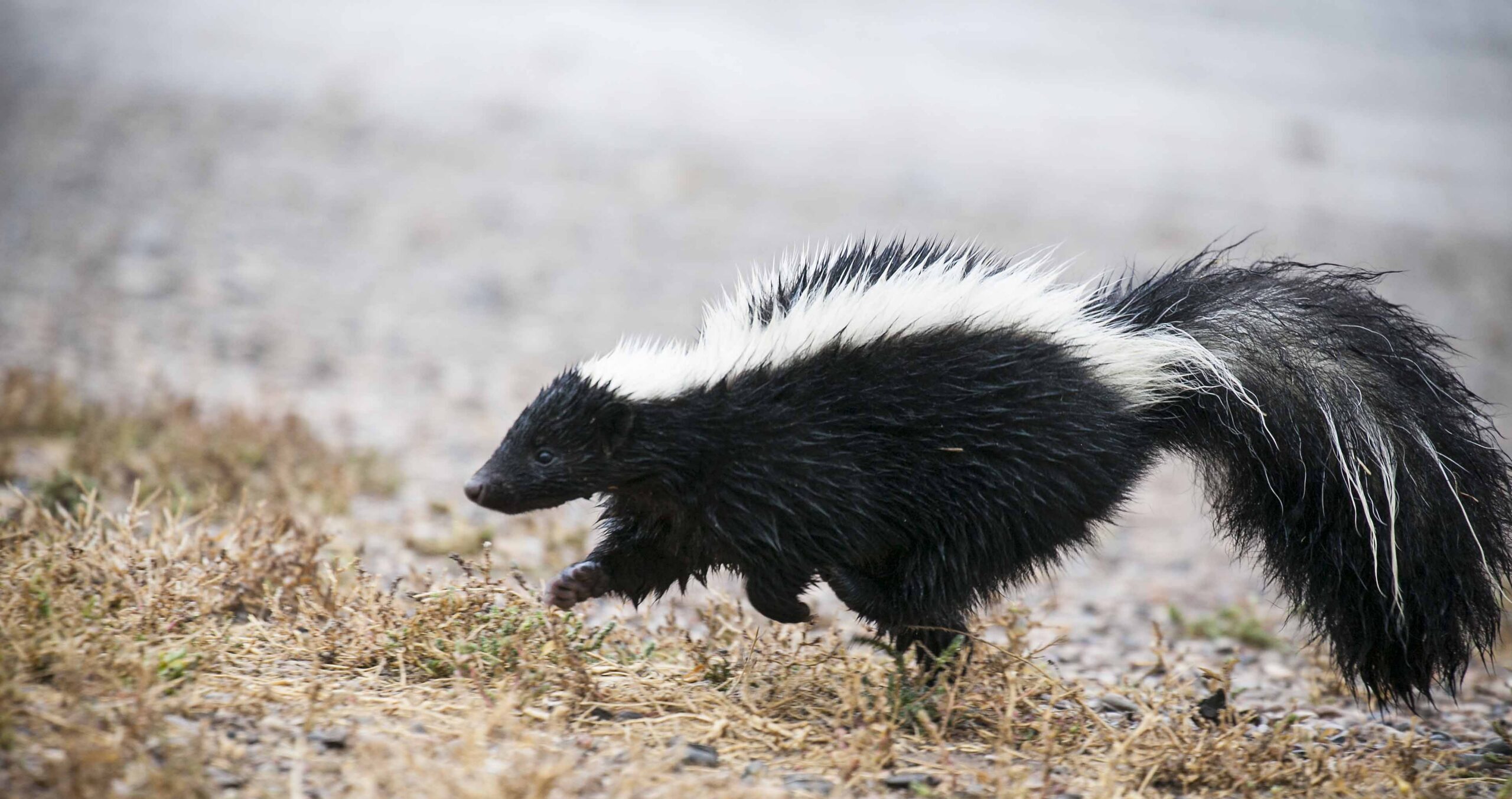
You may wake up and find shallow holes or strips of grass pulled across your lawn. Skunks often cause this damage while searching for grubs and other food beneath the surface. Their claws can open many small patches of turf during one night. Soft, damp ground makes digging easier, so the damage may become more common after rain or lawn watering.
You should not assume that damaged grass means one is living on your property. These animals may travel through several London yards in one night, stop to feed, and then return to shelter somewhere else. A nearby den becomes more likely when lawn damage appears with a larger opening beneath a deck, porch, shed, steps, or foundation edge. A steady odour, fur, worn paths, and sounds after dark may provide more clues.
At Skedaddle Humane Wildlife Control in London, Ontario, we inspect the full property for you. Do not reach into an opening, crawl beneath a structure, touch waste, or seal a route that may still be active. Our team checks for feeding areas, shelter sites, entry points, and dependent young. In this blog, we explain lawn damage, denning signs, and our humane removal and prevention process.
Why Do Skunks Dig Holes in Lawns?
Skunks often dig small holes while searching for grubs and other food near the soil surface. Their strong front claws and pointed nose help them open small sections of turf. The damage may look like shallow, cone-shaped holes spread across the lawn. Many of these holes can appear during a single night of feeding.
They may also roll or lift loose grass when food is hiding beneath the roots. Damp soil makes digging easier, so fresh damage may become more common after rain or lawn watering. One rich feeding area can bring them back for several nights. The digging may continue until the food becomes harder to find or another source draws them away.
These feeding marks are different from a larger entrance beneath a deck, porch, shed, or foundation. Your lawn may only be one stop along a route through several nearby properties. The daytime shelter could be far from the damaged grass. We review the digging pattern and other signs before deciding whether a den may be present.
Lawn Damage Can Reveal What Happened Overnight
The condition of your grass can provide useful clues about what happened during the night. However, lawn damage cannot show where the animal rests during the day. A professional assessment looks at the wider property instead of judging the problem by one patch of damaged turf. We compare the holes with nearby structures, travel paths, odours, fur, and sounds.
- Small Cone-Shaped Holes: Shallow holes may appear in groups where grubs are easy to reach. They are usually much smaller than an entrance used for shelter and may only affect the top layer of soil. Several new holes can appear overnight when the lawn offers a good food supply. We compare their size, shape, and location with other evidence before deciding what caused them.
- Rolled or Lifted Turf: Loose grass may be peeled back when food is sitting just below the roots. Several lifted patches can form across one section of lawn if the soil contains many grubs. This damage may look serious, but it does not prove that a skunk is living on the property. The feeding visitor may leave the yard and spend the day somewhere else.
- Damage After Rain: Wet ground can bring grubs closer to the surface and make them easier to find. Soft turf also lifts with less effort, which may lead to a sudden increase in lawn damage. You might notice fresh holes the morning after a heavy rainfall or several damp days. Rain may explain the timing of the feeding, but it cannot tell you where the animal shelters.
- Repeat Damage in One Area: The same part of the lawn may be disturbed several nights in a row while food remains available. Repeat digging can happen even when the visitor is only passing through the property. The pattern becomes more concerning when it appears with a focused entrance, steady odour, fur, or sounds near a structure. We inspect nearby shelter areas before confirming that a den is present.
Feeding Visits Do Not Always Mean a Den Is Nearby
Skunks can travel across several properties while looking for their next meal. Your lawn may be one useful feeding stop along a much longer nighttime route. A visitor can leave many holes and still return to a shelter outside your neighbourhood block. Lawn damage by itself does not show how close that shelter may be.
A temporary food source can also cause activity to begin and end without warning. Easy access to grubs may bring the same visitor back for several nights, especially when the soil is soft. The digging may stop once the food supply drops or the ground becomes harder. This change does not always mean the skunk has been removed from a nearby den.
Odour alone cannot confirm that one is living on the property. Strong defensive spray can travel through the air and may be noticed well beyond the place where it happened. A lighter smell that keeps returning near one deck, shed, porch, or foundation deserves more attention. We compare the odour with digging, fur, sounds, worn paths, and repeated movement before reaching a conclusion.
Signs That Suggest One Is Sheltering on the Property
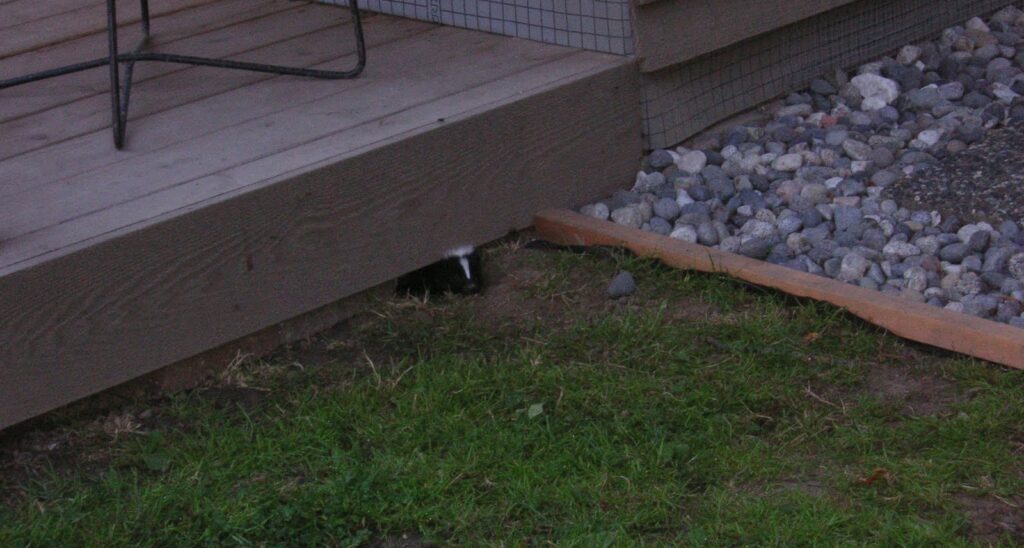
Feeding usually leaves damage spread across an open lawn, while sheltering tends to create repeated signs around one protected space. One clue may not be enough to confirm a den, so the full pattern matters. You should observe possible activity only from a safe distance and leave the inspection to our trained professionals. Do not approach, touch, enter, or close a suspected opening.
- A Larger Excavated Entrance: A shelter entrance may appear beneath steps, decks, porches, sheds, or low lattice. It is often wider and more focused than the small holes left during lawn feeding. Fresh soil, worn grass, or disturbed plants may collect around the same opening. Do not approach or block it because an adult or dependent young may still be inside.
- A Lingering Musky Odour: A mild smell that remains near one structure is different from a strong burst of defensive spray that moves through the area. The odour may become more noticeable near a low opening or during warm, damp weather. A smell that returns in the same place can suggest that the space receives regular use. We still check for other evidence before confirming that the area contains a den.
- Fur and Ground-Level Marks: Small pieces of fur may catch on rough wood, damaged lattice, fencing, or the edge of a narrow opening. Worn soil, flattened grass, and disturbed plants can also show that something travels through the same area often. These marks become more useful when they form a clear path to a sheltered space. Do not touch the fur or place your hand near the opening.
- Sounds After Dark: Scratching, shuffling, or movement may come from beneath a porch, deck, shed, addition, or raised floor. Building materials can carry noise, so the sound may seem to come from a different location than the entrance. Regular activity at a similar time each night may point to an occupied space. We compare the timing and location of those sounds with the evidence found outside.
Common Places Used for Shelter
Skunks often look for dark, low spaces that offer protection from weather and regular human activity. The area beneath a deck or porch may provide cover while still allowing easy ground-level access. Shifted soil, a worn path, fur, or a steady odour may show that the same route is being used. These signs should be assessed without anyone crawling into the space.
Raised sheds, outdoor steps, additions, and gaps near foundation edges can offer similar shelter. A small visible opening may lead into a much larger hidden area beneath the structure. The animal may also use more than one route, making it unsafe to close the first hole you notice. Sealing an active entrance can trap an adult or separate it from dependent young.
Young may remain quiet and hidden while the adult leaves to find food. For this reason, a still or silent entrance does not prove that the space is empty. A professional must identify the occupied area and check the family stage before humane removal begins. Skedaddle’s London team pays close attention to ground-level spaces beneath porches, decks, steps, sheds, and other common shelter sites.
Foraging Patterns Change With the Seasons
Lawn feeding often becomes easier when damp soil brings grubs and other food closer to the surface. Rain, lawn watering, and mild temperatures may lead to many fresh holes in a short period. A dry or frozen lawn may be harder to dig, which can change where the visitor searches. Seasonal conditions can explain when damage appears, but they do not confirm where shelter is located.
During spring and summer, a den may contain dependent young that cannot leave on their own. The adult may travel across several properties to find food before returning to the hidden space. This can make the damaged lawn seem unrelated to the occupied structure. Our team checks for dependent young and makes sure the entire family is accounted for before exclusion work begins.
Late summer and fall may bring more feeding as skunks prepare for colder weather. Activity can slow during winter, but it may not stop completely, especially during warmer periods or a mid-winter thaw. Tracks, odours, digging, and movement near a structure can still appear during cold months. The season provides helpful context, but physical evidence remains the best way to decide whether the property contains an active den.
Skunk Problems Around London, Ontario Homes
London has established neighbourhoods, suburban yards, parks, wooded corridors, and properties near the Thames River. These connected spaces allow skunks to travel between natural cover and residential lawns. A yard may receive feeding activity even when the daytime shelter sits elsewhere.
Many London properties also include decks, porches, sheds, additions, and raised steps. These features can create protected ground-level spaces when an edge remains accessible. Mature landscaping may further hide an entrance from view.
Southern Ontario weather can change when digging becomes visible. Spring moisture, summer heat, autumn feeding, and mild winter periods may all affect movement. Our London team assesses the lawn, structures, travel routes, odours, and other evidence together instead of making a decision from one hole.
What Professional Assessment and Removal Involve
When lawn damage appears with denning signs, Skedaddle should inspect the property. Our team determines whether the visitor is feeding, passing through, or living beneath a structure. You do not need to approach the opening or perform any removal work.
- Property Inspection: We examine lawn damage, soil disturbance, tracks, odours, structures, and likely travel routes. The inspection includes decks, porches, sheds, steps, and foundation edges. We look for connections between the feeding area and possible shelter. One lawn hole is never treated as complete proof.
- Occupancy and Young Assessment: Our technicians determine whether the space is active and whether dependent young may be present. A quiet opening can still contain occupants during the day. The family stage affects the timing and method of humane removal. The entrance must remain accessible until the assessment is complete.
- Humane One-Way Removal: When appropriate, our one-way doors allow wildlife to leave but prevent re-entry. Trained technicians install and monitor the device as part of a larger plan. We first account for dependent young and the layout of the den. The opening is not permanently closed until the space is empty.
- Permanent Exclusion: After removal, we secure vulnerable edges with durable materials suited to the structure. Professional exclusion must account for digging behaviour and possible weak points around the full perimeter. Our technicians complete this work without requiring you to dig or install barriers. The goal is lasting protection rather than a temporary surface repair.
Skunk Removal and Prevention with Skedaddle
Our professional wildlife team inspects the lawn, travel routes, sheltered structures, entry opening, and possible den. You do not need to crawl beneath anything, approach the entrance, or handle waste and nesting material. We determine whether the visitor is only feeding or living on the property.
We confirm occupancy and check for dependent young before choosing a humane removal plan. When appropriate, our one-way doors allow wildlife to leave but prevent re-entry. The timing and design of the process depend on the structure and family stage.
After the area is empty, our technicians complete professional cleanup where required and secure vulnerable spaces with durable exclusion materials. We handle the digging, barrier installation, and structural work included in the plan. This complete process addresses the den and reduces the chance of another entry.
Frequently Asked Questions
What do skunk holes look like?
Feeding holes are often shallow, cone-shaped, and spread across part of the lawn. Some areas may have loose soil or small sections of grass pulled back. A den entrance is usually larger and focused beneath a deck, porch, shed, step, or foundation edge. Our team considers the hole’s size and location with the other evidence on the property.
Does a skunk return to the same lawn?
It may return while the soil continues to provide easy food. Repeat visits can produce new holes in the same section over several nights. That pattern does not prove the visitor sleeps nearby because it may travel through several yards. Denning requires separate evidence around a sheltered structure.
Why does lawn damage appear after rain?
Moist soil can make grubs easier to smell and reach. Soft ground also allows turf to lift with less effort, so feeding damage may become more noticeable after rain. The timing can make it seem as though activity began suddenly. Rain explains why digging may increase, but it does not reveal where shelter is located.
Does a strong smell mean a den is nearby?
Not always, because a defensive spray can travel across several properties. A faint musky odour that stays close to one deck, porch, shed, or foundation area may provide a stronger clue. Wind and enclosed spaces can still move the smell away from its source. We compare odour with openings, tracks, sounds, and disturbed soil before confirming a den.
Should a hole beneath a deck be sealed?
No, not before our team confirms that the space is empty. An adult or dependent young may remain beneath the deck, and blocking the active route could trap them. The visible entrance may also be one part of a larger underground space. Humane removal must happen before permanent exclusion work begins.
Know Whether the Damage Points to Feeding or Shelter
Shallow holes and rolled turf usually show that skunks searched the lawn for food. These marks can appear even when the visitor shelters well beyond the property. A larger entrance, steady odour, fur, nighttime sounds, and repeated movement around one structure provide stronger signs of a nearby den.
You should not approach, corner, touch, crawl near, or seal out skunks. Dependent young may remain hidden, and the opening you see may lead into a much larger space. Professional assessment must come before removal, cleanup, or exclusion.
At Skedaddle Humane Wildlife Control in London, Ontario, we determine whether the damage points to temporary feeding or active shelter. Our team handles humane removal, professional cleanup where needed, and long-term protection for decks, porches, sheds, and other vulnerable areas. Contact us to schedule a property assessment or request an estimate to learn more.

 Loading...