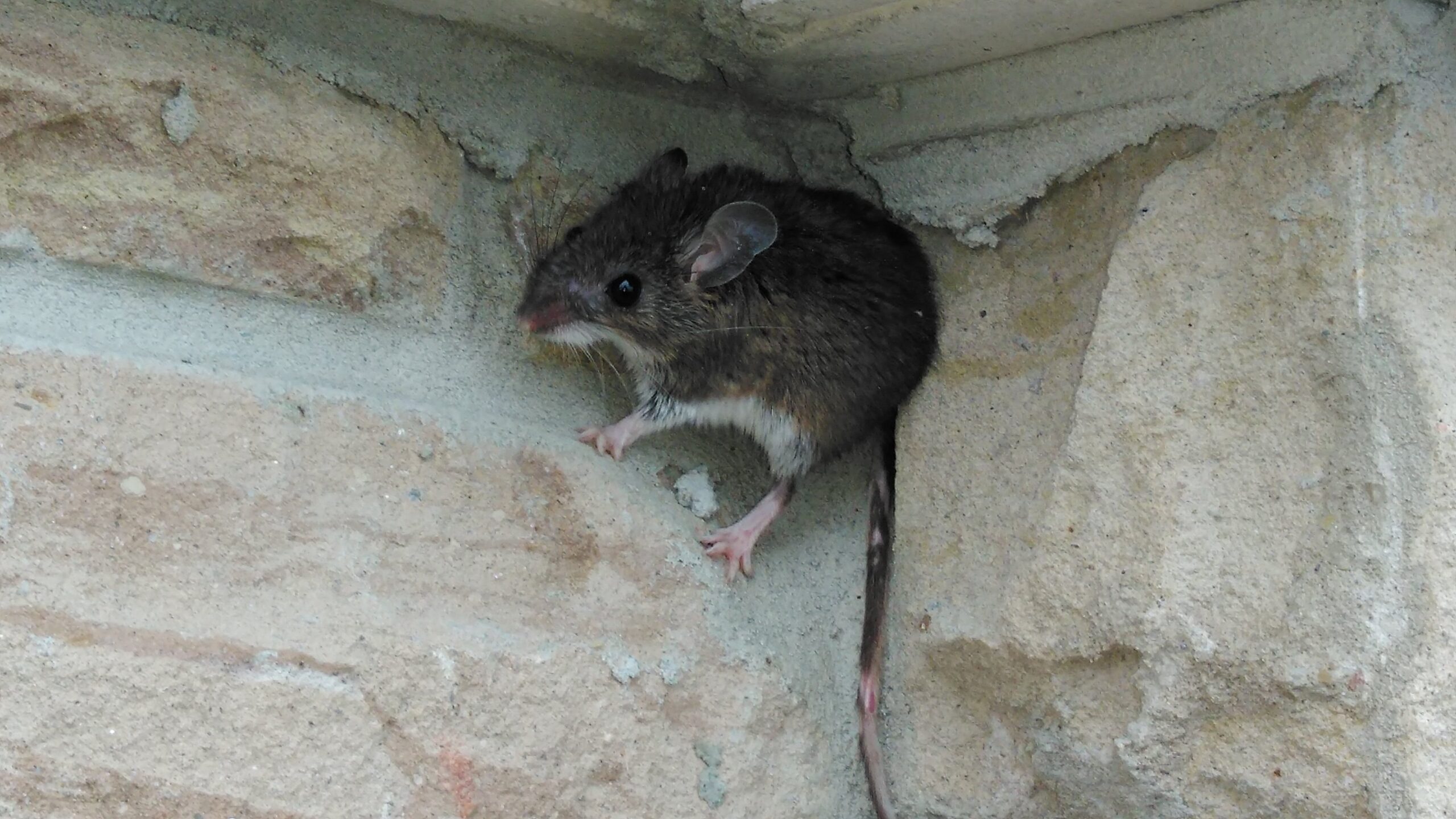
Mice in the home often seem like a simple nuisance with a quick solution. Many homeowners assume that once droppings are cleaned or scratching sounds fade, the problem has been solved. Unfortunately, mouse infestations rarely work that way.
What most homeowners miss is that mice are experts at staying hidden while continuing to live and breed inside walls, insulation, and attic spaces. They enter through tiny structural gaps, follow scent trails, and establish nesting areas far from where activity is first noticed. When only surface signs are addressed, the underlying infestation remains intact.
Lasting mouse removal requires identifying how mice entered, where they are nesting, and what allows them to return. Without resolving those factors together, infestations almost always reappear. That is why professional removal focuses on the entire infestation cycle rather than isolated symptoms.
What’s the Quickest Way to Get Mice Out Of Your House?
The quickest reliable way to remove mice from a home is to locate every entry point, eliminate nesting and contamination inside, and permanently secure access areas. Addressing only visible activity leaves hidden populations behind. Mice can continue living inside structural cavities even when signs seem reduced.
Because mice reproduce quickly, partial removal rarely holds. A small, unnoticed group can rebuild activity within weeks. That is why focusing only on what is immediately accessible does not solve the problem long-term.
Professional mouse removal works quickly because it targets the root cause immediately. By addressing entry, nesting, and contamination at the same time, we stop active infestations and prevent re-entry. This coordinated approach eliminates the need for repeated attempts.
Why DIY Mouse Removal Often Fails
Many homeowners believe mouse problems can be handled with simple products or quick fixes. Mice, however, are highly adaptable animals that quickly learn to avoid disturbances in their environment. They also nest in concealed structural spaces such as wall cavities, attic insulation, and subfloor voids that cannot be accessed without specialized tools and experience. Because much of their activity occurs out of sight, removing only what is visible rarely affects the full population living inside the home.
Another major factor is the incomplete removal of contamination and scent cues. Mice constantly mark travel routes and nesting areas with pheromones and urine, creating invisible pathways that guide them back to the same sheltered spaces. These scent trails remain long after visible signs are cleaned or activity appears reduced. As a result, homes continue to communicate safety and shelter to mice even when homeowners believe the issue has been resolved.
Surface-level treatment leaves behind multiple conditions that support ongoing infestations, including:
- Hidden nesting material deep inside insulation or structural cavities
- Residual scent trails that attract mice back to the same routes
- Undetected entry points allowing continued access
- Contaminated debris in inaccessible spaces
- Established interior travel pathways within walls and floors
Homes treated only at the surface level, therefore continue to signal safe shelter. This is why infestations frequently reappear after homeowners believe they are gone. Without removing what mice leave behind and permanently securing how they entered, recurrence is not just possible, it is expected.
The Hidden Entry Points Most Homeowners Never Find
Mice can enter homes through openings as small as a coin. These gaps often exist in locations rarely inspected, such as roofline intersections, soffits, utility penetrations, and foundation transitions. Seasonal building movement can also create new openings over time.
Indoor activity rarely aligns directly with exterior entry locations. Mice may enter near the roof but appear in kitchens or basements after traveling inside walls. This disconnect makes visual self-inspection unreliable for locating access points.
A professional exterior assessment evaluates the entire building envelope. We trace mouse pathways along structural lines and identify how they reach interior spaces. Securing all access areas prevents ongoing entry instead of closing isolated gaps.
|
Exterior Area |
Why Mice Use It | Typical Visibility |
|
Roofline gaps |
Warm air escapes | Low |
|
Utility openings |
Direct wall access |
Medium |
| Foundation cracks | Ground-level entry |
Medium |
| Vents & soffits | Concealed openings |
Low |
How Professional Inspections Reveal Hidden Entry Points
Recurring mouse activity often leaves homeowners frustrated, especially when traps, bait stations, or other quick fixes fail to stop the problem.
A perfect example comes from one of our recent assessments in Stittsville, Ottawa. Curtis Daniels from Skedaddle Humane Wildlife Control worked with a family who had been dealing with mice for three to four years. Despite repeated attempts to control the problem, the homeowners were still finding mice in the basement, under the kitchen sink, and behind the stove.
During the professional inspection, Curtis focused on the exterior of the home, a step most homeowners overlook. In the garage, clear evidence of mouse activity was discovered:
- Staining along ledges and foundations indicates repeated travel routes
- A large hole under the garage ledge that served as an active entry point into the wall cavities
- Holes through the insulation which allowed access to interior spaces
Once mice enter through these hidden points, they can spread quickly throughout walls, attics, and other structural spaces, making infestations harder to control and more persistent over time.
Curtis also highlighted what homeowners should watch for around their own properties:
- Visible staining along foundations or exterior ledges
- Holes in insulation, especially in garages or utility spaces
- Heavy concentrations of droppings in small, localized areas
Notably, a high concentration of droppings often signals a nearby entry point, even if the opening itself is difficult to see.
This example underscores why professional inspections are so critical. While DIY methods may temporarily reduce activity, only a thorough exterior and interior assessment can uncover the root of the problem. Our team provides precise identification of entry points and long-term solutions, eliminating guesswork and reducing the risk of recurrence. For homeowners dealing with mice in Ottawa, professional intervention ensures lasting results and peace of mind.
Why Mice Keep Coming Back After DIY Attempts
Recurring mouse activity often leads homeowners to believe new infestations are forming. In reality, most recurrences involve the original population re-establishing through unsealed entry points that were never fully secured. Mice are territorial and strongly prefer familiar nesting zones where they have already found warmth, shelter, and reliable travel routes. If access remains available, returning to the same home is easier and safer than searching for a new one.
When nesting material and contamination remain inside structural spaces, homes retain a powerful scent signature that continues to attract mice back. Even small amounts of shredded insulation, droppings, or urine markers can signal that a location is suitable for nesting. These cues persist in wall cavities, attics, and hidden voids long after surface cleaning occurs. To mice, the environment still communicates safety and stability.
Several conditions commonly allow mouse populations to re-establish in the same home:
- Previously used entry gaps that were never permanently sealed
- Residual nesting material left inside insulation or cavities
- Lingering scent trails along interior travel routes
- Protected structural spaces that remain undisturbed
- Established pathways between nesting and food areas
Because of these factors, recurrence is not random or seasonal coincidence. It is a direct and predictable result of incomplete removal combined with unresolved access. Eliminating both contamination and entry points at the same time is essential for lasting prevention and keeping mice from returning to the same spaces.
The Risks of Incomplete Mouse Removal
Mice affect much more than visible living areas. They contaminate insulation, shred stored materials, and spread debris through hidden cavities. Over time, this can impact indoor air quality and structural condition.
Gnawing behaviour also affects wiring and building components. Damage accumulates quietly inside walls and attics, where it remains unseen. Homeowners often discover the extent only after problems escalate.
Allowing populations to persist also increases breeding activity. A small, unnoticed presence can expand rapidly before new signs appear. Complete removal early prevents wider damage and contamination.
| Area | Typical Damage | Long-Term Effect |
| Attic insulation | Nesting & contamination | Heat loss, odour |
| Wall cavities | Debris & urine | Air quality concerns |
| Wiring zones | Gnawing | Electrical risk |
| Storage areas | Shredding | Property damage |
How Professional Mouse Removal Solves the Root Cause
Effective mouse removal is not a single-step process. It requires a coordinated approach that addresses every stage of the infestation cycle. Each part of the process targets a different factor that allows mice to live, reproduce, and return. Skipping even one stage leaves conditions intact, giving mice a reason to persist and making recurring problems almost inevitable.
We start with a thorough inspection of your home. This means identifying all possible entry points and tracing the pathways mice use to move inside. Understanding this network is critical because it reveals how mice navigate your home and where they are likely to nest or travel. Without this step, removal efforts can miss hidden populations entirely.
Next comes the removal of nesting material and contamination from affected areas. This includes shredded insulation, droppings, and any debris that mice leave behind. Removing these elements serves multiple purposes:
- Eliminates scent trails that guide mice back to the same locations
- Reduces contamination that can affect air quality and indoor safety
- Removes potential nesting materials that support reproduction
- Clears hidden spaces that encourage ongoing activity
Sanitized areas no longer signal a safe environment, which significantly reduces the likelihood of returning populations.
The final step is professional exclusion, where all vulnerable structural points are sealed and secured. This is not just about patching visible holes. Durable exclusion involves closing gaps in rooflines, soffits, foundation walls, vents, and utility penetrations. Proper exclusion:
- Prevents future entry by sealing the entire access network
- Protects both new and existing structures from re-infestation
- Ensures long-term results instead of temporary relief
By combining inspection, contamination removal, and exclusion, we tackle both the symptoms and the root causes of mouse infestations. This comprehensive approach provides lasting protection, keeps your home safe, and eliminates the frustration of repeated mouse activity.
Why Ottawa Homes Are Especially Vulnerable to Mice
Ottawa’s seasonal climate has a significant impact on mouse behaviour, making homes particularly vulnerable at certain times of the year. Cold winters drive mice indoors as they search for warmth, shelter, and stable nesting areas. Similarly, the drop in temperatures during the fall triggers more active nesting and entry attempts as mice prepare for the winter months.
Snow cover and frozen ground further concentrate mouse activity toward buildings. With outdoor food sources limited, mice are naturally drawn to human structures in search of sustenance and protection. Once inside, heated interiors allow mice to survive year-round, providing a safe environment for nesting and reproduction.
Several regional factors in Ottawa also increase the risk of infestations:
- Mature landscaping: Dense shrubs, gardens, and tree cover create sheltered pathways that lead directly to homes.
- Aging construction: Older homes often have gaps in rooflines, foundations, and siding that provide easy entry points.
- Seasonal weather fluctuations: Rapid shifts from warm to cold can prompt sudden indoor migration.
- Snow and ice accumulation: These conditions reduce ground-level mobility and encourage mice to seek alternative shelter inside buildings.
These environmental and structural factors mean that Ottawa homeowners face unique challenges when it comes to mouse prevention. Without professional intervention, the combination of climate, landscaping, and building conditions makes infestations more likely and more persistent. Understanding the local risk factors allows for targeted prevention that keeps mice out before they establish a presence.
Signs of Mice Most Homeowners Overlook
Early mouse activity often goes unnoticed because the indicators are subtle and easy to dismiss. Homeowners typically only detect infestations after populations have grown large enough to cause noticeable damage or activity. Recognizing the early signs of mice can make a huge difference, allowing for faster intervention and preventing a small problem from becoming a full-blown infestation.
Some of the most commonly overlooked signs include:
- Faint scratching or scurrying sounds inside walls: These noises are often mistaken for normal house creaks or settling wood, but repeated activity, especially at night, can indicate mouse movement.
- Small grease marks or smudges along baseboards and openings: Mice leave natural oils on surfaces they frequently travel. These subtle streaks can signal established routes between nesting areas and food sources.
- Disturbed insulation or shredded materials in hidden spaces: Mice use insulation and other soft materials to build nests. Even a small amount of shredded debris in attics, crawl spaces, or behind walls can indicate activity.
- Odours in enclosed areas: A musty or ammonia-like smell in closets, cabinets, or storage rooms may point to urine contamination and nesting.
- Droppings in seldom-used areas: Tiny, dark pellets in corners, behind appliances, or in storage areas are classic indicators of early mouse activity.
- Signs of gnawing on wiring, boxes, or stored items: Mice continually chew to keep their teeth healthy, and damage to items can occur long before other signs become obvious.
Being aware of these subtle clues allows homeowners to take action early, rather than waiting for more obvious and harder-to-control infestations. Even a single small indicator can signal the beginning of a problem that will grow if left unchecked. Early detection combined with professional assessment ensures that the infestation is addressed before it spreads further.
Mouse Infestation Cycle
Mouse infestations follow a predictable cycle inside homes, but many homeowners do not realize how quickly they can escalate. Understanding this cycle is key to effective removal and long-term prevention. At each stage, mice create conditions that make it easier for them to survive, reproduce, and return if the problem is not fully addressed.
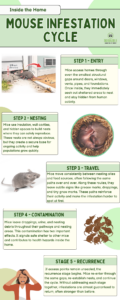
Breaking this cycle requires a comprehensive approach that targets every stage simultaneously. Professional removal ensures that entry points are sealed, nests are eliminated, travel routes are disrupted, and contamination is removed, creating conditions where mice can no longer survive inside your home.
FAQ: Mouse Removal in Ottawa Homes
How do mice get into houses in Ottawa?
Mice enter through small structural gaps around roofs, foundations, and utilities. Seasonal temperature drops increase entry attempts. Buildings provide warmth and shelter during winter.
Can mice leave on their own once inside?
No. Indoor environments provide stable shelter and nesting safety. Without removal and exclusion, mice remain and reproduce. Populations often grow unnoticed.
Why do mice return after removal attempts?
Unsealed entry points and lingering scent cues attract mice back. Familiar nesting zones remain appealing. Recurrence reflects incomplete removal rather than new infestations.
How long does professional mouse removal take?
Time varies by infestation size and structure complexity. Professional assessment quickly identifies the full scope. Addressing all factors together ensures lasting results.
Is mouse activity seasonal in Ottawa?
Yes. Activity increases in fall and winter as mice seek indoor shelter. However, infestations can persist year-round once established. Prevention is important in all seasons.
Stop Recurring Mouse Problems at the Source
Mouse infestations rarely resolve through surface-level measures alone. Hidden entry points, nesting zones, and contamination allow populations to persist and return. Addressing the entire infestation cycle is the only reliable solution.
Professional mouse removal identifies how mice enter, where they live, and what allows them to re-establish. Resolving each factor together provides lasting protection rather than temporary reduction. Ottawa homes benefit most from prevention that accounts for climate and building conditions.
If you suspect mouse activity or want to prevent recurring infestations, we csan help. Contact Skedaddle Humane Wildlife Control in Ottawa to schedule a professional assessment, request more information, or book a service appointment. Protecting your home starts with addressing what most homeowners miss.

 Loading...