Ottawa Wildlife Removal and Pest Control
PROUDLY SERVING •
Ottawa, Kanata, Nepean, Stittsville, Orléans, Barrhaven, Gloucester, Manotick, Carp, Kemptville





Skedaddle Ottawa — serving the capital region since 1993.
No traps. No poison. Permanent exclusion.
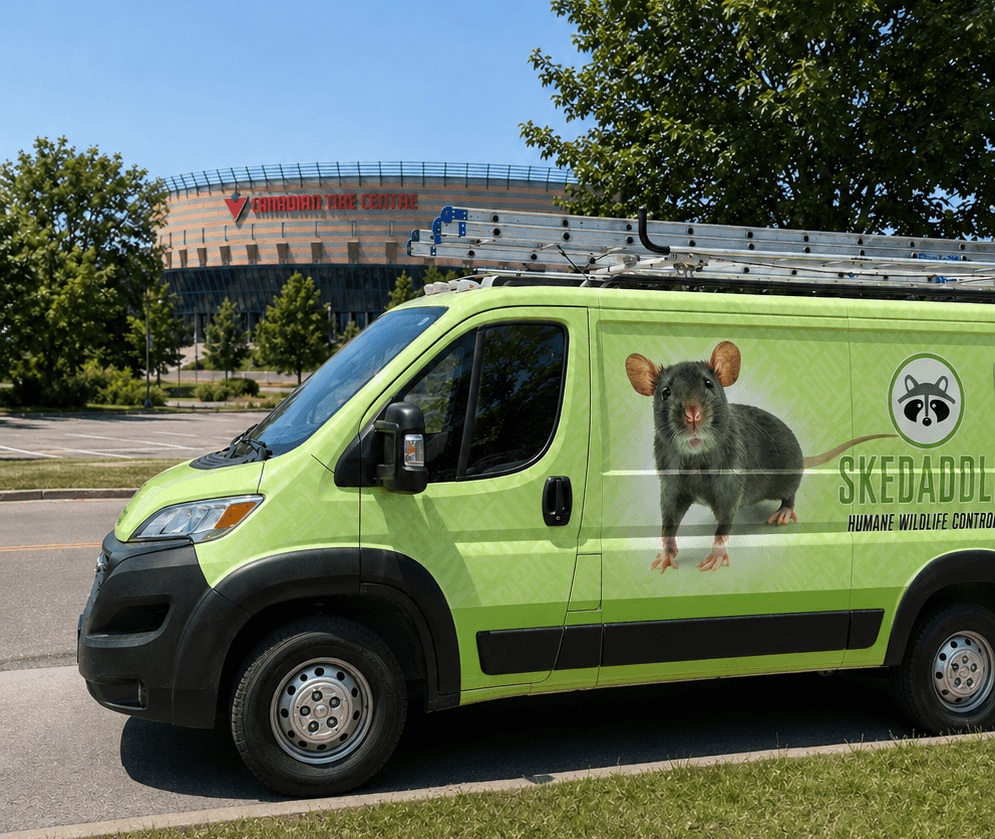
Skedaddle Humane Wildlife Control handles both wildlife removal and pest control across the capital region with one local team. Wildlife work is exclusion-based: animals are removed alive, every entry point is sealed with heavy-gauge material, and that seal carries a lifetime guarantee on all workmanship and materials. Pest work pairs targeted treatment with the same sealing discipline, so insects and rodents lose their routes inside. Every job begins with a full interior, exterior, attic and roofline inspection and an itemized quote on site.
At A Glance
- Service area: Ottawa core plus Kanata, Nepean, Stittsville, Orléans, Barrhaven, Gloucester and area.
- Species handled: Raccoons, squirrels, mice, bats, skunks, rats and birds.
- Pest categories handled: Ants, spiders, wasps, bed bugs, cockroaches and mosquitoes.
- Inspection: Full interior, exterior, attic and roofline assessment before any quote.
- Method: Live removal, one-way doors, targeted treatment, permanent sealing.
- Guarantee: Lifetime guarantee on all workmanship and materials.
Why Homeowners Choose Skedaddle Ottawa
Three decades in the capital region
The local Skedaddle franchise has operated since 1993, six years after the company itself was founded in 1989 by Bill Dowd. That tenure covers the full range of housing stock in the territory: century homes in the Glebe, Centretown and Sandy Hill, post-war bungalows through Nepean and Gloucester, and newer builds in Stittsville, Barrhaven and Riverside South. Each stock type fails in a different place, and the crews have seen all of them. Over the past twelve months the team completed more than 2,600 inspections and more than 1,300 humane wildlife removals across the territory.
Technicians trained on regulated practice
Field crews work to written internal protocols covering ladder and roof safety, attic entry, one-way door placement and material selection. Skedaddle follows Ontario Ministry of Natural Resources guidance for the humane treatment and release of live-captured wildlife, including the province’s limit on how far an animal may be moved from the site of capture, set out in Ontario’s rules on harassing, capturing or killing a wild animal. Technicians also carry role-specific training such as drone pilot certification and insulation-handling training where the work calls for it.
A guarantee that outlasts the invoice
Sealing work is where the value sits, so that is what the warranty covers. Every entry point closed by a Skedaddle crew carries a lifetime guarantee on all workmanship and materials used to seal your home for life. If a sealed point fails, the crew returns and repairs it. That commitment is the reason the inspection is thorough before the quote is written rather than after.
Meet the Team Behind Ottawa's Wildlife Removal and Pest Control

Curtis Daniels
Wildlife Specialist
Curtis considers himself a highly active individual who enjoys being outside, playing sports, and being as healthy as possible. With a degree in business, Curtis chose to work with Skedaddle because he was done with working inside offices and wanted the chance to work with animals, work outside and be active at the same time. Curtis has extensive training with Skedaddle including ladder safety training, drone pilot certification, and GreenOn insulation training.

James Stork
Field Operations Supervisor
An Ottawa native, James brings a strong construction and pest control background to his role as Field Operations Supervisor. Prior to joining Skedaddle, James owned and operated a successful landscape, construction and property maintenance business in the city and takes pride leading Ottawa's team of dedicated technicians. James enjoys the challenge and unpredictability of hands-on wildlife removal and when he's not face-to-face with a raccoon he enjoys spending time outdoors and weekends away at the lake.
The Mission Behind Skedaddle: Since 1989
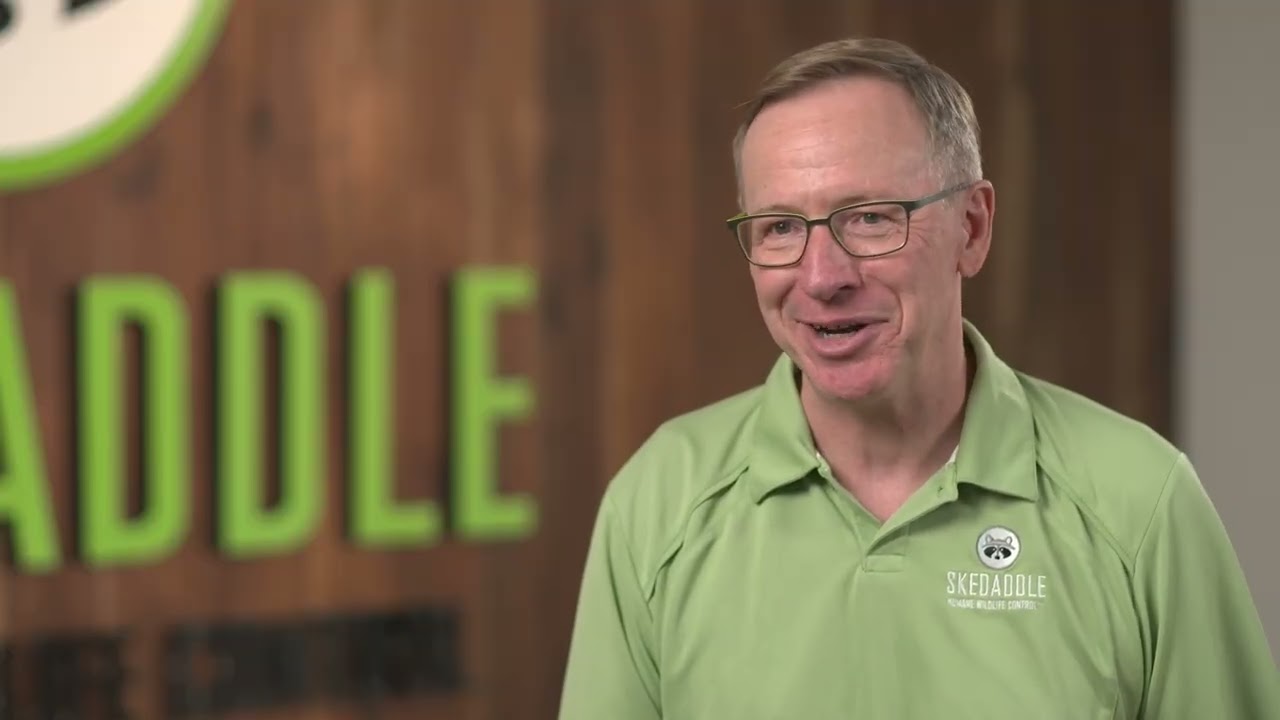
Founder Bill Dowd on why “trap and relocate” fails the homeowner and the animal — and the biology-based method Skedaddle built instead.
Wildlife Control & Pest Control in Ottawa
Skedaddle Ottawa is a full dual-service franchise. Both services below carry the same technicians, the same lifetime guarantee, and the same humane, hands-on method.
Wildlife Control
Ottawa leaves wildlife plenty of room to live alongside people. The National Capital Commission Greenbelt, the Ottawa and Rideau rivers, and mature tree cover through the older neighbourhoods put dens and nest sites against residential rooflines. Animals rarely force their way in; they use what is already open — soffit returns, roof and exhaust vents, gable ends, chimney flashing, and utility line gaps. What starts as noise overhead becomes a widened opening, soiled insulation, or a vent that no longer vents.

Raccoon Removal
Raccoons account for the largest share of local wildlife work and are the most destructive per incident. Females target attics and chimneys in the older core neighbourhoods, where soffit returns and roof vents on century homes give way under sustained pressure. Kits are common in spring and again in late summer. Raccoon removal in Ottawa explains how mothers and young are handled.
Learn more about raccoon removal →

Squirrel Removal
Grey and red squirrels make up the next-largest share, and they chew entry holes rather than find them, so sealing must use heavy-gauge material. Mature canopy along the river corridors puts branches within jumping distance of rooflines, and the usual failure points are roof edges, gable vents and fascia. Squirrel removal in Ottawa details the exclusion sequence.
Learn more about squirrel removal →

Mouse Removal
Mice generate more inspection requests than any other species, with more than 900 assessments across the territory in the past twelve months. They enter through gaps a pencil fits through — utility penetrations, dryer vents, and the sill plate where foundation meets framing. Autumn drives the surge as temperatures fall. Mouse removal in Ottawa covers sealing and cleanup together.
Learn more about mouse removal →

Bat Removal
Bats enter through gaps at the roof peak, chimney flashing and around dormers, often without visible damage. Ontario restricts exclusion during the maternity period from mid-May to mid-August, when flightless pups would be trapped inside. Skedaddle follows Ontario Ministry of Natural Resources bat exclusion guidance on timing. Bat removal in Ottawa covers the window.
Learn more about bat removal →

Skunk Removal
Skunk cases are fewer in number, but the complaints are urgent. Skunks den under decks, sheds, porches and front steps, particularly in suburban communities with raised structures and open access beneath. Exclusion means digging in a screen barrier below grade so the animal cannot re-excavate. Skunk removal in Ottawa explains the barrier method.
Learn more about skunk removal →

Rat Removal
Rat volume is lower than mouse volume, but the entry points are larger and the damage heavier. Rats exploit sewer laterals, foundation cracks and gaps around service lines, and they are most often reported near construction disturbance and older service infrastructure. Sealing must account for gnawing pressure. Rat removal in Ottawa sets out the plan.
Learn more about rat removal →

Bird Removal
Starlings, sparrows and pigeons nest in dryer and bathroom exhaust vents, behind soffits, and under rooftop equipment. Blocked vents are a fire and moisture risk, not just a noise complaint, and the vent assembly often needs replacing rather than clearing. Bird control in Ottawa covers nest removal and screened vent replacement.
Learn more about bird removal →Seeing wildlife signs? See the Ottawa wildlife and pest calendar for seasonal timing, or book an inspection now.
Wildlife (613) 231-2222Pest Control
The pest side runs on the same logic as the wildlife side: identify the species precisely, eliminate the active population with targeted product rather than blanket spraying, then remove the conditions and openings that let the infestation establish. Skedaddle describes this as three stages — Identify and Eliminate, Clean and Control, Monitor and Protect — supported by interior and exterior inspections that look for gaps around foundations, doors, windows, vents and utility lines. Products are eco-friendly formulations placed at targeted areas. Six categories cover the bulk of local casework.
Ant control
Ants are colony insects, so spraying the visible workers accomplishes little and can scatter the colony deeper into a structure. Elimination requires reaching the queen and brood, which is why baits carried back to the nest are the primary tool. Carpenter, pavement and odorous house ants are the usual culprits. Ant control services covers identification and baiting.
Learn more about ants control →
Spider control
Spider complaints concentrate in basements, garages, window wells and along exterior soffit lines where webs accumulate and prey insects gather. Treatment pairs web and egg-sac removal with targeted perimeter application, then addresses the harbourage conditions and the entry gaps around windows, vents and utility lines that let spiders and their food supply inside. Spider control services explains the sequence.
Learn more about spiders control →

Wasp control
Wasp and hornet nests turn up in soffits, wall voids, under decks and in ground cavities in lawns and gardens. Nests build through summer and become most aggressive late in the season. Crews remove developing nests, treat the site so it is not immediately recolonized, and screen the void that hosted it. Wasp control services covers nest removal.
Learn more about wasps control →
Bed bug control
Bed bugs hide in mattress seams, bed frame corners and upholstered furniture, and travel in on clothing and used furniture. Because they can go up to seventy days without feeding, they hide well during inspections and one treatment rarely finishes the job. Treatment combines HEPA vacuuming, targeted chemical application and repeat inspections. Bed bug control services sets out the plan.
Learn more about bed bugs control →
Cockroach control
Cockroaches favour warm, dark, damp areas — basements, kitchens and bathrooms — and can reproduce as quickly as every sixty days, which makes do-it-yourself treatment largely ineffective. They also spread bacteria including E. coli and salmonella, so disinfection is part of the work rather than an add-on step. Cockroach control services covers baiting and disinfection.
Learn more about cockroaches control →

Mosquito control
Mosquito pressure peaks through the humid summer months, driven by standing water in gutters, containers and low-lying yard areas where water sits for several days. Treatment focuses on resting-site application in shaded vegetation combined with source reduction, because eliminating breeding water does more than spraying adults. Mosquito control services explains the approach.
Learn more about mosquitoes control →Seeing pest signs? See the Ottawa wildlife and pest calendar for seasonal timing, or book a pest inspection now.
Pest (855) 878-7859Not sure if it’s wildlife or pest?
One inspection can cover both wildlife and pest issues, because rodent and insect problems often share the same entry gaps and moisture conditions. Our Ottawa technicians identify what you’re dealing with and give you the humane, permanent fix — no guesswork, no poison.
Ottawa Wildlife and Pest Calendar
Pressure in the capital region follows a predictable annual cycle driven by a cold continental winter and a humid summer. Rodent entry peaks in autumn, wildlife denning in spring, and insect activity between June and September.
| Quarter | Most active | What homeowners notice |
|---|---|---|
| Spring (Mar–May) | Raccoon kits, squirrel nesting, bats returning to roosts, early ants | Attic and chimney noise, daytime sightings, ant trails indoors |
| Summer (Jun–Aug) | Bat maternity period, wasps, mosquitoes, juvenile squirrels, skunks | Nests in soffits and lawns, bats indoors, odour under decks |
| Fall (Sep–Nov) | Mouse and rat entry at peak, squirrel caching, raccoon pre-winter denning | New gnawed openings, scratching at night, droppings in cupboards |
| Winter (Dec–Feb) | Mice and rats indoors, raccoons denning in attics, cockroaches | Sounds in walls, insulation damage, kitchen and basement sightings |
Regulatory note: Bat exclusion is restricted during the maternity period from mid-May to mid-August under Ontario Ministry of Natural Resources bat exclusion guidance, and live-captured wildlife may not be moved more than one kilometre from the capture site under Ontario’s wild animal rules. Both shape scheduling.
This quarter in Ottawa — autumn 2026: Mouse entry is at its annual peak, and a gap only half an inch high is enough for a mouse, so book roofline, soffit and vent sealing before winter. Autumn is also the recommended season for wildlife removal, because this year’s young have left the den and no mother is separated from her litter. Bat exclusion is open again.
Suburbs and Neighbourhoods Ottawa Serves
The territory runs from Kanata and Stittsville in the west, through the urban core, out to Orléans and Cumberland in the east, and south through Barrhaven, Riverside South and Manotick. Dedicated pages are live for three communities, with the rest served on the same schedule from the same crews.
Suburb Pages
- Kanata
- Nepean
- Stittsville
- Orléans
- Barrhaven
- Gloucester
- Manotick
- Greely
- Cumberland
- Clarence-Rockland
- Carp
- Richmond
- Findlay Creek
- Kemptville
- Arnprior
- Embrun
- Smiths Falls
- Carleton Place
Serving your neighbourhood
Our Ottawa technicians cover the whole capital region, from Kanata and Stittsville through Nepean, Barrhaven, Gloucester and Orléans.
Skedaddle's Three-Step Wildlife Removal Process

Assess And Remove
We begin with a detailed inspection of your home to identify the wildlife, locate active entry points, and assess the extent of the problem. Our technicians then use proven, species-appropriate methods to remove animals safely and humanely.
Learn more
Clear And Clean
After the animals are removed, we clean and decontaminate affected areas, removing nesting materials, droppings, and other traces left behind. When needed, we also address damaged insulation and help restore the space to a clean, healthy condition.
Learn more
Prevent And Protect
Finally, we identify vulnerable areas and seal confirmed or potential entry points to help prevent wildlife from returning. Our durable exclusion work provides lasting protection and includes a lifetime warranty on the entry points we seal.
Learn moreHow Skedaddle Handles Wildlife and Pests Responsibly
One-way doors and exclusion, not lethal removal
Wildlife is removed alive. Species-appropriate one-way doors let an animal leave on its own and prevent re-entry, which avoids the stress and injury risk of trapping. The permanent fix is the seal, not the removal, so crews close every opening before sign-off.
Reuniting mothers with young
Removals in spring and late summer almost always involve dependent young. Crews locate and hand-retrieve kits and pups, place them in a heated reunion box near the original entry, and let the mother move them to an alternate den herself.
Decontamination and attic restoration
Wildlife and rodent occupation leaves droppings, urine, parasites and soiled insulation. Skedaddle removes contaminated material, cleans and disinfects the space, and replaces insulation where required so the attic returns to its original thermal performance.
Targeted treatment, not blanket spraying
Pest work favours species identification and placement over volume. Baits are set where colonies will carry them, product goes into harbourage and resting sites rather than across open surfaces, and formulations are eco-friendly.
A lifetime guarantee behind the seal
Sealed openings carry a lifetime guarantee on all workmanship and materials. That is the standard the inspection is built to meet, and the reason crews document every opening before quoting.
Ready to book?
Every sealed opening carries a lifetime guarantee on workmanship. Book an inspection and we’ll identify what you’re dealing with before any work begins.
Skedaddle Ottawa: Service Area and Contact
Saturday 8:00 am to 5:00 pm | Sunday 10:00 am to 4:00 pm
Frequently asked questions about Ottawa wildlife removal
Does Skedaddle handle both wildlife removal and pest control?
Yes. The same local operation covers wildlife — raccoons, squirrels, mice, bats, skunks, rats and birds — and pest categories including ants, spiders, wasps, bed bugs, cockroaches and mosquitoes. One inspection can cover both, because rodent and insect problems often share the same entry gaps and moisture conditions. The two services share one local team but use separate phone lines, labelled beside every number here.
How much does wildlife removal cost?
There is no flat price, and no honest quote can be given over the phone. Cost depends on the species, how many entry points need sealing, how much material the seal requires, and whether decontamination or insulation replacement is needed. Technicians provide an itemized written quote on site.
Is wildlife removal regulated in Ontario?
Yes. The Fish and Wildlife Conservation Act, 1997 governs how wildlife may be handled, and provincial rules limit how far a live-captured animal may be moved from the capture site. The province also publishes exclusion guidance for bats, which Skedaddle follows on timing and release practice.
Can bats be removed from my home in the summer?
Not during the maternity period. From mid-May to mid-August, flightless pups are present and sealing a roost would trap them inside, so exclusion is restricted under provincial guidance. Crews can confine bats out of living spaces and plan the work, then complete exclusion after mid-August.
What is the difference between pest control and wildlife removal?
Wildlife removal deals with vertebrates — raccoons, squirrels, bats, skunks, birds and rodents — and centres on live removal plus permanent structural sealing. Pest control deals with insects and centres on targeted treatment plus sanitation and monitoring. Skedaddle runs both, and both end with sealing.
Do you service Kanata, Nepean and Stittsville?
Yes, and each has its own page. Orléans, Barrhaven, Gloucester, Manotick, Greely, Cumberland, Clarence-Rockland, Carp, Richmond, Findlay Creek, Kemptville, Arnprior, Embrun, Smiths Falls and Carleton Place are served on the same schedule by the same crews.
How quickly can a technician get to my property?
Same-day service is often available, and customers regularly note fast response in reviews. However, availability depends on crew scheduling and the time of year — autumn rodent season and midsummer wasp season are busiest. Phone lines are staffed 7:30 am to 9:00 pm on weekdays, with shorter weekend hours.
What does the lifetime guarantee actually cover?
It covers all workmanship and materials used to seal your home for life. If a sealed entry point fails, a crew returns to repair it. The guarantee applies to the exclusion work, which is why the inspection documents every opening before the quote is written.
Do you relocate animals far away from my property?
No, and provincial rules prevent it. Live-captured wildlife may not be moved more than one kilometre from the capture site under Ontario's wild animal rules. Skedaddle's approach makes distance irrelevant: because entry points are permanently sealed, an evicted animal cannot get back in.
Do you clean up after the animals are removed?
Yes. Droppings, urine, nesting material and parasites are removed, the affected space is cleaned and disinfected, and soiled attic insulation is replaced where the damage requires it. Restoring the attic's thermal performance is part of the work, not a separate trade you arrange yourself.
Are pest treatments safe around children and pets?
Skedaddle uses eco-friendly formulations derived from sources including chrysanthemum and borax, and applies them to targeted harbourage and resting sites rather than spraying broadly across living space. Your technician will tell you which areas were treated and how long to stay clear.
Book your inspection today
If you hear scratching above the bedroom ceiling, finding droppings behind the cupboards, watching wasps work the lawn, or smelling skunk under the deck, the next step is the same: a full inspection before any quote. A technician confirms the species, finds every opening, and writes an itemized plan onsite. Removal is humane, treatment targeted, and the sealing carries a lifetime guarantee.
