You are settling in for the evening when something heavy moves above the ceiling. A few nights later, the thumping returns. With winter approaching, you may wonder whether to arrange an inspection or wait for the animal to leave.
For homeowners in Convent Glen, Chapel Hill, Fallingbrook, and across Orleans, autumn is a useful time to investigate suspected attic activity. Ontario recommends removing small animals from homes in autumn once young have left the den or nest.
Addressing the problem means understanding what is inside, how it entered, and what repairs are needed. A coordinated approach combines humane removal with exclusion, cleanup, and appropriate restoration.
When is the best time to remove raccoons from an attic in Ottawa?
Ontario recommends removing small animals from homes in autumn, once young have left the den or nest, to avoid separating families. November can be a useful time to address attic activity. A professional should still assess occupancy, dependent young, weather, and entry points before planning humane removal and exclusion.
Your fall raccoon checklist at a glance:
- Notice the signs: Recurring overhead movement, damaged soffits, or observed animal entry.
- Observe safely: Record activity and photograph visible damage from the ground.
- Assess before sealing: Suspected occupied openings need professional attention.
- Plan beyond removal: Include entry-point repairs, cleanup, decontamination, and restoration where needed.
Do Raccoons Hibernate During Winter?
Raccoons do not truly hibernate. Instead, they can spend extended periods inactive in winter dens, conserving energy during cold weather. Hinterland Who’s Who identifies attics, chimneys, and garages among the structures raccoons may use for shelter.
That distinction matters when you are listening for activity. A quieter attic does not necessarily mean the space is vacant. A change in noise is an observation to share with an inspector, rather than confirmation that the animals have gone.
Likewise, an entrance that appears unused during a brief outdoor check may still require assessment. Looking at one opening for a few minutes cannot establish the full situation.
Avoid making repair decisions based only on silence. An inspection can consider the visible entrance, accessible interior evidence, and other areas of concern before determining how removal and sealing should proceed.
Why Is Autumn a Useful Time for Humane Removal?
Ontario’s guidance on managing conflicts with small animals recommends autumn removal after young have left the den or nest. The purpose is to avoid separating a mother from dependent young.
This makes November a sensible time to investigate a suspected raccoon in an attic. Addressing occupancy and building access now can help prevent an unresolved problem from continuing through winter and into the following spring.
However, the calendar cannot replace an inspection. Hinterland Who’s Who reports that raccoon births peak in May, while births outside the usual spring period also occur. Family groups may remain together through their first winter.
The practical approach is to arrange assessment when you notice activity. A professional can determine whether young are present and select a suitable removal method.
Autumn offers an opportunity to act thoughtfully. It does not mean every occupied opening should immediately receive the same exclusion device or repair.
What Signs Suggest a Raccoon Is Using Your Attic?
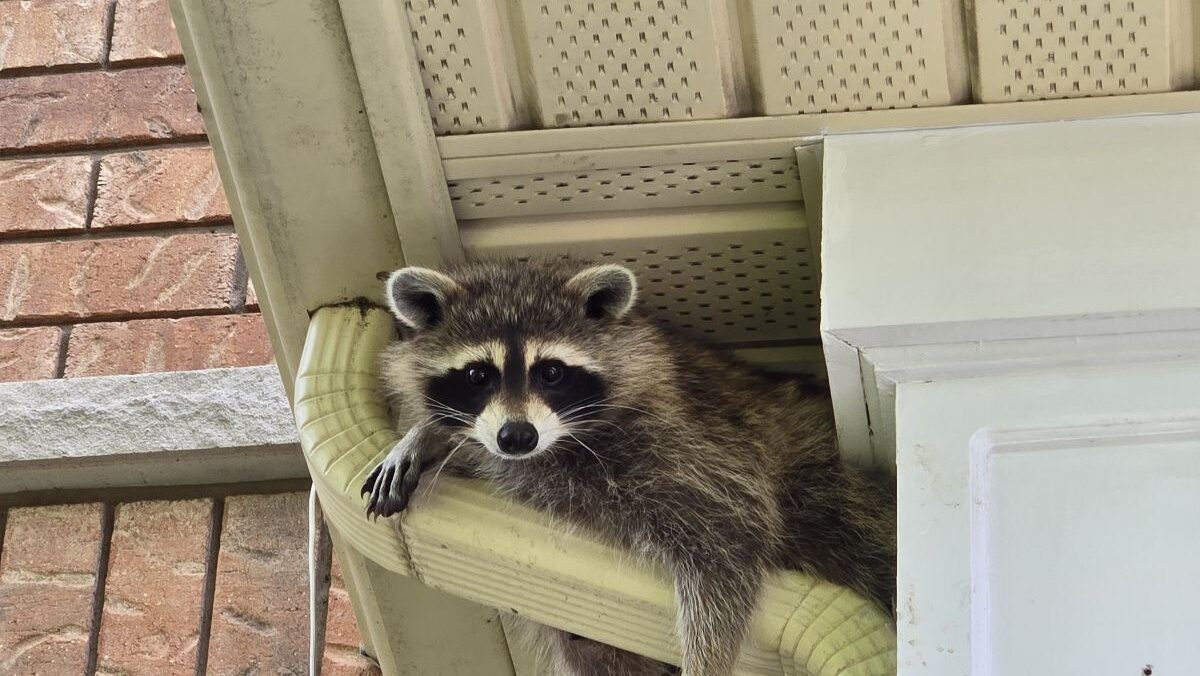
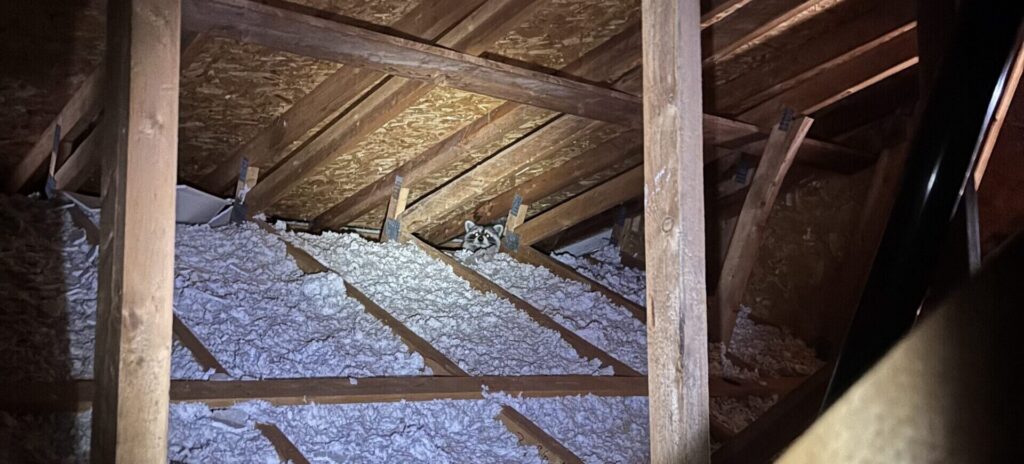
Heavy movement overhead can prompt concern, especially when it returns over several evenings. Other clues may become apparent outdoors, such as disturbed materials near the roof.
Observations worth reporting include:
- Recurring thumping or movement above the ceiling.
- Loose or damaged soffit panels.
- Damage around a roof vent.
- An animal entering or leaving an opening.
- Unexplained odours or visible waste.
These clues help guide an inspection, but individual signs have limits. A damaged panel does not establish which animal caused it. Noise alone cannot confirm a raccoon or reveal how many animals are present.
Before an appointment, note where the sounds seem loudest, when they occur, and whether their location changes. Share any photographs taken safely from the ground.
Avoid entering an attic to approach an animal or investigate a suspected den. Concealed spaces and damaged materials need appropriate assessment. Your observations can provide useful context without requiring you to disturb the area.
Where Should You Look for Possible Entry Points?
Start outside, keeping your observations at ground level. A visible opening may be near the room where you hear movement, but it may also be elsewhere along the building.
Areas that deserve attention include:
- Soffits beneath roof overhangs.
- Fascia along the roof edge.
- Roof vents and surrounding materials.
- Intersections between roof sections.
- Chimney openings.
- Previous repairs or additions.
Look for displaced components, deterioration, or visible separation between materials. Photograph concerns rather than climbing onto the roof or pulling apart a damaged section.
A nearby branch may provide access towards the roof, but it is different from the opening into the building. Both the approach and the entrance may warrant attention as part of prevention.
Chimney concerns also need careful evaluation. Our guide to signs of a raccoon in your chimney explains why that location deserves assessment.
Repairs must preserve necessary ventilation and exhaust functions. Filling a gap without understanding its purpose can create another problem while leaving the actual animal entrance unresolved.
Why Should You Avoid Smoking Raccoons Out or Sealing Openings Yourself?
When an animal is inside, it is understandable to want a quick solution. Lighting a fire, applying household chemical deterrents, or closing the entrance can complicate removal.
Ontario warns against smoking raccoons out of chimneys and using substances such as mothballs. Its guidance also explains that young raccoons may be unable to climb out even when adults can.
Do not light a fire to force an animal from a suspected occupied chimney. Arrange an assessment before using the fireplace.
The same principle applies to roof openings. Permanent sealing must be coordinated with occupancy. Otherwise, animals may remain inside while their route outdoors is blocked.
A suitable plan considers:
- Whether the space is occupied.
- Whether dependent young are present.
- Which openings provide access.
- How removal and repairs should be sequenced.
Housekeeping can support prevention, but suspected active entrances require a more informed response than an immediate patch.
How Does Humane Removal Address Access, Contamination, and Damage?
Professional raccoon removal in Orleans begins with an inspection. At Skedaddle Humane Wildlife Control, the findings guide the removal method and the work needed to protect the building.
The process includes:
- Assessing activity and occupancy.
- Identifying entrances and other access concerns.
- Planning humane removal around dependent young when present.
- Using a one-way device where appropriate.
- Repairing identified openings with durable materials.
- Completing cleanup and decontamination.
- Restoring affected attic materials where needed.
Cleanup deserves attention after removal. Visible waste, affected insulation, and damaged materials should be assessed without homeowners disturbing them simply to finish tidying.
Health concerns should also be kept in perspective. Ontario continues surveillance in Eastern Ontario because of the risk of raccoon-variant rabies entering from neighbouring jurisdictions. This does not establish that an animal visiting your home is infected.
If someone is bitten or scratched, wash the wound thoroughly with soap and water and seek immediate medical advice. Public-health professionals assess potential exposures.
For further context, read our article on rabies awareness in Ottawa.
Skedaddle provides a “lifetime guarantee on all workmanship and materials used to seal your home for life.” The applicable terms and covered sealing work should be explained as part of your service plan.
Frequently Asked Questions
Do raccoons hibernate in Ottawa?
Raccoons experience periods of winter inactivity rather than true hibernation. They may use buildings as winter dens. A reduction in attic noise therefore does not confirm that animals have left. Have suspected occupancy assessed before closing an opening or assuming the problem has ended.
Is it better to remove raccoons in fall or spring?
Ontario recommends autumn removal once young have left the den or nest, helping avoid family separation. However, suspected activity in any season deserves assessment. The appropriate method depends on the animals present, their dependence on one another, and the conditions at the property.
Can I smoke a raccoon out of my chimney?
No. Do not light a fire to force a raccoon out. Young may be unable to climb out even if an adult can. Keep the fireplace unused while arranging a professional assessment, and avoid applying mothballs or other improvised chemical deterrents.
Is raccoon rabies a concern in Eastern Ontario?
Ontario identifies ongoing risk from neighbouring jurisdictions and maintains surveillance. That warrants sensible precautions, rather than assuming a particular animal is infected. Avoid contact and seek medical advice promptly after a bite, scratch, or other suspected exposure. Behaviour alone cannot provide a diagnosis.
What happens to my attic after raccoons are removed?
The affected area should be assessed for contamination and damage. Appropriate work may include waste removal, decontamination, removal of affected insulation, and attic restoration. The extent depends on the findings, so the proposed scope should explain what needs attention and why.
Does Skedaddle guarantee its raccoon exclusion work?
Skedaddle offers a “lifetime guarantee on all workmanship and materials used to seal your home for life.” Your technician can explain the applicable terms and identify the covered work. Keep those details with your service documents for future reference.
How Can You Book an Orleans Raccoon Inspection?
Recurring movement overhead deserves investigation before winter. Whether you live in Avalon, Queenswood, Cardinal Creek, or Orleans Woods, record the signs and have suspected occupied openings assessed before attempting repairs.
Contact Skedaddle Humane Wildlife Control serving Ottawa to arrange an assessment. Our raccoon removal team can develop a humane removal, exclusion, cleanup, and restoration plan suited to your home.

 Loading...