It is 2 a.m. You are fast asleep, warm and cozy in your bed. Suddenly, a loud thump coming from above your head wakes you up. Then comes the sound of heavy scratching and footsteps scurrying across the ceiling. It sounds too heavy to be a mouse or a squirrel. Your heart starts to race as you realize you might have raccoons on the roof.
In cities like Toronto, this is a very common story. Our urban neighbourhoods are full of wildlife, and raccoons have adapted perfectly to living near us. In fact, they often prefer our homes to hollow trees. Your roof offers safety from predators and a warm place to sleep, but it also serves as the main gateway into your attic. Once an animal gets inside, they can cause serious damage to your insulation, wiring, and health.
The best way to handle wildlife is to stop them before they ever get in. At Skedaddle Humane Wildlife Control, we specialize in securing homes against these clever intruders. We understand how strong and determined raccoons can be.
That is why we offer raccoon prevention services designed to keep your home safe and your family healthy. In this post, we will explain exactly how we secure your roof and ensure animals stay on the outside where they belong.
Securing Roof Vents Against Entry
One of the most common ways we see animals break into a home is through the roof vents. Most homes are built with standard roof vents made of plastic or light aluminum. While these are great for letting air flow out of your attic, they are not designed to stop a hungry or cold raccoon.
Plastic covers are no match for a raccoon. They can easily rip the plastic cap off or chew right through it in a matter of minutes. Once the cap is gone, they have a direct hole leading into your attic space. Even aluminum vents can be bent or pulled up by a strong animal.
When we protect your home, we focus heavily on these vulnerable areas. Here is how we make sure your vents are safe:
- Heavy-Gauge Steel Screening: We install strong, heavy-gauge steel screens over your existing vents. This material is too tough for an animal to chew through or bend.
- Secured to the Roof Deck: We do not just clip the screen on. We bolt it securely to the roof deck so it cannot be ripped off by a determined animal.
- Maintaining Airflow: Our screens are designed to let air flow freely out of the attic while keeping even the smallest animals out.
- Protection for All Vent Types: We have custom solutions for whirlybirds, plumbing mats, and standard box vents.
By covering these vents with professional-grade materials, we remove the easiest entry point for raccoons on the roof.
Protecting Chimneys and Plumbing Mats
Another area that raccoons love to explore is the chimney. To a raccoon, an uncapped chimney looks exactly like a hollow tree. It is a wide-open tunnel that leads to a safe den at the bottom. Without a proper cap, a raccoon can climb down your chimney and set up a home on the smoke shelf or even get into your fireplace. This can lead to scary encounters and a big mess inside your home.
Plumbing mats are another weak spot. These are the pipes that stick out of your roof to help your plumbing system breathe. Usually, there is a rubber mat around the base of the pipe to keep water out. Raccoons have learned that they can tear this rubber away or push the entire pipe down to squeeze into the attic.
Our team at Skedaddle takes specific steps to lock these areas down:
- Custom Chimney Caps: We install heavy-duty steel chimney caps. These caps are screened to prevent animals from climbing in but still allow smoke and dangerous gases to escape your home safely.
- Securing Plumbing Mats: We place steel cages over the plumbing mats and pipes. This stops raccoons from chewing on the rubber or pushing the pipe through the roof deck.
- Checking Flashing: We inspect the metal flashing around the chimney base to make sure an animal has not pulled it away to get underneath.
- Durability: All our materials are galvanized to prevent rust, ensuring they protect your home for years to come.
Reinforcing Soffits and Roof Edges
The edge of your roof, where the roof meets the wall, is called the soffit. This is usually made of aluminum or wood. It looks nice and helps your house breathe, but it is often very flexible. A raccoon standing on your eavestrough can push up on the soffit with its back. Because the aluminum is light, it bends easily, creating a gap big enough for the raccoon to crawl through.
This intersection is one of the trickiest spots for a homeowner to spot, but it is obvious to a professional wildlife technician. Once inside the soffit, the raccoon has full access to the rest of your attic. They can trample your insulation and chew on wires.
To prevent this, Skedaddle technicians secure these intersections so they cannot be pushed open. Here is what we look for and how we fix it:
- Securing the Fascia: We make sure the board behind the eavestrough (the fascia) is solid. If it is rotten, raccoons can chew through it easily.
- Reinforcing the Soffit: We use screws and extra framing to lock the soffit panels in place. This means a raccoon cannot push them up to squeeze inside.
- Closing Construction Gaps: often, builders leave small gaps between the roof and the wall. We find these gaps and seal them with steel screening.
- Roof-Soffit Intersections: In many homes, two rooflines meet, creating a dark corner. We pay special attention here, often installing custom screens to block access.
General Roof Maintenance and Inspection
While installing screens and guards is the best defense, general maintenance is also key to keeping raccoons on the roof from becoming a problem. Raccoons are great climbers, but you do not want to make it easy for them. If you have tree branches touching your roof, you have built a bridge for wildlife.
We always recommend keeping tree branches trimmed back at least six feet from your home. This makes it much harder for animals to jump onto your shingles. It also protects your roof from damage caused by rubbing branches during a storm.
Also, it is important to remove reasons for them to visit. If you have leaves and debris piling up in your gutters, it can rot the wood underneath. Soft, rotting wood is very easy for a raccoon to chew through. Keeping your gutters clean helps keep the wood strong.
Finally, we look for food sources. If you keep garbage bins near the side of the house, raccoons might use them as a ladder to get to the roof. We advise moving bins into a garage or shed. By removing easy access and food, you make your home less attractive to the animals in the neighbourhood.
Professional Raccoon Removal From The Roof
Sometimes, despite your best efforts, you might hear noises that tell you an animal is already inside. If this happens, you need professional raccoon removal from the roof. This is not a job you should try to do yourself. Raccoons are wild animals and can be aggressive when they feel cornered or threatened.
When you call Skedaddle, we start with a thorough inspection. We climb onto the roof to find exactly where they got in. We look for paw prints, chew marks, and fur.
If we find raccoons living in your attic, we do not use traps. Trapping causes stress and does not solve the problem of how they got in. Instead, we use a specialized one-way door.
Here is how our removal process works:
- Installation: We place a heavy-duty screen over the entry hole and install a one-way door.
- The Exit: When the raccoon wakes up and wants to leave to find food, it pushes through the door.
- No Re-entry: The door allows the animal to walk out, but it will not open from the outside. The raccoon is safe outside, but it cannot get back in.
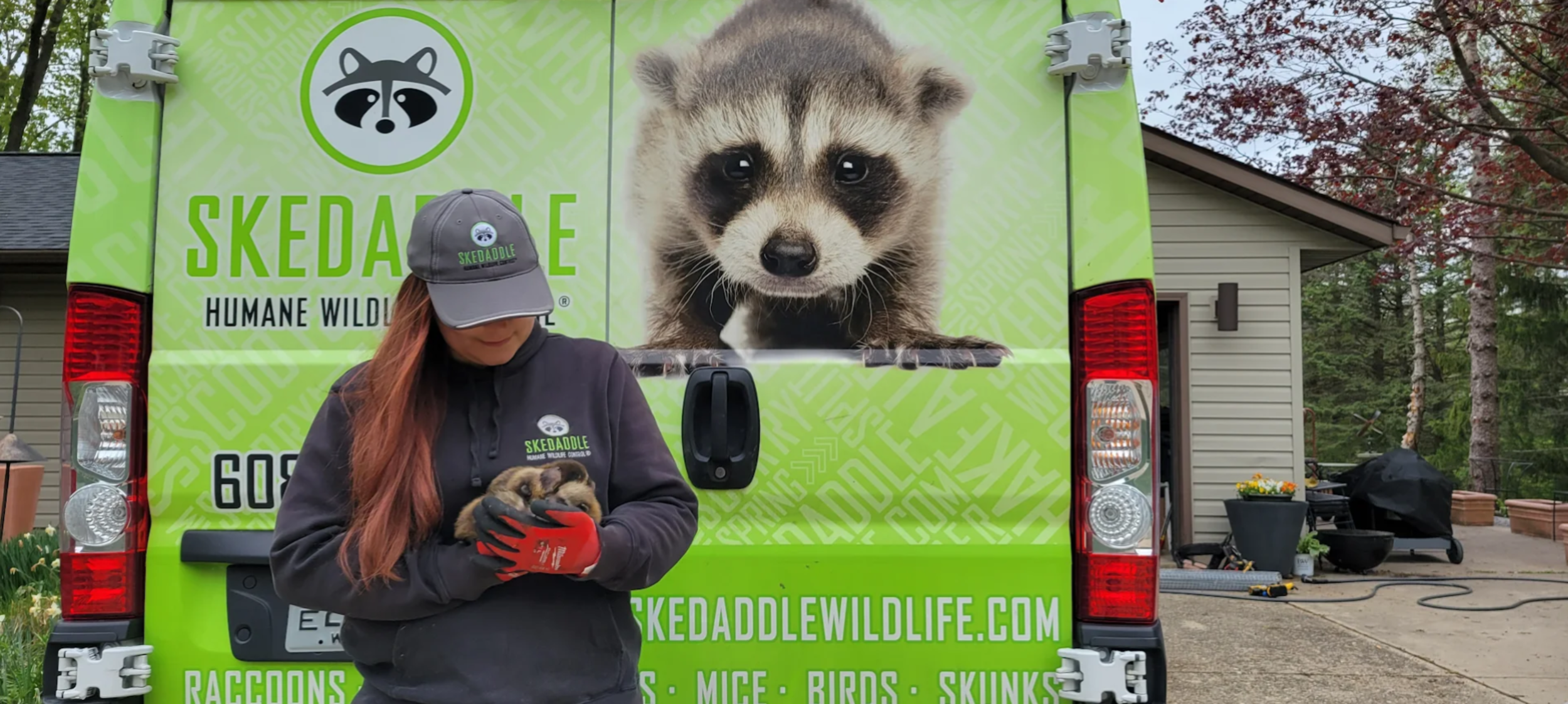
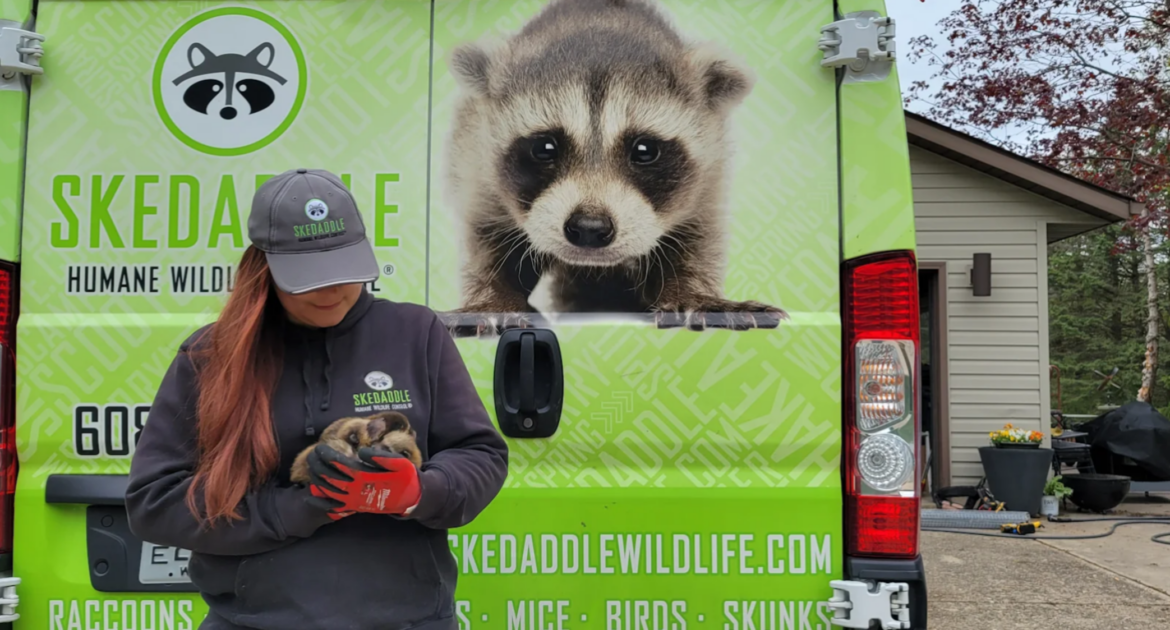
- Baby Season: In the spring and summer, there are often babies inside. A one-way door will not work for babies because they cannot walk yet. In this case, our technicians enter the attic and remove the babies by hand. We place them in a heated reunion box outside so the mother can collect them and take them to a new den.
Once the animals are gone, we remove the door and seal the hole permanently with steel. We can also help clean up any mess they left behind, like damaged insulation or droppings, to make sure your home is healthy again.
Protecting Your Home For Good
Hearing footsteps on your ceiling can be scary, but you do not have to live with it. The key to a raccoon-free home is making sure they never find a way in. By securing your vents, chimneys, and soffits with professional-grade steel, you can sleep soundly knowing your home is safe.
If you suspect you have raccoons on the roof or want to prevent them from moving in, do not wait for the damage to get worse. You need a solution that is safe, humane, and permanent.
Protect your biggest investment and your family’s health. Contact Skedaddle Humane Wildlife Control in Toronto today to request an estimate and learn more about our raccoon prevention services. We are here to help you live wildlife-free.

 Loading...







