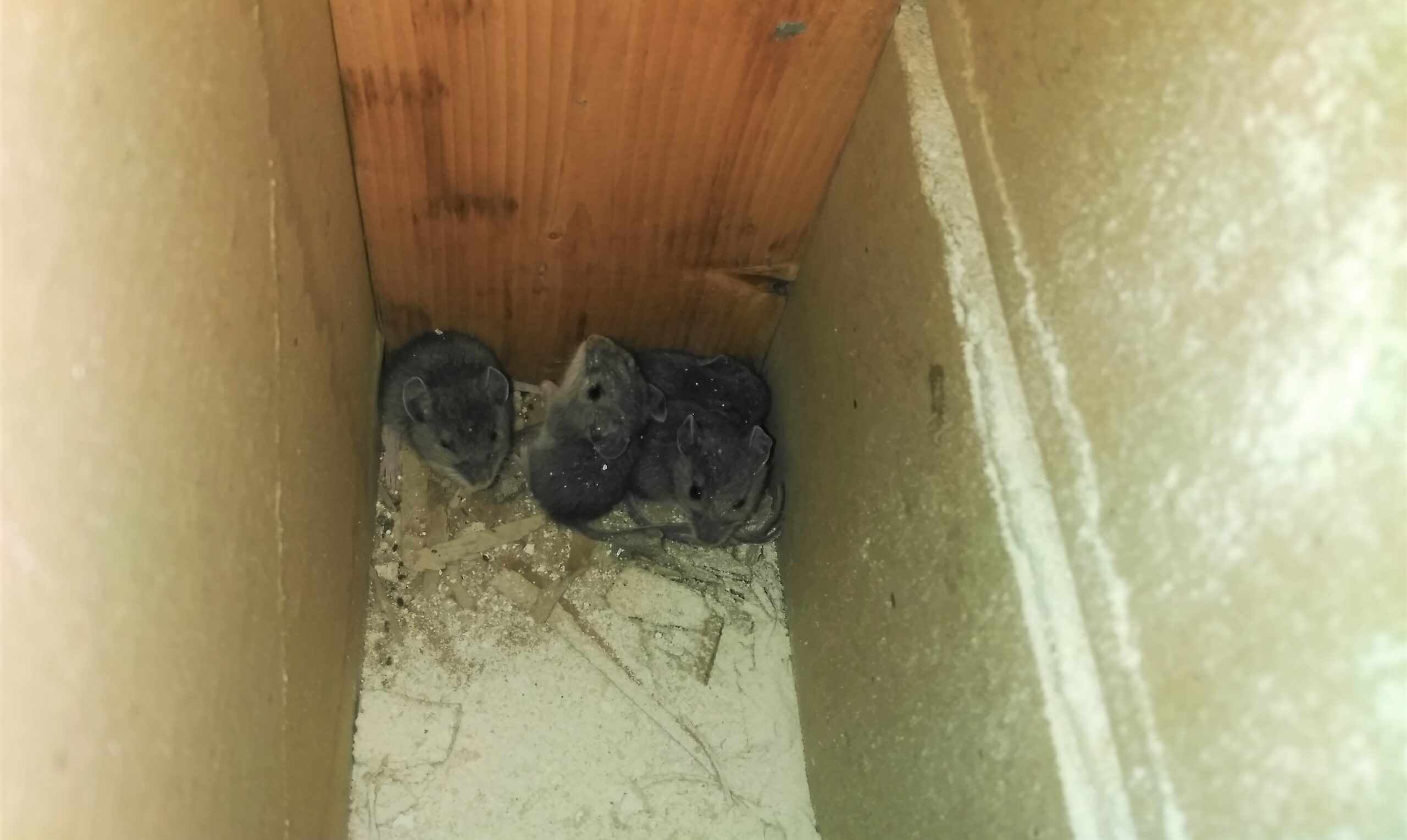
Mice keep getting into Windsor homes because most homes have more entry points than homeowners realize and these animals only need a gap the size of a dime to squeeze through. You might seal one hole and think the problem is solved, but if the other openings around your foundation, garage, vents, and roofline haven’t been found and sealed too, they’ll just find another way in.
You’re not alone if you’ve dealt with this more than once. Mice are persistent, they breed fast, and they’re very good at finding the spots that are easiest to miss. The problem isn’t just that they got in, it’s that the conditions that let them in are still there.
At Skedaddle Humane Wildlife Control in Windsor, we help homeowners find every entry point. Not just the obvious ones. In this blog, we walk you through how mice get into homes, what makes Windsor properties especially vulnerable, and what our team does to fix the problem completely so it doesn’t keep coming back.
When Do Mice Have Babies?
Mice can have babies at any time of year, but they breed most actively indoors when they’ve found a warm, safe place to nest. A female mouse can have five to ten litters per year, with each litter producing six to eight pups. That means a small mouse problem can grow into a large one very quickly, especially during the colder months when they’re sheltering inside your home.
Indoors, mice don’t slow down in winter the way some animals do. They stay active year-round, continue breeding, and expand through wall cavities, attics, and crawlspaces as the population grows. By the time most homeowners notice the signs, there are often far more animals present than they expect.
This is one of the most important reasons to act fast at the first sign of mouse activity. The longer you wait, the larger the population gets and the more of your home they spread into. Call our team as soon as you notice the signs and let us assess the full scope of what’s there before it grows any further.
How Mice Get Into Windsor Homes Through Tiny Gaps
Mice don’t need much space to get inside. A gap the size of a dime is enough for a mouse to squeeze through, which means there are likely more potential entry points on your home than you’ve ever noticed. Here’s where our team finds them most often:
- Around the Foundation: Gaps and cracks along the base of your home’s foundation are one of the most common entry points. These can develop over time as the ground shifts, as mortar deteriorates, or as pipes and utility lines create openings that aren’t fully sealed. Mice follow the foundation line looking for any gap they can find, and even a hairline crack can be enough to get them started.
- Around Utility Lines: Every pipe, wire, and cable that enters your home from the outside passes through a hole in the wall or foundation. If those holes aren’t sealed tightly around the line, they’re open entry points. Gaps around gas lines, electrical conduit, water pipes, and cable lines are frequently overlooked and frequently used by mice to get inside.
- Under and Around Garage Doors: The gap under a garage door that doesn’t seal tightly to the floor is one of the easiest ways mice get into a home. Even a small, uneven seal along the bottom of the door is enough. From the garage, they move easily into the rest of the home through gaps around the door that connects the garage to the living space.
- Through Vents: Dryer vents, bathroom exhaust vents, and foundation vents all create openings in your home’s exterior. If the vent cover is damaged, missing, or made of a material that can be chewed through, it becomes an entry point. Mice can push past flimsy vent flaps and squeeze through damaged covers with very little effort.
- Along Siding and Rooflines: Gaps where siding meets the foundation, where different sections of siding overlap, and where the roofline meets the exterior wall are all spots mice can exploit. Older siding that has warped or shrunk over time creates small gaps that are hard to see but easy for these animals to find and use.
What Makes Windsor Homes Higher Risk
Windsor’s older neighbourhoods are especially vulnerable to mouse problems. Many homes in the city were built decades ago, and the materials used to seal gaps around foundations, utility lines, and rooflines break down over time. What was once a tight seal becomes a gap and gaps are exactly what mice are looking for. Older homes also tend to have more irregular foundation surfaces and more areas where different building materials meet, all of which create opportunities for entry.
Attached garages are another major risk factor in Windsor. When a garage is connected to the living space of the home, mice that get into the garage have an easy path into the rest of the house. The door between the garage and the home is often not sealed as tightly as an exterior door, and gaps around pipes and utility lines in the garage wall give them another route through. A mouse problem that starts in the garage very quickly becomes a mouse problem throughout the home.
Nearby construction and colder weather both push mice toward residential properties. When excavation or demolition disturbs the ground nearby, mice that were living underground get displaced and move toward the nearest available shelter, which is often a home in the surrounding neighbourhood. As temperatures drop in the fall, the push toward warm indoor spaces intensifies. Windsor’s winters are cold enough to drive significant mouse activity into homes from October through March, which is when most calls to our team peak.
Common Signs of Mice Behind Walls or in Attics
Mice spend most of their time in spaces you can’t easily see: inside walls, in attics, and in crawlspaces. Here’s what to look for when they’re active in those hidden areas:
- Scratching and Scurrying Sounds: Light, fast scratching sounds, especially at night, are one of the clearest signs of mouse activity inside your walls. These sounds often travel along baseboards and through wall cavities as the animals move around. If you’re hearing them in multiple spots, the problem has likely spread through more of your home than just one area.
- Droppings Along Walls and in Cabinets: Mouse droppings are small, dark, and shaped like a grain of rice. They appear along the routes these animals travel, which usually means along walls, behind appliances, inside cabinets, and near any food storage area. Do not attempt to clean up droppings yourself. They carry harmful bacteria and need to be handled by our professional team.
- Chew Marks on Wood, Wiring, and Packaging: Mice chew constantly to wear down their teeth. Gnaw marks on wood trim, food packaging, and electrical wiring are all signs of active mouse presence. Chewed wiring is especially serious – it creates a hidden fire hazard inside your walls. If you find chew marks on or near electrical components, call our team right away.
- A Musty or Ammonia-Like Smell: Mouse urine has a distinct smell that becomes noticeable when there are enough animals present in an enclosed space. If you notice a persistent musty or ammonia-like odour in your attic, basement, or along certain walls, mouse activity is a likely cause. This kind of smell means the problem has been going on for a while.
Why Sealing One Hole Is Never Enough
The most common mistake homeowners make when they find a mouse entry point is sealing it and assuming the problem is solved. It’s not. Mice don’t use just one entry point, they use several. And when one gets sealed, they move to another one that’s already there or chew a new one nearby. Sealing the most obvious gap without finding all the others just changes which route they take, not whether they get in.
A complete solution requires finding every entry point on the exterior of your home, not just the one you noticed first. That means checking the full foundation line, every utility penetration, the garage, all the vents, the siding junctions, and the roofline. Our team does this as a full exterior inspection that covers up to 50 potential entry points on a typical home. The goal is to find everything, not just the most visible problem.
There’s also the question of what’s already inside. Sealing entry points when mice are still present traps them inside your home, which doesn’t solve the problem and creates additional damage as they try to find a new way out. Our team always assesses whether animals are still active inside before any sealing work begins. Finding every entry point and knowing what’s still inside are both critical parts of a complete solution.
How Fast a Small Mouse Problem Can Grow
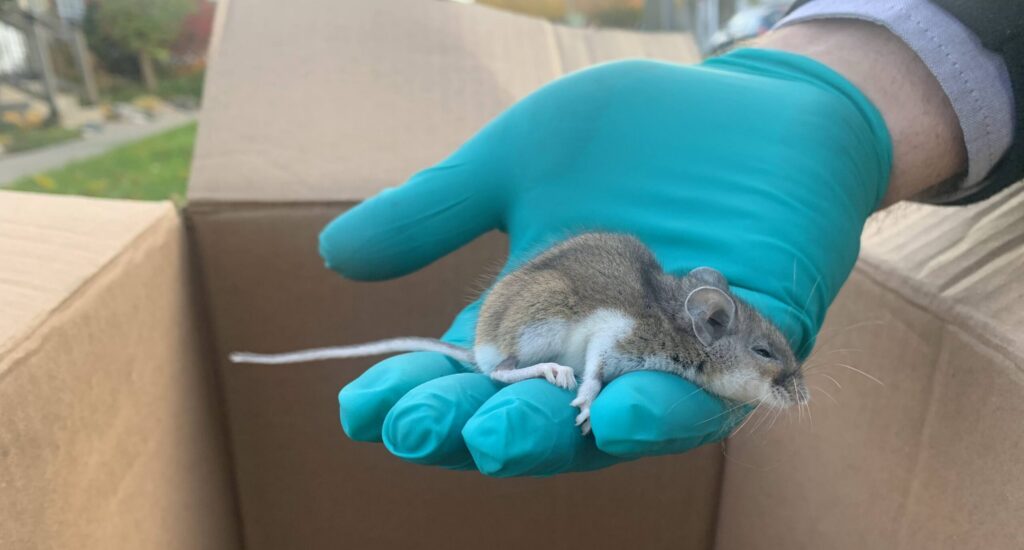
A single female mouse can produce up to 60 or more pups in a year. Those pups reach breeding age in as little as six weeks. If two mice get into your home in the fall and aren’t dealt with quickly, you can have dozens of animals present before winter is over. This is why what seems like a small problem – a few droppings, a scratching sound at night – can turn into a full infestation in a matter of weeks.
The population doesn’t just grow in one place. As numbers increase, mice spread through wall cavities and move into new areas of the home looking for food and nesting space. A problem that starts in the basement or garage spreads into the kitchen, then the walls, then the attic. The damage to insulation, wiring, and stored items grows at the same pace as the population.
By the time most homeowners realize the problem is serious, it’s already well beyond what a single entry point or a couple of traps can address. This is exactly why calling our team at the first sign of mouse activity is so important. Acting early keeps the problem small and the solution straightforward. Waiting makes both bigger.
Why Poison Doesn’t Solve the Problem
Poison might seem like a quick fix, but it doesn’t address why mice are getting in and that’s the only thing that actually solves the problem. Here’s why relying on poison alone always falls short:
- It Doesn’t Close the Entry Points: Poison kills individual mice, but it does nothing to seal the gaps they’re using to get inside. As long as those openings exist, new animals will keep coming in to replace the ones that have been killed. The cycle continues indefinitely because the root cause – the entry points – has never been addressed.
- Dead Mice Create New Problems: When mice die from poison inside your walls or attic, they decompose in place. This creates a serious odour problem that can last for weeks and is very difficult to locate and address without pulling open walls. It also attracts other insects and pests. Poison creates a secondary problem while leaving the original one unsolved.
- It Doesn’t Account for the Full Population: Poison addresses individual animals, not the colony. By the time poison is being used, the population inside your home is almost always larger than what’s visible. The animals that avoid the bait continue breeding, and the ones that are affected may not be found until the smell makes their location obvious.
- Our Team Addresses the Source: The only way to truly solve a mouse problem is to find every entry point, seal them all, and make sure no animals are left inside. That’s what our inspection and exclusion process does and it’s the difference between a temporary fix and a permanent one.
Mice in Windsor Homes
Windsor’s climate and housing stock create conditions that make mouse problems more common here than in many other cities. The cold winters drive mice indoors earlier and more aggressively than in milder climates, and the city’s large number of older homes means there are more gaps, cracks, and deteriorated seals for them to find. Windsor’s proximity to the Detroit River and the city’s older industrial and residential neighbourhoods also means established mouse populations are active throughout the year.
Fall is the most active season for mouse entry in Windsor. As temperatures drop, these animals move fast toward the nearest warm shelter and older homes with gaps around their foundations and utility lines are easy targets. Homeowners in Windsor’s older east and west end neighbourhoods in particular tend to see mouse activity pick up significantly between October and December. By the time the problem becomes obvious, it’s usually been going on for several weeks already.
Construction activity in and around Windsor also plays a role. When ground gets dug up or buildings come down, established mouse populations get displaced and move into surrounding residential areas. If there’s been active construction near your home and you’ve started noticing signs of mouse activity, the two are likely connected. Our team works with Windsor homeowners throughout the year, but the fall inspection season is when we’re busiest, and getting ahead of the problem before winter sets in is always the smarter move.
Mice Removal and Prevention with Skedaddle
When mice have found their way into your home, whether it’s a recent problem or one that keeps coming back, the right response is to call our team at Skedaddle Humane Wildlife Control. We start with a full exterior inspection that covers every potential entry point on your home. We don’t just look at the obvious spots. We check the foundation line, utility penetrations, the garage, vents, siding junctions, and the roofline – everything that a mouse could use to get inside.
We use one-way door systems, where applicable, that allow animals to exit but not return, combined with thorough exclusion work that seals every entry point with materials that hold up over time. We never seal an entry point until we’ve confirmed what’s on the other side of it. If mice are still active inside, sealing them in makes the problem worse, which is why the inspection always comes before the exclusion work.
Prevention is the final and most important step for long-term results. After removal and exclusion are complete, we make sure the conditions that made your home attractive in the first place are fully addressed. Our goal is to make your home as difficult as possible for mice to get into and to back that up with work that holds up through Windsor’s cold winters and beyond. We handle all of it from start to finish so you don’t have to deal with any part of it yourself.
Frequently Asked Questions
How do I know if I have mice or just one mouse?
If you've seen one mouse or found one dropping, there are almost certainly more. Mice rarely travel alone and breed very quickly. A single sighting is enough reason to call our team for a full inspection - don't wait to see more evidence before acting.
Can mice get in through second-floor windows or the roof?
Yes. Mice are good climbers and can scale rough exterior surfaces, downspouts, and tree branches to reach upper floors and rooflines. Entry points along the roofline and upper siding are less obvious but just as common as ground-level gaps.
Why do I keep getting mice even after setting traps?
Traps catch individual animals but don't seal the entry points they're using to get in. As long as those gaps exist, new mice will keep coming in to replace the ones that have been caught. The solution is finding and sealing every entry point, which is what our inspection and exclusion process does.
Is it safe to stay in my home while mice are present?
Mouse droppings and urine carry bacteria that can affect air quality and cause illness. If anyone in your household is experiencing unexplained symptoms, a mouse problem could be a factor. Call our team right away so we can assess the situation and deal with it completely.
How long does a full mouse exclusion take?
It depends on the size of the home and the number of entry points that need to be addressed. Most exclusion jobs are completed in one visit, though follow-up checks are sometimes needed to confirm the exclusion is holding. Our team will walk you through the full process before we begin.
Do mice come back after exclusion?
If the exclusion work is done properly - meaning every entry point is found and sealed with the right materials - mice should not be able to get back in through the same spots. Our team uses durable materials and checks the full exterior so nothing gets missed.
Tired of Mice Finding Their Way Back In? Let’s Fix It for Good
Mice keep getting into Windsor homes because most homes have more entry points than homeowners realize and sealing one hole while leaving others open just changes which route they take. The fix isn’t complicated, but it does require finding every gap, knowing what’s already inside, and sealing everything in the right order. That’s exactly what our team does.
Whether this is your first mouse problem or the third time it’s happened, the approach is the same. A full inspection, complete exclusion, and a plan that addresses the root cause, not just the most visible sign of the problem. You don’t have to keep dealing with this every winter.
Our team at Skedaddle Humane Wildlife Control in Windsor is ready to help. We’ll inspect your home, find every entry point, and take care of everything from removal to exclusion. Contact us today to request an estimate and find out how we can help keep mice out of your home for good.

 Loading...