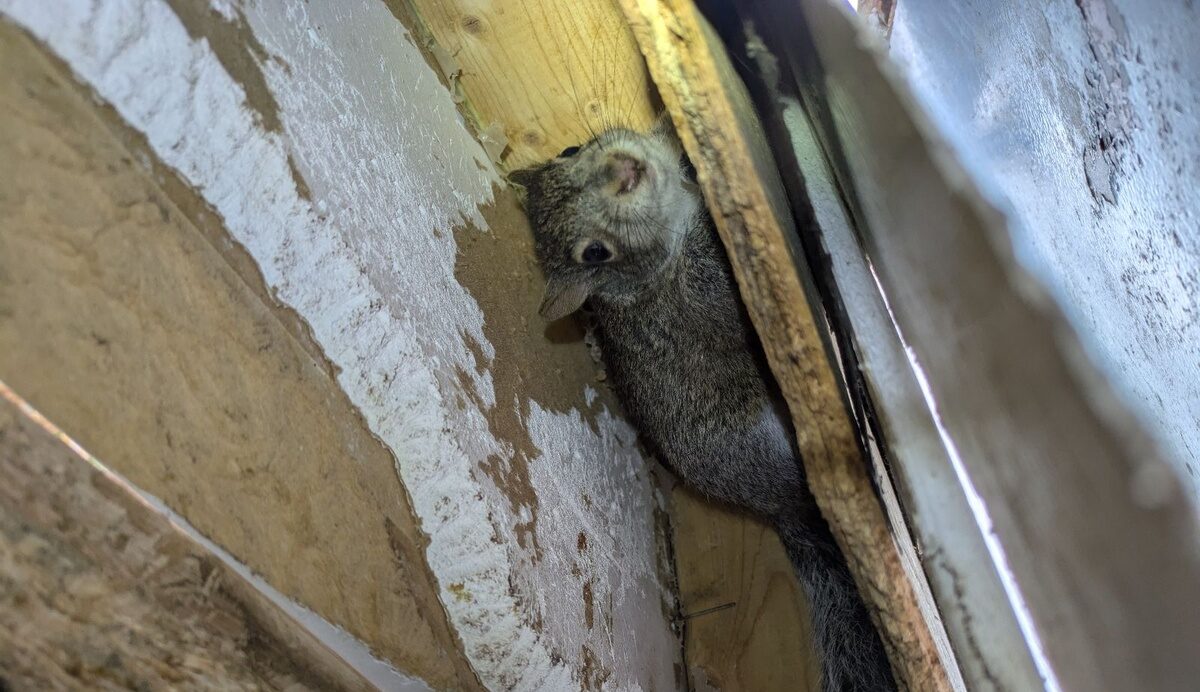
You may hear a squirrel running above the ceiling or scratching beside a bedroom wall, but sound alone cannot confirm where it is. Movement across a wide ceiling area may suggest attic activity, while repeated scratching in one vertical spot may suggest a wall space. Both areas could also be connected. A professional inspection is needed to find the entrance, travel route, and nesting spot.
You might wake to quick footsteps overhead, then hear a scrape lower down later that morning. That change can make it seem as though the activity has moved into another room. Yet wood framing and other building materials can carry noise away from its source. The loudest spot may be some distance from the occupied space.
At Skedaddle Humane Wildlife Control in York Region, we compare sound type, timing, and location with the signs found at the home. Our team checks hidden areas without asking you to enter the attic or open a wall. Here is what scurrying, rolling, and gnawing may suggest, why the location can be misleading, and how we find the source before removal and prevention begin.
How Can You Tell if a Squirrel Is in Your Walls or Attic?
Scurrying above the ceiling, scratching within a wall, regular daytime movement, and damage near an opening can provide useful clues. Sounds that seem to travel over several rooms may point toward movement in the attic. Repeated scratching within one wall may suggest a more confined space. Neither pattern confirms where the nest is located.
An entrance, travel route, and nesting area can sit in different parts of the building. A roofline opening may lead into an attic before the route continues toward a wall. In another home, the occupied space may remain close to the entrance. Our team checks the layout instead of assuming every roof opening leads to the same place.
You can share the sounds noticed during normal use of the home. Details such as the room, time of day, and whether the noise moves help guide our inspection. We compare those observations with entry damage, nesting material, and other signs. That gives us a clearer picture than listening from one room alone.
What Scurrying, Rolling, and Gnawing May Mean
The type of noise helps us decide where to focus the inspection. It may suggest movement, shifted material, or chewing without showing the exact cause. We need physical evidence before linking a sound to a specific action or occupied space.
- Quick Scurrying or Scampering: Fast footsteps above the ceiling may come from movement across framing or other attic surfaces. You may hear the sound travel from one side of a room to the other before it stops. Building materials can make a small occupant sound much larger than expected. The volume does not reliably show how many squirrels are present or where they are nesting.
- Rolling, Bumping, or Light Thumps: Small bumps and rolling sounds may come from movement or material being shifted inside the structure. These noises can seem unusual when the home is quiet, especially if they repeat in the same area. They do not prove that nuts are being stored overhead. Our team checks nearby signs before deciding whether food, nesting material, or another cause explains them.
- Repeated Gnawing or Scraping: Chewing may affect the edge of an entrance or materials inside the building. A steady scraping sound can draw attention to one spot, but it cannot reveal what is being chewed. Our inspection checks for damage to wood, insulation, wiring, and other affected materials. If damaged wiring is found, a qualified electrician should assess the electrical concern.
Why the Time of Day Helps but Does Not Confirm the Source
Common tree squirrels are generally active during daylight, so early-morning movement can fit their usual pattern. You may hear activity around sunrise or notice daytime trips through a roof opening. Late-afternoon movement may also occur as they return to shelter. These patterns give our team context without proving the source.
The clock cannot provide a firm answer on its own. Sunrise changes through the year, and activity does not follow the same hours at every property. Resting, nesting, weather, and disturbance can affect when movement is heard. After-dark noise also does not justify a diagnosis based only on timing.
Our team compares the schedule with the sounds, location, and signs found during inspection. A report of morning scurrying becomes more useful when there is repeated entry through a damaged soffit nearby. Without that evidence, the source still needs checking. You do not need to stay awake, tap the ceiling, or provoke movement to help us investigate.
Clues That May Point to Attic Activity
Attic movement may seem to spread across a larger area than sounds within a wall. Activity outside near the roof can add useful context. Our team must still confirm whether the noise comes from inside the roof space or travels from another location.
- Movement Across a Wider Ceiling Area: Scurrying that seems to cross several rooms may suggest movement through an open roof space. The sound may start above a bedroom and then seem to continue toward a hallway. Framing can carry it farther, making the path difficult to judge from below. The room where it sounds loudest may not sit beneath the nest.
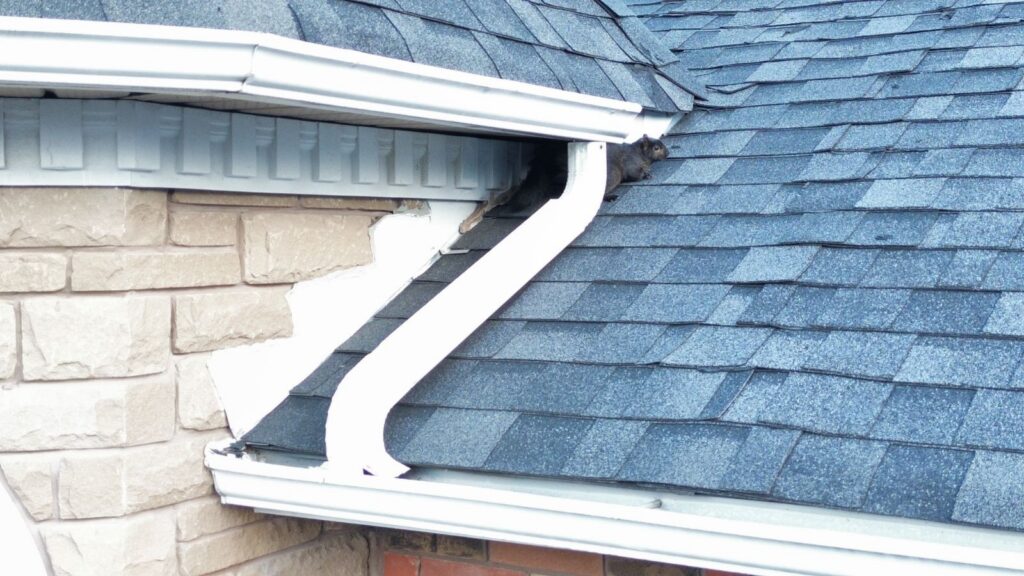
- Repeat Use of a Roofline Opening: Regular entry near a vent, soffit, fascia board, or roof join gives us a stronger clue than roof traffic alone. A squirrel crossing the roof may simply be travelling between outdoor areas. Repeated use of the same damaged opening suggests that the structure needs inspection. Our team checks where that route leads without asking you to climb or approach it.
- Signs Found During Our Attic Inspection: Nesting material, disturbed insulation, droppings, and chewing may help show which parts of the attic are being used. Paths through insulation can also help us trace movement between areas. These findings need to be compared because old signs may remain after earlier activity. Homeowners should not enter the attic or touch materials to search for this evidence.
Clues That May Point to a Wall Space
Wall activity may sound closer or remain focused within a smaller area. The space could be used as a route or nesting spot, or an occupant may be unable to leave it. Those possibilities require inspection rather than a decision based on how the scratching sounds.
- Scratching Within One Vertical Area: Movement that seems to travel up or down beside a room may suggest activity within a wall space. You might hear it near the ceiling first and lower down a few moments later. Sound travelling through framing can create a similar impression, so the apparent path needs checking. Our team compares the location with the building layout and nearby access points.
- Activity Near a Ceiling-and-Wall Join: Some homes have connected spaces that allow movement between the roof area and a wall. Scratching near that join may help direct our inspection toward a possible route. The exterior entrance could be well away from the room where the sound is heard. Not every wall connects openly to the attic, so we check the actual structure.
- Persistent Movement in One Spot: Repeated scratching in a fixed area deserves prompt attention, especially when it continues without the usual movement across the ceiling. It may involve a nesting area or an occupant with limited room to move. Noise alone cannot tell us whether anything is trapped. Leave the wall intact and contact our team rather than cutting into it or tapping to force a response.
How Our Team Connects the Entrance, Route, and Nest
Our inspection begins with your observations and the areas they point toward. We check possible entrances around the roofline and other parts of the exterior. Chewed edges, damaged covers, and repeated use help us assess which openings matter. A visible gap is only the start of the investigation.
Inside, the home’s layout helps explain how movement could continue beyond that entrance. Nesting material, droppings, damage, and disturbed insulation may show the areas being used. We compare those findings with the reported sounds to trace the likely route. The nesting spot may be quieter than the passage used to reach it.
Before removal begins, we also check for dependent young and any occupant unable to reach an exit. An adult may leave during the day while young remain hidden. A trapped squirrel in a wall needs a plan that accounts for its location and access. Closing the roof entrance or fitting a one-way door is not enough if those needs remain unresolved.
Why York Region Homes Need a Full-Structure Check
York Region homes have varied roof shapes, additions, attached garages, and outdoor travel routes. Mature trees near a house may provide access to the roof, but that access does not prove entry. A visitor can cross the building without using any indoor space. Our inspection looks for the signs that separate roof traffic from occupancy.
Different roof sections can also make the route hard to judge. A gap near an addition may lead toward a space above another room, while an attached garage may have its own separate roof area. Past repairs can change those connections. The loudest sound or most obvious damage may not show the full path.
Activity can occur in more than one season, and nesting periods make checking for young especially important. Colder weather may also make sheltered spaces useful, but it does not tell us whether a nest is present. Building age alone cannot answer that question either. We check the whole structure so removal and prevention address the actual routes at your home.
Let Skedaddle Find the Nest and Close the Routes
Our work starts with finding the entrance, occupied spaces, and signs of damage. We compare the inspection findings with the sounds you have noticed. That helps us choose a humane plan for the actual layout of the home. Dependent young and trapped occupants must be included before removal begins.
Where suitable, our one-way doors allow wildlife to leave but prevent re-entry. We use them as part of a plan that accounts for the occupants and their route out. Another approach may be needed if young cannot leave independently or an occupant is trapped elsewhere. The method must fit the findings at the property.
Our Skedaddle Humane Wildlife Control team in York Region also assesses affected materials and cleanup needs. After removal is confirmed, we secure suitable entry areas with durable protection. We check other vulnerable points rather than focus only on the opening first noticed. This helps address the current problem and reduce the chance of future entry.
Frequently Asked Questions
Can one squirrel sound like several?
Yes, one occupant moving through an attic can create more noise than you might expect. Footsteps and bumps may travel through wood framing and seem to come from several places. Noise volume does not provide a reliable count. Our team looks for evidence of all occupants, including young, during the inspection.
Do rolling sounds mean nuts are stored in the attic?
Not necessarily, because movement and shifted material can create similar sounds. A light bump may travel through the ceiling and seem like something rolling overhead. We need physical evidence before connecting that noise to stored food. The sound is useful as a clue, but it does not identify the cause on its own.
Does a quiet week mean the space is empty?
No, quiet periods can happen while adults are away or movement is difficult to hear. Young may also remain hidden even when the usual footsteps stop. Silence does not show whether nesting material, waste, or damage remains. Our team must check the space before a suspected entrance is closed.
Can the attic and walls both be used?
Yes, connected spaces may allow movement between an attic and a wall. One area may serve as a route while another provides a nesting spot. That does not mean every wall in the home is reachable from above. Our inspection checks the actual connections and which spaces show evidence of use.
Should the opening be closed while the squirrel is outside?
No, an adult seen outside may have young or another occupant still inside the structure. Closing the opening could trap them or prevent the adult from returning. An exterior sighting does not confirm that the whole space is empty. We assess the removal needs before securing the entrance.
Find the Source Before Closing the Opening
You can use sound type, timing, and location to describe what is happening, but those clues cannot confirm the nest or entrance. Morning scurrying may suggest daytime movement, while repeated wall scratching may point toward a confined space. Rolling and gnawing sounds need closer checks too. The attic and walls may be connected, and framing can carry noise away from its source.
Leave suspected entrances and hidden spaces alone until the property has been inspected. Do not enter the attic, cut into walls, touch waste, or seal a route while an adult appears to be outside. Young or another occupant may remain beyond the opening. A quiet period does not prove the building is empty.
At Skedaddle Humane Wildlife Control in York Region, we trace the entry route and find the occupied areas before choosing a removal plan. Our team provides humane removal, professional cleanup, and protection for suitable entry points. We base the work on the evidence found at your home. Contact us to schedule a professional assessment or request an estimate to learn more.

 Loading...