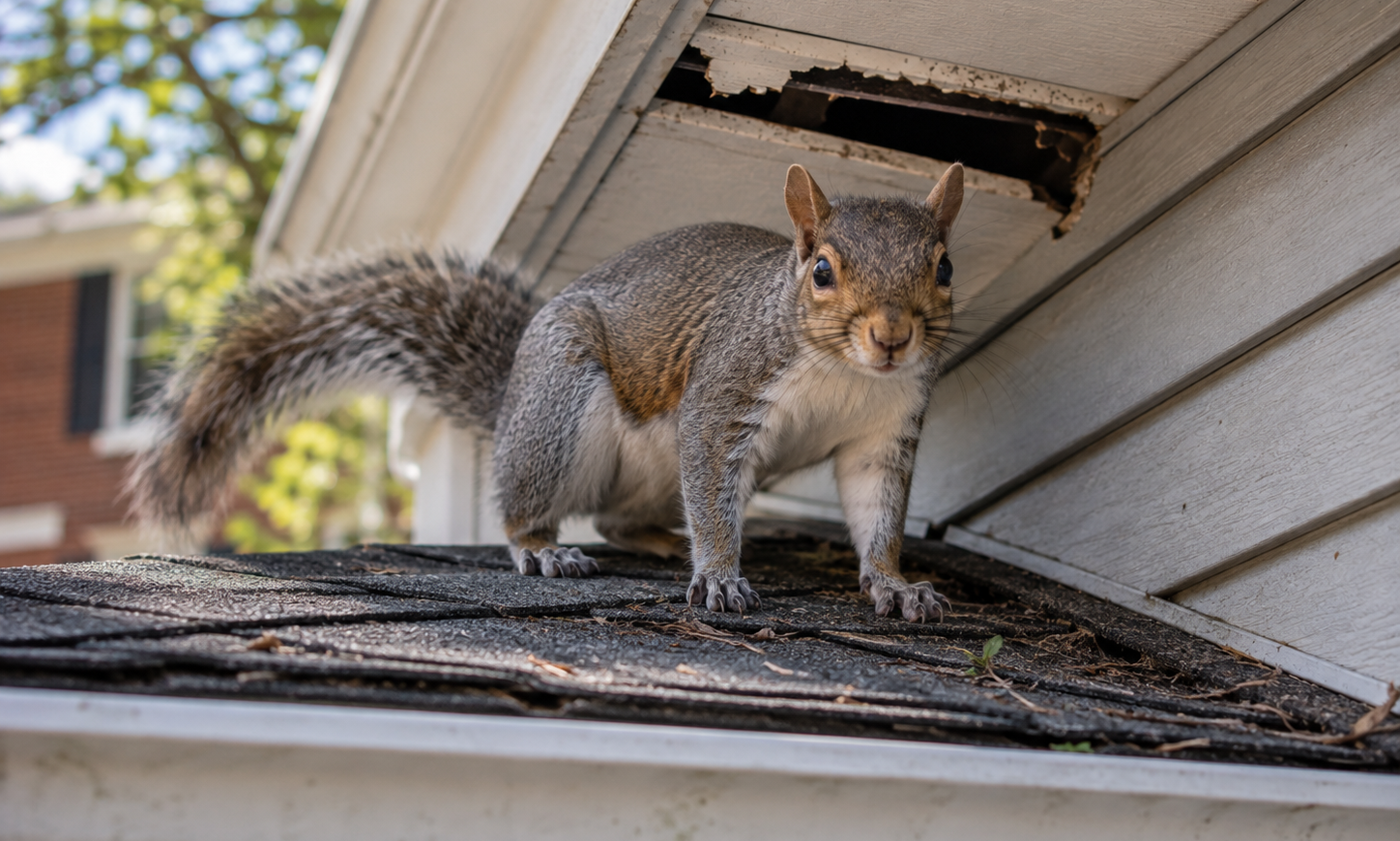
You may see a squirrel run across your roof and wonder how it got there. Nearby branches, fences, utility lines, brick walls, downspouts, and exterior fixtures can all provide access. These animals can jump, climb, and balance across several features without following one direct route.
A tree branch does not need to touch your house. A short gap may be easy to cross, while a fence or wall can help them move from the ground toward the eaves. Once they reach the roof, they may inspect vents, soffits, fascia, flashing, and chimneys for weak areas.
At Skedaddle Humane Wildlife Control in Baltimore, we inspect the complete route from the yard to the attic. You should never climb onto the roof, approach utility lines, enter the attic, or close a suspected entrance yourself. In this blog, we explain how squirrels reach your roof and how professional removal can protect your home.
How Are Squirrels Getting on My Roof?
Squirrels usually reach roofs from branches, utility lines, fences, brick walls, downspouts, porches, and other raised features. They can climb rough surfaces and jump across open gaps. A direct branch touching your house is not required.
Several routes may also connect. A fence can lead to a tree, while a cable may provide the final path from a pole to the building. Exterior fixtures may help them climb the last few feet toward the eaves.
Removing one visible route does not prove the problem has ended. Another path may remain, or the attic may already be occupied. A professional assessment considers every approach to the roof and checks for active entry.
Tree Branches Create Raised Launching Points
Trees are one of the most common ways squirrels gain access to a roof. They are strong climbers and can jump from a raised branch without first moving down to the ground. Wind and rain may also push flexible branches closer to your home.
- Overhanging Limbs: A branch above the roof can provide a direct launching point toward shingles or gutters. The limb does not need to touch the structure because these animals can cross a short open gap. Leaves may hide the movement from anyone standing below. Repeated landings can bring them back to the same section of roof.
- Branches Beside the House: Limbs growing beside the home may lead toward an eave, lower roof, porch cover, or gutter. Side access can be harder to notice than movement from a branch hanging directly overhead. The trunk may also sit beyond your main view from a window. A visitor can climb, jump, and disappear behind the roof edge within seconds.
- Tall Evergreens: Evergreens often contain thick branches that begin close to the ground and continue toward the roof. Their needles provide cover throughout much of the year. Rough bark and closely spaced limbs make climbing easier. A tree near the house may connect with more than one roof level.
- Trees Along Fences: A fence may lead to a trunk or low branch near the edge of the yard. The squirrel can run along the fence and climb the tree without crossing open ground. This creates a connected path between neighboring properties and your roof. The true route may begin several yards away from the house.
- Weather-Damaged Branches: Wind, snow, and heavy rain may bend a branch closer to gutters or shingles. A cracked limb can also settle into a new position without falling. This may create access where none existed earlier in the year. Homeowners should not climb or cut branches near active roof movement.
One tree can provide several paths toward the building. Removing or changing one branch may leave another route in place. Our technicians examine the full canopy and how it connects with every part of the roofline.
Fences, Walls, and Exterior Features Form Climbing Routes
Trees are not the only way to gain height. Fences, walls, downspouts, porches, and exterior fixtures may provide grip or raised surfaces. Several small features can form one continuous path from the yard to the roof.
- Wooden Fences: Fence rails and posts create narrow but steady running surfaces. A fence that meets the house may lead directly to siding, a porch, or a lower roof. Gaps between boards can provide extra grip during climbing. The route may also connect your property with a neighboring yard.
- Brick and Textured Walls: Rough brick and deep mortar joints can provide enough grip for vertical climbing. Building corners may be even easier to use because they offer support on two sides. Textured masonry may lead toward soffits, windows, or roof intersections. Baltimore’s older brick buildings can contain long climbing routes that are difficult to see from one position.
- Siding and Wood Trim: Seams, ledges, and damaged trim may provide small footholds. A loose section can help with climbing and may later become an entrance. Wood near the roof edge can also be easier to chew than stronger exterior materials. A professional must inspect whether the route ends at surface damage or an active opening.
- Downspouts: Corrugated downspouts contain ridges and joints that may provide grip. Brackets can create more support as the route continues upward. A downspout often ends beside the gutter, soffit, or fascia. This makes it a possible path from ground level to one of the roof’s weaker areas.
- Porches and Exterior Fixtures: Porch posts, railings, shutters, cables, and mounted boxes can create a series of steps toward the eaves. A visitor may move between several features rather than climb one surface. The route can look incomplete when each part is viewed alone. Our technicians assess how the features connect.
The path may not appear direct from the yard. A fence, post, downspout, and lower roof can work together to provide access. We follow each connection instead of examining only the final landing point.
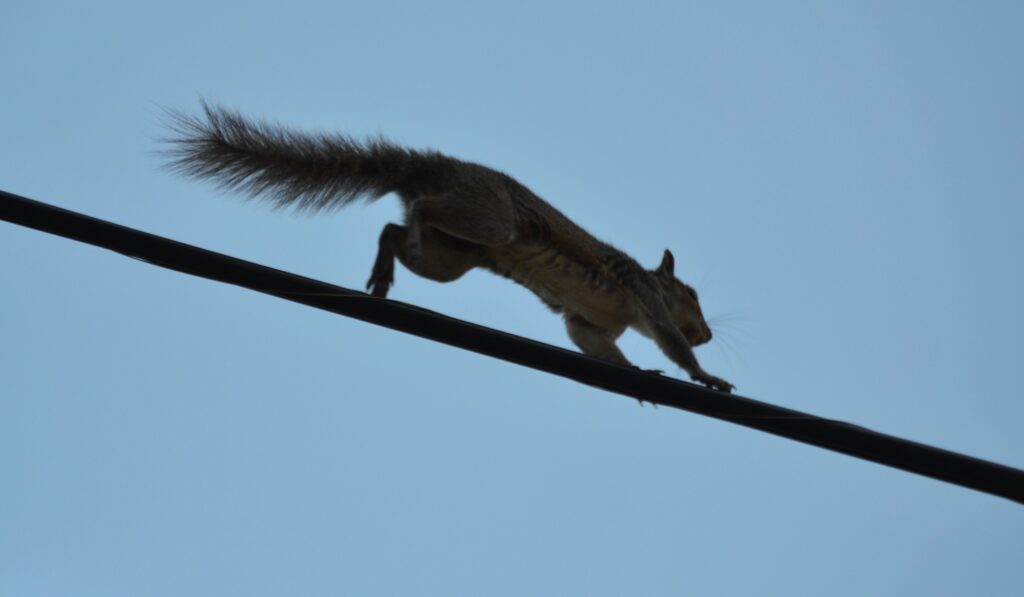
Utility Lines Can Become Elevated Highways
Power, cable, and communication lines often connect directly with a building. Squirrels can balance on narrow surfaces and travel far above the ground. These routes may provide roof access even when nearby trees have been cut back.
- Power Lines: Overhead electrical lines may lead from a pole toward a roof or upper exterior wall. A squirrel can climb the pole and follow the line to the building. Homeowners should never touch, change, or place anything around electrical lines. Any utility concern must be handled by the proper provider.
- Cable and Communication Lines: Cable and communication lines may connect with siding, fascia, or another part of the upper wall. These lines can sit below power lines but still offer enough height to reach the roof. Their attachment points may also be close to trim or other gripping surfaces. The route can continue after the line ends.
- Lines Connected to Poles or Trees: A utility pole may be reached from a fence, branch, or nearby structure. Once on the pole, the squirrel can move to a line leading across several properties. The full route may begin outside your yard. Looking only at the area beside the home may miss this larger connection.
- Building Connection Points: Utility hardware, cables, boxes, and fasteners may provide small footholds near the roof. The connection point may sit beside a soffit, vent, or gap in the siding. These features can help a visitor move from the line onto the building. Nearby wear should be inspected for possible entry.
Utility routes must be assessed without disturbing the equipment. Skedaddle can identify how the path connects with the home, but electrical or communication line work remains with the proper provider. You should always stay away from overhead lines.
Roof Access Can Lead to an Attic Entrance
Reaching the roof is only the first part of the problem. Once there, squirrels may inspect vents, soffits, fascia, flashing, and chimneys. A small weak area can be pushed, pulled, or chewed until it provides access.
- Soffit Panels: Soffits protect the underside of the roof edge and often contain vents. Loose, damaged, or poorly fitted panels may provide entry beneath the eaves. Deep shadows can hide the opening from the ground. A small exterior seam may lead into a much larger attic space.
- Fascia Boards: Fascia runs along the roof edge and supports the area behind the gutter. Worn wood, moisture damage, or a gap behind the gutter can weaken this section. A squirrel may chew a soft edge and enlarge an existing opening. The visible damage may be smaller than the space behind it.
- Roof Vents: Plastic covers, loose frames, and damaged screens may provide access to the attic. A vent can still look secure when the failure sits along its back or lower edge. Warm air leaving the roof may also draw attention to the opening. The complete vent must be checked before any repair is made.
- Roof Intersections: Dormers, additions, porches, and lower roof sections create complex joints. Flashing and siding may cover gaps where two parts of the building meet. These hidden corners provide protection from wind and rain. They may also lead directly into an attic or enclosed ceiling.
- Chimneys and Flashing: Open flues, damaged caps, loose flashing, and masonry gaps can create several possible entrances. The opening may lead into the chimney, attic, or space surrounding the flue. Sounds near a fireplace do not confirm the exact location. The full chimney and roof connection require inspection.
One visible hole may not be the only vulnerable area. Sealing it before removal could trap an adult or dependent young inside. A professional must inspect the roofline and attic before creating a prevention plan.
Roof Activity Can Become an Indoor Problem
One squirrel crossing your roof does not always mean the attic is occupied. It may be travelling between properties or searching for food. However, repeat visits to the same vent, soffit, chimney, or roof corner may point to an entrance.
An attic provides warmth, darkness, and shelter from weather. Once inside, squirrels may build a nest, store food, disturb insulation, or chew wood and wiring. Skedaddle notes that Baltimore attics, chimneys, and wall cavities can become nesting spaces, with chewing activity leading to insulation, wiring, and structural damage. Visit our website for more information on Baltimore squirrel removal.
You should not enter the attic to search for the nest. Droppings, urine, damaged insulation, or exposed wiring may be present. An adult may also have dependent young hidden in an area you cannot see.
Signs the Roof Route Is Being Used Regularly
Repeated running or scratching above the ceiling may be one of the first signs. Squirrel activity is often easier to hear during the morning and daytime. The sound may move across the attic as they follow rafters or paths through insulation.
Outside, you may notice regular movement along a gutter or repeated visits to the same roof section. Chewed vent covers, loose soffits, disturbed flashing, nesting material, or staining may also point to active use. You should observe these signs from the ground and avoid touching damaged material or waste.
The loudest indoor noise may not be beside the entrance. Roof framing and insulation can carry sound across several rooms. Our professional team traces the movement instead of assuming the opening is directly above the sound.
Baltimore Buildings Offer Connected Roof Routes
Baltimore’s mature trees, fences, overhead lines, older brick homes, and closely spaced buildings provide many ways to reach a roof. Rowhouses may also contain connected rooflines and shared exterior features. A squirrel can move between neighboring properties without returning to the ground.
Older buildings may have worn soffits, fascia, vents, chimney caps, and flashing. Newer homes can still contain construction gaps or damaged exterior covers. The age of the home does not determine whether roof access is possible.
Cooler fall weather can make attics and enclosed roof spaces more useful. A visitor may first enter for temporary shelter and then remain when the space is warm and quiet. A wider inspection is important because the active entrance may be on another section of the building.
How Skedaddle Traces the Route and Secures the Roofline
A roof opening only shows where the final part of the journey ends. Our professional wildlife team looks at branches, fences, brick walls, downspouts, porches, and utility connections that may lead toward it. We then compare those routes with roof activity and sounds inside the home. This helps us address the complete problem instead of focusing only on one hole.
Our inspection continues along the roofline and inside the attic. We check vents, soffits, fascia, flashing, chimneys, insulation, nesting areas, and possible damage. We also confirm whether dependent young are present before choosing a humane removal plan. You do not need to climb, crawl, or enter a contaminated space.
When appropriate, our one-way doors allow squirrels to leave while preventing them from getting back inside. Once the attic is empty, our technicians remove affected material when needed and secure vulnerable openings with durable materials. We do not use live trapping or relocation.
Frequently Asked Questions
Can squirrels jump from a tree to a roof?
Yes, squirrels can cross an open gap without a branch touching the building. Their ability to reach the roof depends on the height, angle, and landing surface. A flexible branch may also move closer during wind or rain. Repeated landings may lead them back to the same roof section.
Can squirrels reach a roof without nearby trees?
Yes, they may use utility lines, fences, brick walls, downspouts, porches, and exterior fixtures. Several features can connect to form one route from the ground. The path may begin on a neighboring property. A professional assessment looks beyond the trees closest to your house.
Does seeing one on the roof mean it lives in the attic?
Not always. A squirrel may cross the roof while travelling or searching for food. Repeat visits to one opening, scratching above the ceiling, or visible damage provide stronger evidence of entry. An attic inspection is needed to confirm whether the space is occupied.
Should a roof opening be sealed right away?
No, the opening should remain accessible until our professionals confirm that the attic is empty. An adult or dependent young may still be inside. Sealing the gap too soon can trap them or force movement into the living space. Humane removal must happen before permanent prevention.
Should homeowners inspect the roof themselves?
No, homeowners should not climb onto the roof or approach utility lines. Height, damaged materials, electrical equipment, and an active entrance create several risks. You should also avoid entering an attic with possible waste or damaged wiring. Trained technicians can inspect these areas with the proper equipment.
Stop a Roof Route From Becoming an Attic Problem
Trees, fences, utility lines, brick walls, downspouts, porches, and exterior fixtures can all help squirrels reach your roof. Several features may connect to form one hidden route. The concern becomes more serious when a damaged vent, soffit, fascia board, roof joint, or chimney provides access to the attic.
You should never climb onto the roof, touch utility lines, enter an affected attic, or handle droppings yourself. Do not seal a suspected entrance because an adult or dependent young may still be inside. Professional inspection and humane removal must happen before the opening is secured.
At Skedaddle Humane Wildlife Control in Baltimore, we trace the full path from the yard to the occupied space. Our team handles inspection, removal, cleanup, and long-term prevention, so you do not need to perform dangerous work. Contact us to schedule a professional assessment or request an estimate to learn more about protecting your roof and attic.

 Loading...