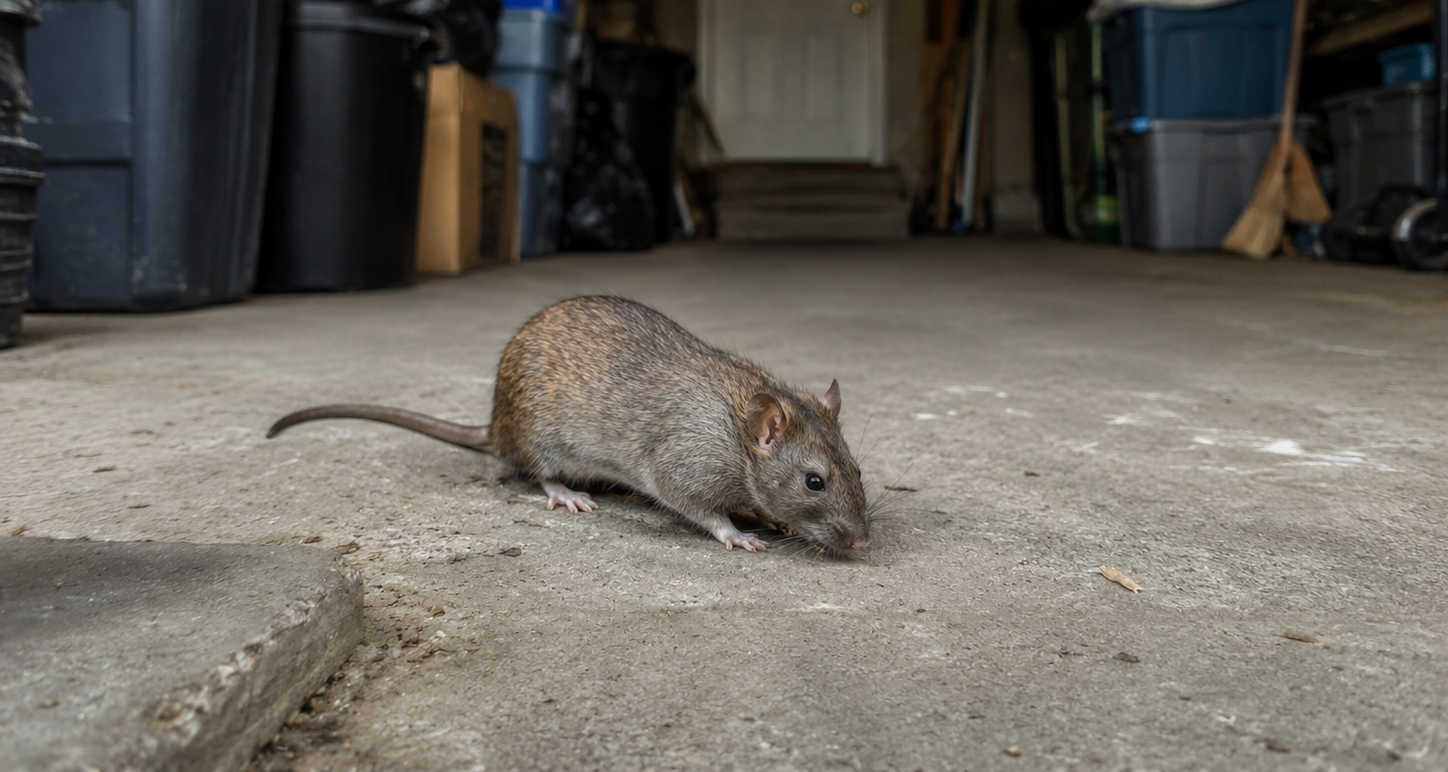
Columbus is still one of the most rodent-affected cities in the country. The city recently ranked in the top half of a 50-city list of America’s rattiest cities and while that was an improvement of four spots from the year before, it’s a clear sign that rats and mice are still a real and ongoing problem for homeowners across the Columbus area. If you’ve seen signs of activity in your home, you’re not alone.
These animals get into homes through gaps that most people never think to check. A crack along the foundation, a gap under the garage door, an unsealed pipe penetration, or a worn vent cover , any one of these is enough for a mouse to get inside. Rats don’t need much more. Once they’re in, they breed fast and spread through walls and attics before most homeowners know the problem exists.
At Skedaddle Humane Wildlife Control in Columbus, Ohio, we help homeowners get to the bottom of these problems and fix them completely. In this blog, we walk you through how these animals are getting into Columbus homes, what the signs of activity look like, and what our team does to stop the problem from coming back.
Do Rats Carry Disease?
Yes. Rats and mice carry several diseases that can be passed to humans through their droppings, urine, and saliva. Leptospirosis, hantavirus, and salmonella are among the most serious. You don’t need direct contact with one of these animals to be at risk: dried droppings can break down into dust that gets into the air, and contaminated surfaces can spread bacteria through normal household contact.
The health risks are real and they grow the longer these animals are present in your home. A small number of animals produces a small amount of waste. A large, established population, which is what most infestations become if they’re not addressed early, produces significant contamination that spreads through insulation, wall cavities, and anywhere else they spend time.
This is why droppings and contaminated materials should never be handled by the homeowner.
Call our team and let us assess and address the situation with the right protective equipment.
Rats in particular are also known to bite when cornered or threatened. A bite or scratch from one of these animals needs to be treated as a potential health concern right away. Do not try to handle or corner one. Keep everyone away and call our team to deal with it safely. The health risks alone are reason enough to take any sign of activity seriously and act fast.
How Rodents Get Into Columbus Homes
These animals get into homes through gaps that are smaller than most people expect. A mouse can fit through a hole the size of a dime, and rats need only slightly more space. Here’s where our team finds entry points most often in Columbus homes:
- Foundation Cracks and Gaps: Cracks along the base of your home’s foundation are one of the most common entry points. These develop over time as the ground shifts, mortar deteriorates, and materials age. Even a hairline crack can be enough for a mouse to start chewing its way through. Our team checks the full foundation line during every inspection, not just the sections that are easy to see.
- Garage Doors and Attached Garages: The gap under a garage door that doesn’t seal tightly to the floor is one of the easiest ways these animals get into a home. From the garage, they move through gaps around the door connecting the garage to the living space and spread quickly. The shared wall between an attached garage and the home is full of utility penetrations that are rarely fully sealed and these are common pathways into the walls and attic.
- Utility Lines and Pipe Penetrations: Every pipe, wire, and cable that enters your home from the outside passes through a hole in the wall or foundation. If the space around those lines isn’t sealed tightly, it’s an open entry point. Gaps around gas lines, electrical conduit, water pipes, and cable lines are easy to miss and frequently used. Our team checks every utility penetration as part of a full exterior inspection.
- Exterior Vents: Damaged or missing vent covers on dryer vents, bathroom exhaust vents, and foundation vents create direct openings into your home. These animals can push past flimsy vent flaps and squeeze through damaged covers with very little effort. Our team replaces standard vent covers with heavy-gauge materials that can’t be chewed through or pulled back.
Signs of Activity in Basements, Garages, and Walls
Rodents spend most of their time in spaces you can’t easily see. Here’s what to look for in the areas of your home where they’re most commonly found:
- Scratching and Scurrying Sounds in Walls: Light, fast scratching sounds, especially at night, are one of the clearest signs of activity inside your walls. Rodents move along wall cavities and through ceiling spaces, and the sounds tend to travel. If you’re hearing them in multiple spots, the problem has likely spread further through your home than one area.
- Droppings Along Walls and in Corners: Droppings are small, dark, and appear along the routes these animals travel, usually along walls, behind appliances, in cabinet corners, and near any food storage area. Do not attempt to clean up droppings yourself. They carry harmful bacteria and need to be handled by our professional team with the right protective equipment.
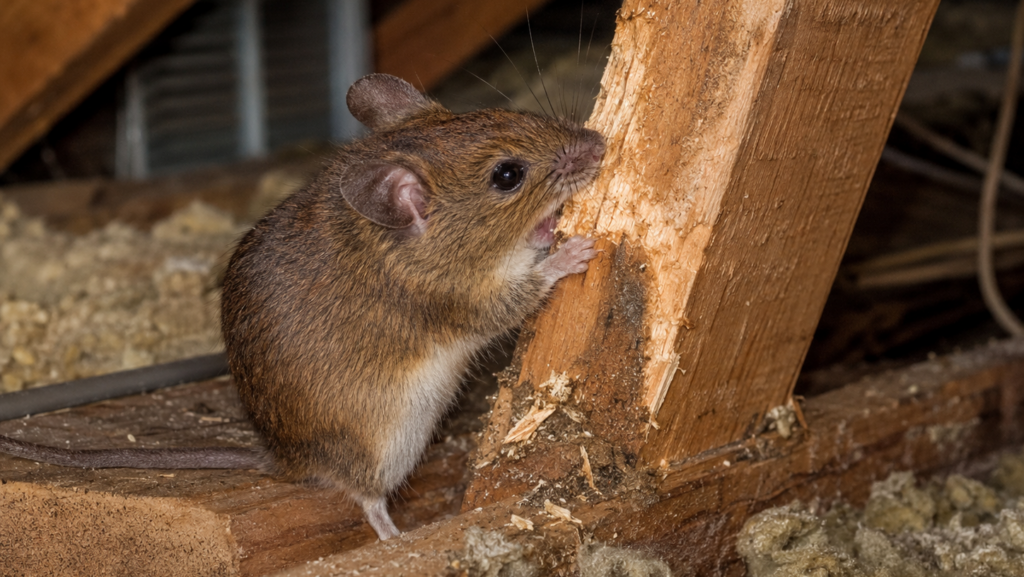
- Chew Marks on Wood, Wiring, and Packaging: Rodents chew constantly to wear down their teeth. Gnaw marks on wood trim, food packaging, and electrical wiring are all signs of active presence. Chewed wiring inside walls creates a hidden fire hazard. If you find chew marks near electrical components, call our team right away.
- Burrow Holes Near the Foundation or in the Garage: Rats in particular dig burrow holes along the base of the foundation or in sheltered areas of the garage. These holes are usually two to three inches wide with loose, freshly moved soil around them. If you find a hole like this, do not try to fill it yourself. Call our team to confirm what’s there before anything gets sealed.
Food Sources That Keep Them Coming Back
Before rodents settle into a home, something usually draws them to the property first. Here’s what our team looks for when checking what’s pulling them in:
- Unsecured Garbage and Compost: Rodents follow strong smells, and garbage bins and compost containers are reliable attractants. They’ll tip over bins, tear through bags, and return to the same spot night after night once they find food. A bin left outside after dark or a compost pile without a sealed lid is an open invitation that keeps them coming back.
- Bird Feeders and Birdseed: Bird feeders are one of the most overlooked attractants on any property. Seed that falls from a feeder piles up on the ground below and that ground-level food is exactly where rodents look. Many homeowners don’t connect a bird feeder to a rodent problem, but the two go together more often than people expect.
- Pet Food Left Outside: Pet food left out after feeding time is another strong draw. It sits at ground level, the smell carries well, and even a small amount left overnight is enough to bring these animals back on a regular basis. Pet food stored in bags in the garage is also a target , rodents can chew through soft packaging quickly.
Why Removing Visible Rodents Doesn’t Solve the Problem
The most common reason a rodent problem keeps coming back is that only part of the problem was addressed. Removing rodents you can see or hear, without finding and sealing every entry point, just creates a temporary pause. New animals move in through the same gaps, follow the same scent trails, and settle into the same nesting spots. The cycle repeats because the root cause was never fixed.
Rodents also use multiple entry points at the same time. Sealing one visible gap without finding the others just redirects them to a different route. A complete solution requires finding every gap on the exterior of the home, which is why our inspection process is so thorough. We check the full foundation line, every utility penetration, the garage, all the vents, and the roofline before any sealing work begins.
There’s also the question of what’s already inside. Sealing entry points when these animals are still present traps them inside your home, which creates additional damage and makes the situation harder to resolve. Our team always confirms what’s inside before any sealing work begins, so the process happens in the right order and nothing gets missed.
Why Rats and Mice Thrive in Columbus Neighborhoods
Columbus’s combination of older housing stock, a large student population, dense urban neighborhoods, and significant restaurant and food service activity creates ideal conditions for rodents to thrive. Older homes have more natural gap points: aging foundations, worn soffits, and deteriorating seals around utility lines are all common in Columbus’s established neighborhoods. These gaps don’t have to be large to be a problem, and they tend to get worse over time without regular maintenance.
The city’s size and density also play a role. Columbus is one of the fastest-growing cities in the Midwest, and that growth means more construction, more displacement of established populations, and more pressure on residential properties near development areas. When ground gets dug up and buildings go up in previously open land, these animals get pushed toward the nearest available shelter, which is often a residential neighborhood nearby.
Columbus winters also push these animals hard toward warm indoor spaces. The fall season is the most active time for rodent entry in Columbus as temperatures drop and these animals look for shelter. By the time the cold sets in, a problem that started in September can be well established by December, which is why getting your home inspected and sealed before winter is always the smartest move.
How Inspection, Sanitation and Exclusion Help Prevent Recurring Activity
A complete solution to a rodent problem has three parts and skipping any one of them is why problems come back. The first part is a thorough inspection. Our team checks the full exterior of your home: every foundation crack, every utility penetration, every vent, and every gap along the roofline. We also check the interior for signs of nesting, droppings, and damage so we know the full scope of what we’re dealing with before we put a plan together.
The second part is exclusion. We use one-way door systems where applicable that allow rodents to exit without being able to get back in, combined with sealing work that closes every entry point with materials that hold up over time. We never seal a gap before confirming what’s on the other side because closing an opening with animals still inside creates a worse problem than the one you started with. Every entry point gets addressed at the same time so there’s no gap left open for these animals to use.
The third part is sanitation and prevention. After the animals are gone and the entry points are sealed, the conditions that drew them in need to be addressed. Contaminated insulation, droppings, and nesting material all need to be handled by our team with the right protective equipment. Scent trails left behind can pull new animals toward your home even after the current ones are gone, which is why cleanup is a critical part of a complete and lasting solution. We handle all of it so you don’t have to deal with any part of it yourself.
Frequently Asked Questions
How do I know if I have rats or mice?
Rats are larger, leave bigger droppings, and tend to burrow near foundations or in wall cavities at lower levels of the home. Mice are smaller, leave smaller droppings, and are more likely to be found throughout the home including upper floors and attic spaces. Our team can identify which you're dealing with during the inspection.
Is one sighting a sign of a bigger problem?
Almost always, yes. Rodents rarely travel alone. If you've seen one or found a single dropping, there are almost certainly more present. A single sighting is enough reason to call our team for a full inspection. Don't wait for more evidence.
Can rodents get into a second-floor apartment or condo?
Yes. Rodents are good climbers and can reach upper floors through wall cavities, plumbing chases, and utility penetrations. Living above ground level doesn't protect you from an infestation, especially in a building where the problem exists at the ground level.
Why does Columbus keep ranking on the rattiest cities list?
A combination of older housing, a large urban population, significant food service activity, and rapid growth near open space all contribute. These conditions create year-round pressure from rodents that's hard to fully eliminate on a city-wide scale, which makes home-level protection all the more important.
How long does it take to resolve a rodent problem?
It depends on the size of the infestation and how many entry points need to be found and sealed. Most jobs can be addressed in one visit, with follow-up checks to confirm the exclusion has held. Our team will give you a clear timeline before work begins.
Do rodents come back after exclusion?
If every entry point is properly found and sealed with the right materials, they shouldn't be able to get back in through the same spots. Our team inspects the full exterior so nothing gets missed and the work we do is built to hold up over time.
Columbus Is One of the Rattiest Cities in the Country , Don’t Let Your Home Be Part of the Problem
Columbus has been on the rattiest cities list for a reason and if your home has gaps in the foundation, garage, vents, or utility lines, it could be contributing to that number. Rodents get in through small openings, breed fast, and spread through your home before most people catch it. Waiting to see if the problem goes away on its own just gives it more time to grow.
The right move is to call our team as soon as you notice the signs. The sooner we get involved, the easier the situation is to fix and the less damage you’ll be dealing with when it’s all said and done. You don’t have to figure out where they’re getting in or handle any part of the removal yourself.
At Skedaddle Humane Wildlife Control in Columbus, Ohio, our team has the right strategy to fight against rodents. We’ll inspect your home, find every entry point, and take care of everything from removal to sealing. Contact us today to request an estimate and get a complete solution in place.

 Loading...







