Every fall, we start hearing the same kinds of stories from Columbus homeowners. Someone hears a faint scratching sound after the house gets quiet. A bag of dog food suddenly has a small hole in the corner. A few dark droppings appear in a kitchen drawer that was clean the day before. At first, it is easy to wonder if you are imagining things. Most of the time, you are not.
From a technician’s point of view, fall is when small weaknesses around a home really start to matter. As the nights get colder, a warm garage, basement, wall space, or kitchen looks much more inviting to a mouse. It does not take a wide-open door, either. A worn weather seal or a gap around a pipe can be enough.
The good news is that finding a mouse does not mean your home is dirty, and it does not mean the problem cannot be solved. It simply means a mouse found a way in and discovered a reason to stay. Our job is to figure out where that happened, remove the mice humanely, clean up the affected areas, and close the openings so the same problem is less likely to happen again.
QUICK ANSWER
Fall is a busy season for mouse problems in Columbus because cold nights push mice to look for warm, protected spaces. Homes and businesses offer shelter, food, and plenty of small entry points. Mice can also stay active indoors all year, so we look beyond the season itself. We find how they got in, remove them humanely, clean affected areas, and seal the openings.
Why Do We See More Mouse Activity In The Fall?
Mice do not check the weather forecast, but they are very good at noticing when conditions change. As nights cool down, outdoor food becomes harder to find and protected shelter becomes more valuable. A heated building offers both.
The change happens fairly quickly in Columbus. National Weather Service averages put our nighttime low at about 57°F in September, 45°F in October, and 35°F in November. The first freezing temperature usually arrives around October 27 at John Glenn Columbus International Airport, although it may happen earlier or later in your neighborhood.
That does not mean every mouse suddenly rushes indoors on the same cold night. It is more gradual than that. The UC Statewide IPM house-mouse guide explains that mice living outdoors often enter homes in autumn as nighttime temperatures drop. Once they get inside, they may find food, water, warmth, and quiet places to nest.
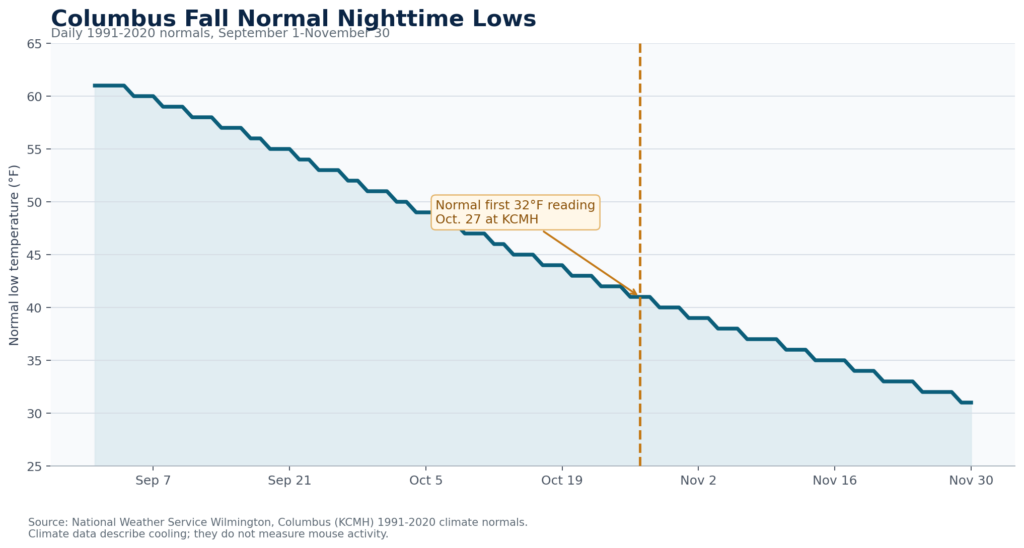
Columbus normal nighttime lows decline steadily through fall. Source: National Weather Service Wilmington, 1991-2020 normals. Climate data do not measure mice.
When we inspect a home in the fall, we also pay attention to what has changed around the property. Maybe the garage door has been left open during yard cleanup. Maybe holiday decorations have been brought up from the basement. Maybe bags of birdseed or pet food have been moved into the garage. Fallen leaves and thick plants can also make small gaps harder to see from outside.
The same thing happens at businesses. Deliveries increase, loading doors stay open, and more packaged goods move through storage areas. A mouse may enter through the building itself, but it can also arrive unnoticed with boxes or other deliveries. That is why we never look at temperature as the only explanation. The weather adds pressure, but the way a building is used matters just as much.
Fall is also a good time to deal with the problem because the outside of the building is still easy to inspect and repair. It is much simpler to deal with a worn garage-door seal or an open utility gap before freezing weather and snow arrive. A little attention in September or October can save you from hearing scratching behind a wall in December.
Are Mice Only A Fall Problem?
No. This is one of the first things we explain when someone tells us, “I thought mice only came inside when it got cold.”
Fall is a common time for mice to enter a building, but mice that already live indoors can stay active throughout the year. If they have steady access to food, water, and a protected nesting area, they do not need to wait for a particular season. Sometimes the first cold nights simply make an existing problem easier to notice.
That is why a few warm days will not necessarily make the sounds or droppings disappear. It is also why one fall sighting does not prove that every home in the neighborhood suddenly has mice. Each situation is different. We have to look at the signs inside, the condition of the building, and the possible ways a mouse could be getting in.
Columbus has seen public examples of what can happen when access, food, and building maintenance come together. In 2024, WOSU reported that a southwest Columbus grocery store temporarily closed after inspectors found mice and contaminated food packages. An earlier WOSU report about a South Franklinton apartment complex also included rodents among a long list of property problems. Those are individual cases, but they are useful reminders that mice are usually part of a larger access or maintenance issue, not a problem that appears out of nowhere.
What Are The First Signs Of Mice Inside A Home?
You may never see the mouse itself. In fact, many of the people we help notice something else first. They hear movement in a wall, find a few droppings under the sink, or notice that a food package has been chewed.
When someone calls us, these are the signs we usually ask about:
- Small droppings in cabinets, drawers, pantry corners, under sinks, or behind appliances.
- Tiny chew marks on food bags, cardboard boxes, wood, or stored items.
- Shredded paper, fabric, insulation, or dried plants gathered in a quiet area.
- Scratching or rustling after the house becomes quiet, especially in walls or ceilings.
- A stale or musky smell that seems stronger in one room or cabinet.
- Fresh signs that return after an area has been cleaned safely.
The U.S. Environmental Protection Agency lists these as common clues, but no single clue tells us how many mice are present. One old dropping may be left from an earlier problem. Fresh droppings that keep appearing are more useful. A daytime sighting can happen too, but it does not automatically tell us the size of the mouse population.
This is where an inspection makes a difference. At Skedaddle, our technicians are not only looking at the sign you noticed. They are asking where a mouse would travel from that spot, what it could be eating, where it could hide, and how that path connects to the outside. The droppings under the sink may be the first clue, but the actual entry point could be on the other side of the house.
If you manage a restaurant, store, office, or apartment building, write down the date and exact location of each sign. A simple record can help us spot a pattern. If food may have been contaminated, move people away from the area and follow your health and safety procedures right away. This is not a good time to wait and see what happens.
Where Do Mice Usually Get In?
The answer is often somewhere you have walked past a hundred times.
The CDC says a mouse can fit through an opening about 1/4 inch wide. That is roughly the width of a pencil. From standing height, a gap that small can be almost invisible. From ground level, it may look like an open door.
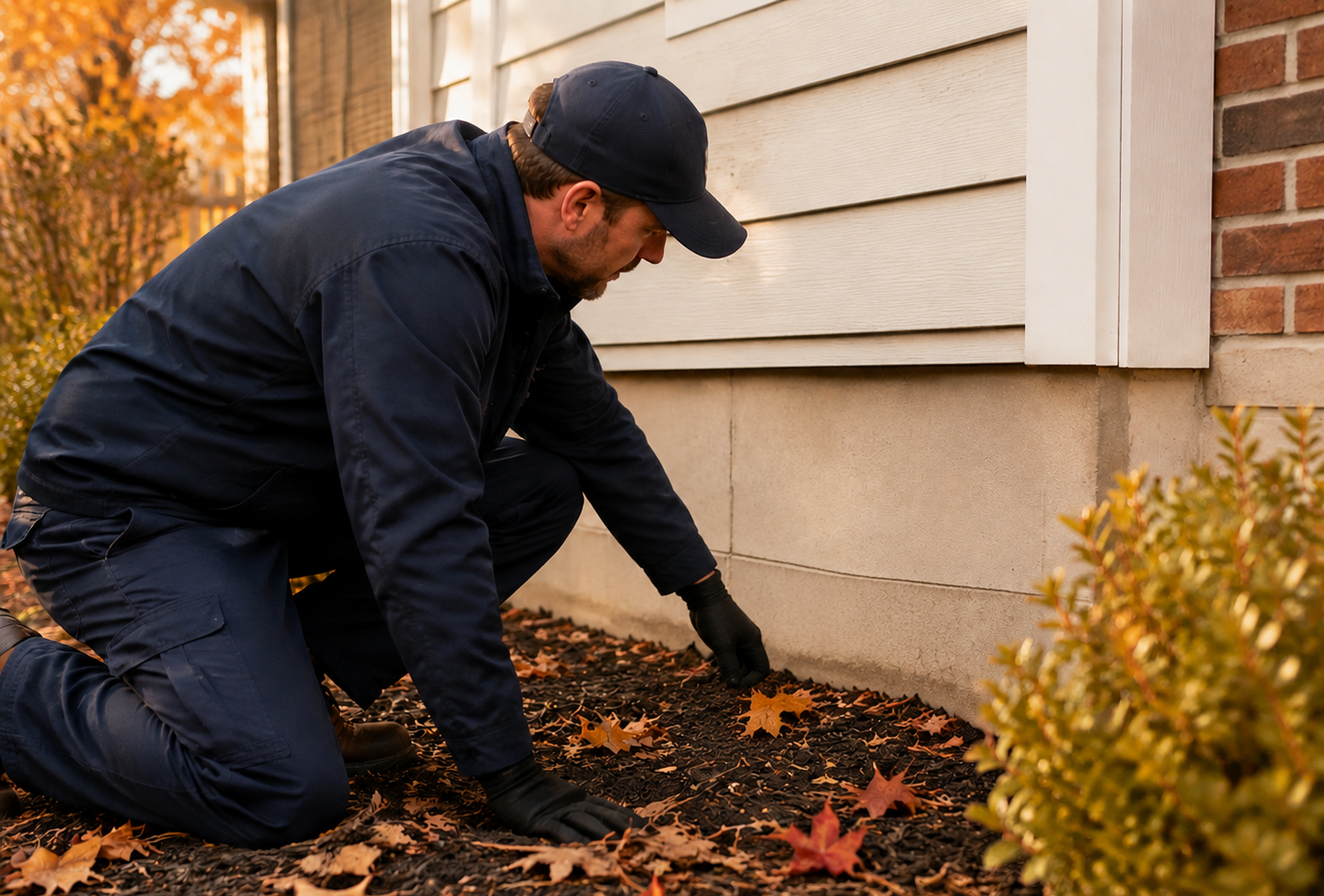
When we walk around a Columbus home, we spend a lot of time looking low. Our technicians check where the foundation meets the siding, where pipes and wires enter the building, and where different building materials come together. We look at garage-door corners, worn door sweeps, vents, crawl spaces, roof edges, soffits, and areas behind outdoor equipment.
Older homes may have settled foundations, aging masonry, old additions, or several generations of plumbing and electrical work. New homes can have gaps too, especially where different trades finished their work or where cables and heating equipment were installed later. A building does not have to look neglected for a mouse-sized opening to be present.
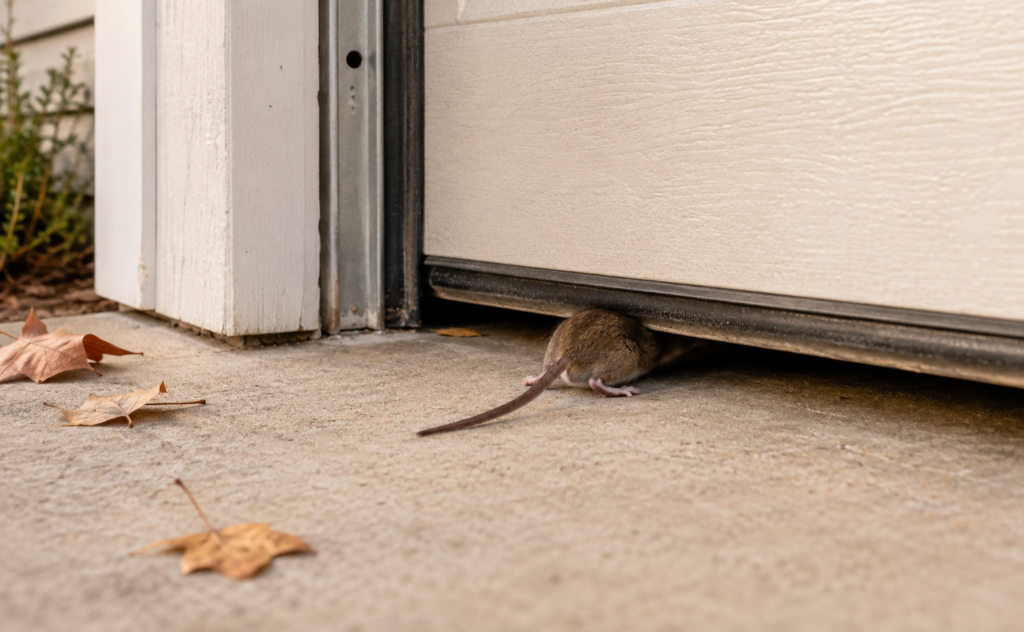
Garages are especially common starting points. If a garage door is left up even an inch, a mouse has more than enough room to slip underneath. Worn rubber seals at the bottom corners can create a similar opening even when the door looks closed. Once inside the garage, a mouse may follow pipes, wires, or wall spaces into the rest of the home.
Food gives it a reason to stay. Pet food, birdseed, grass seed, garbage, crumbs, and food stored in thin bags are easy targets. Cluttered boxes and rarely moved storage give mice quiet places to hide. These things do not create the opening, but they can turn a quick visit into a comfortable home.
Here is the simple advice we give property owners:
- You see a gap but no indoor signs: Have the opening checked and repaired before the weather gets colder. If you suspect something is actively using it, find out what is inside before sealing it.
- You find signs in one room: Protect food, keep children and pets away, note what you found, and arrange an inspection. Mice may be travelling farther than the visible signs suggest.
- You hear activity in walls or ceilings: Do not start opening walls or climbing into unsafe spaces. A technician can trace the likely route without turning the search into a bigger repair.
- Someone or a pet had direct contact with a mouse: Contact a healthcare provider, veterinarian, or public-health professional as appropriate. Wildlife removal is not a replacement for medical advice.
What Should You Do After Finding Mouse Droppings?
The natural reaction is to grab a broom or vacuum. Please pause before you do that.
The CDC’s rodent-cleanup guidance says not to sweep or vacuum dry droppings, urine, or nesting material. Dry cleanup can stir contaminated particles into the air. For a small area that is safe to reach, the CDC recommends airing out the space, wearing gloves, wetting the material thoroughly with an appropriate disinfectant, allowing the product the required contact time, and wiping it up.
If there is a large amount of waste, contaminated insulation, material inside ductwork, or evidence in a tight attic or crawl space, stop and call for help. Those situations may need extra protective equipment and professional cleaning.
There are a few other reactions that can make the problem harder to solve:
- Do not pick up a live mouse, nest, or young mouse with bare hands.
- Do not climb into an unsafe attic, crawl space, roof area, or damaged ceiling to follow a sound.
- Do not seal a hole while mice may still be inside. They may become trapped or look for another route through the building.
- Do not place poison or an unprotected device where children, pets, customers, or other animals could reach it.
- Do not depend on ultrasonic devices to solve the problem. The UC IPM guide reports little evidence that sound or vibration drives established mice out of a building.
- Do not assume that moving a captured mouse somewhere else fixes the problem. The opening and the conditions that attracted it will still be there.
If you live in a rental, take photos, note the dates, and contact your landlord or property manager. If several units share walls or utility spaces, the inspection may need to include more than one unit. The City of Columbus Vector Control Program handles certain outdoor rat complaints, but it does not inspect or treat indoor mouse problems. Those concerns need to go through the property owner or a qualified professional.
What Happens When A Skedaddle Technician Comes To Your Property?
Most people expect us to arrive, find the mouse, and take it away. We understand why. The mouse is the part you can hear or see. But if we remove one mouse and leave the opening behind, we have not really solved the problem for you.
That is why our Columbus mice removal service begins with a careful inspection. We use a 35-50 point process to make sure we do not focus only on the obvious spot. We will ask what you have noticed, where you noticed it, and when it tends to happen. Then we look for signs inside and inspect the outside of the building for possible entry points.
As they go, our technicians will explain what they are seeing in plain language. If there are droppings under the sink, they will show you the nearby pipe gap that may be part of the travel route. If the garage-door corner is worn, they will explain how a mouse could get through it. You should not have to understand construction terms to understand what is happening in your own home.
Once we know how mice are using the building, we put together a plan for that property. No two homes are exactly alike, so there is no one device or one repair that works everywhere. Depending on what we find, the plan may include:
- Finding the full route: We connect the indoor signs to the places mice may be entering and travelling.
- Removing the mice humanely: We choose a method that fits the building and the activity we found. In the right situation, a one-way door may allow mice to leave without letting them come back in.
- Cleaning affected areas: We look at droppings, urine, nesting material, damaged food, and insulation to decide what needs to be cleaned or removed.
- Closing the openings: We seal vulnerable areas with durable materials chosen for that part of the building, rather than relying on a quick patch that mice can chew through.
- Helping you prevent another problem: We point out food, storage, door, or maintenance issues that could make the property inviting again.
Before work begins, we walk you through the recommendations and provide a customized quote. Our lifetime guarantee applies to the workmanship and materials we use. We also explain the scope clearly, so you know which areas are being serviced and what is covered.
In the attached video, we discuss Skedaddle’s mouse removal practices.
How Can You Make Your Property Less Inviting To Mice?
You do not need to turn your home into a fortress. A few good habits, combined with solid repairs, can make a big difference. We usually tell homeowners to think about three things: how mice could get in, what they could eat, and where they could hide.
Early fall is a great time to work through that list. You can still see and reach the outside of the home, and you have time to make repairs before freezing weather arrives.
Start outside:
- Look along the foundation, siding, masonry, vents, roof edges, soffits, and places where pipes or cables enter.
- Check the bottom corners of garage doors and exterior doors. Replace damaged weatherstripping and worn sweeps.
- Trim thick plants near the building and remove piles of leaves or deep mulch that create sheltered paths.
- Keep garbage lids closed and clean up spilled birdseed, pet food, or grill debris.
Then check inside:
- Move pet food, birdseed, and pantry goods into sturdy containers with tight-fitting lids.
- Clean crumbs and spills, including the easy-to-forget areas under appliances and shelving.
- Reduce cardboard, fabric, and clutter that can sit untouched in basements, garages, and storage rooms.
- Take a quick look through quiet cabinets, utility rooms, and storage areas every few weeks during the fall.
For businesses and apartment buildings:
- Make sure someone is responsible for loading doors, garbage areas, deliveries, and repair follow-up.
- Record where signs are found instead of treating every report as a separate mystery.
- Check adjoining units or shared utility routes when activity may be moving between spaces.
- Act quickly when droppings or gnawed packaging appear near food or customer areas.
One important caution: if you already have fresh signs inside, do not rush around sealing every hole you can find. Closing an active route at the wrong time can trap mice inside or push them into another area. The better order is to understand the activity, remove the mice appropriately, clean the affected space, and then complete the repairs.
Common Questions We Hear About Fall Mice
When should I start checking my Columbus home for mice?
Late summer or early September is a good time to begin. Keep checking through November as the nights get colder. Columbus normally reaches its first freezing temperature around October 27, so an early look gives you time to deal with worn seals and small gaps before they become active entry points. Continue watching for signs year-round, especially if mice have been inside before.
Does seeing one mouse mean I have an infestation?
It tells us that at least one mouse found a way in, but it does not tell us how many others may be present. I look for supporting signs such as fresh droppings, repeated chewing, nesting material, smells, or activity in more than one room. If the signs keep returning, involve food, or seem to come from walls or ceilings, it is time for an inspection.
Can I seal a mouse hole myself?
You may be able to make a preventive repair if there are no signs of current activity and the area is safe to reach. If you find fresh droppings or do not know what is inside, do not seal the opening blindly. A complete inspection is also important because the hole you noticed may not be the only one. Remember, a mouse only needs about a 1/4-inch gap.
Can I vacuum mouse droppings?
Not while they are dry. Follow the CDC's wet-cleanup guidance for a small, accessible area. Wear gloves, wet the material thoroughly with an appropriate disinfectant, wait for the required contact time, and wipe it up. If there is heavy contamination, exposed insulation, activity in ductwork, or waste in an unsafe space, leave it alone and call a professional.
What does humane mouse removal mean at Skedaddle?
For us, humane mouse removal means solving the conflict as a whole. We find the entry points, choose a removal method that fits the situation, clean the areas that have been affected, and seal the building with durable materials. When appropriate, that may include one-way doors or other specialized methods. The goal is not a quick response to one mouse. It is a lasting solution for the home.
Let Us Take A Closer Look Before The Weather Turns Colder
If you are hearing movement, finding droppings, or noticing chewed packages, you do not have to figure out the entire problem on your own. Start by protecting food, keeping people and pets away from affected areas, and writing down what you have seen or heard. Avoid dry cleanup and do not seal an opening unless you know what is happening behind it.
Our Columbus technicians can inspect your home or business, show you where mice are getting in, and explain the next steps without burying you in technical language. Call us or request service from our Columbus humane wildlife control team. We will help you deal with the mice that are there now and the openings that could invite the next ones in.

 Loading...