You may notice more bats near your roofline during fall because feeding patterns, cooler temperatures, and seasonal movement bring them closer to buildings. Nearby water, trees, and exterior lights can support large numbers of flying insects. Warm air and small roof gaps may also draw these animals toward sheltered parts of your home.
More evening activity does not always mean your attic has been entered. They may simply be hunting above your yard or resting on the outside of the building. However, repeated flights into one vent, soffit, fascia gap, or roof intersection can point to an active roost.
At Skedaddle Humane Wildlife Control in Colorado, we inspect the whole property to separate normal outdoor activity from a building problem. You should not climb onto the roof, enter the attic, touch droppings, or seal a suspected opening. In this blog, we explain the reasons for increased fall bat activity and the signs that may point to a roofline entry.
Why Are There So Many Bats Around My House?
There may be many bats around your home because the area provides food, water, travel routes, or possible roosting spaces. Their presence can become more noticeable during fall as they feed and move between seasonal shelter. A home near trees, water, or open land may sit along a regular feeding route.
Several individuals flying over your yard do not prove that they live inside your house. They may be catching insects drawn to water, plants, or outdoor lights. This activity often continues until the food supply moves or colder weather arrives.
The concern grows when several flights lead toward the same part of your roof. Dark staining, droppings, or sounds near that area can provide more evidence. A professional inspection is needed to confirm whether the activity is inside or outside.
Seasonal Movement Changes Fall Flight Patterns
Fall brings shorter days, cooler nights, and changes in available food. Bats may spend more time feeding as they build the energy needed for winter. Their activity can become easier to notice because evening flights begin earlier.
Some will also move between summer roosts, temporary resting places, and winter shelter. These seasonal trips may bring them through neighborhoods that seemed quiet during summer. A short rise in activity can therefore be part of normal movement.
Repeated emergence from one exact roof opening tells a different story. It may show that the building provides a regular roost rather than a brief stop. Our technicians consider flight direction, timing, and structural evidence before reaching a conclusion.
Nearby Water and Food Sources Increase Activity
Bats often hunt in places where insects gather. Water, trees, and green spaces can support a steady food supply near residential buildings. Your roof may simply sit beside a productive feeding area.
- Lakes, Ponds, and Streams: Water can support large numbers of flying insects during warmer parts of fall. Open areas above the water also provide room to hunt. Homes nearby may experience more evening flights even when the structures are not occupied.
- Pools and Backyard Water: An open pool can become part of a nighttime feeding route. Bats may fly low over the water to drink or catch insects. Their movement may then continue over the roof without leading into the attic.
- Trees and Green Spaces: Wooded areas and planted yards can provide useful feeding grounds. Tree lines may guide flight between open spaces and residential areas. A nearby roofline may become part of that regular path.
- Warm Fall Evenings: Insect activity can remain high when fall temperatures stay mild. Several bats may gather where food is concentrated. A sudden cold period can change this pattern quickly as feeding conditions shift.
Frequent feeding above a yard may last only part of the season. It becomes more concerning when the flights repeatedly end at one structural gap. Our team can tell the difference without requiring you to approach the roof.
Artificial Lighting Can Concentrate Feeding Near Buildings
Exterior lights can draw insects toward walls, doors, eaves, and roof edges. Bats may circle a lit area while hunting, making it appear as if they are focused on the house. The activity may begin soon after sunset and continue while food remains available.
Feeding flights often involve quick turns or repeated passes around a light. Entry behavior is usually more focused on one exact gap. Technicians watch how the bats approach, where they slow down, and whether they disappear into the structure.
A busy feeding area does not always require removal from the home. The main question is whether the activity remains outside. Our team can inspect nearby vents, soffits, and roof joints for evidence of entry.
Warm Air and Roof Features Can Guide Them Toward Openings
Warm air may escape through small gaps around the roof during cool fall evenings. That heat can make a sheltered opening more noticeable. Structural lines may also guide bats toward narrow spaces that are difficult to see from the ground.
- Warm Areas Around the Roof: An attic can hold heat after outdoor temperatures fall. Air may escape through gaps around vents, trim, or roof joints. These warm areas can provide clues that a protected space lies behind the opening.
- Soffit and Fascia Edges: Narrow seams can form where soffit panels and fascia boards meet the roof. Shadows may hide the gap during a ground-level inspection. Even a newer home can contain small construction openings in these areas.
- Roof Intersections and Flashing: Dormers, chimneys, and intersecting roof sections create sheltered corners. Flashing may lift or separate as materials shift. A small opening can then lead into a much larger attic space.
- Ridge and Roof Vents: A loose edge or damaged screen may provide access near the top of the home. The vent may still look normal from the yard. A professional must examine it closely before any exclusion work begins.
No suspected opening should be sealed based only on its appearance. Bats may already be using the space behind it. Closing the entrance too soon can trap them or force them farther into the structure.
Height and Temporary Night Roosts Make Rooflines Useful
Height provides open space for bats to begin flying. They may drop slightly before spreading their wings and moving away from the structure. Roof peaks, walls, and eaves can therefore support easier departures than low, enclosed areas.
Some may use sheltered exterior corners as temporary night roosts. They can rest beneath an overhang between feeding periods and leave again later. A brief exterior stop does not always mean the attic is occupied.
Technicians compare temporary resting with repeated entry through a gap. They consider how long the activity lasts and whether droppings or staining are present. This prevents normal outdoor behavior from being confused with an indoor roost.
Small Entry Gaps Can Lead Into the Attic
Bats do not need a large opening to enter a home. A narrow seam can connect with a wide attic or wall cavity. These gaps may exist in new and older buildings.
- Open Soffit Seams: Panels may separate where they meet the roof edge or another building material. The resulting space can remain hidden in shadow. Repeated flight toward the seam may suggest active use.
- Loose Fascia Boards: A small opening can develop behind exterior trim. Wind, moisture, and normal building movement may cause the material to shift. The gap may then provide access to the roof structure.
- Damaged Vent Edges: Roof, attic, and gable vents can develop openings around their frames. A screen may also loosen behind the visible cover. Activity can continue even when the vent looks undamaged from below.
- Gaps Around Flashing: Flashing protects joints near chimneys, dormers, and roof intersections. Lifted or separated sections may expose a narrow entrance. That opening can lead directly into the attic.
- Joints Between Materials: Brick, siding, wood, and roofing can expand or contract at different rates. Small seams may form where these materials meet. Our technicians include these transition points in a complete roof inspection.
Finding one opening does not mean it is the only one present. A roost may have one active entrance and several nearby gaps. Lasting prevention requires a complete inspection of the roofline.
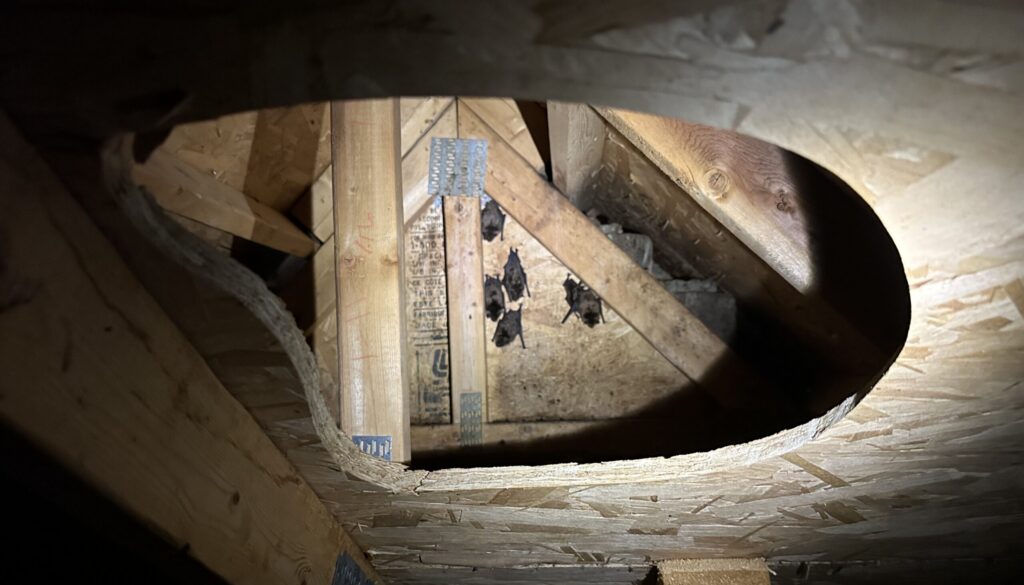
Signs of an Active Roofline Roost
One evening sighting does not confirm that bats live inside your home. A group may simply be feeding or passing through the area. Several signs around the same opening provide stronger evidence of a roost.
- Repeated Flights from One Opening: You may see bats emerge from the same gap around dusk. Regular use over several evenings can point to an occupied space. Watch from the ground and do not stand beneath the opening.
- Dark Staining Around a Gap: Repeated contact may leave dark marks near an active entrance. Weather, dirt, and moisture can cause similar staining, so the mark is not proof by itself. Technicians compare it with flight activity and other signs.
- Droppings Below the Roofline: Waste may collect on siding, a ledge, or the ground below an entrance. Homeowners should not touch, sweep, or vacuum this material. Our trained professionals can assess and remove it safely.
- Sounds in Walls or Ceilings: Squeaking, scratching, or light movement may come from the upper part of the home. Noise can travel through framing and seem far from the actual roost. Our professional inspection is still needed to confirm the source.
- Activity Returning Each Season: Bats may return to a roost that provided safe shelter before. If the structural opening remains available, the same pattern can happen in later years. Long-term exclusion must address every vulnerable gap after the space is empty.
More than one sign may appear by the time you notice the problem. Flights, staining, droppings, and attic sounds can all point to the same entrance. Our team connects these clues without disturbing the roost.
Fall Bat Activity Around Colorado Homes
Colorado includes mountain communities, open spaces, wooded areas, lakes, and growing neighborhoods. These settings can support feeding and seasonal travel near homes. Activity may change quickly as temperatures rise during the day and fall after sunset.
Many Colorado homes also have complex rooflines, chimneys, vents, siding joints, and attic spaces. Small gaps may form where different building materials meet. These openings can provide seasonal shelter even when the home appears well maintained.
Removal timing must account for the season, possible winter shelter, and the presence of dependent young. Exclusion at the wrong time can trap bats inside. Skedaddle Humane Wildlife Control in Colorado assesses the roost before selecting a humane plan.
Bat Removal and Prevention: What to Know
Our professional wildlife team inspects the roofline, soffits, fascia, vents, flashing, chimney, attic, and surrounding property. We identify active openings, roosting spaces, contamination, and signs of dependent young. You do not need to climb onto the roof or enter the attic.
We select the removal method and timing based on the season and roost conditions. When appropriate, our one-way doors allow bats to leave but prevent them from returning through the same opening. We do not use live trapping and relocation.
After the roost is empty, our team seals vulnerable gaps with durable materials. We can also remove contaminated insulation, clean droppings, and sanitize affected areas when required. This complete process addresses the current activity and helps prevent another entry.
Frequently Asked Questions
Does flying near the roof mean the attic has been entered?
No, feeding or passing activity can happen near a home without entry. Bats may circle exterior lights or hunt above trees and water. Repeated flights into one exact opening make attic occupation more likely.
What time are bats most active around homes?
Activity often becomes visible around dusk and during the evening. The exact timing may change with weather, temperature, and available food. Observation from the ground cannot confirm where they spend the day.
Can bats stay in an attic during winter?
Some bats may use buildings as winter shelter. Their activity can become quiet or difficult to notice during cold periods. A professional must assess the roost because sealing an occupied entrance can trap them inside.
Should droppings beneath the roof be cleaned up?
Bat droppings should be handled by our trained professionals. Homeowners should not touch, sweep, or vacuum them because disturbing dry material may release harmful particles. Our team has the equipment and methods needed for safe cleanup.
Can a suspected opening be sealed right away?
No, the opening must remain available until a professional confirms that exclusion can happen safely. Adults, dependent young, or inactive bats may still be inside. Closing the gap too soon can trap them or force them into your living space.
Address Roofline Activity Before It Becomes an Indoor Problem
Fall activity around your roofline may be connected to feeding, seasonal movement, nearby water, artificial lighting, warm air, or temporary outdoor resting. These flights do not always mean that bats have entered your home. However, repeated movement into one opening, dark staining, droppings, or sounds inside the structure should receive professional attention.
You should not climb onto the roof, enter the attic, touch waste, or close a suspected entrance yourself. Adults, dependent young, or inactive bats may remain inside even when the opening seems quiet. Humane exclusion must be planned around the season and conditions inside the roost.
At Skedaddle Humane Wildlife Control in Colorado, we can inspect your property, confirm where the activity is occurring, and choose the proper removal plan. Our team handles humane exclusion, professional cleanup, structural repairs, and lasting prevention. Contact us to schedule a professional assessment or service appointment. You can also request an estimate to learn more about protecting your home.

 Loading...