
Fall is the perfect time to check your Franklinton property for conditions that could attract rats. An overflowing trash container, an open delivery door, or a gap around a utility line can create opportunities as colder weather approaches.
For homes and businesses alike, prevention starts with two priorities: reducing accessible food and addressing entry points. Secure waste storage helps, but exterior gaps and sheltered clutter also deserve attention.
Before winter arrives, use this practical checklist to review waste areas, doors, and storage spaces. You’ll learn which maintenance tasks you can tackle and which signs call for a professional assessment.
What is a rat’s biggest enemy?
Rats have natural predators, including owls and other animals, but there is no single “biggest enemy” that provides dependable protection for a property. For homeowners and businesses, effective prevention focuses on reducing accessible food, limiting shelter, and securing entry points. Suspected activity calls for professional assessment rather than relying on pets or repellents.
Secure Household Trash and Commercial Waste
Waste storage is a practical starting point because food scraps can attract rats to an area. A closed container is helpful, but its condition and the cleanliness of the surrounding space also matter.
At home, inspect trash cans for damaged lids, cracks, or openings. Keep food waste inside the container rather than leaving bags beside it. If you compost, maintain the system appropriately and prevent food scraps from becoming openly accessible.
Businesses should review both containers and collection practices. A dumpster that regularly overflows may need more frequent collection or additional capacity. Even when the lid closes, spilled waste and food residue around the disposal area can remain available.
Check that:
- Lids close completely after each use.
- Containers are intact and suitable for their purpose.
- Trash bags remain inside containers.
- Spilled food and waste are cleaned promptly.
- Collection areas remain accessible for inspection.
For businesses, assign responsibility for checking the waste area instead of assuming someone else will handle it. Homeowners can add the same check to their regular outdoor maintenance routine.
If you notice gnawed containers, droppings, or repeated rat sightings, improving waste storage is still worthwhile. However, cleanup alone cannot establish that activity has ended. Record the signs and arrange an assessment to understand whether rats are also accessing sheltered spaces or the building.
Check Delivery Doors, Garage Doors, and Service Entrances
Doors can provide access through damaged seals or during everyday use. At businesses, receiving entrances may open repeatedly as deliveries arrive. At homes, garage and basement doors can have worn thresholds or gaps that go unnoticed.
Begin with the door closed. Look for visible spaces along the bottom, lower corners, and frame. Check whether weatherstripping and sweeps are intact and whether the door closes fully without an obstruction.
Useful checks include:
- Damaged or missing door sweeps.
- Gaps beneath thresholds or at lower corners.
- Loose weatherstripping around the frame.
- Faulty closing mechanisms.
- Items preventing the door from closing properly.
Business owners should also consider daily routines. Minimize unnecessary time with delivery doors propped open, and close entrances promptly when receiving work is complete. Keep nearby packaging and stock from interfering with the door.
Homeowners can apply the same approach to garage doors. A door that fits well when closed still provides an opportunity for entry when left open for extended periods.
An open door is a possible access route, not proof of how rats entered. Likewise, a visible gap needs evaluation rather than an assumption.
Routine wear can be addressed through suitable maintenance. Gnawing that returns, droppings near an entrance, or observed animal entry calls for professional assessment before suspected active openings are permanently closed.
Inspect Exterior Gaps and Utility Openings
After checking doors, walk around the accessible exterior of the building. Pay attention to places where materials meet and where pipes, cables, or other services pass through walls.
Deteriorated seals, damaged covers, and unfinished installation work can leave openings. Some are hidden behind stored materials or vegetation, making them difficult to see during an ordinary walk past the property.
Observe accessible areas around:
- Plumbing and cable penetrations.
- Foundation and exterior wall transitions.
- Basement windows and door frames.
- Damaged or loose vent covers.
- Previous service installations.
- Additions and adjoining structures.
Photograph concerns and note their locations. Avoid pulling on cables, disturbing pipes, or attempting repairs around gas and electrical services.
A suitable repair depends on the opening and surrounding materials. Simply filling every visible space with foam does not provide a complete prevention plan. Repairs must also preserve necessary ventilation, exhaust, and drainage functions.
Distinguish an exterior entrance from an interior travel route. An opening beneath a sink may connect to a concealed cavity, while a separate gap elsewhere allows entry from outdoors. Closing only the interior opening may leave the access problem unresolved.
Suspected active entrances need assessment before sealing. A professional can evaluate evidence and determine how repairs should fit into a removal and prevention plan. Utility-related work may also require an appropriately qualified tradesperson.
Reduce Clutter and Keep Storage Areas Inspectable
Clutter can conceal activity and make maintenance difficult. A crowded garage, storage shed, or commercial stockroom may contain areas that remain undisturbed for long periods.
Organizing these spaces makes it easier to inspect wall edges, identify damaged packaging, and reach building components that need repair. It also reduces unnecessary cover around the property.
For homeowners, useful tasks include:
- Removing unnecessary cardboard and unused materials.
- Organizing garage and shed storage.
- Securing birdseed and pet food in sturdy containers.
- Cleaning ordinary food spills promptly.
- Keeping accessible wall edges visible.
Businesses should review accumulated delivery packaging, unused equipment, and stock stored near receiving areas. Food inventory needs suitable storage, while damaged packaging should be identified and handled promptly. Establish a regular schedule for removing excess boxes rather than allowing them to build up.
Outside, keep stored materials from hiding the building perimeter where practical. Maintaining access helps both routine checks and professional inspections.
Tidying is a prevention task, but suspected contamination requires a different approach. If you discover droppings, possible nesting material, or heavily damaged stored goods, avoid disturbing the area simply to finish the cleanup. Document what you can safely observe and seek appropriate guidance.
An organized property can still have an access problem. Clutter reduction supports prevention, while inspection helps determine whether rats are already using the building.
Recognize Rat Activity Before It Becomes a Recurring Problem
You do not need to see a rat inside a room to have a reason for concern. Damaged packaging, gnawed containers, and droppings may reveal activity in less visible areas.
At the same time, individual clues need careful interpretation. A hole outdoors does not identify the animal responsible, and scratching sounds do not confirm rats. Consider observations together rather than drawing a conclusion from one sign.
Report concerns such as:
- Rat sightings inside or near the building.
- Droppings in accessible storage or waste areas.
- Gnawed food packaging or trash containers.
- Damage around possible entrances.
- Possible burrows near structures.
- Recurring sounds in concealed spaces.
Record dates, locations, and photographs where possible. One sighting cannot determine population size, but it deserves attention. There is no need to wait for repeated sightings before seeking an assessment.
For businesses, give staff a clear way to report concerns. An employee working near a receiving door may notice something that someone in the office would never see. Centralizing those observations helps identify patterns and supports a more informed inspection.
Avoid dry sweeping or vacuuming suspected rodent waste. Follow appropriate public-health cleanup guidance or seek professional assistance.
Repeated signs after housekeeping or maintenance suggest that part of the problem may remain unresolved. A broader assessment can consider food sources, shelter, and access together.
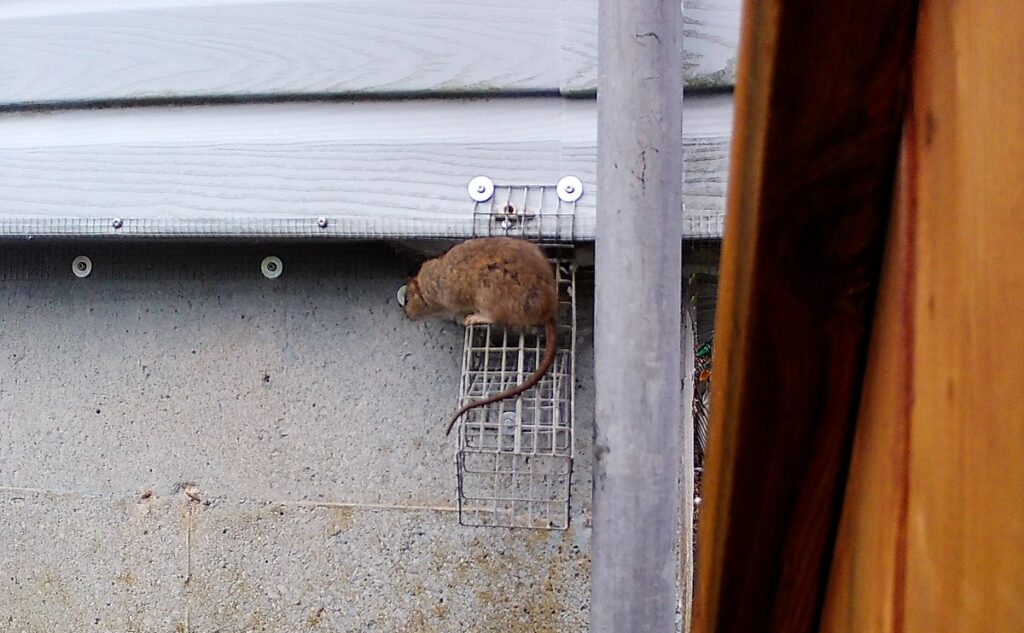
Combine Food Management With Professional Exclusion
Food management and access prevention perform different jobs. Secure waste storage reduces available food. Exclusion secures openings against entry or re-entry. Together, they address more of the conditions that allow rat problems to continue.
Removing food does not close a gap in a wall. Sealing an entrance does not correct an overflowing dumpster or exposed food storage. A coordinated plan considers both the building and the way the property is used.
When activity is suspected, professional assessment helps determine:
- Which observations indicate current activity.
- Where rats may be entering.
- Which connected spaces require attention.
- How humane removal and sealing should be coordinated.
- What ongoing maintenance will support prevention.
Suspected occupied openings should be assessed before permanent closure. Sealing too soon can leave animals inside, while addressing only one opening may overlook other entrances.
At Skedaddle Humane Wildlife Control, we consider existing activity alongside the access concerns that may allow it to recur. The plan should reflect the property, its construction, and the evidence found during assessment.
Homeowners and businesses continue to play an important role afterward. Keep waste contained, maintain doors, and review storage practices. Check again after renovations, equipment installations, or other changes that could affect the exterior.
These habits support exclusion work and make new concerns easier to recognize before they become recurring problems.
Frequently Asked Questions
Can rats enter a clean home or business?
Yes. Cleanliness helps reduce available food, but it does not eliminate exterior gaps or sheltered spaces. A well-kept property may still have an accessible entrance. Prevention combines secure food and waste storage with maintenance and appropriate exclusion, while suspected activity requires assessment to determine what is happening.
Does one rat sighting mean there are more?
One sighting cannot establish how many rats are present or how long they have been active. It is still worth reporting, especially if accompanied by droppings or damage. An inspection can assess additional evidence, possible entrances, and relevant areas without assuming either an isolated visit or a larger problem.
Why are delivery doors important for rat prevention?
Delivery doors may open frequently and remain open while goods are moved. Damaged seals or incomplete closing can also leave access opportunities. Review both the condition of the door and receiving routines. Keeping nearby waste and packaging under control supports prevention, but signs of activity still require investigation.
Will removing outdoor food sources make rats leave?
Reducing accessible food is useful, but shelter and building access may remain. Rats may also find food in another part of the property. Cleanup should support a broader prevention plan rather than serve as proof that activity has ended. Ongoing signs warrant assessment of entrances and sheltered areas.
Should I seal a gap if I think rats are using it?
Have suspected active entrances assessed before permanently sealing them. The opening may connect to occupied interior spaces, and additional entrances may exist elsewhere. Coordinating humane removal with appropriate exclusion helps address activity without leaving animals inside or overlooking routes that could allow the problem to continue.
Prepare Your Franklinton Property Before Winter
Fall rat prevention starts with manageable steps: secure waste, maintain delivery and garage doors, inspect accessible exterior areas, and organize storage. These tasks help reduce opportunities and make warning signs easier to spot.
When activity is suspected, address both resources and access. Removing available food supports prevention, while appropriate exclusion helps protect the building against entry and re-entry.
If you notice rats, droppings, or unexplained damage, contact Skedaddle Humane Wildlife Control serving Franklinton. Our team can assess your home or business and develop a humane removal and prevention plan suited to the property.

 Loading...