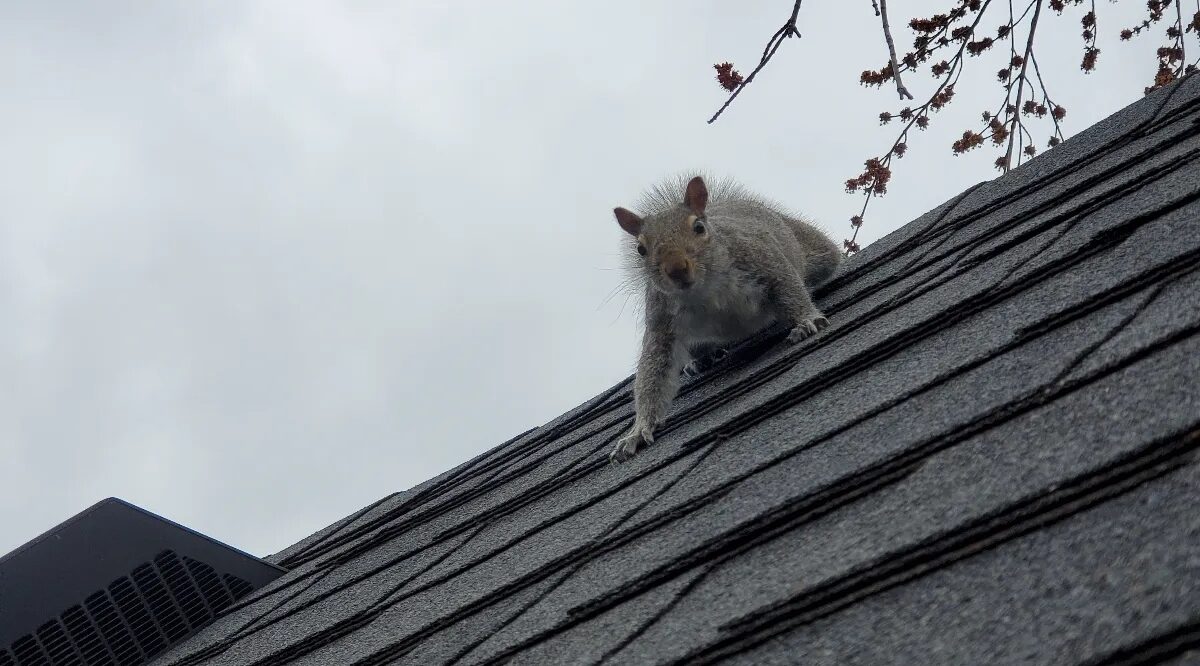
You may notice squirrels crossing your roof more often once fall arrives. They could be using it as a food cache for nuts and seeds. Gutters, roof valleys, and sheltered corners provide dry storage. However, this does not always mean they have entered your attic.
Pay closer attention when they return to the same vent, soffit, or damaged roof edge. Chewing, scratching above the ceiling, droppings, or nesting material may point to indoor activity. Nuts in the gutter may only show an outdoor storage route. The real concern begins when outdoor visits turn into indoor access.
At Skedaddle Humane Wildlife Control in London, Ontario, we inspect the roofline and attic for you. Do not climb, enter the attic, touch waste, or seal a suspected opening. You could face danger or trap an occupant inside. In this blog, we explain fall caching, roof damage, indoor activity, and our humane removal process.
Do Squirrels Store Food in Attics?
Yes, squirrels may store food in an attic when they already have a way inside. The dry space can protect nuts and seeds from rain and snow. Still, food outside the building does not prove that the attic is occupied.
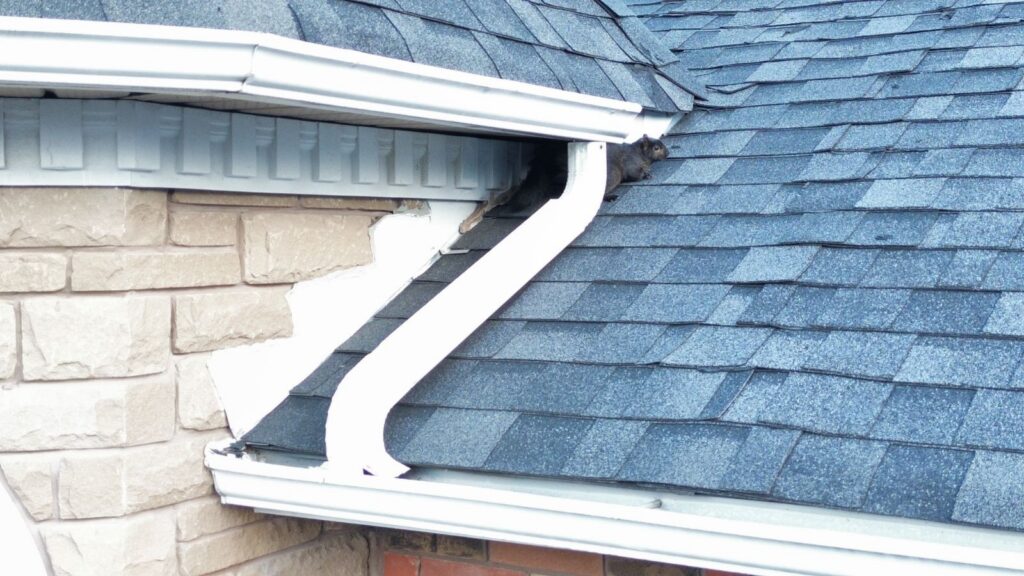
Nuts in a gutter or roof valley may be part of an outdoor cache. These animals divide food between many hiding places and may return later to collect it.
Indoor sounds and damage provide stronger evidence of entry. Running above the ceiling, droppings, nesting material, or disturbed insulation can point to an occupied attic. You should not inspect or clean the space yourself.
How Fall Food Caching Brings More Activity to the Roof
Fall is an active food-gathering season for squirrels. They may travel between trees, fences, garages, yards, and roofs while searching for places to store what they find. A higher number of visits may reflect normal outdoor caching, but repeated activity can also expose weak areas of the building.
- Food Is Divided Between Many Hiding Places: Squirrels often use scatter-hoarding, which means they hide small amounts of food in many locations. One roof may contain only a few nuts while other supplies sit across several nearby properties. This method reduces the chance that one lost cache will remove the entire food supply. It also explains why you may see them return to different parts of the roof throughout the day.
- Higher Areas Can Offer More Protection: An elevated location can keep stored food away from regular ground-level movement. A gutter, roof valley, or protected corner may also shield nuts from some wind and rain. These spots can feel useful even when there is no opening into the house. Height alone does not confirm that the roof space or attic has become a shelter.
- Saved Food May Be Checked More Than Once: These animals may return to a cache to collect, move, or eat stored food. This can create a regular path across the same branches, fence, garage, and roof section. Repeat traffic does not prove indoor entry, but close attention to one weak area can lead to chewing or pulling. We inspect the route and building materials before deciding what the activity means.
Outdoor Caching and Indoor Entry: What to Look For
Outdoor caching and attic entry can happen at the same property, but they are not the same issue. One nut or one rooftop sighting cannot show whether the building is occupied. You need a professional assessment when several warning signs begin to appear together.
- Food or Shells Remain Outside: Nuts and shells in a gutter, roof valley, or sheltered corner may show outdoor storage. They may also have rolled from another part of the roof or fallen from an overhanging branch. This evidence becomes more useful when we compare it with tracks, chewing, and repeat visits. By itself, outdoor food does not confirm that anything is living in the attic.
- The Same Roof Area Receives Repeat Visits: Regular movement toward one vent, soffit, or roof edge may point to a cache or possible entrance. You may see these animals pause, carry food, or disappear behind part of the structure. The difference can be difficult to judge safely from the ground. Our team checks the area closely without requiring you to climb or approach it.
- Sounds Come From Above the Ceiling: Running, scratching, or chewing inside the roof space provides stronger evidence of entry. Framing can carry sound, so the noise may seem far from the true opening. Activity may become easier to hear when the house is quiet. You should not enter the attic to find the source because disturbed occupants and contaminated materials can create risks.
- Indoor Materials Show Disturbance: Damaged insulation, nesting material, droppings, or stains may show that the attic is being used. These signs may appear far from the outside entrance because movement can continue across the roof space. Do not touch, sweep, vacuum, or remove affected materials. We determine whether professional cleanup is needed after the occupants have been removed.
Why Vents, Soffits, and Roof Edges Can Become Damaged
Simple movement across a strong roof may not cause major harm. The risk increases when squirrels find plastic vents, loose soffits, aged fascia, or existing gaps. They may chew or pull at these areas while looking for food, storage, or shelter. A small weakness can become a usable opening after repeated attention.
Damage can be easy to miss from the ground. A vent may look complete from below while one side has been chewed or lifted. A loose soffit panel may also move back into place after they pass through it. Our team checks the full roof edge instead of relying on the most visible mark.
An opening should not be covered as soon as it is found. An occupant may still be inside, and dependent young may be hidden during certain parts of the year. Closing the route too early can trap them in the attic or force more damage as they try to escape. We confirm the building is clear before completing the required exclusion work.
Fall Roof Activity Around London Homes
London has mature neighbourhood trees, parks, and connected yards that support overhead travel. Branches, fences, garages, and roofs can form a route across several properties. You may therefore see frequent movement without having an indoor problem.
Fall creates a strong reason to gather food before winter. Older roofs, vents, soffits, and detached structures may contain gaps that receive attention. Newer homes can also have openings caused by weather or past damage.
Rain, wind, and colder nights can change where food is stored. Sheltered roof areas may receive more attention as fall weather changes. Only physical evidence can show whether those visits remain outside or continue into the attic.
When Roof Activity Needs a Professional Inspection
One squirrel crossing the roof may not require the same response as repeated chewing near an opening. The pattern, location, and condition of the building all matter. Our professional attention becomes important when activity continues or indoor signs appear.
- One Area Receives Constant Attention: Several visits to the same vent, soffit, fascia board, or roof corner may point to stored food or an entrance. The visitor may pause there, carry material, or disappear from view. You should watch only from a safe place on the ground. We inspect the area and determine whether the route leads indoors.
- You Hear or Smell Activity Inside: Scratching, running, chewing, stains, or unusual odours may show that the problem has moved beyond the roof surface. Sound can travel through ceilings and walls, making the occupied area hard to locate. Waste and nesting material may also remain hidden beneath insulation. Our team traces the signs without asking you to enter the affected space.
- Building Materials Look Chewed or Shifted: A damaged vent, lifted soffit, loose panel, or widened gap needs professional assessment. Even a small opening may provide access to a larger space behind the exterior. Do not seal it, place a cover over it, or reach inside. We must first confirm whether an occupant or dependent young remain within the structure.
Squirrel Removal and Prevention with Skedaddle
Our process begins with an inspection of the roofline, attic, soffits, vents, and nearby travel routes. We determine whether the activity involves outdoor caching, indoor shelter, or both. We also check for dependent young, so you never need to enter the attic or handle affected material.
When suitable, we install one-way doors that allow wildlife to leave but prevent re-entry. We confirm that the space is empty and secure vulnerable openings with durable materials. This addresses the current activity and the route that allowed entry.
We identify waste, nesting material, and damaged insulation that may require professional cleanup. Homeowners should never touch or remove these materials. Our wider inspection also finds less obvious weaknesses around the building.
Frequently Asked Questions
Why are squirrels suddenly running across my roof in fall?
Fall brings more food gathering and storage as squirrels prepare for colder conditions. Your roof may connect nearby trees, fences, garages, and yards along a useful travel route. They may also visit gutters or sheltered corners where food has been stored. Frequent movement does not confirm attic entry unless other signs support it.
Do nuts in the gutter mean squirrels are living in the attic?
No, nuts in a gutter usually show that food was dropped, carried, or stored outside. Rain, wind, and roof slope may also move items into the gutter. Indoor sounds, nesting material, droppings, and a damaged entry point provide stronger signs of attic use. We compare all available evidence before confirming an indoor problem.
Can squirrels damage roof vents and soffits?
Yes, squirrels can chew plastic vents, pull at loose soffits, or widen an existing weak point. Repeated activity can turn a small damaged area into an entry route. The full amount of damage may not be visible from the ground. Our professional team checks the exterior and connected interior space to determine what needs attention.
Should a roof opening be sealed right away?
No, a suspected entrance should not be sealed before a professional inspection. An adult or dependent young may still be inside the building. Blocking the opening could trap them or lead to more damage as they search for another way out. Our team confirms the occupancy and family stage before beginning removal and exclusion.
Keep Fall Food Storage Outside the Attic
Squirrels may use gutters, roof valleys, and sheltered corners as part of a fall food cache. Nuts, shells, and repeated roof traffic can show that food is being stored outside. These signs do not always mean your attic is occupied. The concern becomes greater when regular visits appear with damaged vents, lifted soffits, indoor sounds, droppings, stains, or nesting material.
You should not climb onto the roof, enter the attic, touch waste, or seal a possible route. An adult or dependent young may remain inside even when the opening looks quiet. Covering the entrance too soon could trap them or cause more building damage. A professional inspection must happen before removal, cleanup, repairs, or exclusion work begins.
At Skedaddle Humane Wildlife Control in London, Ontario, we inspect the roofline, attic, and surrounding property for you. Our team provides humane removal, installs one-way doors where suitable, completes professional cleanup, and secures vulnerable areas against another entry. We create the plan around the evidence found at your home instead of relying on one rooftop sighting. Contact us to schedule a professional assessment or request an estimate to learn more.

 Loading...