







Offering humane and effective wildlife removal for homes and businesses in Baltimore and the surrounding Maryland communities.
Proudly serving Baltimore, Towson, Owings Mills, and Perry Hall. Trust our proven, three-step humane process to protect your property and provide long-term peace of mind.
From the historic, tightly-packed rowhomes of Roland Park to the sprawling wooded estates near the Liberty Reservoir, Baltimore offers a diverse landscape that both residents and wildlife call home. However, the proximity of the city’s urban infrastructure to lush corridors like Gunpowder Falls State Park often leads to unwanted encounters.
Local species such as resourceful raccoons, agile squirrels, and elusive bats frequently seek shelter in attics and crawl spaces, while rats and skunks can quickly compromise the safety of a property. At Skedaddle Humane Wildlife Control, we combine deep local expertise with a commitment to ethical, permanent solutions, ensuring your home or business remains a sanctuary for you, not for pests.
Wildlife Control in Baltimore
Baltimore’s unique blend of dense urban rowhouses and lush green spaces like Loch Raven and Gunpowder Falls creates a perfect habitat for nuisance wildlife. Homeowners frequently encounter raccoons, squirrels, and bats nesting in attics, while skunks and groundhogs often burrow beneath porches or foundations. These animals can cause significant structural damage, fire hazards from chewed wires, and health risks such as rabies or histoplasmosis. Professional, humane removal is essential in Maryland, as state laws strictly regulate the relocation of rabies-vector species. Skedaddle Humane Wildlife Control specializes in a three-step process: Assess, Remove, and Protect to ensure animals are excluded safely and permanently without harm.

Uninvited Guests: Common Wildlife Challenges
Baltimore’s humid subtropical climate and varied architecture provide the perfect “all-access pass” for local wildlife seeking food and shelter. Because many of the city’s historic homes feature older masonry, wooden soffits, and intricate rooflines, animals find easy entry points that often go unnoticed until a full-blown infestation occurs.
The Major Culprits in Charm City:
- Raccoons: These “masked bandits” are incredibly strong and can tear through shingles or heavy mesh to reach your attic, especially during the spring birthing season.
- Squirrels: Both Eastern Gray and Flying Squirrels are notorious for gnawing on electrical wiring, which poses a significant fire risk to wood-framed structures.
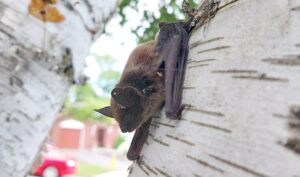
- Bats: Maryland is home to several bat species that love the high, dark corners of chimneys and shutters. Because they are protected species, their removal requires specialized timing and expertise.
- Mice and Rats: In dense urban environments, rodents can squeeze through gaps as small as a dime, contaminating insulation and food supplies.
Understanding these behaviors is the first step toward protection. When wildlife moves in, they don’t just occupy space; they leave behind pheromones, waste, and structural damage that can decrease your property value and threaten your family’s health.
Baltimore’s Wildlife Calendar: A Seasonal Guide
Wildlife activity in Maryland shifts with the Chesapeake Bay’s changing seasons. Understanding these cycles helps property owners anticipate when their homes are most vulnerable.
Baltimore Fall Wildlife Protection Before Winter Moves In
When the first frost reaches the Patapsco Valley, Baltimore’s wildlife starts looking for a warm place to spend the winter. Squirrels, including flying squirrels, push into attics through gaps at the roofline, raccoons test chimneys and loose soffits, and mice and rats work their way in through foundation cracks and utility openings. Homes in Roland Park, Parkville, Perry Hall and Pikesville, especially those near Loch Raven and Gunpowder Falls State Park, often see the first signs: thumping in the attic at night, chewed trim, and droppings in basements or garages.
An animal that settles in during the fall will usually stay until spring, and the damage adds up month by month as insulation is flattened, wiring is chewed and stored food is contaminated. Skedaddle’s humane wildlife control in Baltimore begins with a complete inspection of the roof, vents and foundation, followed by safe removal, cleanup of affected areas and sealing of entry points, so your home is protected before the coldest weather arrives.

Winter: Seeking Shelter
While some animals hibernate, many remain active. During cold snaps, rodents and larger mammals like skunks seek shelter beneath porches, decks, or in crawl spaces. They remain relatively quiet but can cause significant accumulation of waste and odors throughout the winter months.
Spring: The Peak of Activity
Spring is the busiest season for Skedaddle. As temperatures rise, wildlife enters the birthing season. Raccoons and squirrels seek the warmth and security of attics to raise their young. During this time, female raccoons become incredibly determined, often ripping through soffits or roof vents to create a nursery. It is critical to identify if babies are present before sealing entry points; simply blocking a hole can trap young animals inside, leading to structural damage and ethical concerns.
Baltimore Summer Wildlife Protection for Historic Homes and Urban Neighbourhoods
Summer wildlife activity in Baltimore can increase quickly around row homes, older properties, garages, attics and rooflines. Raccoons may target chimneys and soffits, squirrels can enter through small roof gaps, and birds or bats may use vents and exterior openings for shelter. Mice and rats can also become more active near alleys, foundations, sheds and outdoor waste areas when food and cover are available. Homeowners may notice scratching noises, droppings, nesting materials, damaged vents or gnaw marks. Because many Baltimore homes have aging exterior materials and tight urban spaces, small problems can be easy to miss until wildlife is already inside. Skedaddle’s humane wildlife control in Baltimore helps homeowners identify activity, remove animals safely and protect vulnerable areas with long-term prevention. Summer is an important time to inspect rooflines, secure garbage, close gaps and address early warning signs before wildlife damage spreads further into the home.
Why Baltimore Trustworthy Neighbors Choose Skedaddle
When wildlife moves in, you need a local partner who understands unique architecture and uses a proven, humane approach to protect your home and family.
- Deep Local Expertise: We understand how local wildlife interacts with Maryland’s specific building styles. Our technicians are trained to spot the subtle entry points that others miss.
- A “Human-First” Humane Approach: We don’t just “trap and haul.” We use proprietary exclusion methods that keep families of animals together while ensuring they can no longer access your living space. It’s better for the animals and more effective for your home.
- Guaranteed, Long-Term Results: We don’t believe in temporary fixes. Our exclusion work is backed by a lifetime guarantee on the areas we service. If the animals get back through our physical barriers, we’ll return to fix the problem at no cost to you.
- Award-Winning Standards: As pioneers in the humane wildlife industry since 1989, we bring a level of professionalism and safety that has earned us the trust of homeowners across North America.
At Skedaddle, we understand that discovering an intruder in your attic or crawl space is more than just a nuisance; it’s a disruption to your peace of mind. You deserve a solution that is as compassionate as it is effective.
By choosing our team, you’re not just hiring a technician; you’re partnering with local experts who value wildlife and the safety of the people who live here. We take the stress out of the situation by handling every detail, from the initial climb onto your roof to the final cleanup, so you can get back to enjoying your home without the unwanted roommates.
Our Proven Three-Step Humane Process
We follow a thorough, three-step process that ensures a permanent solution to your wildlife problem, protecting both your property and the animals. Unlike traditional “trap and haul” methods that often fail, our approach addresses the root of the problem and restores your home to its original state.
1. Assess & Remove
Every successful resolution begins with a detailed, 50-point inspection of your property. Our technicians don’t just look at the obvious holes; we scale roofs and crawl into attics to identify every current and potential entry point. Once we understand the scope of the infestation, we use species-specific, hands-on removal techniques. For example, during the spring birthing season, we utilize specialized “baby-boxes” to keep wildlife families together, ensuring mothers can safely relocate their young to secondary den sites without causing them harm or leaving them trapped inside your walls.
2. Clear & Clean
Once the animals have “skedaddled,” the real work of protecting your health begins. Wildlife can leave behind hazardous materials such as droppings, urine, and nesting debris, which can harbor parasites like roundworm or lead to respiratory issues like histoplasmosis. Our team performs a comprehensive decontamination of the area, removing soiled insulation and using hospital-grade disinfectants to neutralize bacteria and odors. This step is vital for your family’s safety and prevents the pheromones of previous “tenants” from attracting new animals to your home.
3. Prevent & Protect
A removal is only permanent if the animals can’t get back in. We go beyond simple patches by reinforcing your home’s vulnerable spots like roof vents, soffits, and chimneys with heavy-gauge, galvanized steel screening. This material is specifically designed to withstand the powerful teeth and claws of determined raccoons and squirrels. Because we believe in the quality of our craftsmanship and materials, we back this work with a lifetime guarantee. If a wild animal manages to breach our physical barriers, we’ll return to fix it at no additional cost.

Protecting Your Health: Understanding Wildlife Risks
While seeing a raccoon in a park can be a charming part of Maryland living, having that same animal nesting in your attic or crawl space introduces significant health and safety hazards. Wildlife aren’t just noisy neighbors; they are biological “hitchhikers” that can carry pathogens and parasites into your living quarters. For homeowners, the risks aren’t just about structural damage; they’re about the air you breathe and the surfaces your family touches every day.
Major Health Risks in the Maryland Region:
- Rabies (The Vector Threat): Maryland is a known rabies-endemic state. Raccoons, bats, and skunks are the primary “vector species” here. While actual bites are rare, any physical encounter is a medical emergency. Bats are a particular concern because their teeth are so small that a bite can occur while you sleep without leaving a visible mark.
- Histoplasmosis: This is a serious respiratory infection caused by a fungus that grows in nitrogen-rich soil or organic matter—specifically bat guano and bird droppings. When these droppings dry out in an attic or behind a wall, the spores become airborne. Simply walking through a contaminated space can kick up dust that, if inhaled, leads to flu-like symptoms or even chronic lung issues.
- Leptospirosis: Frequently spread through the urine of rats, mice, and raccoons, this bacterial disease can contaminate surfaces in your basement or kitchen. It poses a particular risk to household pets, who may encounter the bacteria in stagnant water or on contaminated grass near your home’s foundation.
- Raccoon Roundworm (Baylisascaris): Raccoons often create “latrines” (communal bathroom areas) in attics or on flat roofs. Their waste can contain millions of microscopic roundworm eggs. These eggs are incredibly hardy and can survive for years, posing a severe risk to children or pets who might accidentally ingest them.
- Parasites & Fire Hazards: Beyond disease, wildlife brings fleas, ticks, and mites into your home. Furthermore, squirrels and rodents have a biological need to gnaw; in older wood-frame homes, they frequently chew through electrical insulation, creating “arc faults” that are a leading cause of unexplained residential fires.
Secure Your Property Today
At Skedaddle Humane Wildlife Control, we are committed to providing residents with ethical, long-term protection against unwanted wildlife. Our team understands the stress of an infestation, and we take pride in restoring the safety and integrity of your home through our proven humane methods. Trust our local experts to handle your wildlife concerns with the care and permanence you deserve.
Contact Skedaddle Humane Wildlife Control today to schedule your comprehensive 50-point property assessment and keep your home wildlife-free for good
Baltimore Insights
A Rabid Raccoon Entered a Baltimore School: Could One Get Into Your Home?
Can Rats and Mice Move Between Baltimore Rowhouses?