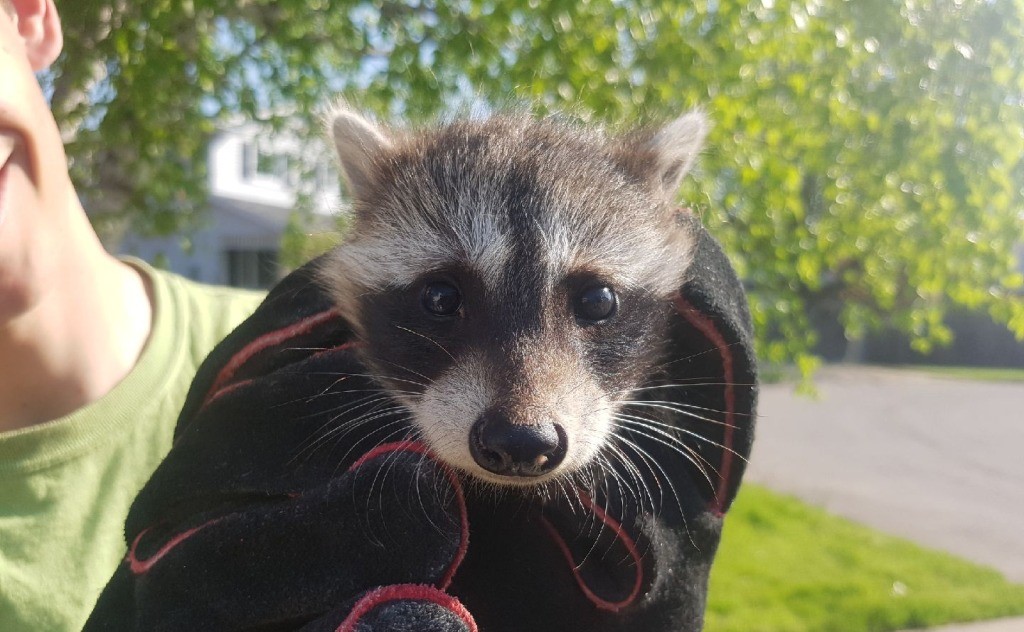
It’s hard not to feel concerned when you see a raccoon that appears to be trapped. Whether it’s stranded in a window well, stuck behind a fence, or unable to find its way down from a roof or ledge, your first instinct is probably to help. That same compassion was on full display when a raccoon stranded on a downtown Toronto building captured the attention of thousands online. As wildlife rescuers worked to safely assist the animal, the story sparked an important conversation about when wildlife actually needs intervention and who should provide it.
In Etobicoke, raccoons are a familiar part of the urban landscape, and encounters with them are common. While some situations require immediate professional assistance, others simply call for patience and careful observation. Knowing the difference can help protect both your family and the animal. In this blog, we’ll explain why raccoons sometimes become trapped, when it’s appropriate to call for help, and how we safely resolve these situations while preventing future wildlife conflicts around your home.
Will a Raccoon Come Back After Being Trapped?
Yes, a raccoon may return to your property after escaping or being safely removed if the conditions that attracted it haven’t changed. Raccoons have excellent memories and are remarkably resourceful, often revisiting places where they previously found food, shelter, or a safe place to raise their young. That’s why resolving the immediate situation is only part of the solution. Identifying how the raccoon accessed your property and preventing future entry is essential for avoiding repeat visits and protecting your home long term.
Not Every Raccoon Needs to Be Rescued
Seeing a raccoon that appears to be stuck can be alarming, but appearances can sometimes be misleading. Raccoons are intelligent, adaptable animals, and what looks like a dangerous situation to us may simply be part of their normal behaviour. Before assuming a rescue is needed, it’s important to understand that wildlife often pauses, rests, or waits for the safest opportunity to move on.
For example, a raccoon perched on a fence, roof, or tree branch may remain in one place for several hours. It could be avoiding people, waiting until nightfall, or simply resting before continuing on its way. Young raccoons may also stay in one location while their mother searches for food, returning later to collect them.
However, there are situations where a raccoon genuinely cannot escape without assistance. Window wells, deep fenced yards, empty swimming pools, chimneys, and construction sites can all become accidental traps. Injuries, illness, or entanglement in netting or other materials can also prevent an animal from leaving on its own.
The recent Toronto raccoon rescue that captured widespread public attention is a good example of why every situation should be assessed individually. Many people wanted to help immediately, but trained wildlife professionals carefully evaluated the animal’s condition before taking action. Their goal was to ensure the safest possible outcome for both the raccoon and everyone involved.
If you discover a raccoon on your property, resist the urge to approach it or encourage it to move. A frightened animal may become defensive if it feels cornered, even if it isn’t naturally aggressive.
Instead, watch for signs that indicate professional assistance may be needed, such as:
- The raccoon has remained in the same location for an unusually long time.
- It appears unable to climb out or escape.
- The animal is visibly injured.
- Baby raccoons are nearby.
- The raccoon has entered your home or another enclosed structure.
When in doubt, it’s always safest to let experienced wildlife professionals determine whether intervention is necessary. In many cases, the best way to help wildlife is by giving it space while trained experts assess the situation.
How Raccoons End Up Trapped Around Homes
Raccoons are exceptional climbers and problem-solvers, but even they can find themselves in situations they can’t easily escape. As they search for food, shelter, or a safe place to travel, they often encounter man-made structures that weren’t designed with wildlife in mind. What begins as simple curiosity can quickly turn into a stressful situation for both the animal and the homeowner.
In Etobicoke, where residential neighbourhoods are surrounded by parks, mature trees, and green spaces, raccoons regularly move between natural habitats and urban environments. Along the way, they may accidentally enter areas that become difficult to leave.
Some of the most common places where raccoons become trapped include:
- Window wells that are too deep to climb out of
- Fully enclosed backyards with high fencing
- Garages that have been left open before being closed
- Chimneys without properly fitted caps
- Attics where damaged roof vents or soffits provided access
- Crawl spaces beneath porches or additions
- Construction sites with open pits or unfinished structures
Mother raccoons can also find themselves in challenging situations while searching for denning locations. During the spring, females look for warm, sheltered spaces to raise their babies, and homes often provide exactly what they’re seeking. If access becomes blocked or they become disoriented while moving between entry points, they may appear trapped even though they’re trying to return to their young.
It’s also important to remember that not every raccoon is trapped because of an injury. Sometimes they’re simply unable to find the same route back out that they used to get in. Other times, new obstacles, such as recently installed fencing, closed gates, or changes to the property, can leave them temporarily stranded.
Understanding how these situations happen helps explain why every wildlife encounter is different. Rather than assuming the animal will eventually find its way out or attempting to intervene yourself, having the situation professionally assessed helps ensure the safest outcome for everyone involved.
Knowing When to Call for Help
Not every wildlife encounter is an emergency, but there are times when calling a professional is the safest course of action. The challenge for many homeowners is knowing the difference between a raccoon that simply needs time to move on and one that genuinely cannot escape. Waiting too long in a true emergency can put the animal at greater risk, while intervening too quickly can create unnecessary stress for both people and wildlife.
One of the clearest signs that professional assistance is needed is when a raccoon has remained in the same location for an extended period without any obvious way to leave. An animal trapped in a window well, tangled in debris, or confined inside a garage or shed is unlikely to resolve the situation on its own.
You should also contact a wildlife professional if:
- The raccoon appears injured or is unable to stand or climb normally.
- It is trapped inside your home, attic, chimney, or crawl space.
- Baby raccoons are present or you suspect a family is involved.
- The animal is tangled in netting, fencing, or other materials.
- The raccoon poses an immediate safety concern for people or pets.
It’s equally important to know what not to do. Approaching a frightened raccoon, attempting to corner it, or trying to encourage it to leave can cause unnecessary stress. Even healthy raccoons may react defensively when they feel threatened, particularly if they are protecting young or have nowhere to retreat.
At Skedaddle, we begin every service call by carefully assessing the situation before deciding whether intervention is necessary. Sometimes the safest solution is allowing the raccoon a clear opportunity to leave on its own. In other cases, professional removal is required to protect both the animal and the homeowners. Every situation is different, which is why an experienced assessment is so important before any action is taken.
What We Do When Responding to a Trapped Raccoon
Every trapped raccoon situation is unique, which is why we never assume the same solution will work for every call. Our first priority is to carefully assess what has happened, determine whether the animal is truly trapped, and identify any risks to both the raccoon and the homeowners. Sometimes what appears to be an emergency simply requires patience, while other situations call for immediate professional action.
If intervention is necessary, we use humane techniques that minimize stress on the animal while keeping everyone involved safe. Our team also looks beyond the immediate problem to understand why the raccoon became trapped in the first place. This allows us to address the underlying issue rather than simply resolving the current situation.
Our assessment may include:
- Determining how the raccoon entered the area.
- Checking whether the animal has a safe route to leave on its own.
- Looking for signs that a mother raccoon has babies nearby.
- Inspecting the surrounding structure for additional wildlife activity.
- Identifying entry points that need to be secured.
When baby raccoons are involved, the situation requires even greater care. During spring and early summer, mothers often leave their young temporarily while searching for food. If a mother becomes separated from her babies because she cannot reach them safely, we work to reunite the family whenever possible. Keeping wildlife families together is always our preferred outcome when circumstances allow.
Once the immediate situation has been resolved, our work isn’t finished. We inspect the home for vulnerable areas that may have attracted the raccoon in the first place and recommend long-term exclusion solutions to help prevent future wildlife conflicts. By focusing on both removal and prevention, we help homeowners avoid repeat encounters while allowing wildlife to continue living where it belongs.
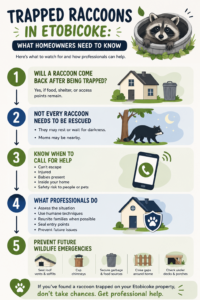
Preventing Future Wildlife Emergencies Around Your Property
While it’s impossible to control where raccoons travel, there are many ways to make your property less likely to become an accidental destination. Most raccoon emergencies don’t happen by chance. They usually begin with an accessible shelter, an easy food source, or an opening that has gone unnoticed for months. By addressing these vulnerabilities early, homeowners can significantly reduce the chances of another wildlife encounter.
Homes naturally change over time. Weather, aging building materials, and seasonal wear can create new gaps along the roofline or foundation that weren’t there the year before. These small changes are often all a curious raccoon needs to begin exploring your home.
Some of the most common problem areas include:
- Damaged soffits or roof vents
- Loose fascia boards
- Uncapped chimneys
- Gaps around roof intersections
- Worn garage door seals
- Spaces beneath decks, porches, or additions
- Accessible crawl spaces
Food can also encourage raccoons to spend more time around your property. Overflowing garbage bins, fallen fruit, bird feeders, and pet food left outdoors can all make a yard more appealing. While removing attractants won’t stop every raccoon from passing through, it can discourage them from lingering or investigating your home more closely.
At Skedaddle, prevention is a key part of every service we provide. Once a raccoon has been safely removed, we identify the entry points and vulnerabilities that allowed the situation to happen in the first place. By professionally sealing access points and strengthening weak areas of the home, we help homeowners reduce the likelihood of future wildlife emergencies and enjoy greater peace of mind year-round.
Lessons From Toronto’s “Raccoon Rescue”
When a raccoon became stranded on the ledge of a downtown Toronto building, thousands of people followed the story online, hoping for a positive outcome. Photos and videos spread quickly across social media as concerned residents watched wildlife rescuers carefully work through the situation. It was a reminder of just how much people care about the well-being of the wildlife that shares our cities.
The story also highlighted an important lesson: not every wildlife emergency has an immediate or obvious solution. From the outside, it can be difficult to tell whether an animal is truly trapped, temporarily resting, or waiting for the safest opportunity to move. Acting too quickly without understanding the situation can sometimes make things more stressful for the animal.
Professional wildlife responders don’t simply rush in. They take time to evaluate the animal’s behaviour, its surroundings, and the safest way to achieve the best possible outcome. Every situation is different, and the response should reflect that. A raccoon stranded on a building ledge requires a different approach than one trapped in a window well, inside a garage, or in an attic.
The Toronto rescue also showed the value of patience. While many people wanted an immediate resolution, wildlife professionals understood that carefully assessing the situation first was essential. Their goal wasn’t simply to remove the raccoon, but to ensure the animal could be helped safely without creating additional risks.
At Skedaddle, we take the same thoughtful approach every time we respond to a wildlife call in Etobicoke. We understand that homeowners want to help, and we share that same commitment to protecting wildlife. By carefully assessing each situation, using humane removal techniques when necessary, and focusing on long-term prevention, we help create outcomes that are safer for both homeowners and the raccoons that live alongside us.
Frequently Asked Questions
How can I tell if a raccoon is actually trapped?
It isn't always obvious whether a raccoon is trapped or simply resting. A raccoon that remains in the same location for many hours, appears unable to climb or move normally, or is confined in a place like a window well or garage may need professional assistance. If you're unsure, it's best to keep your distance and have the situation assessed rather than attempting to intervene yourself.
Will a trapped raccoon become aggressive?
Raccoons generally prefer to avoid people, but any wild animal that feels frightened, cornered, or unable to escape may react defensively. This doesn't mean the raccoon is naturally aggressive; it's simply trying to protect itself. Giving the animal space and avoiding direct interaction helps reduce stress while allowing wildlife professionals to determine the safest way to resolve the situation.
What should I do if I find baby raccoons?
If you discover baby raccoons, avoid touching or moving them. Mother raccoons frequently leave their young alone while searching for food and usually return once they feel it is safe. However, if the mother cannot reach her babies because she has become trapped or separated, professional assistance may be needed. We always work to reunite raccoon families whenever it is safely possible to do so.
Why do raccoons keep coming back to my property?
Raccoons return to places where they consistently find shelter, food, or easy access to a den site. If openings around your roof, soffits, vents, or foundation remain unprotected, they may continue investigating your home even after a previous encounter. Long-term prevention focuses on identifying and securing these access points so wildlife is less likely to return in the future.
Who should I call if I find a raccoon trapped on my property?
If a raccoon appears injured, cannot escape, has entered your home, or has been stranded for an extended period, contact a professional wildlife control company as soon as possible. At Skedaddle, we carefully assess every situation before deciding on the safest course of action. Our goal is to protect both homeowners and wildlife while helping prevent similar situations from happening again.
Compassion Starts With the Right Response
Finding a raccoon that appears to be trapped can be upsetting, but the best thing you can do is stay calm and let trained professionals assess the situation. While some raccoons simply need time to find their way, others may require expert assistance to safely escape. Knowing the difference helps protect both your family and the wildlife that shares your neighbourhood.
At Skedaddle, we believe every wildlife situation deserves a thoughtful, humane approach. From assessing whether intervention is necessary to safely removing raccoons, reuniting mothers with their babies whenever possible, and securing your home against future entry, we focus on solutions that protect everyone involved.
If you’ve found a raccoon trapped on your Etobicoke property or are concerned about wildlife around your home, we’re here to help. Contact Skedaddle Humane Wildlife Control today to schedule a professional assessment and let us help you resolve the situation safely while preventing future wildlife conflicts.

 Loading...