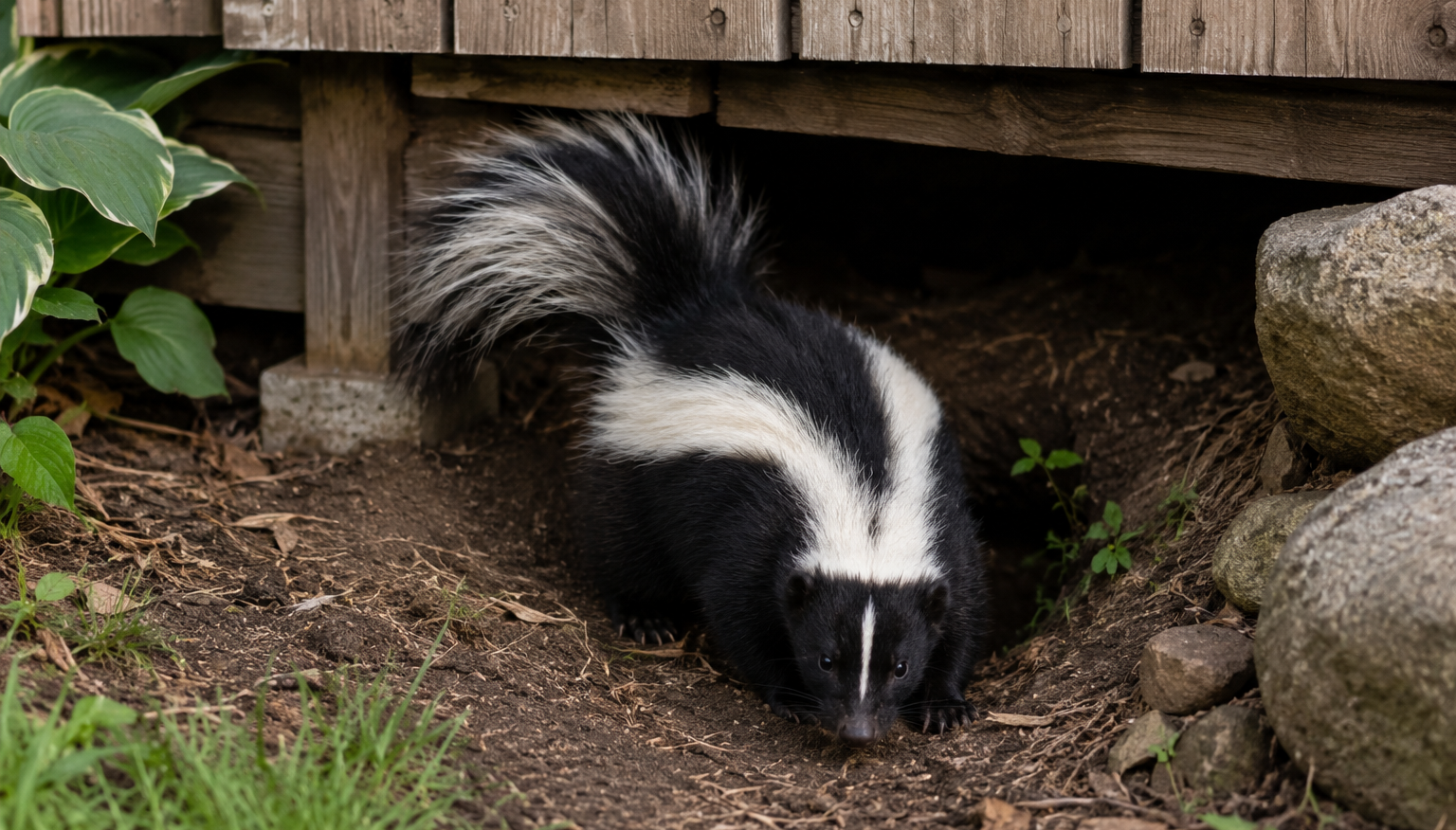
Something living under your deck is more common than most homeowners realize and it’s almost always a raccoon, skunk, groundhog, or mouse that’s found exactly what it was looking for. The space under a deck is dark, sheltered, close to the ground, and usually undisturbed for long stretches of time. That combination makes it one of the most attractive denning spots on any residential property.
You might notice a smell, see fresh dirt along the edge of your deck, or hear movement at night and not be sure what’s causing it. These are all signs that something has moved in and the longer it goes without being addressed, the more established the animal becomes. What starts as one animal can turn into a family with young in a matter of weeks, especially during spring and summer.
At Skedaddle Humane Wildlife Control in Columbus, Ohio, we respond to under-deck situations regularly throughout the year. In this blog, we walk you through which animals are most likely denning under your deck, what the signs look like, why you should never seal the opening right away, and what our team does to remove them and make sure the space can’t be used again.
Do Raccoons Dig Under Decks?
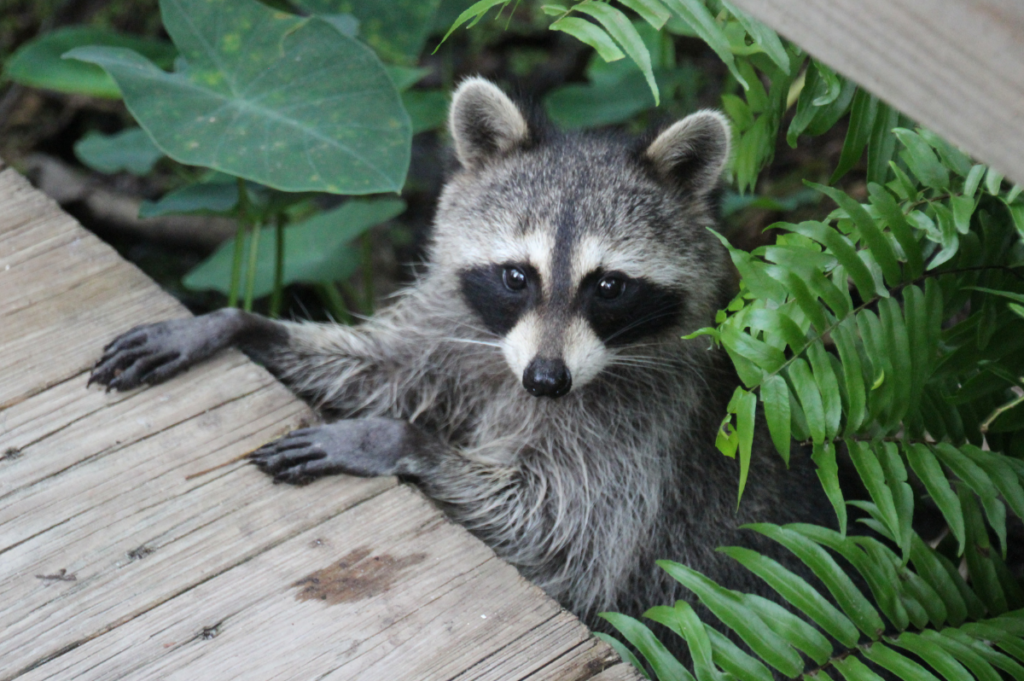
Yes. Raccoons do dig under decks, and they do it more often than most people expect. These animals are strong diggers and will work their way under a deck by moving soil along the perimeter until they’ve created enough space to get underneath. Once inside, the dark, sheltered space feels very safe to them, especially to a female looking for a place to raise her young.
Raccoons aren’t the only ones digging though. Skunks are powerful diggers too, and they’ll create entrance holes along the edge of a deck that are easy to mistake for simple erosion. Groundhogs dig even more aggressively – they can move large amounts of soil quickly and create burrow systems that extend well under the structure. In each case, the digging is a sign of an established den, not just a passing visit.
Finding a hole dug along the base of your deck is one of the clearest signs that something has moved in underneath. Do not try to fill or block the hole before our team has assessed the situation. If an animal, or a family of animals, is still inside when the opening gets sealed, the situation becomes much harder and more expensive to resolve. Call our team first and let us determine what’s there before anything gets closed off.
Common Animals That Den Under Decks, Porches, and Sheds
Several types of wildlife regularly use the space under decks, porches, and sheds as a denning site. Here’s what our team finds most often in Columbus-area properties:
- Raccoons: Raccoons look for dark, dry, sheltered cavities to rest and raise their young and the underside of a deck or porch fits perfectly. They’re most active in spring and summer when females are raising kits, and a mother raccoon that has settled under your deck is very protective of the space. They can cause significant damage to lattice, skirting, and soil around the structure as they move in and out.
- Skunks: Skunks are one of the most common under-deck animals in Columbus. They dig entrance holes along the perimeter, often in the softest soil they can find, and settle in for weeks at a time. Even without spraying, they produce a musky odor that becomes noticeable near the den. A skunk under your deck during spring almost always means young are present or on the way.
- Groundhogs: Groundhogs are aggressive burrowers that can move large amounts of soil very quickly. Their burrows extend deep under structures and can undermine the soil that supports your deck’s footings over time. A groundhog den under a deck or shed is one of the more structurally damaging wildlife situations our team encounters and it needs to be addressed before the excavation causes real problems.
- Mice and Rats: Mice and rats use tiny gaps along the base of a deck, particularly around ledger boards and foundation contact points, to get underneath and potentially into the wall cavities of the home. They don’t dig the way raccoons or groundhogs do, but they find and use existing gaps very effectively. A mouse or rat den under a deck is often connected to activity inside the home as well.
Signs Something Is Living Under Your Deck
Most homeowners don’t know something is under their deck until the signs become hard to ignore. Here’s what to look for:
- A Musky or Pungent Odor Near the Deck: A persistent smell near your deck, especially in the morning, is one of the first signs of an active den. Skunks produce a musky odor even without spraying, and raccoon and groundhog dens also develop a noticeable smell over time as droppings and urine accumulate. If you notice an unexplained odor near the base of your deck, call our team before investigating on your own.
- Fresh Digging Along the Perimeter: A defined burrow hole or piles of freshly moved soil along the edge of your deck are a clear sign that something has dug its way underneath. These holes are usually circular, a few inches wide, and surrounded by loose dirt. Do not attempt to fill or block the hole – call our team to confirm what’s inside before taking any action.
- Damaged Lattice or Chewed Skirting: Torn or pushed-aside lattice panels and chewed wooden framing around the base of the deck are signs of forced entry. These animals push through or chew weak points in deck skirting to get underneath. Fresh damage – where the wood looks raw or the lattice is recently bent – means the entry is still being used actively.
- Nighttime Movement and Sounds: Scratching, shuffling, or heavy movement sounds heard after dark are a strong indicator of activity under the deck. Raccoons and skunks are mostly nocturnal, so nighttime sounds near the base of the structure are worth paying attention to. If the sounds are consistent and happen around the same time every evening, something is almost certainly denning underneath.
- Tracks Near the Deck Entrance: Muddy or soft soil near the base of the deck sometimes shows visible tracks. Raccoon tracks look like small human handprints. Skunk tracks are smaller with claw marks visible at the front. Groundhog tracks are wide and flat. Any of these near a burrow hole confirm active use and are a clear reason to call our team.
Why You Should Never Block Access Right Away
Finding a hole or entry point under your deck can make it very tempting to seal it right away. But blocking access before our team has assessed the situation is one of the most common mistakes homeowners make and it almost always makes things worse.
If an animal is still inside when the opening gets sealed, it gets trapped. A trapped animal will work very hard to find another way out – sometimes digging through soil, chewing through wood framing, or pushing into the home itself. A mother with young is even more persistent. She will not leave her young behind, and her effort to get back in can cause significant damage to the deck structure and surrounding soil.
If young get sealed inside without the mother, they don’t survive, which leads to serious odor problems that are very difficult to address without opening up the structure. The timing of any exclusion work also matters a great deal. During baby season, which runs from early spring through late summer in Ohio – young animals are often present and unable to leave on their own. Our team checks for young before any work begins, which is the only way to handle the situation humanely and without creating a secondary problem.
The Damage These Animals Can Cause Under a Structure
The longer these animals den under your deck, the more damage accumulates. Here’s what our team looks for when assessing under-deck situations:
- Soil Displacement and Foundation Undermining:
Groundhogs in particular can remove significant amounts of soil from under a deck in a short period. This displacement can destabilize the soil around deck footings and supports – leading to shifting, settling, and structural movement over time. Even smaller burrowers like skunks cause soil erosion along the perimeter that gets worse season after season if the den isn’t addressed. - Structural Damage to Wood and Lattice: Chewing, scratching, and repeated movement in and out of the den site damages wood framing, lattice panels, and deck skirting. These animals also bring nesting material under the deck – leaves, debris, and insulation, which traps moisture against wood surfaces and accelerates rot. A den that’s been active for more than one season often leaves visible wood damage that needs to be assessed and repaired.
- Contamination from Droppings and Urine: Droppings and urine accumulate under the deck wherever animals have been active. Raccoon droppings in particular carry parasites that are harmful to humans. Do not attempt to clean up any contaminated area yourself – this work needs to be done by our professional team with the right protective equipment. Call us and let us handle the full assessment and cleanup process.
Why the Space Gets Reused If It Isn’t Properly Secured
Removing the animals from under your deck is only part of the job. If the space isn’t properly secured after they leave, the same spot will be used again – either by the same animal coming back, or by a new one that finds it the next season. These animals leave behind scent marks that draw other animals to the same location. That’s why simply waiting for them to go doesn’t solve the problem.
Blocking the hole with a rock or a board won’t cut it either. These animals are strong diggers and won’t give up easily. They’ll work around a basic barrier until they find a way back in. The only solution that works long-term is a full perimeter exclusion using materials they can’t chew through, dig through, or pull apart and that’s exactly what our team installs after removal is complete.
We use heavy-gauge galvanized steel mesh along the full perimeter of the deck, buried at an outward angle underground so animals can’t tunnel back under from the sides. This stops re-entry from every direction – not just the most visible spot. Combined with our one-way door process, which confirms all animals have left before the mesh goes in, it creates a complete and lasting fix.
Under Deck Wildlife in Columbus, Ohio
Columbus’s mix of older neighborhoods, green spaces, and suburban yards makes it a busy area for under-deck wildlife activity year-round. Raccoons and skunks are common across the city and its surrounding communities. Spring through late summer is the busiest time of year for denning under residential structures. Homeowners in areas like Westerville, Hilliard, Gahanna, and Dublin all see regular activity, but the problem shows up all over the city.
Ohio’s cold winters push animals toward sheltered spaces earlier and harder than milder climates do. A deck that gets used as a winter shelter in January is very likely to become a spring maternity den in March or April, especially if the space wasn’t properly secured after the first visit. This seasonal pattern is one of the main reasons Columbus homeowners often deal with the same spot being used over and over again.
Older Columbus properties with wood deck skirting, worn lattice, and soft soil along the perimeter are at higher risk than newer construction. These conditions are easy for wildlife to work with, and they can go unnoticed for years before a homeowner realizes the space has been in regular use. Our team works across Columbus and knows exactly what to look for in the area’s most common home styles.
Wildlife Removal and Prevention with Skedaddle
When wildlife has moved in under your deck, the right response is to call our team at Skedaddle Humane Wildlife Control. We handle under-deck situations with a clear process that covers every part of the problem. Here’s what that looks like:
- Checking for Babies Before Any Work Begins: Baby season in Ohio runs from early spring through late summer and during this time, young animals are often present in dens under decks and sheds. Our team checks for young before installing any exclusion devices. Starting removal before confirming that young can leave on their own creates a situation that’s much harder to fix. We never skip this step.
- One-Way Doors for Humane Removal: We install one-way door systems at active entry points that let animals leave the den on their own without being able to get back in. This approach is humane and effective, and it doesn’t require trapping or relocating animals. Once we’ve confirmed that all animals have exited, including any young, we move to the exclusion phase.
- Trenching and Mesh for Permanent Exclusion: After the den is confirmed empty, we install heavy-gauge galvanized steel mesh along the full perimeter of the deck, buried at a 90-degree outward angle underground. This stops animals from tunneling back under from any direction. We also seal gaps in the skirting and repair damaged lattice as part of a complete exclusion that holds up over time and doesn’t need to be redone every season.
Frequently Asked Questions
How do I know if there are babies under my deck?
You may hear higher-pitched sounds - squeaking or chirping - coming from under the deck, especially in the evening. You may also notice that the adult animal is very persistent about getting in and out of the same spot. Our team checks for young as the first step of every under-deck job.
Is it safe to let my kids or pets near the deck if something is living under it?
No. Keep children and pets away from the base of the deck until our team has assessed and resolved the situation. These animals can carry parasites and disease, and a mother protecting young may act defensively if approached or cornered.
Can these animals damage my deck's foundation?
Yes, especially groundhogs, which are aggressive burrowers that can remove significant amounts of soil from around deck footings. Even smaller animals like skunks cause erosion along the perimeter over time. The longer a den is active, the more the surrounding soil and structure are affected.
Will the animals leave on their own if I wait?
Unlikely. Animals don't abandon a den that feels safe and works for them, especially during baby season when young are present. Waiting gives the situation more time to become established and harder to resolve. Call our team as soon as you notice the signs.
What if I already blocked the hole before calling?
Call our team right away. If the hole was blocked recently and animals were still inside, we need to assess the situation urgently. A trapped animal is a more complicated and more urgent problem, but it's one our team can handle safely if you reach out immediately.
How long does the full removal and exclusion process take?
It depends on the size of the structure and whether young animals are present. Most jobs are completed within one to two visits. Our team will give you a clear timeline before any work begins so you know what to expect.
Something Is Under There, Let’s Find Out What and Fix It for Good
A wildlife problem under your deck doesn’t fix itself. These animals find a spot that works for them and stay, sometimes through multiple seasons, causing damage to soil, wood, and the structure above them the whole time. The sooner you act, the smaller and simpler the problem stays.
Don’t try to seal the opening yourself, and don’t wait to see if they leave on their own. Both of those responses tend to make things worse. A trapped animal causes more damage trying to get out, and an animal that leaves on its own will come back because the space is still open and still smells like home to them.
The right move is to call our team, let us assess what’s there, and handle the full process from removal to exclusion. We check for young before any work begins, use one-way doors to remove animals humanely, and install permanent mesh exclusion so the space can’t be used again.
Our team at Skedaddle Humane Wildlife Control in Columbus, Ohio gets under-deck problems fully resolved, not just temporarily managed. Contact us today to request an estimate and find out how we can help.

 Loading...







