A quick scratching sound interrupts your morning coffee. Later, you hear movement above the hallway ceiling. When the sounds return the next day, you start wondering whether something has moved into the attic.
For homeowners in Delaware, Ohio, recurring daytime noises can be a reason to investigate possible squirrel activity. Roofline damage, repeated entry into an opening, and nesting evidence may offer additional clues.
Before sealing a gap or disturbing materials, arrange an assessment of suspected activity. Understanding what is inside, where access is occurring, and which repairs are needed helps protect your home while allowing humane removal to proceed appropriately.
What are the most common signs that squirrels are in my attic?
Common signs include recurring daytime scratching or scurrying, squirrels repeatedly entering a roofline opening, gnawed soffits or vents, and gathered nesting materials. Droppings or disturbed insulation may also warrant investigation. These clues do not reveal the full situation on their own, so arrange a professional inspection before sealing suspected entrances or disturbing materials.
Listen for Recurring Daytime Noises
Scratching, rustling, and quick movement above a ceiling can be among the first signs of concealed animal activity. You might hear a brief scurry over one room, followed by silence, or notice sounds returning in the same area each morning.
Common tree squirrels are generally active during daylight hours. That makes timing a useful detail to share during an inspection. However, daytime sounds alone cannot confirm squirrels or establish how many animals are present.
Other wildlife and household systems can produce noises, too. Plumbing, mechanical equipment, and building materials may create sounds that seem to originate overhead.
Record details such as:
- The time of day you hear movement.
- How often the sounds return.
- Whether they last seconds or longer periods.
- Which rooms seem most affected.
- Any accompanying sightings or exterior damage.
Sound travels through framing and other building materials. The location where it seems loudest may not be directly beneath the source, so listening alone cannot reliably identify an entrance or nesting area.
A short recording can help describe what you are hearing, but it does not replace assessment. Avoid opening a ceiling or repeatedly banging on it to investigate. Instead, share the pattern with a professional who can consider the sounds alongside visible evidence and the building’s layout.
Look for Roofline Damage and Possible Entrances
After noticing unexplained ceiling sounds, a safe exterior check may reveal areas that deserve closer inspection. Focus on visible roofline components from the ground rather than climbing onto the roof.
Soffits are the surfaces beneath roof overhangs. Fascia runs along the roof edge, often where gutters attach. Damage to these components, vents, or roof intersections may create access to concealed spaces.
Look for:
- Displaced or missing soffit panels.
- Gnawed edges around an opening.
- Loose fascia or damaged roof-edge coverings.
- Broken or shifted vent covers.
- Gaps where roof sections meet walls or additions.
Squirrels may exploit deterioration or enlarge a vulnerable opening. However, damage can also result from weather, moisture, or ordinary wear. Its appearance alone does not prove that an animal is currently inside.
Photograph visible concerns and note their locations. A zoomed photograph can help you communicate details without approaching an elevated opening.
Routine deterioration needs suitable repair, but suspected occupancy changes the sequence. If you have seen squirrels entering the area or heard recurring sounds nearby, arrange wildlife assessment before a contractor closes it.
The most obvious damage may not be the only concern. A professional inspection can consider adjoining materials and other potential entrances, helping prevent a repair to one spot from leaving another access route unresolved.
Watch for Repeated Entry Rather Than Roof Visits Alone
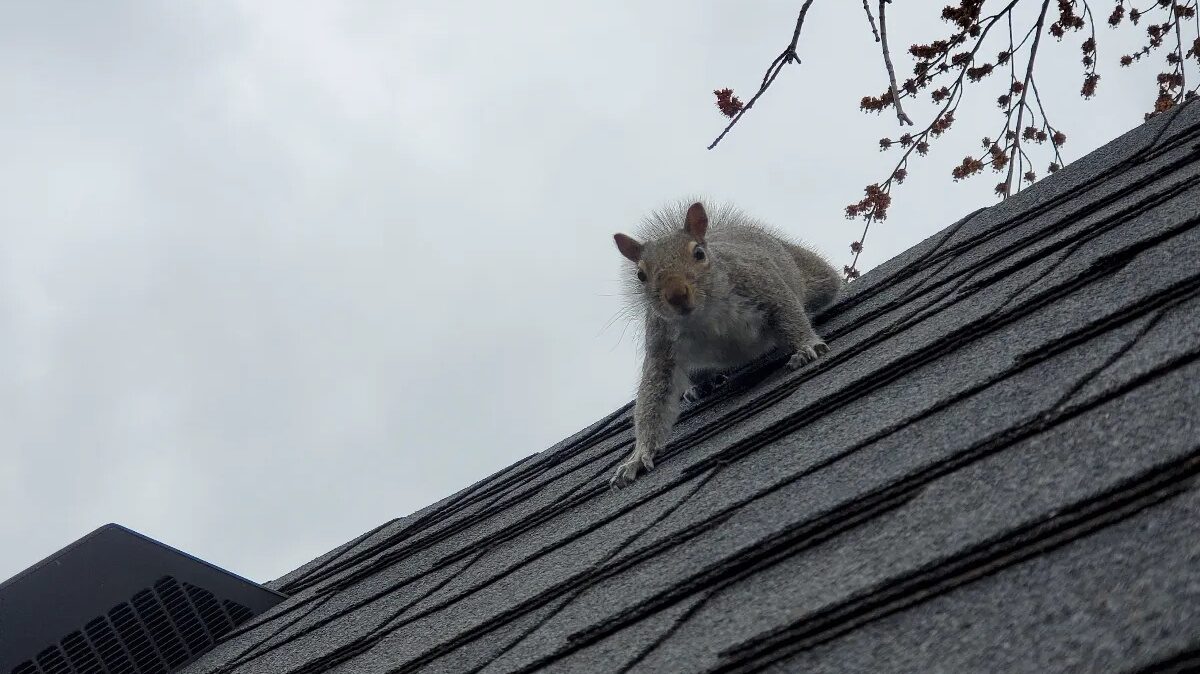
Seeing a squirrel on your roof can be unsettling after hearing ceiling noises. Still, a rooftop visit does not necessarily mean the animal has moved inside. Squirrels may cross buildings as they travel through an area.
Repeatedly seeing one disappear into the same opening is a stronger reason to investigate. The pattern connects exterior activity with a potential entrance, although it still does not reveal everything happening inside.
Useful observations include:
- A squirrel entering or emerging from a roofline gap.
- Repeated activity at the same soffit corner or vent.
- An animal carrying material toward an opening.
- Activity returning after earlier repairs.
- Indoor sounds occurring near the same area.
Watch from a safe distance and record dates, times, and locations. Avoid approaching an animal, interfering with its route, or attempting to block the entrance as a test.
A squirrel leaving temporarily does not establish that the space is empty. Other occupants or dependent young may remain inside. Similarly, the number of squirrels you see outdoors cannot determine total occupancy.
Nearby branches may provide a convenient route to the roof, but removing that route alone does not repair an opening. An assessment should consider access to the building itself and any evidence of current use.
These observations help guide an inspection without requiring you to decide independently whether removal or repairs are needed.
Recognize Possible Nesting Activity and Interior Damage
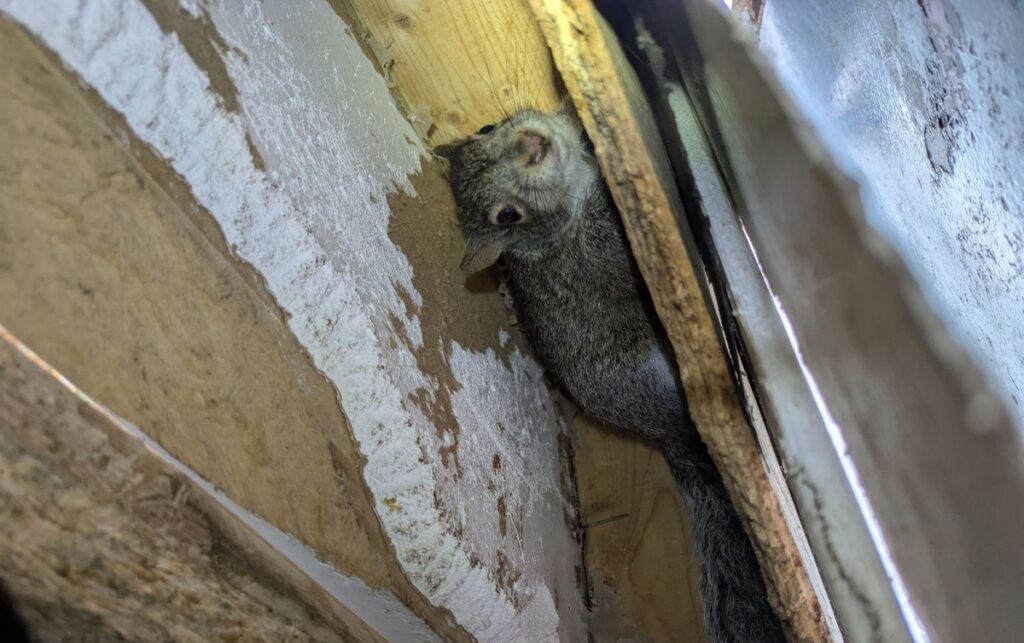
Evidence inside an attic may provide further information about activity. Gathered leaves, twigs, paper, or other materials can suggest nesting, particularly when found in a sheltered location.
Disturbed insulation, droppings, and gnawed materials also warrant assessment. However, these findings can have different causes, and individual signs should not automatically be attributed to squirrels.
If you have already noticed concerns during a safe, routine visit, share them with the technician:
- Materials gathered into a concentrated area.
- Insulation that appears disturbed or displaced.
- Droppings near stored belongings.
- Gnawed wood or other building materials.
- Damage around an interior opening.
You do not need to enter the attic to collect evidence before calling for help. Attics may have limited footing, concealed hazards, and affected materials that should not be disturbed.
Avoid moving suspected nests, reaching into concealed spaces, or cleaning unknown waste without appropriate guidance. Photograph only what you can safely observe.
Squirrel activity can affect insulation and other building components. Gnawing can also damage wiring, although a sighting alone does not establish that electrical damage has occurred. If damaged wiring is discovered, a qualified electrician should assess it.
A wildlife inspection helps evaluate the signs and identify relevant activity. Building or electrical repairs may require additional qualified professionals, depending on what is found.
Understand What a Professional Inspection Can Reveal
A professional inspection brings together observations that may otherwise seem unrelated. Morning scratching, a damaged soffit, and a squirrel seen near the roof may form part of the same situation, or they may have separate explanations.
The assessment considers accessible exterior and interior evidence, the building’s construction, and the locations where activity has been reported. It can help identify the species involved, signs of occupancy, and relevant access points.
Questions an inspection helps answer include:
- What animal is responsible for the activity?
- Which areas show evidence of use?
- Where is access occurring?
- Could dependent young be present?
- What removal and repair steps are appropriate?
- Are additional vulnerabilities visible nearby?
Possible dependent young need to be considered rather than ruled out solely by the season. Their presence affects how humane removal should proceed.
An inspection also helps distinguish the opening first noticed from other concerns. For example, a damaged vent may be visible from the driveway while another roof transition requires closer evaluation.
Not every concealed condition can be established from a quick exterior look. Further investigation may be appropriate when access is limited or evidence is incomplete.
At Skedaddle Humane Wildlife Control, assessment helps guide a plan suited to the property and the activity found. It gives homeowners a clearer understanding of what needs attention and how humane removal can be coordinated with prevention.
Coordinate Humane Removal With Entry-Point Repairs
Removing squirrels and repairing their access points address different parts of the problem. Removal deals with current occupancy, while appropriate exclusion helps prevent entry or re-entry.
These steps need to follow the right sequence. Closing a suspected occupied opening too soon can trap animals inside or separate an adult from dependent young. Seeing one animal leave is not enough to confirm that permanent sealing can begin.
A coordinated plan may involve:
- Assessing occupancy and relevant entrances.
- Accounting for dependent young when present.
- Completing appropriate humane removal.
- Repairing or securing identified openings.
- Addressing surrounding vulnerabilities.
- Explaining maintenance that supports prevention.
Durable protection must suit the component involved. Soffit repairs, fascia work, vent protection, and roof-transition repairs may require different materials and installation methods.
Necessary building functions must remain intact. Ventilation openings should be protected appropriately rather than indiscriminately blocked, and underlying deterioration may need suitable building repairs.
Skedaddle’s approach considers both the animals using the space and the access conditions that could allow the problem to return. Addressing one visible entrance may leave other vulnerabilities unresolved, so the broader findings matter.
Afterward, maintain repaired components and check for new damage following storms, renovations, or service installations. Continued care supports exclusion work and makes future concerns easier to identify before another animal gains access.
Frequently Asked Questions
Does daytime scratching always mean squirrels?
No. Daytime activity is a useful observation, but it cannot identify the cause alone. Other animals, plumbing, and mechanical systems can produce noises above ceilings. Recurring sounds should be considered alongside sightings, damage, and other evidence during an inspection before deciding what removal or repair work is appropriate.
Does a squirrel on the roof mean it is living in the attic?
A squirrel crossing the roof does not establish indoor occupancy. Repeated entry into a specific opening provides a stronger reason for assessment, especially when accompanied by ceiling sounds or damage. Record what you observe from a safe distance and share the pattern rather than trying to block the animal’s route.
Can I seal an opening after I see a squirrel leave?
Have suspected active entrances assessed before permanent closure. The animal may be leaving temporarily, and other squirrels or dependent young may remain inside. Coordinating humane removal and repairs helps prevent trapping occupants or separating adults from young while addressing the openings that could allow future access.
Do I need to enter the attic before calling Skedaddle?
No. Recurring sounds, exterior photographs, and observations of possible entry are enough to request an assessment. Homeowners should not enter unsafe spaces or disturb suspected nests to gather proof. A professional can determine which areas need inspection and whether further access is appropriate based on the available evidence.
How do entry-point repairs help prevent another squirrel problem?
Appropriate repairs and exclusion secure identified entrances using materials suited to the building. Assessing nearby vulnerabilities also helps address potential alternative routes. Continued maintenance remains important because deterioration, storms, renovations, or service work can create new openings after the original problem has been resolved.
Investigate the Sounds Before Closing the Opening
Recurring daytime noises, roofline damage, repeated entry, and possible nesting evidence deserve attention. Together, these observations can help guide an inspection, even when they do not reveal the full situation on their own.
Before closing a suspected entrance, arrange assessment so humane removal and repairs can be coordinated. That approach helps protect the building without trapping animals inside.
Contact Skedaddle Humane Wildlife Control serving Delaware, Ohio, for a professional inspection and a squirrel-removal and prevention plan suited to your home. Understanding the activity is the first step toward addressing it appropriately this fall.

 Loading...