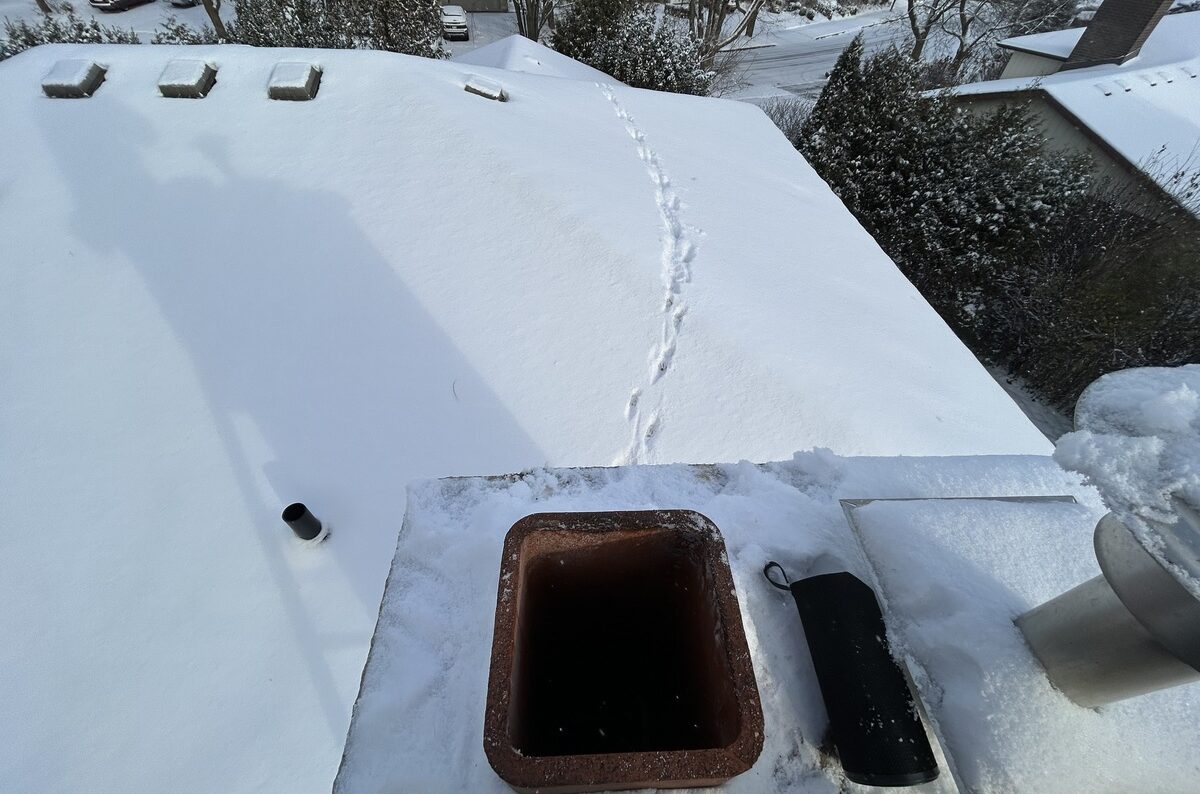
You may find raccoon tracks that show where a visitor crossed the yard, approached food, or moved toward a building. Clear footprints can help identify likely activity, while a trail may reveal part of a regular route. However, tracks alone cannot prove that a den is present or that anything has entered your home.
Prints noticed in the morning may suggest a nighttime visit, but they do not establish exactly when the movement occurred. Rain, snowmelt, and the surface beneath the feet can also change their appearance. Several marks may come from one visitor crossing the area more than once.
At Skedaddle Humane Wildlife Control in Columbus, Ohio, we compare tracks with damage, waste, sounds, and access points. You should not follow a trail beneath structures, climb, touch droppings, or block a suspected entrance. We explain what footprints can reveal, where they may appear, and how our professional assessment helps establish what is using the property.
What Do Raccoon Tracks Look Like Around a House?
Clear raccoon tracks feature five slender toes, giving them a distinct hand-like appearance. The hind footprint is typically longer than the front print, and sharp claw marks often register in soft ground. While walking sequences, mud, and uneven surfaces can easily distort or smudge these details, comparing multiple prints helps confirm their unique features and identify wildlife activity across your property.
The Surface Changes How Clearly a Visit Is Recorded
The same foot can leave different-looking marks on mud, snow, or a hard surface. Ground conditions affect how much detail remains, while weather can change a print after it is made. Our team considers those conditions before interpreting the shape, size, or apparent route.
- Mud and Damp Soil: Suitable soft ground can record toes, pads, and part of the walking pattern. Very wet or deep mud may also distort the shape as the foot sinks or slides. A deep impression does not reliably establish the visitor’s weight. We compare several marks and their surface conditions before drawing conclusions.
- Snow: Snow may reveal a route that would otherwise be hard to notice. Melting can enlarge or blur individual prints, while fresh snowfall can cover earlier marks. The trail may therefore show movement without preserving clear foot details. Our assessment accounts for those changes rather than treating snow as a perfect record.
- Dusty or Dirty Hard Surfaces: A patio, step, or other hard surface may hold only a partial footprint. Some toes or pads may leave a mark while other parts do not register. A smudge can suggest contact without providing enough detail for identification. We assess it alongside clearer evidence where available.
- Muddy Marks on Building Features: Dirt transferred to a wall edge or climbing feature may suggest contact with the building. The mark can be smeared rather than shaped like a complete footprint. Its presence does not prove that entry occurred at that location. Our professionals assess higher surfaces and check where the possible route leads.
Track Locations Can Point Toward Different Activities
Where prints appear can provide useful context about a visit. A trail near disturbed food raises different questions from marks beside a damaged panel. Our team checks the surrounding evidence rather than assigning a purpose from the footprints alone.
- Near Garbage or Outdoor Food: Prints beside scattered scraps or a disturbed container may support evidence of feeding. The connection is stronger when the route leads to the affected area. It still does not establish where the visitor rests or whether it enters a building. We assess other food sources and relevant access points nearby.
- Along Fences, Trees, and Yard Edges: A trail may follow connected features through the property and continue into another yard. These routes can support movement without providing shelter on your land. Several prints along a fence do not automatically mean regular den use nearby. Our team considers the route’s connections before recommending property work.
- Beside Decks, Garages, or Building Openings: Tracks near a structure deserve comparison with its condition and available access. The visitor may pass beside it, explore beneath it, or use an opening. Proximity alone cannot distinguish those possibilities. We inspect the route and relevant space to establish whether occupancy is involved.
A Trail Suggests Movement, Not a Complete Story
A sequence of clear prints may help establish the path taken across a surface. Partial marks can leave uncertainty about direction or where the route ends. Hard ground may interrupt the trail entirely.
Even a clear path cannot reveal the visitor’s purpose by itself. Movement toward a deck may involve shelter, food, or a route past the structure. The tracks need to be compared with what is found at the destination.
Our team follows relevant connections during the inspection. You should not pursue a trail beneath a deck, into a crawl space, or onto the roof. We assess those areas and explain which findings support the conclusion.
Morning Footprints Do Not Establish the Hour of a Visit
Raccoons are often active at night, but they can also move during daylight. Prints first noticed in the morning may have been present before the previous evening. The time you find them is not necessarily the time they were made.
Weather affects how long tracks remain visible. Rain can blur details, while drying soil may preserve some marks and change others. Snowmelt can also make a print look larger or less defined.
Sightings and sounds noticed during normal use of the home may provide more timing context. You can tell us when those observations occurred without approaching the route. Our team compares that information with physical evidence rather than assigning an exact age to the tracks.
Several Prints Do Not Automatically Mean Several Visitors
One visitor can cross the same area repeatedly and leave many footprints. Steps may overlap or form several routes through the same patch of ground. Counting marks therefore does not establish how many individuals used the property.
Front and hind prints also differ in shape and size. Those differences should not automatically be interpreted as separate occupants or evidence of young. Mud and melting snow can create further variation.
Our team assesses the broader pattern and other signs of occupancy. Tracks may help guide the investigation without providing a reliable population count. We explain what the evidence supports and where uncertainty remains.
Other Signs Help Explain What the Route Means
Footprints become more useful when they are compared with nearby activity and physical findings. Damage, waste, and indoor sounds may add context, but each still needs assessment. Our team connects those clues before deciding whether the property requires removal, cleanup, or exclusion.
- Disturbed Food and Containers: Scattered food or moved containers near a trail may support a feeding connection. The disturbance could be part of a repeated visit or an isolated event. It does not prove that a den exists on the property. We compare the location with other activity rather than treating the food area as the resting place.
- Damaged Panels or Roof Materials: Shifted covers, torn soffits, and disturbed edges may provide possible access. Weather wear or loose supports can also contribute to that damage. Tracks nearby do not automatically establish that the opening is currently used. Our team checks the connection with sheltered spaces and evidence of occupancy.
- Droppings Near the Route: Waste near a trail deserves professional assessment and should remain untouched. Its location may reflect a regularly used waste area without identifying a den. Appearance alone does not show when it was left or how many visitors are involved. We assess the evidence and explain appropriate professional cleanup needs.
- Sounds From Connected Spaces: Thumping or scratching inside an attic, wall, or crawl space may suggest indoor activity. Building materials can carry noise away from its source and change how it sounds. Outdoor tracks and indoor noise must still be connected through inspection. Our team assesses both rather than assuming that one explains the other.
An Outdoor Visit Is Different From an Occupied Building
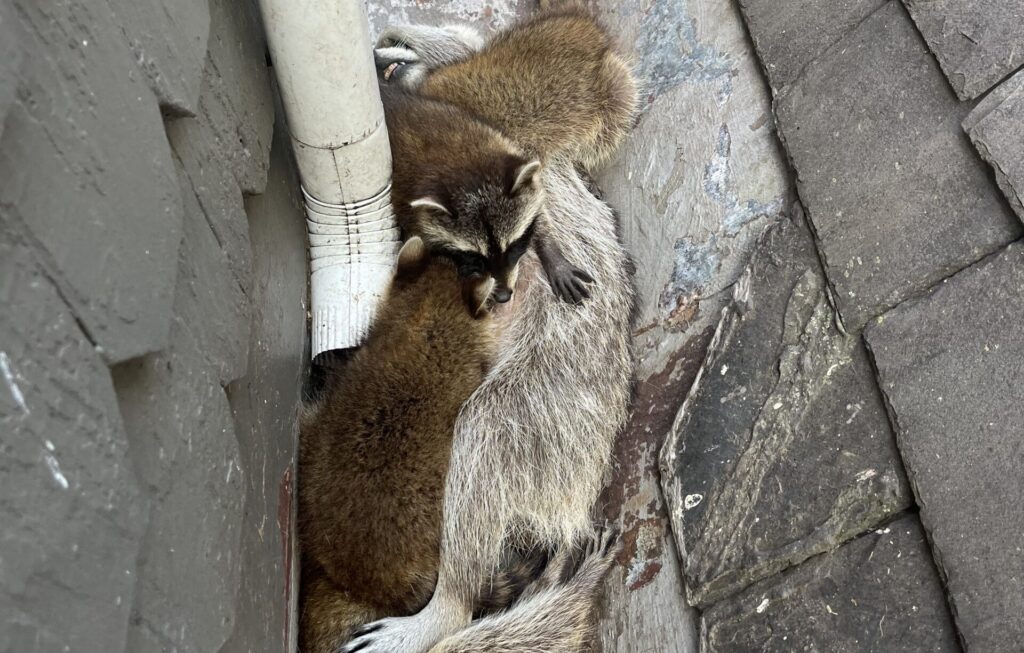
Confirmed movement across the yard does not automatically require removal from the home. A visitor may feed or pass through without using any building space. The first task is to establish whether shelter is occupied.
Repeated use of an opening, evidence inside, and the presence of dependent young affect the plan. A footprint near a doorway cannot answer those questions. Even several visits may involve movement outside rather than indoor entry.
Our team assesses the relevant space before recommending exclusion. A suspected route should not be sealed simply because tracks appear to lead toward it. Occupancy and safe removal needs must be considered first.
A Professional Inspection Checks Beyond the Footprints
Our inspection aims to establish likely identity, property use, and the work needed. Track details are one part of that assessment rather than the final answer. We also explain any limits caused by incomplete marks, inaccessible areas, or uncertain connections between signs.
- Compare Clear and Partial Marks: Several prints can provide more information than one isolated smudge. Their shape, arrangement, and surface conditions help guide identification. Some details may remain too incomplete to support a firm conclusion. Our team states that uncertainty instead of presenting every hand-like mark as confirmed raccoon activity.
- Assess Entry Points and Shelter: Relevant deck, garage, roofline, and crawl-space areas may need inspection when evidence points toward them. A weakness can require prevention without being an active entrance. A confirmed route may also connect with a space beyond outside view. We assess those distinctions before recommending work.
- Check Occupancy and Dependent Young: Quiet conditions do not confirm that a sheltered space is empty. One adult leaving also does not establish that every occupant has departed. Dependent young may remain unable to travel or use an exit independently. Our humane removal approach accounts for those needs before permanent closure.
- Assess Damage and Cleanup Needs: Affected insulation, nesting material, or waste may require professional attention if occupancy is confirmed. The extent of the work depends on the findings rather than the track count. Structural concerns may also need another qualified professional. You should leave hidden spaces and affected materials untouched while we assess them.
Columbus Conditions Affect Which Tracks Remain Visible
Rain-softened soil can reveal prints that were not visible during dry conditions. Snow may also record movement, while warmer temperatures can quickly change the details. Track visibility varies with weather and the surface available.
Columbus yards may include mature trees, shared fences, detached garages, and nearby green spaces. Those features can shape routes through a property. Their presence does not prove that an attic, deck, or garage is occupied.
Our team assesses the individual building and surrounding evidence. An older home and a newer property may have different vulnerabilities or no confirmed entry at all. The plan follows the actual findings rather than the neighborhood or age of the structure.
Turn the Evidence Into a Humane Plan with Skedaddle
Our professional wildlife team assesses tracks alongside access, occupancy, and other evidence. Raccoon removal is recommended when the findings establish a problem requiring it. Outdoor footprints alone do not determine that decision.
Where suitable, our one-way doors allow wildlife to leave but prevent re-entry. Dependent young and occupants unable to exit independently must be accounted for first. Permanent protection follows confirmation that the occupied space is clear.
Our team assesses professional cleanup and sanitation needs, then secures relevant access routes. We explain what each part of the work addresses. At Skedaddle Humane Wildlife Control in Columbus, the plan is based on the property findings rather than one trail.
Frequently Asked Questions
Do tracks beside a house prove attic entry?
No, tracks beside a house may show ground-level movement or a passing visit. Their location does not establish access to the roof or attic. Damage and indoor evidence need separate assessment. Our team checks whether the route connects with an occupied space.
Can rain make a footprint harder to identify?
Yes, rain can soften, smear, or erase parts of a print. Some details may remain while the features needed for identification disappear. The mark may therefore suggest movement without confirming the source. We consider weather and surface conditions when interpreting the evidence.
Does a large print mean a large visitor?
Not necessarily, because mud, sliding, and snowmelt can change apparent size. A foot may leave a longer impression when it moves through soft ground. One print is therefore not a reliable measure of weight or body size. Our assessment compares several clues before drawing conclusions.
Does the absence of tracks mean visits have stopped?
No, hard or dry surfaces may record little evidence of movement. Rain or other activity can also remove earlier marks. A lack of visible prints does not confirm departure from an occupied space. Other signs and the property inspection remain important.
Get the Visit Assessed Before Assuming a Den
You may find tracks that help reveal movement toward food, cover, or a building. Clear prints can guide identification, while their location can suggest a route worth assessing. They cannot establish exact timing, visitor numbers, or indoor shelter by themselves.
Damage, waste, repeated use of an opening, and indoor sounds provide additional context. You should not follow trails into hidden spaces, climb, touch droppings, or block a suspected entrance. A quiet opening does not prove that all occupants have left. Our team compares the evidence before deciding what work is needed.
At Skedaddle Humane Wildlife Control in Columbus, Ohio, we assess the property and explain what the findings support. We complete humane removal when needed, handle professional cleanup, and secure vulnerable access routes. The response addresses confirmed occupancy and prevention needs rather than assuming every footprint means a den. Contact us to schedule a professional assessment or request an estimate to learn more.

 Loading...