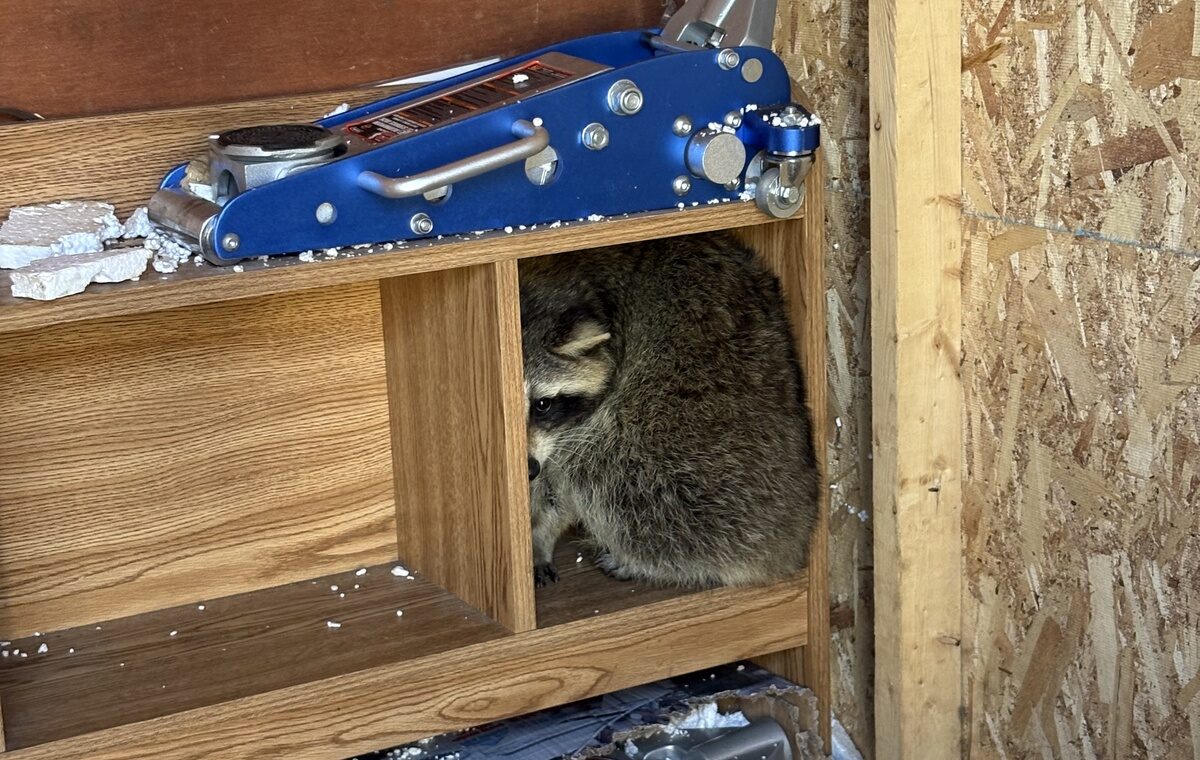
You may see your shed or detached garage as storage, but it can offer food and shelter. Seed and pet food provide meals, while cardboard and clutter offer nesting material. Door gaps, damaged walls, roof edges, and open spaces below the structure can provide entry.
You may not notice a problem right away because an outbuilding is often used less than the main house. Scratching sounds, damaged packages, droppings, stains, or strong odours may appear only after activity has spread through stored belongings. Regular visits to the same door, roof edge, wall gap, or sheltered space beneath the building can also point to an entrance.
At Skedaddle Humane Wildlife Control in London, Ontario, we inspect the building and property for you. Do not touch droppings, move nesting material, climb, crawl below the structure, or seal an opening. In this blog, we explain common attractants, warning signs, and our humane removal and prevention process.
What Attracts Wildlife to a Shed or Garage?
Food, water, nesting material, quiet hiding places, and protection from harsh weather can attract wildlife to a shed or garage. Bags of seed, pet food, garbage, cardboard, fabric, insulation, and stored belongings may all make the space useful. If the structure also has an entry gap, mice, rats, raccoons, squirrels, or skunks may begin using it.
A detached building may be appealing because people enter it less often than the main home. Activity can remain hidden behind equipment or boxes. These animals may also move between the building, yard, garbage area, and house.
One sighting does not prove occupancy. Concern grows when visits focus on one area or when sounds, droppings, damage, or odours appear. We connect those signs with the entrance and nesting area.
Stored Food Can Draw Activity to the Building
Sheds and garages often contain strongly scented products. Once these animals find a steady food source, they may return and explore nearby shelter.
- Birdseed and Grass Seed: Mice, rats, or squirrels can damage paper and thin plastic bags. Loose seed may collect behind shelves or equipment, allowing hidden feeding. Our team checks torn packages and scattered seed along with droppings, nesting material, and entry routes.
- Pet Food: Its scent may draw attention before visible damage appears. Mice and rats can reach low storage, while raccoons may use a larger gap. A visitor may feed in the garage but shelter elsewhere, so we assess the wider route.
- Garbage and Recycling: Food residue and stored waste can bring repeat activity close to the building. Raccoons may focus on containers, while mice and rats use spills or damaged packages. Signs around a door or wall can help us identify access.
- Garden and Seasonal Products: Seed packets, bulbs, and dried produce may remain stored for months. Damage can begin on the hidden side of a package. Leave contaminated products in place until our team assesses the area.
Cardboard and Clutter Create Protected Nesting Areas
An outbuilding may remain quiet for long periods. Stacked belongings create dark spaces and protected routes where movement stays hidden.
- Cardboard Boxes: Cardboard offers cover and material for a nest. Damage may begin beside a wall or beneath another box, with droppings or shredded pieces nearby. Do not open or move an affected box before our inspection.
- Seasonal Decorations: Fabric, wreaths, cushions, and holiday items may remain untouched for months. Mice and squirrels can use these materials when an entrance is available. We inspect the area without asking you to sort contaminated belongings.
- Tools and Building Materials: Wood, insulation, tarps, and renovation supplies form covered spaces between stacks. Chewed items may show that activity extends beyond one corner. We document the damage and determine what requires professional removal or cleanup.
- Crowded Floors and Shelves: Equipment, tires, cabinets, and clutter can limit visibility. A nest may remain hidden until sounds or odours appear. Our inspection follows the evidence without requiring you to disturb the space.
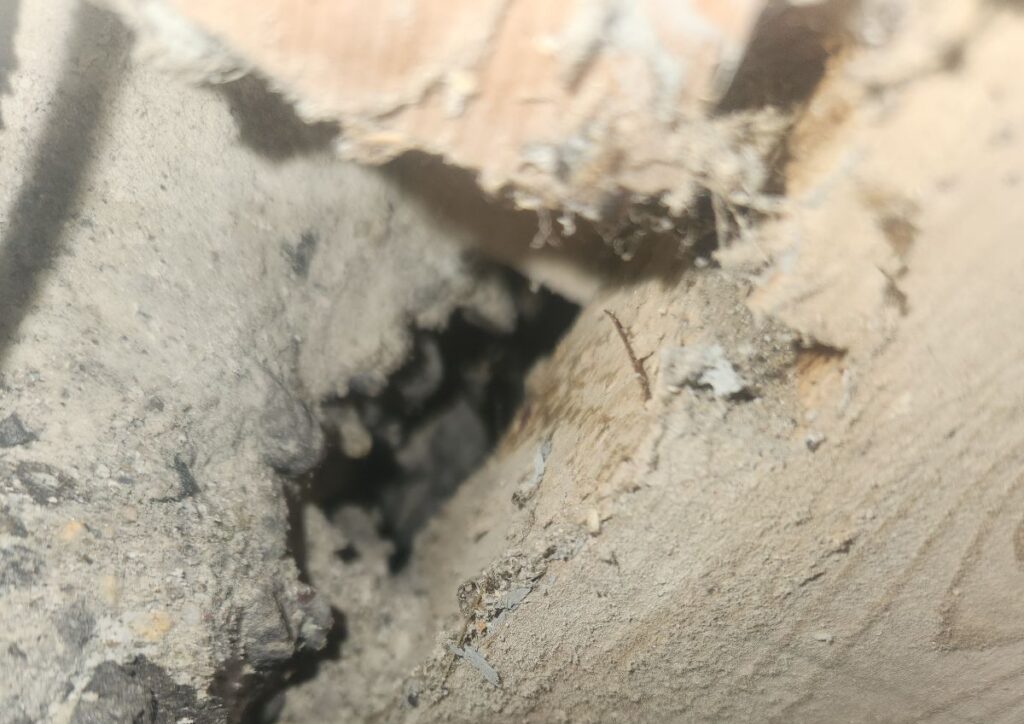
Structural Gaps Make Entry Easier
An indoor problem still requires a usable entrance. Worn materials, weather damage, and construction gaps can provide one.
- Gaps Beneath Doors: Uneven floors, worn seals, and poorly closing doors may leave space along the bottom. Mice need a very small opening, while larger gaps can admit rats or other visitors. We inspect the whole frame rather than one section.
- Damaged Walls and Siding: Loose boards, cracked panels, worn trim, and wall joints can provide entry. A narrow gap may connect with a larger hidden space. We check for occupancy before permanent exclusion begins.
- Roof Edges and Vents: Squirrels and raccoons can reach upper areas using trees, fences, or nearby structures. Loose fascia, soffits, vents, and roof joints may provide access. Do not climb onto the roof; our trained team can inspect it safely.
- Shelter Beneath the Building: A raised shed may leave a dark space below it. Skunks, raccoons, rats, and mice may use an open edge, and dependent young may remain hidden. Do not crawl underneath or block access before we confirm the space is empty.
Why Detached Structures Can Hide Activity Longer
A shed or garage may go weeks without regular use, allowing sounds and movement to continue unnoticed. Unlike your main home, these spaces may remain quiet for long periods between visits. Activity may become clear only after you notice strong odours, damaged storage, droppings, or marks near a wall. By then, the problem may have spread beyond the first nesting area.
Unfinished framing, insulation, rafters, shelves, and cabinets provide many hidden routes through an outbuilding. These animals may travel behind stored items or inside wall and ceiling spaces without being seen. Droppings or damage can appear far from the original opening. Our technicians inspect the whole structure to connect the indoor signs with the exterior entry point.
The same visitor may travel between the garage, garbage area, yard, shed, and main house. It may feed in one location while using another space for shelter. This movement can make one damaged package or visible gap seem like the full problem when it is only one part of a larger route. We examine the entire property before creating a professional removal and prevention plan.
Seasonal Conditions Change How Outbuildings Are Used
Weather and breeding periods can change how raccoons, squirrels, mice, and rats use a shed or garage. A dry, quiet structure may become more appealing when rain, wind, heat, or cold makes outdoor shelter less reliable. Existing door, wall, roof, and foundation gaps may then become active entrances. Activity can also return when the same seasonal conditions happen again.
During spring and summer, raccoons and squirrels may search for protected places where their young can remain hidden. Wall spaces, rafters, cabinets, and areas beneath sheds may provide shelter when an opening is available. Dependent young may stay inside even when the adult leaves to find food. Our professionals must locate the full family before humane removal begins.
Fall and winter may increase interest in stored materials, enclosed walls, garages, and sheltered spaces beneath sheds. Mice and rats can use small gaps near doors and siding, while larger visitors may enter through wider openings or damaged roof areas. Snow or cold weather does not mean the structure is empty. Activity can occur during any season, so our team relies on physical evidence rather than the time of year alone.
Signs the Shed or Garage May Be Occupied
Scratching, running, gnawing, or heavier movement may come from walls, rafters, cabinets, or beneath the floor. Framing and enclosed spaces can carry noise away from the true entrance or nesting area. A sound near one wall may begin in another part of the structure. We compare the timing and location of those sounds with physical evidence found during our inspection.
Droppings, stains, disturbed insulation, damaged packages, chewed materials, and strong odours may point to indoor activity. Some signs may remain hidden behind equipment or stored belongings until the problem has grown. You should not touch, sweep, vacuum, or clean affected materials because doing so can disturb contamination. Our technicians determine which areas require professional cleaning, sanitizing, or damaged material removal.
Repeat visits near one door, vent, roof edge, wall gap, or opening beneath the building can provide an important exterior clue. One outdoor sighting does not prove occupancy, but continued attention to the same feature deserves professional assessment. The visible opening may also connect with a larger hidden space inside. We match the exterior route with the indoor evidence before creating a humane removal and prevention plan.
Sheds and Detached Garages in London, Ontario
London has a mix of established neighbourhoods, newer developments, wooded areas, parks, and properties near the Thames River. These connected spaces allow mice, rats, raccoons, squirrels, and skunks to move between natural areas and residential streets. A shed or detached garage may become useful when it offers food, nesting material, or an opening into a quiet space.
Seasonal weather can also affect activity around London properties. Heavy rain, summer heat, cold temperatures, and winter snow may make dry outbuildings more appealing. Older garages may have worn doors, damaged siding, or roof gaps, while raised sheds can provide sheltered spaces underneath.
You should not enter a contaminated outbuilding, handle droppings, move nesting material, or block a suspected entrance. Our professional team can inspect the walls, doors, roofline, storage areas, and space beneath the structure. At Skedaddle Humane Wildlife Control in London, Ontario, we identify the active route and create a humane removal and prevention plan for your property.
Wildlife Removal and Prevention with Skedaddle: What to Know
Our professional wildlife team begins with a detailed inspection of the outbuilding and surrounding property. We check doors, walls, siding, roof edges, vents, utility openings, storage areas, and sheltered spaces beneath the structure. You do not need to move contaminated belongings, climb, or crawl below the building.
We identify the species, active entrance, occupied area, damage, nesting material, and presence of dependent young. We also assess droppings, stains, odours, and affected materials without asking you to touch or clean anything. These findings guide a humane plan suited to the building and the activity present.
When appropriate, our one-way doors allow wildlife to leave but prevent re-entry. After the space is empty, our technicians complete professional cleaning and sanitizing where required and secure vulnerable openings with durable materials. This complete process addresses the current occupants and the conditions that allowed entry.
Frequently Asked Questions
Can mice get into a closed garage?
Yes, because a closed garage door does not protect the building when gaps remain beneath it or around walls, vents, siding, and utilities. Mice can enter through very small openings that may be difficult to notice during a quick look. Once inside, they can travel behind storage, cabinets, or wall materials before leaving visible signs. Our professional team inspects the full structure and traces indoor evidence back to the entry point.
Why do raccoons keep visiting my detached garage?
A raccoon may be following a regular route or returning because the property offers food, water, or shelter. Visits near the same door, roof edge, soffit, or vent may point to an opening, but general movement across the yard does not confirm entry. Indoor sounds, damage, staining, and odours provide stronger evidence. Our technicians determine whether the garage is being used or simply crossed during outdoor travel.
Can squirrels live in a shed?
Yes, when the structure provides an opening and a protected place for a nest. Squirrels may reach upper gaps by using branches, fences, nearby roofs, or other raised features. Cardboard, fabric, and insulation inside the shed may provide useful nesting material. A professional must also check for dependent young before any exclusion work begins.
What causes a strong odour in an outbuilding?
Waste, urine, nesting material, damp contamination, or long-term hidden activity may create an unpleasant smell. Air can carry the odour through walls, cabinets, flooring, and stored belongings, so the strongest spot may not reveal the source. Opening walls or moving contaminated items can expose you to further risk. Our team locates the affected area and determines the proper professional cleanup plan.
Should an opening beneath a shed be blocked?
No, not before a professional confirms that the area is empty. Skunks, raccoons, rats, mice, or dependent young may remain beneath the building, and closing their active route could trap them. The visible opening may also be only one of several access points. Humane removal must happen before our technicians complete permanent exclusion work.
Keep Your Outbuildings From Becoming Shelter
Stored seed, pet food, garbage, cardboard, clutter, door gaps, roof damage, wall openings, and sheltered spaces beneath a building can make your shed or garage useful to wildlife. Quiet conditions may allow activity to remain hidden until you notice sounds, droppings, odours, or damaged belongings. Repeat visits to one part of the structure can provide another important warning sign.
You should not enter a contaminated space, handle waste, move nesting material, climb onto the roof, crawl beneath a shed, or seal a suspected entrance. Our team identifies the species, route, occupied area, and possible presence of dependent young. Humane removal must take place before cleanup and permanent exclusion begin.
At Skedaddle Humane Wildlife Control in London, Ontario, we handle inspection, removal, professional cleanup, and long-term prevention for you. Our team examines the outbuilding and the wider property so the plan addresses more than one visible sign. Contact us to schedule a professional assessment or request an estimate to learn more about keeping your shed or detached garage protected.

 Loading...