Before the first snow arrives in Hilliard, property owners have plenty to tackle. Clearing leaves and preparing outdoor spaces may top the list, but the soffits, vents, and roof edges above you deserve attention, too.
A loose panel or damaged vent cover can create an opening into sheltered building spaces. For homeowners and business owners alike, fall is a useful time to identify these concerns and arrange appropriate repairs.
Use this checklist to understand what to look for and when to call a professional. If an opening may already be occupied, have it assessed before sealing it. The right sequence helps protect your property while preventing animals from being trapped inside.
How do squirrels prepare for winter?
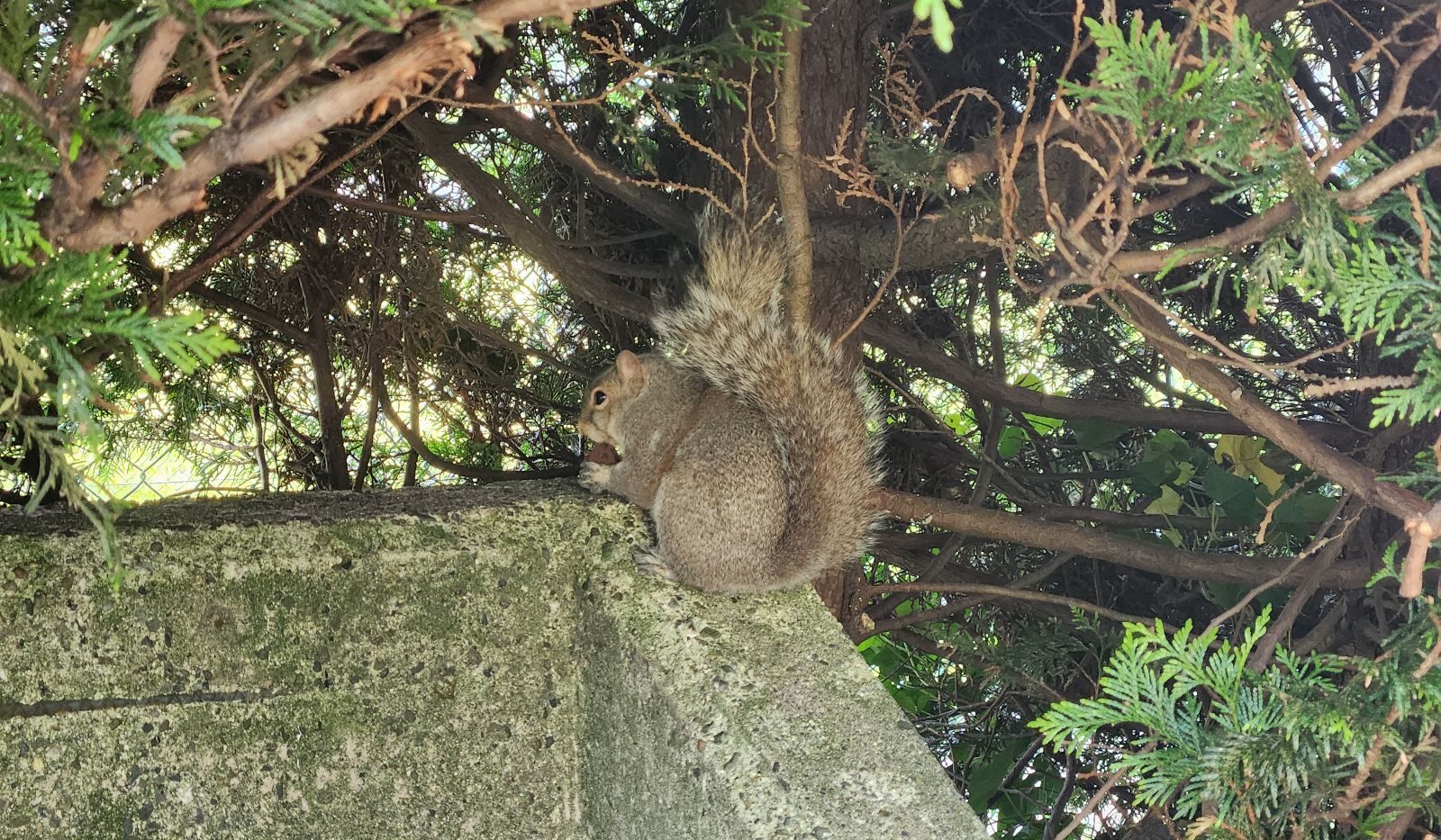
Tree squirrels prepare for winter by gathering food, storing supplies, and maintaining sheltered nests. They remain active rather than hibernating, although severe weather can limit their movements. An accessible attic or roof cavity may offer shelter, making fall a useful time to inspect exterior damage and have suspected entry points assessed before sealing.
Check Soffits Beneath Roof Overhangs
Soffits are the surfaces beneath your roof overhangs. They help finish and protect this part of the building, and some incorporate ventilation. Because they sit overhead, damage can go unnoticed until a panel shifts or activity becomes audible inside.
Start with observations from the ground. Walk around the property and look for irregularities beneath the eaves. Binoculars or a zoomed photograph can help you document visible concerns without climbing.
Look for:
- Loose, sagging, or displaced panels.
- Missing sections that expose the space above.
- Gaps where soffits meet walls or adjoining materials.
- Damaged seams and corners.
- Gnawed edges around an opening.
Pay particular attention to roof intersections and corners. Their construction can make gaps difficult to see from one position, so viewing the area from another safe location may help.
These checks apply to homes, offices, storefronts, and other buildings with overhangs. A damaged soffit may connect with an attic or another concealed space, depending on the structure.
Ordinary deterioration calls for suitable maintenance. However, squirrels repeatedly entering the area, recurring chewing, or sounds nearby change the next step. Arrange a wildlife assessment before a contractor closes the opening.
An intact-looking panel beside a damaged section does not establish that the space is empty. Occupancy needs to be considered before permanent repairs begin.
Inspect Fascia and the Areas Behind Gutters
Fascia is the board or covering along the roof edge, often where gutters are attached. It can be affected by moisture, loose fittings, and general deterioration. Gutters may also hide damage behind or beside them.
From ground level, examine visible roof-edge surfaces and corners. Look for separation, loose coverings, or materials that appear damaged. These observations help identify areas requiring a closer professional inspection.
Questions to consider include:
- Are fascia joints visibly separating?
- Is wood deteriorating at exposed corners?
- Are coverings loose or missing?
- Do gutters appear loose or misaligned?
- Has chewing returned after an earlier repair?
Moisture-related damage requires attention to its cause as well as the affected material. Replacing a damaged board without addressing the surrounding maintenance issue may leave the area vulnerable to further deterioration.
Animal damage and ordinary wear can occur in the same location. Gnawed edges may suggest wildlife activity, but they cannot establish whether the space is currently occupied.
If you suspect squirrel access, coordinate the repair with a professional wildlife assessment. The opening should be evaluated before new fascia or coverings close it.
For business owners, share concerns with the person responsible for building maintenance. A photograph and clear location description can help ensure that the repair team understands the possibility of occupancy before work starts.
Review Vents and Protective Covers
Vents are necessary building components, but damaged housings or protective covers can leave openings. Attic and roof vents deserve attention during a fall inspection, particularly if parts are loose, missing, or visibly disturbed.
Different vents perform different jobs. An attic ventilation opening, a plumbing vent, and a commercial exhaust outlet cannot all be protected in the same way. Any repair must preserve the component’s function.
Visible concerns include:
- Missing or displaced covers.
- Broken housings or loose attachments.
- Damaged screening.
- Gnawed material around the vent.
- Nesting material near an opening.
Avoid attaching improvised mesh or filling openings without understanding the system. Inappropriate protection can restrict airflow, interfere with exhaust, or complicate servicing.
A suitable cover or guard needs to match the vent and be installed securely. Commercial equipment may require coordination with the building’s maintenance provider or another qualified professional.
If squirrels appear to be entering a vent, or you hear recurring activity nearby, have the area assessed before replacing the cover. Animals may be using a connected cavity that is not visible from outside.
The goal is to protect the opening while keeping it operational. That requires attention to both wildlife access and building performance. A properly planned repair accounts for the vent’s purpose rather than treating every opening as a gap to plug.
Follow Roof Edges, Intersections, and Building Additions
Individual soffits and vents are important, but the connections between building sections also deserve inspection. Where a roof meets a wall, dormer, or addition, several materials come together. Separation or damage at these transitions may create an access concern.
Complex rooflines can contain areas hidden from a straightforward view. Commercial buildings with attached structures or multiple roof sections may have similar inspection challenges.
Areas for professional evaluation may include:
- Roof-to-wall intersections.
- Edges around dormers.
- Connections between additions and the original building.
- Loose trim at roof transitions.
- Damaged materials along concealed roof edges.
Property owners can document visible problems, but a ground-level walkthrough has limits. Avoid climbing onto the roof to finish the checklist. Elevated inspection and repairs should be handled by appropriately trained professionals.
Nearby branches are another consideration. They may provide convenient routes to the roof, although squirrels can also climb building surfaces. When pruning is appropriate, use a qualified tree care professional.
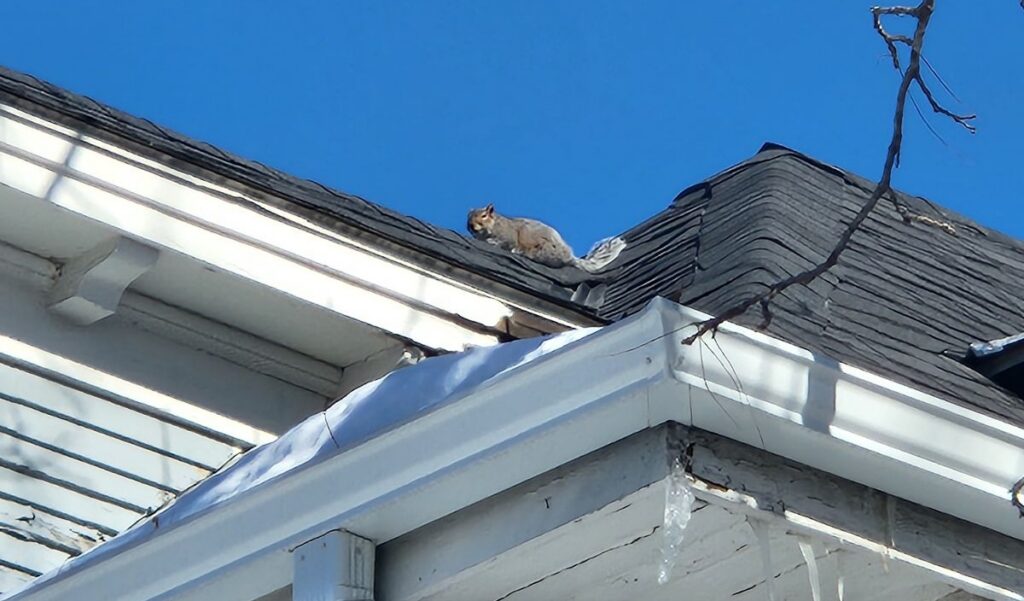
Reducing convenient roof access supports prevention, but it does not repair an existing entrance. Likewise, seeing squirrels move across a branch or rooftop does not prove they are inside.
Focus on the building’s condition and any repeated entry behavior. Together, these observations help determine which areas need assessment and what maintenance will meaningfully improve protection.
Recognize Signs an Opening May Be Occupied
A visible opening can look like a straightforward repair until activity suggests animals may be using it. Recognizing that possibility is essential before anyone closes the space.
Repeatedly seeing a squirrel enter or emerge from the same opening is a clear reason to seek assessment. Other observations, such as scratching sounds or gnawed edges, can help guide the inspection but do not identify the full situation alone.
Record concerns such as:
- Squirrels disappearing into a roofline opening.
- Repeated movement at the same soffit or vent.
- Recurring scratching or scurrying sounds.
- Gnawing that returns after repairs.
- Nesting material near a suspected entrance.
Note the location, date, and approximate time. Photographs taken from a safe distance may help communicate what you have seen.
A squirrel crossing the roof does not establish indoor occupancy. Conversely, a quiet opening does not establish that the space is empty. Animals may be inside without being visible during your observation.
Dependent young are another consideration. Their possible presence needs assessment rather than an assumption based on the calendar. Closing an entrance can separate an adult from young that cannot leave independently.
At businesses, encourage staff to report repeated roofline activity to a designated contact. People entering from different sides of a building may notice signs that others miss.
Do not test occupancy by blocking the entrance. Have a professional assess suspected activity before sealing or replacing the affected component.
Coordinate Humane Removal With Lasting Prevention
When an opening may be occupied, squirrel-proofing begins with assessment. The repair itself is only one part of the process.
Premature sealing can trap animals inside or prevent an adult from reaching dependent young. It may also leave other entrances unresolved. A coordinated approach considers occupancy, humane removal, and the condition of the surrounding building.
Professional exclusion means securing appropriate openings against entry or re-entry. The work needs to follow a sequence suited to the findings.
A plan may include:
- Identifying the species and evidence of occupancy.
- Assessing relevant entrances and surrounding vulnerabilities.
- Accounting for dependent young when present.
- Coordinating humane removal with permanent repairs.
- Installing durable protection suited to the building component.
At Skedaddle Humane Wildlife Control, we consider both existing activity and the access conditions that could allow it to recur. Repairing one visible entrance may be insufficient if adjacent soffits, vents, or roof transitions remain vulnerable.
Materials and installation methods should suit each location. Repairs also need to preserve ventilation and other necessary functions.
Afterward, homeowners and businesses can support prevention through regular maintenance. Recheck visible components after storms, renovations, or service installations, and report recurring damage promptly.
Professional exclusion helps protect the building, while ongoing care addresses deterioration or new openings that may develop over time.
Frequently Asked Questions
Do squirrels hibernate during winter?
Tree squirrels remain active during winter rather than hibernating. Severe weather may limit their movements, but they still need food and sheltered nesting areas. Fall preparation includes gathering food and maintaining shelter. Property owners should therefore address damaged roofline components without assuming squirrel activity will stop when snow arrives.
Does a squirrel on my roof mean it is living inside?
No. Squirrels may cross rooftops while moving through an area. Repeated entry into an opening, nearby damage, or recurring indoor sounds provides a stronger reason for assessment. Observations should be considered together before determining whether the building is occupied and which components require repair or exclusion.
Can I seal a soffit opening when I do not see any squirrels?
A period without visible activity does not prove that an opening is unoccupied. Animals or dependent young may remain inside concealed spaces. If entry is suspected, arrange an assessment before permanent sealing. Humane removal and repair should be coordinated so the work protects the property without trapping animals.
Will trimming branches keep squirrels off the building?
Pruning may reduce a convenient route to the roof, but squirrels can use other routes, including climbing building surfaces. Appropriate tree care supports prevention without replacing repairs to damaged components. A qualified tree professional can advise on pruning, while a wildlife assessment addresses suspected entrances and occupancy.
Should businesses follow the same squirrel-prevention checklist as homes?
The core checks apply to both: soffits, fascia, vents, roof edges, and signs of occupancy. However, roof design, commercial ventilation, access arrangements, and maintenance responsibilities can differ. Businesses should coordinate observations and repairs through the appropriate property contact, with wildlife assessment before suspected occupied openings are closed.
Prepare Your Hilliard Property Before Snow Arrives
Checking soffits, fascia, vents, and roof edges can reveal maintenance concerns before winter makes exterior work more difficult. Safe observations help identify where a closer inspection is needed.
If squirrels may already be using an opening, arrange assessment before sealing it. Coordinating humane removal and exclusion helps protect your property while avoiding harm to animals inside.
Contact Skedaddle Humane Wildlife Control serving Hilliard for a professional inspection and a squirrel-removal and prevention plan suited to your home or business. Timely attention can help you head into winter with vulnerable areas addressed.

 Loading...