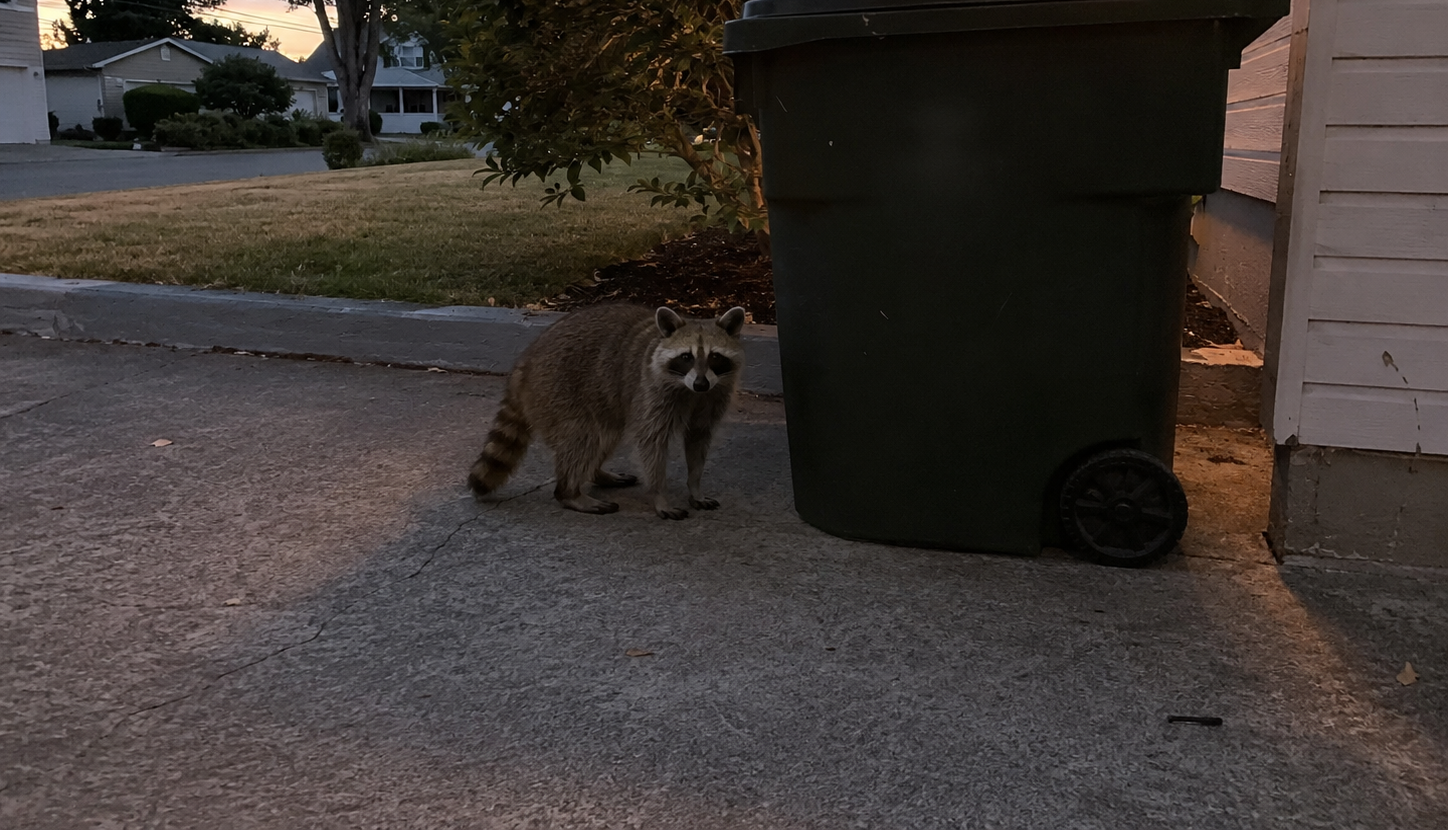
While you sleep, your neighbourhood comes alive. Raccoons are tipping over garbage bins, mice are squeezing through gaps in your walls, bats are swooping through the night sky, and skunks are digging up your lawn. These creatures are active, busy, and looking for food and shelter and your home may be exactly what they’re looking for.
You might not see them, but you can often hear them. Scratching in the walls, thumping in the attic, and rustling near your bins are all signs that the night shift has started. These sounds are easy to brush off at first, but they’re worth paying attention to. Nocturnal wildlife can cause real damage to your home while you’re fast asleep.
At Skedaddle Humane Wildlife Control in Montreal, we know exactly what these creatures are up to after dark and what it means for your home. In this blog, we explain what the most common nocturnal creatures are doing after dark, why your home is such an attractive target, and what our team does to keep them out for good.
What Animals Are Nocturnal?
Nocturnal animals are creatures that sleep during the day and become active at night. In Montreal and across Quebec, the most common nocturnal wildlife homeowners deal with are raccoons, skunks, bats, rats, and mice. These creatures have sharp senses that help them move around in the dark – strong noses, sensitive ears, and eyes built for low light.
Each of these creatures has its own nightly routine. Raccoons go looking for food in your bins and gardens. Skunks dig through your lawn for grubs and insects. Bats hunt flying insects using echolocation. Rats and mice sneak through your walls and kitchen looking for crumbs and scraps. They’re all working through the night while you rest, and they’re very good at what they do.
The reason your neighbourhood attracts so many of them is simple. Residential areas offer everything these creatures need: food, water, shelter, and warmth. Your home, your yard, and your garbage bins are all part of their nightly territory.
Raccoons: The Midnight Foragers
Raccoons are one of the most active nocturnal creatures in Montreal. They come out after dark to search for food, and they’re not picky. Garbage bins, compost piles, gardens, and pet food left outside are all fair game. They have clever front paws that can open lids, pull back screens, and pry apart weak spots on the outside of your home.
A raccoon’s night doesn’t end with a meal. Once they’ve eaten, they explore the full property looking for a safe place to rest. Attics, soffits, and the space under decks are common spots. A mother raccoon looking for a place to raise her young is especially motivated to get inside, and she’ll push through damaged vents, weak soffits, and gaps in the roofline to find a warm, quiet space.
The damage raccoons cause while you sleep adds up quickly. Torn insulation, chewed wiring, and contaminated spaces are what our team finds when we inspect a home with an active raccoon problem. If you hear heavy thumping in your attic at night, it’s time to call us. The sooner we get in, the less damage there is to deal with.
Skunks: The Quiet Diggers
Skunks are most active around dusk and through the early hours of the night. They move slowly and quietly, which is why many homeowners don’t realize they have a skunk problem until they smell one. They dig small holes through your lawn looking for grubs, beetles, and other insects that live just under the surface of the soil.
Your yard offers skunks exactly what they’re looking for. A lawn with grubs underneath it is like a buffet, and skunks will return to the same yard night after night once they find a good food source. The digging they leave behind can damage your lawn significantly over a single season.
Skunks also look for sheltered spots to rest during the day, and the space under your deck or shed is a common choice. Here’s what skunk activity typically looks like around a home:
- Small Cone-Shaped Holes in the Lawn: Skunks dig with their front claws to get to grubs just under the surface. These holes are usually a few centimetres deep and appear scattered across the yard in no particular pattern.
- Digging Along the Deck or Shed Perimeter: Skunks push under the edges of decks and sheds to access the dark, sheltered space underneath. Our team installs heavy-gauge mesh around these structures to block access after confirming the space is clear.
- A Strong Smell Near the Foundation: A skunk that feels threatened near your home may spray close to the structure. If the smell is coming from under your deck or porch, there’s a good chance one has moved in. Call our team right away, do not go near the area yourself.
Bats: The Night Flyers
Bats are helpful creatures – a single bat can eat thousands of flying insects in one night. But when they get into your attic or walls, they become a real problem. Here’s what they’re doing after dark and what it means for your home:
- Hunting Insects Using Echolocation: Bats are most active just after sunset and just before sunrise. They send out sound waves and listen for the echo to navigate in complete darkness and catch insects in mid-air. They’re incredibly precise fliers, which also makes them very good at finding tiny openings in your home.
- Getting In Through Very Small Gaps: Bats can squeeze into your home through a gap as small as a centimetre. This means the inspection for bat entry points is much more detailed than for larger creatures. Our team checks every possible opening on the exterior of your home to find exactly where they’re getting in.
- Leaving Behind a Buildup of Droppings: Once inside, bats roost in groups and leave behind droppings that pile up over time. These droppings can carry health risks and create strong smells that spread through the home. Bat removal in Quebec follows specific provincial rules, and our team handles the full process in line with all regulations. Do not go near the roosting area yourself.
Rats and Mice: The After-Dark Explorers
Rats and mice are two of the most common nocturnal creatures in Montreal neighbourhoods, and they’re active every single night of the year. While you sleep, they move through the walls, under the floors, and into your kitchen looking for food. They’re small, fast, and very good at staying out of sight.
Mice can squeeze through a gap the size of a dime. Rats need slightly more room but are strong enough to chew through weak materials to create their own entry points. Once inside, they look for a quiet spot to nest – behind walls, under appliances, and inside insulation are all common choices. Here’s what they’re doing in your home after dark:
- Foraging for Food in Your Kitchen: Mice and rats are drawn to crumbs, unsealed packages, and food scraps. They follow the same routes through your home night after night, and their droppings along these paths are often the first sign homeowners notice.
- Chewing Through Materials to Widen Entry Points: Rats and mice chew constantly to keep their teeth worn down. Inside your walls, that means wiring, insulation, and wood framing are all targets. Chewed wiring is a direct fire hazard and should be checked by a licensed electrician after our team completes the removal.
- Nesting Inside Walls and Under Floors: Once they’ve found a warm, hidden spot, they build a nest and start breeding. Mice can have multiple litters in a single year, which means a small problem can grow into a large one very quickly. Our team finds every active nesting area during the inspection and makes sure the full structure is clear before sealing it off.
What Nocturnal Wildlife Is Doing to Your Home
The noise you hear at night is only part of the story. While these creatures are active after dark, they’re also leaving behind damage that builds up whether you’re aware of it or not. Chewed wiring, torn insulation, soiled nesting material, and structural damage from digging and chewing are all common findings when our team inspects a home with an active nocturnal wildlife problem.
The health risks are just as serious as the structural ones. Droppings, urine, and nesting material from raccoons, rats, mice, and bats can carry bacteria and parasites. These materials should never be handled by homeowners without the right protective equipment. Our team manages all cleanup as part of the removal process, so you never have to go near any of it.
The longer nocturnal wildlife is left active in or around your home, the worse the situation gets. What starts as a noise in the wall can become a full nesting situation in a matter of weeks. If you hear something at night that doesn’t belong, call our team right away.
Wildlife Prevention with Skedaddle: What to Know
The best time to deal with a wildlife problem is before it starts. Nocturnal creatures are drawn to homes that offer easy food, shelter, and a way inside. Removing those opportunities is the most effective way to keep them out. Here’s what our team looks for and addresses when we assess a property:
- Unsecured Food Sources Around the Property: Garbage bins without locked lids, compost that isn’t properly enclosed, and pet food left outside overnight are some of the strongest attractants for raccoons, skunks, and rats. These food sources bring them into your yard night after night, and once they’re comfortable in your yard, the next step is finding a way inside. Our team identifies every food-related attractant on the property during the inspection so the full picture is clear.
- Structural Weak Spots That Give Them a Way In: Damaged roof vents, gaps along the roofline, worn soffits, and cracks near the foundation are the most common entry points our team finds. Nocturnal creatures are persistent and test the exterior of your home every night, any weak spot will eventually be found. We seal every opening with heavy-gauge materials that hold up against chewing and weather so there’s no way back in.
- Sheltered Spots That Make Your Property Attractive: The space under your deck, porch, or shed is dark, quiet, and close to food, exactly what skunks, rats, and raccoons look for when they need a place to rest. Our team installs heavy-gauge mesh around the base of these structures to block access after confirming the space is clear. Once it’s in place, these spots are no longer available as shelter.
- Droppings and Nesting Material Left Behind: Even after nocturnal creatures have been removed, the waste they leave behind keeps attracting others and poses health risks to anyone in the home. All cleanup of droppings, nesting material, and contaminated insulation is handled entirely by our team, homeowners should never attempt to clean or remove any of this without proper protective equipment. Our team makes sure the space is fully clear and safe before the job is considered done.
Nocturnal Wildlife Challenges in Montreal
Montreal’s mix of dense urban neighbourhoods, parks, and green corridors creates strong conditions for nocturnal wildlife activity year-round. Raccoons, skunks, rats, and mice move through the city constantly, using laneways, alley bins, and residential yards as their nightly territory. The city’s older housing stock with aging foundations, worn soffits, and original roof vents, gives these creatures plenty of entry points to work with.
Winter in Montreal pushes nocturnal wildlife closer to homes as they look for warmth and food when natural sources run low. This is when attic intrusions and wall nesting are most common. Spring brings a second wave of activity as mothers search for quiet, sheltered spots to raise their young. Our team responds to calls across Montreal year-round and knows the specific patterns that drive nocturnal wildlife activity in different parts of the city.
Older neighbourhoods like Rosemont, Plateau-Mont-Royal, and Verdun tend to see the highest volume of calls, largely because the housing stock is older and the green space nearby gives these creatures easy access to residential yards and rooflines. Our team knows these areas well and knows exactly what to look for.
Frequently Asked Questions
How do I know if nocturnal wildlife is in my home and not just outside?
Sounds that come from inside the walls, attic, or ceiling. Scratching, scurrying, or thumping are a strong sign that something has made it inside. Sounds from outside are usually easier to trace to a specific direction. If you're hearing it above your head or behind your walls, call our team for an inspection.
Are bats dangerous to have in the attic?
Yes. Bat droppings build up over time and can carry health risks. Bats in Quebec are also protected under provincial regulations, which means removal has to follow specific guidelines. Our team is trained in compliant bat exclusion and handles the full process so you don't have to worry about the regulatory side of it.
Why do I hear more noise at night than during the day?
Nocturnal creatures are most active after dark, which is when they're moving around, foraging, and communicating. Your home is quieter at night too, which makes the sounds easier to hear. If the noise is consistent and coming from inside the structure, it's worth having our team take a look.
Can nocturnal wildlife cause a fire in my home?
Yes. Rats and mice chew through electrical wiring regularly as part of their natural behaviour, and stripped or damaged wires are a direct fire hazard. If our team finds chewed wiring during an inspection, we flag it immediately so a licensed electrician can assess it after the removal is complete.
Do nocturnal animals come out during the day at all?
Sometimes. A nocturnal creature that appears during the day isn't always sick. It may simply be hungry, disturbed from its resting spot, or a mother looking for food while her young are nesting nearby. That said, daytime activity can sometimes be a sign of a larger population or a stressed animal. If you see one during the day, call our team rather than approaching it yourself.
Don’t Let the Night Shift Wreck Your Home
The scratching, the thumping, the smell near the deck. These aren’t things you should wait out. Nocturnal wildlife doesn’t slow down on its own, and every night they’re active in or around your home is another night of damage, contamination, and risk building up.
Most homeowners don’t realize how much has happened until our team does the inspection and lays it all out. By then, it’s usually been going on for weeks. You don’t have to wait for it to get that far. If you’re hearing anything at night that doesn’t belong, that’s the right time to call.
At Skedaddle Humane Wildlife Control in Montreal, we handle the full process – inspection, removal, cleanup, and sealing – so you don’t have to deal with any of it yourself. Our one-way door system gets them out humanely, and our sealing process keeps them from coming back. Request an estimate today and let our team take care of what’s happening after dark.

 Loading...