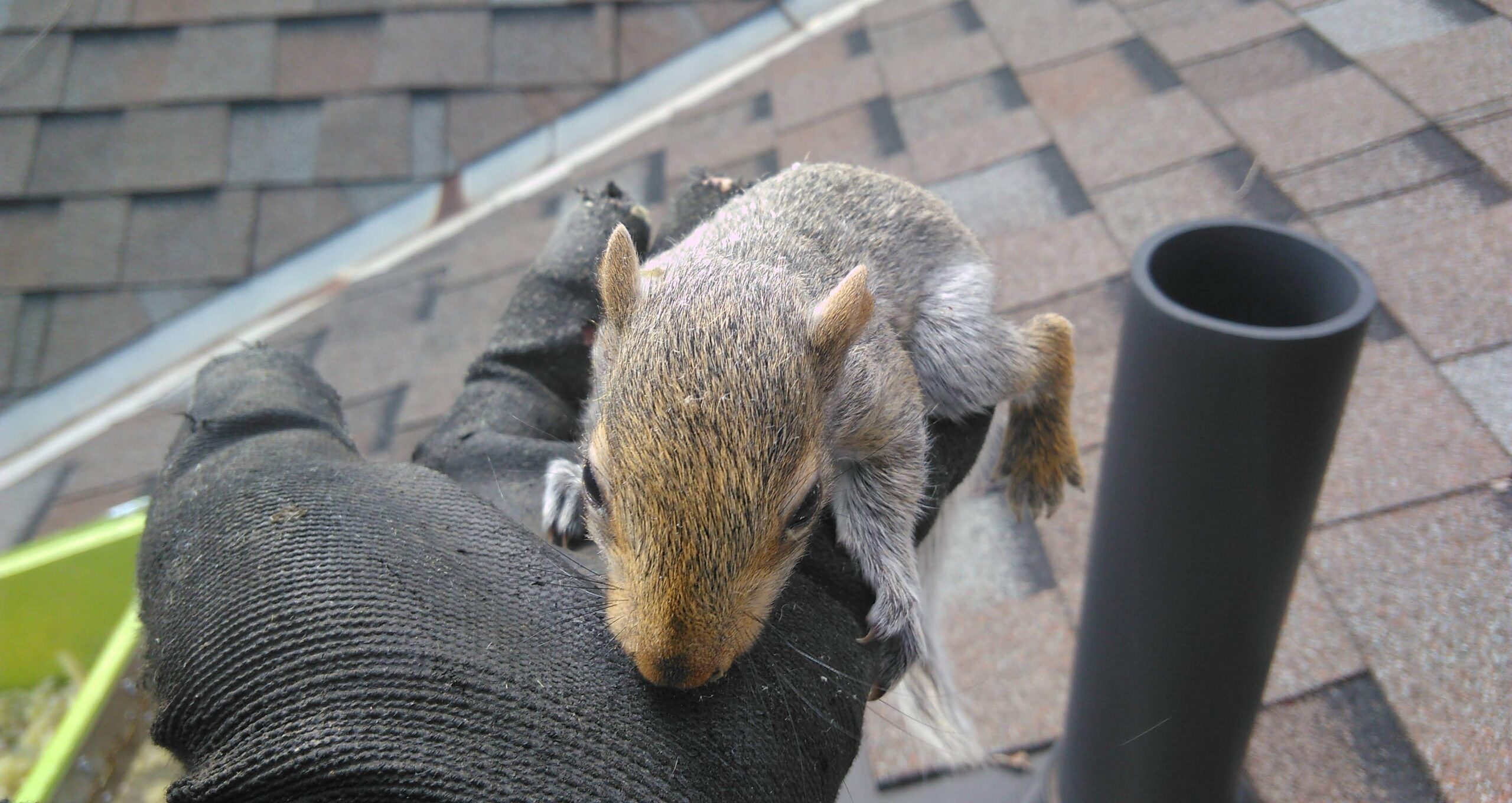
Roof damage from a windstorm can absolutely let wildlife into your home, and it can happen faster than you’d expect. When strong winds lift shingles, knock down branches, crack soffits, and loosen roof vents, they create openings that squirrels, raccoons, bats, and birds will find and use. These animals are always looking for a way in, and storm damage gives them exactly that.
Windsor’s July 2026 storm brought winds reaching 113 km/h, damaged hundreds of homes, and generated more than 800 tree-damage requests across the city. You can read more about the city’s response here: City of Windsor, Post-Storm Support. That kind of storm doesn’t just damage your roof, it opens doors for wildlife that can cause even more damage once they’re inside.
At Skedaddle Humane Wildlife Control in Windsor, we respond to exactly these situations. In this blog, we walk you through how different types of storm damage create entry points for wildlife, what to look for after a windstorm, and why calling our team before sealing anything is always the right first move.
What Animals Can Live in Your Roof?
Several animals commonly take up residence in and around roofs and all of them are capable of getting in through storm damage. Squirrels, raccoons, bats, and birds are the most frequent culprits in Windsor. Each one looks for slightly different conditions, but all of them are drawn to the warmth, shelter, and darkness that a roof or attic space provides.
Squirrels are fast movers and skilled chewers. They’ll find a small gap created by a lifted shingle or a cracked soffit and chew it bigger until they can get through. Raccoons are stronger and more deliberate, they’ll pull back damaged soffit sections, pry open loosened vent covers, and use fallen branches as a bridge to reach areas of your roof they couldn’t access before. Both are most active in spring and fall when they’re looking for nesting spots.
Bats need very little space to get in – a crack of half an inch is enough. Storm damage creates exactly the kind of small, irregular gaps that bats slip through easily. Birds look for sheltered spots near vents, damaged fascia boards, and any opening along the roofline that gives them a covered place to nest. Once any of these animals gets inside, they don’t leave on their own and the longer they stay, the more damage they cause.
Fallen Branches Create Instant Access Points
Fallen and hanging branches are one of the most immediate wildlife risks after a windstorm. They do two things at once, they damage your roof on impact and they create a bridge that makes parts of your roof accessible to animals that couldn’t reach them before. Here’s what our team looks for:
- Branch Impact Damage: When a heavy branch falls on your roof, it can crack shingles, punch through soffit sections, and dislodge flashing around chimneys and vents. Even a branch that doesn’t look like it caused serious damage can leave behind gaps that aren’t visible from the ground. Our team inspects the full area of impact – not just what’s easy to see – to find every opening created by the fall.
- Hanging Branches Are Still a Risk: A branch that’s been partially broken but hasn’t fallen yet is just as much of a concern. It can fall at any time, causing additional damage and in the meantime, it may already be resting against your roofline in a way that gives squirrels and raccoons direct access to areas they couldn’t reach before the storm. Hanging branches near the roofline need to be assessed right away.
- Branches That Touch the Roofline: Even branches that didn’t break during the storm can be pushed closer to the roofline by high winds. A branch that now makes contact with your soffit or fascia becomes a highway for squirrels to travel directly onto your roof. Our inspection maps out which branches are close enough to create a wildlife access problem and flags them for attention.
- Don’t Go on the Roof Yourself: After a storm, your roof may be unstable and slippery. Do not climb up to check for branch damage yourself. Call our team and let us assess the situation safely from the ground and with the right equipment. We’ll tell you exactly what we find and what needs to happen next.
Lifted Shingles Open the Door for Wildlife
High winds get underneath shingles and lift them – sometimes pulling them off entirely, and sometimes just loosening them enough to create a gap between the shingle and the roof deck. Either way, that gap is an opening that wildlife will find and use. Here’s what lifted shingles mean for your home:
- Even Small Gaps Are Enough: A shingle that’s been lifted even a few centimetres creates a gap along the roofline that bats and mice can squeeze through. Squirrels will find these gaps and start chewing the edges to make them bigger. What starts as a small lift from wind damage can become a significant entry point in a matter of days if it’s not found and addressed quickly.
- Lifted Shingles Expose the Roof Deck: When a shingle is pulled back, it exposes the roof deck beneath it to moisture and to wildlife. Raccoons are strong enough to pull back a loosened shingle further and tear through the weakened deck material underneath. A section of roof that looks like minor shingle damage from the ground can be a much bigger problem once it’s been found and worked on by a persistent animal.
- Multiple Shingles Create Multiple Entry Points: A windstorm doesn’t just lift one shingle, it affects large sections of the roof at the same time. Multiple lifted shingles mean multiple potential entry points across your roofline. Our team checks the full roof after a storm call, not just the most visible damage, so nothing gets missed.
- Our Team Flags Every Gap Before Anything Gets Sealed: Before any repair work begins, our team identifies whether wildlife has already used a gap to get inside. Sealing a lifted shingle area without checking what’s behind it can trap animals inside your roof space. We assess every opening first so repairs can be done in the right order.
Damaged Soffits Are a Common Entry Point
Soffits – the panels that run along the underside of your roof’s overhang – are one of the most vulnerable parts of your home during a windstorm. They’re often made of aluminum or vinyl, which means strong winds can crack them, pull them away from the fascia board, or bend them enough to create a gap along the edge. These gaps are exactly the kind of opening raccoons and squirrels look for.
A soffit that’s been pulled away from the fascia even slightly creates an opening along the full length of the panel. Raccoons are strong enough to pull a damaged soffit section back further and use it as an entry point into the attic space above. Squirrels take a different approach, they find the weak spot and chew until the opening is big enough to get through. Both outcomes lead to the same result: animals inside your attic.
Soffit damage is also easy to miss from the ground, especially if the soffit is only slightly bent or cracked. Our team checks the full soffit line after a storm, not just the sections with obvious damage, because small gaps that look minor can be actively used by wildlife within days of the storm passing. If we find damage, we flag every affected section and make sure nothing gets sealed until we know whether animals are already inside.
Loosened Roof Vents Create Direct Access
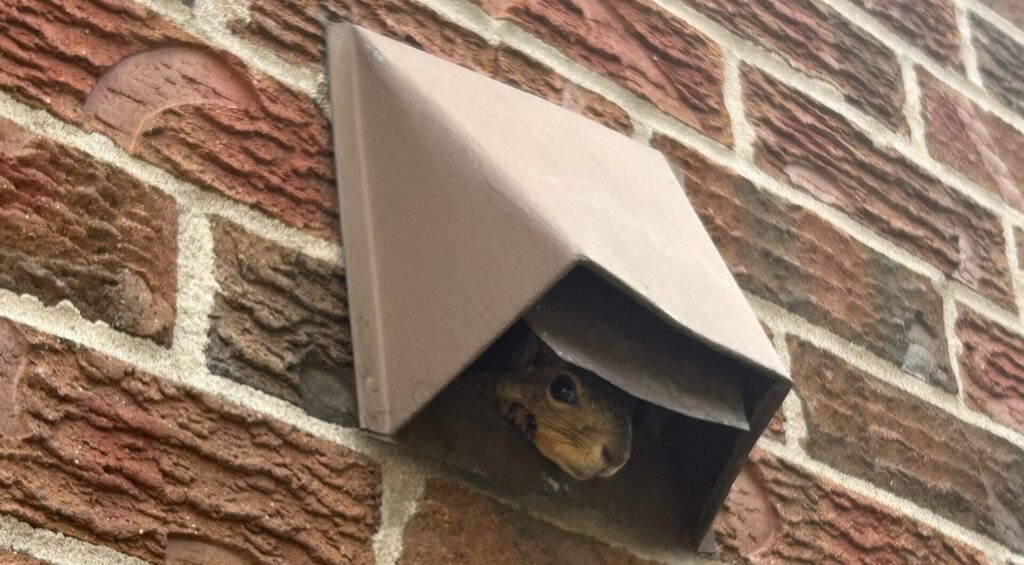
Roof vents, including ridge vents, plumbing vents, and exhaust fans, are secured to the roof with fasteners and sealed around the edges. A strong windstorm can loosen those fasteners, pull back the flashing around the vent, and shift the vent cover enough to create a gap that wildlife can use to get inside. This is one of the most direct entry points on any home.
Bats are the most common animals to enter through loosened roof vents because they can fit through very small gaps and are naturally drawn to enclosed, dark spaces. A vent that’s been shifted even slightly by wind damage can create a crack along one edge that’s more than enough for them to slip through. Once inside, they typically move into the attic space and establish a roost that grows over time.
Raccoons and squirrels will also take advantage of a loosened vent, especially if the cover itself has been partially dislodged. A raccoon is strong enough to pull a loose vent cover completely off, which creates a large, direct opening into your attic. Our team checks every vent on your roof after a storm call and assesses whether the seals and fasteners are still intact. Any vent that’s been shifted or loosened gets flagged before repairs begin.
Post-Storm Inspection Checklist
After a windstorm, your roof needs to be looked at carefully, but safely and by the right people. Here’s what our post-storm inspection covers to make sure no wildlife entry points get missed:
- Roofline and Shingle Assessment: Our team checks the full roofline for lifted, cracked, or missing shingles and flags every area where a gap has been created. We look at the roof from multiple angles so nothing is missed, including sections that can’t be seen from the ground or a single vantage point.
- Soffit and Fascia Check: Every section of soffit and fascia gets inspected for cracks, bends, gaps, and sections that have pulled away from the structure. We check the full perimeter – not just the areas with obvious visible damage – because wildlife entry points are often in spots that don’t look serious from the outside.
- Vent and Chimney Inspection: All roof vents, plumbing vents, exhaust fans, and the chimney cap get checked for shifting, loosened fasteners, and gaps in the surrounding flashing. These are high-priority spots after any windstorm because they offer direct access to the attic with very little resistance.
- Check for Signs of Wildlife Before Sealing Anything: Before any storm repair work begins, our team looks for signs that wildlife has already used the damage to get inside: droppings, nesting material, sounds, and evidence of chewing around entry points. Nothing gets sealed until we know whether animals are already present. Sealing an entry point with wildlife inside creates a much bigger problem than the one you’re trying to fix.
Wildlife Roof Damage in Windsor Homes
Windsor’s climate creates ideal conditions for wildlife to move toward homes, especially after a storm. The city’s mix of mature trees, older housing stock, and seasonal weather swings – including the kind of severe storms that hit in July 2026 – means that roof damage and wildlife activity tend to go hand in hand. When trees come down and rooflines get hit, animals in the surrounding area move fast to take advantage of the new openings.
Squirrels are especially active in Windsor in the weeks following a storm. They’re quick to explore new gaps along rooflines, and they’re persistent enough to chew a small opening into a usable one in a very short period of time. Raccoons, which are well established in Windsor’s residential neighbourhoods, are strong enough to pull back damaged soffit sections and use them as direct entry points into attic spaces. Both species breed in spring and fall, which means any storm damage during those seasons carries an especially high risk of animals nesting inside.
Windsor homes that were affected by the July 2026 storm should be assessed for wildlife entry points as part of the overall storm damage response. Not just by a roofing contractor, but by our team as well. A roofing contractor will fix the visible damage. Our team checks whether anything got inside before the repairs happen. Both steps matter, and doing them in the right order is what prevents a bigger problem from developing inside your home.
Wildlife Removal and Prevention with Skedaddle
When storm damage has created openings in your home – or when wildlife has already moved in through those openings – the right call is to contact our team at Skedaddle Humane Wildlife Control before any repair work begins. We inspect the full property, identify every entry point created by the storm, and determine whether animals are already inside. We look at the whole picture so nothing gets sealed over before the situation is fully assessed.
We use one-way door systems that allow animals to leave your home on their own without being able to get back in. This approach is humane and effective, and it makes sure that no animals are trapped inside when the repairs happen. Once the roost or nesting space is confirmed empty, we seal every entry point with materials that hold up over time and resist future attempts to get back in.
Prevention after a storm is just as important as responding to the immediate situation. After removal and exclusion are complete, we assess the full roofline and exterior of your home for any remaining vulnerabilities not just the ones created by the storm. Our goal is to leave your home fully protected so the next storm doesn’t create the same problem. We handle all of it from start to finish so you don’t have to deal with any part of it yourself.
Frequently Asked Questions
How quickly can wildlife get into storm damage?
Very quickly, sometimes within hours. Animals that are already active around your neighbourhood will investigate new gaps and openings as soon as the storm passes. Squirrels especially move fast. Don't assume you have days to wait before getting an inspection done.
Should I seal the damage myself while I wait for repairs?
No. Do not seal any openings before our team has inspected the area. If wildlife is already inside and you seal the entry point, they become trapped, which creates a more serious and more expensive problem. Call our team first so we can check before anything gets closed up.
Can wildlife get in through damage I can't see from the ground?
Yes and this is one of the most important reasons to have a professional inspection done after a storm. Many entry points along the roofline, at soffit junctions, and around vents aren't visible from the ground. Our team checks areas that aren't accessible without the right equipment and experience.
What if I had storm damage and didn't notice wildlife until weeks later?
Call us right away. Animals that moved in through storm damage can establish a nest or roost quickly, and the longer they're present the more damage they cause. It's not too late to address the problem, but it's important to act as soon as you notice the signs.
Do I need a wildlife inspection and a roofing inspection after a storm?
Yes - both. A roofing contractor addresses the structural damage. Our team checks whether wildlife has used that damage to get inside and makes sure no animals are trapped when repairs happen. Both inspections are important and they need to happen in the right order.
What are the signs that wildlife got in through storm damage?
Listen for scratching, thumping, or rustling sounds coming from the attic or along the roofline. Look for droppings near entry points, nesting material in the attic, chew marks around gaps, or an unusual smell. If you notice any of these signs after a storm, call our team right away.
Storm Damage Is Done, Don’t Let Wildlife Make It Worse
A windstorm does enough damage on its own. The last thing you need is wildlife moving in through the gaps it left behind and adding to the problem. Lifted shingles, cracked soffits, fallen branches, and loosened vents all create real entry points that squirrels, raccoons, bats, and birds will find and use fast, often before the repairs even get scheduled.
The most important thing you can do after a storm is get your property inspected before anything gets sealed. Closing up a gap with animals already inside turns a wildlife problem into an emergency. Our team checks every opening, finds out what’s there, and makes sure the repairs happen in the right order.
At Skedaddle Humane Wildlife Control in Windsor, we’ll inspect your property after the storm, identify every entry point, and take care of everything from removal to exclusion. Contact us today to request an estimate and make sure your home is fully protected before the next storm hits.

 Loading...







