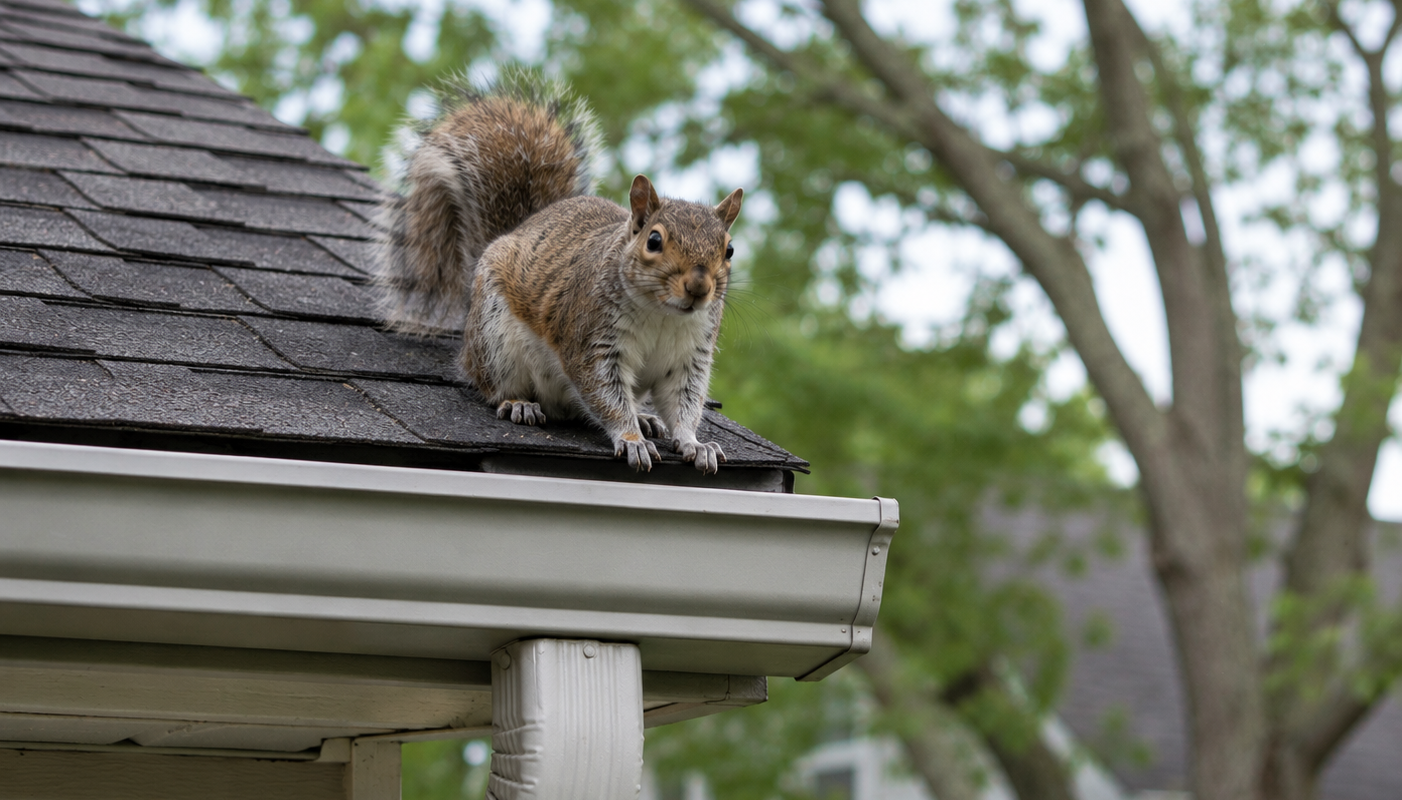
If you’re hearing scratching or scurrying sounds coming from inside your walls, there’s a real chance that’s exactly what’s going on. Squirrels are small, fast, and very good at finding their way into places they shouldn’t be. Your walls give them everything they’re looking for: shelter from the weather, safety from predators, and a quiet place to raise their young.
Most homeowners hear them before they ever spot one. The sounds are usually the first clue, especially early in the morning or around dusk, when these creatures are most active. By the time the noise shows up, they’ve often been inside for weeks.
At Skedaddle Humane Wildlife Control in York Region, we take care of everything from the first inspection to the final seal. In this blog, we break down why squirrels end up in your walls, what to watch for, and how our team handles the problem so you never have to figure any of it out on your own.
Do Squirrels Nest in Walls?
Yes, squirrels nest in walls, and it happens more often than most homeowners expect. Wall cavities are dark, quiet, and well-protected, which makes them a very attractive nesting spot. A mother will tear through insulation, carry in leaves and soft material, and build a full nest right inside your wall if she finds a way in.
The tricky part is that wall nests are harder to detect than attic nests. You can’t always see the entry point from the ground, and the sounds can be easy to mistake for pipes or the house settling. Our team at Skedaddle has found active nests deep inside wall cavities in homes all across York Region, including cases where the homeowner had no idea anything was wrong until significant damage had already been done.
If you think something might be living in your walls, trust that feeling and call us right away. The sooner we inspect, the less damage there is to deal with.
Seeking Shelter and Warmth
Your walls are one of the warmest, most protected spaces on your property. For a squirrel trying to survive a cold Ontario winter or a wet spring, that kind of shelter is extremely appealing. The insulation inside your walls holds heat, blocks wind, and stays dry – exactly the conditions these creatures look for when temperatures drop.
Summer isn’t any different. On hot days, the shaded interior of a wall cavity offers a cool, quiet place to rest. Your home essentially offers year-round comfort, which is why wall intrusions happen in every season across York Region, not just in fall and winter.
Once they find a warm, dry wall cavity and settle in, they don’t leave on their own. Our team removes them using one-way door systems that allow them to exit the structure safely but prevent them from getting back in. After that, we seal every opening so the problem doesn’t repeat.
Breeding Season Brings Them Closer
Squirrels in Ontario typically have two breeding seasons – one in late winter and one in midsummer. During both of these periods, mothers are actively searching for safe, hidden places to give birth and raise their young. Your walls check every box.
A mother will push through weakened soffits, tear back damaged vents, and chew through rotting wood to reach a wall cavity she’s decided is suitable. Once she’s inside with her young, the situation becomes more complicated. The babies can’t leave on their own, and simply blocking the entry without a proper plan can trap them inside, leading to more damage and additional health risks from waste and decay.
Our one-way door system is designed for exactly this situation. It allows the mother to exit safely while keeping her from returning. Once all activity has stopped and the family has vacated, our team seals the structure completely with durable materials that hold up against future chewing attempts.
The Need to Chew
Squirrels have teeth that never stop growing. That means they have to chew constantly to keep their teeth at a manageable length. Inside your wall, that means your wooden framing, your insulation, and your electrical wiring are all fair targets.
Chewed wiring is the most serious risk. It’s a direct fire hazard, and it often goes unnoticed until an inspection turns it up. Here’s what our team typically finds when they inspect a wall with active or recent activity:
- Wiring with Stripped Insulation or Exposed Copper: Squirrels chew through electrical wiring regularly as a way to wear down their teeth, and the damage they leave behind is a direct fire hazard. You may not notice anything is wrong until something stops working or our team uncovers it during an inspection. A licensed electrician should assess the wiring after our team completes the removal to make sure it’s safe before the wall is sealed.
- Torn or Matted Insulation: Insulation that has been shredded and packed into a nest loses its ability to hold heat effectively, which means your home is working harder to stay warm or cool. It may also be contaminated with droppings and urine, which creates health risks that go beyond the structural damage. Our team handles all contaminated material – this is not something homeowners should attempt to clean or remove on their own.
- Chewed Wooden Framing or Drywall: Entry and exit points inside the wall often show significant gnaw marks where they’ve been widening their access over time. Wood framing that has been chewed repeatedly can weaken the structural integrity of that section of wall. Our team documents all damage found during the inspection so you have a clear picture of what needs to be repaired once the exclusion is complete.
Attractants Near the Roofline
Your roofline has more vulnerabilities than most homeowners realize. These creatures are excellent climbers and use overhanging branches, utility lines, and fences to reach your roof daily. Once they’re up there, they walk the full perimeter looking for any weak spot they can use to get inside.
A few specific features pull them in even more directly:
- Exhaust Vents that Release Warm Air: Bathroom and kitchen exhaust vents push warm air outside, and in cooler weather, squirrels detect that heat and follow it right to the source. The warmth signals shelter, and once they’ve located the vent, getting through it doesn’t take long. Plastic and louvred vent covers are easy to chew through or pry open, which is why our team replaces them with heavy-gauge steel covers that can’t be broken down from the outside.
- The “Tree Cavity” Instinct: Uncapped chimneys, open plumbing stacks, and unprotected wall vents look and feel like hollow tree trunks to a squirrel, and their natural nesting instinct pulls them directly toward these openings. This isn’t random exploration, it’s a hardwired behaviour that makes certain features of your home extremely attractive regardless of what else is nearby. Our team identifies every opening on your property that mimics this kind of cavity and closes it off as part of the full exclusion process.
- Gaps at the Soffit and Roofline: Where the soffit meets the fascia, small gaps often open up as a home ages through years of temperature changes and general wear. These gaps aren’t always visible from the ground, and most homeowners have no idea they’re there until an inspection turns them up. Our team knows exactly where to check along the roofline and uses materials specifically chosen to seal these areas in a way that holds up against both weather and persistent pressure from the outside.
Our team replaces damaged vents with heavy-gauge steel covers that can’t be chewed through and seals roofline gaps with materials built to hold up against repeated pressure from the outside.
Behavioural Instincts and Memory
These creatures are more persistent than most people expect. Once they find a reliable entry point into your home, they remember it, and they come back to that same spot again and again. If a mother successfully raises a litter inside your wall, there’s a strong chance she and her offspring will attempt to return to that exact location the following year.
Our team sees this pattern regularly across York Region. A homeowner patches a gap on their own, and within weeks the same spot has been reopened. That’s not bad luck, it’s behaviour. These creatures test every exterior surface of your home as part of their daily routine, and they’re strongly motivated to return to a spot they already know works.
That’s why our sealing process uses materials specifically chosen to resist chewing and repeated pressure over time. We don’t just patch the gap, we close it off permanently.
Incidental Trapping and Structural Weakness
Not every squirrel in a wall got there intentionally. Sometimes they fall in while exploring the attic or a plumbing stack, slipping down the interior of a wall cavity and getting completely stuck. A trapped squirrel will chew aggressively in every direction trying to get out, causing significant damage in a short period of time.
Structural weakness is also a major factor. Here’s what our team commonly finds contributing to wall intrusions during inspections in York Region:
- Rotted Fascia Boards From Clogged Eavestroughs: Water damage softens the wood at the roof edge, and once it’s soft enough, tearing through it takes very little effort. This is one of the most common entry point types our team finds during inspections across York Region. Keeping eavestroughs clear reduces the moisture buildup that causes this kind of rot, but once the damage is there, the wood needs to be replaced and the opening sealed properly.
- Gaps Originally Created by Other Pests: Mice and birds sometimes open small holes that squirrels later find and widen to suit their larger size. One intrusion can quietly set the conditions for another, which is why our team inspects the full exterior rather than focusing only on the most obvious entry point. Closing every gap – regardless of what created it is the only way to make sure the problem doesn’t continue.
- Ageing Roof Vents and Soffits: Older homes in Newmarket, Richmond Hill, and Vaughan often have exterior features that have weakened over years of freeze-thaw cycles and general wear. Plastic vent covers crack, soffit panels loosen, and small gaps open up along the roofline that didn’t exist when the home was newer. Our team assesses all of these during the inspection and replaces compromised materials with heavy-gauge options that hold up against persistent chewing and weather exposure.
Removal and Prevention With Skedaddle
When our team arrives at your property, we start with a full inspection of the exterior and interior – the roofline, every vent, the soffit edges, the garage, and the full perimeter of the home for active entry points and signs of nesting.
Our removal process uses one-way door systems at active entry points. These let the squirrels leave the structure on their own but prevent them from getting back in. Once all activity has cleared, we seal every opening permanently with materials that hold up against weather and future intrusion attempts.
All cleanup of droppings, nesting material, and contaminated insulation is handled entirely by our team. Homeowners should never go near any of this without proper protective equipment — if you suspect an active nest, call us right away.
Squirrel Challenges in York Region
York Region’s mix of mature residential neighbourhoods, ravines, and conservation land creates strong year-round conditions for this type of wildlife activity. Areas like Newmarket, Richmond Hill, Vaughan, and Markham sit alongside forests and green spaces that give squirrels natural travel routes directly onto residential rooflines.
Older housing stock is a key factor across the region. Aging soffits, weathered fascia boards, and weakened roof vents give squirrels access points that didn’t exist when the homes were newer. Our team knows the local housing stock and the structural patterns that create vulnerability, which means we know exactly where to look.
Baby season in late winter and midsummer is the busiest period for squirrel calls across the region. By the time a homeowner notices the sounds, the family has often been there for weeks.
Frequently Asked Questions
How do I know if it's a squirrel in my wall and not something else?
Squirrels are most active at dawn and dusk. Scratching or scurrying sounds during those windows are a strong indicator. Their movements are fast and purposeful - more deliberate than the random scratching of a mouse. Our team can confirm the species during an inspection.
Can a squirrel in my wall cause a fire?
Yes. They chew through electrical wiring regularly, and damaged wires are a direct fire hazard. A licensed electrician should check the wiring after our team completes the removal.
Will they come back after you remove them?
Not if the exclusion is done properly. Our sealing process uses materials that hold up against chewing and weather exposure. We close every opening we find, not just the main entry point.
What time of year are squirrels most likely to get into walls?
Late winter and midsummer are the most active periods in York Region because those are the two breeding seasons. But wall intrusions happen year-round - cold weather, heavy rain, and summer heat all push them toward shelter inside your home.
If You’re Hearing It, Don’t Wait
That scratching in your wall isn’t going to stop on its own. Squirrels don’t leave once they’ve found a place to nest, and the damage – chewed wiring, torn insulation, contaminated wall cavities- only gets worse the longer they’re there. What starts as a small noise can turn into a serious repair bill if it goes unaddressed.
The signs are easy to miss at first. Sounds that come and go, a faint smell, a small patch of damage you can’t quite explain. By the time it’s obvious, they’ve usually been inside for weeks. That’s why calling us early makes such a big difference.
At Skedaddle Humane Wildlife Control in York Region, we handle everything from the first inspection to the final seal. Our team finds every entry point, removes the squirrels using our one-way door system, and closes off your home permanently with materials built to hold. All cleanup is handled by our team; you should never go near droppings or nesting material without the right protective equipment.
You don’t need to do a thing; just call us, and we take it from there. Request an estimate today and let our team get your home back to normal.

 Loading...