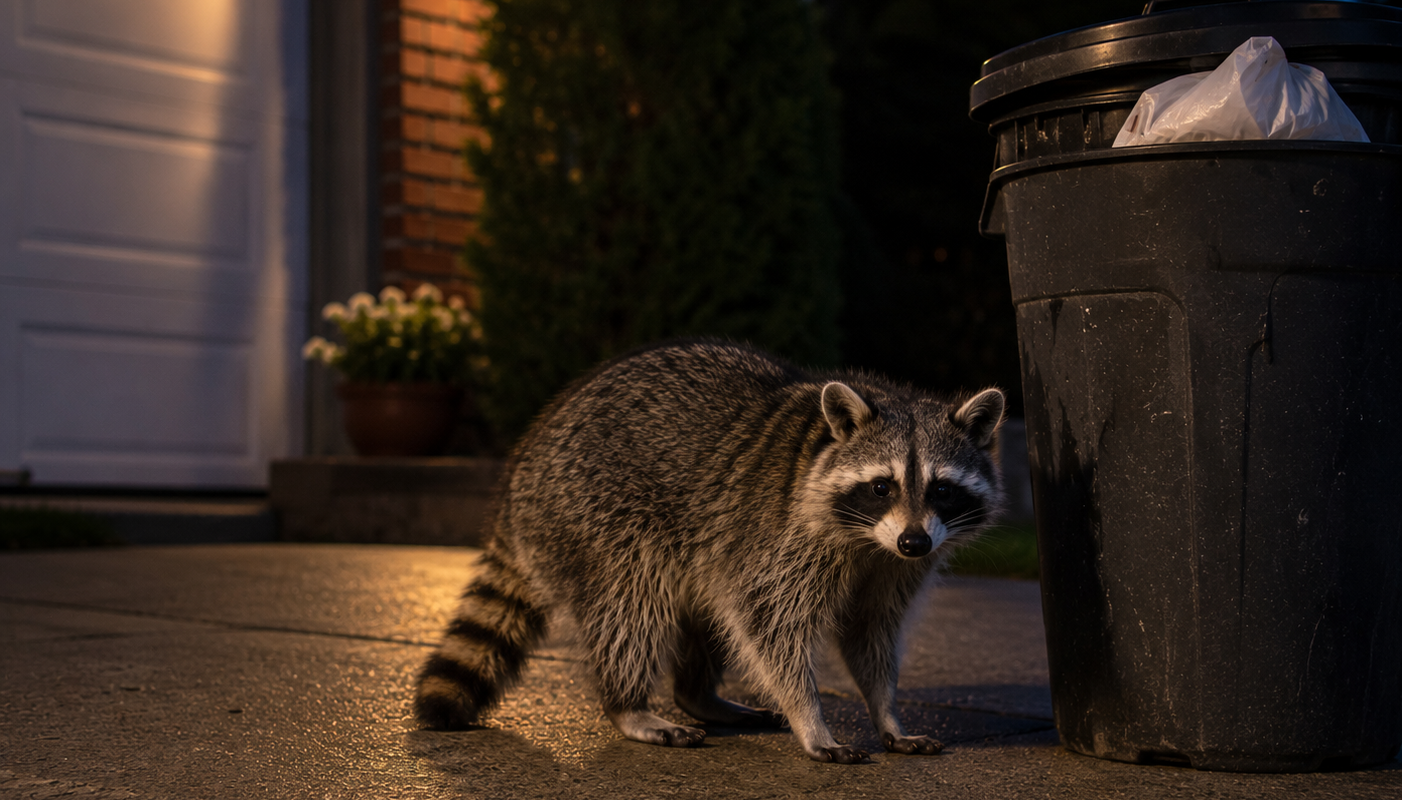
Summer is the season you look forward to all year. The BBQ is fired up, the back door is open, and the kids are running in and out all day. But while you’re busy enjoying every warm minute of it, raccoons, squirrels, skunks, and mice are busy too, and your summer routine may be giving them exactly what they need to move in.
Your summer fun could be inviting wildlife into your home in more ways than you might think. The smell of your BBQ, a lid left off the garbage bin, an open garage door, or a gap under the deck – each one sends a signal that there’s food, shelter, and easy access nearby. And once these animals find their way in, they don’t leave on their own. They nest, they raise their young, and the damage adds up fast.
At Skedaddle Humane Wildlife Control in York Region, we know how quickly a wildlife problem can go from minor to major, and we’re here to stop it before it gets that far. In this blog, we break down the most common summer habits that attract wildlife to your property and what our team does to get them out and keep them out for good.
Does My BBQ Attract Raccoons?
Yes. Your BBQ absolutely attracts raccoons. Grease, leftover food, and the lingering smell of meat are nearly impossible for raccoons to ignore. They have an exceptional sense of smell, and a BBQ that hasn’t been cleaned after a cookout is like a flashing neon sign pointing straight to your backyard.
Raccoons are smart and persistent. Once one finds a reliable food source near your home, it will return and bring others. They’re not just digging around the grill either. They scout the full property. That means your garbage bins, your compost, and any other food source nearby all become part of their nightly routine.
The bigger concern is what happens next. A raccoon that’s comfortable in your yard will start looking for shelter close to the food. That often means your attic, your soffit, or the space under your deck. Our team at Skedaddle sees this pattern all the time during summer; it starts with the smell of a cookout and ends with a raccoon family nesting overhead. If you’ve noticed increased activity around your BBQ or backyard, that’s the time to call us.
Backyard BBQs: A Free Meal for Wildlife
There are several ways that summer BBQs draw wildlife closer to your home. Here’s what our team commonly finds on inspections:
- Uncleaned Grease Traps and Grill Grates: Leftover grease and food residue on your grill is one of the strongest attractants for raccoons and skunks. The smell carries farther than you’d expect, especially on warm summer nights. These animals are opportunistic feeders – they don’t need much to make your yard their dinner spot. Our team assesses your outdoor cooking area as part of any property inspection to identify what’s drawing activity to your home.
- Food Scraps and Plates Left Outside After a Cookout: It’s easy to leave dishes outside after a long summer evening, but even a short window of time is enough for a raccoon or skunk to move in. These animals are active at dusk and through the night, which is exactly when most cookouts wind down. By morning, the damage is done and you may not realize they’ve been there until you start seeing signs of activity closer to the house.
- Positioning the BBQ Close to the House or Garage: The closer your BBQ is to your home’s exterior, the higher the chance that foraging animals will investigate nearby entry points. A raccoon that’s nosing around the grill is also checking out the gap between your soffit and roofline on the same visit. Our inspections always take the full picture into account – not just where they got in, but what pulled them there in the first place.
Open Doors and Windows: An Open Invitation
Summer means open windows, propped screen doors, and a garage that’s wide open for the afternoon. It feels great, but it also gives wildlife a direct path inside. You don’t always see it happening, and by the time you do, they’ve already found a comfortable spot.
Mice can squeeze through a gap the size of a dime. Squirrels are fast and bold enough to dart through an open door in seconds. Even a garage left open for an hour while you’re working outside is enough time for one to slip in and find a hiding spot. Once they’re in, they look for a quiet corner to settle — and a garage full of boxes, insulation, or storage gives them plenty of options.
The problem is that most homeowners don’t notice until the damage has already been done. Chewed wiring, torn insulation, and droppings in hard-to-reach spots are the usual signs. Our team handles the full assessment – checking every corner, crawl space, and gap that wildlife may have used. If they’re in there, we find them.
Neglected Trash and Bins: A Buffet on Your Curb
Summer heat makes everything smell stronger, including your garbage. Bins that fill up quickly during backyard parties and cookouts become one of the easiest food sources for raccoons and skunks in the neighbourhood. They can smell it from a distance, and an unsecured lid is no obstacle for a determined raccoon.
Here’s what typically draws animals to the bin area on a Skedaddle inspection:
- Overflowing Bins Left out Overnight: Bins put out the night before pick-up are a common target. Raccoons are nocturnal and active through the night, which means any bin left outside after dark is fair game. Even a fully closed bin can be tipped and raided by a persistent raccoon. Our team identifies how animals are accessing your bin area and addresses the attractant as part of a full property assessment.
- Unsecured or Open Compost Bins: Compost is an especially strong attractant because it combines the smells of food waste, fruit, and organic material all in one spot. In summer, that smell intensifies quickly. Skunks and raccoons are the most likely visitors, but mice and rats will also be drawn in by food scraps mixed into compost that isn’t properly enclosed.
- Unrinsed Food Containers in Recycling Bins: Recycling bins with unrinsed cans, bottles, and food containers are just as attractive as garbage bins. The residue from sauces, drinks, and food packaging adds to the scent load around your home. Raccoons that find this kind of reward in your yard will return every night and explore the rest of the property on every visit.
Summer Is Baby Season: Rearing Young Inside Your Home
Summer isn’t just a busy season for you; it’s peak baby season for raccoons, squirrels, and skunks. Mother animals are actively searching for safe, quiet, warm places to give birth and raise their young. Your attic, your wall cavities, and the space under your deck check all of those boxes.
A mother raccoon doesn’t need a large opening to get inside. She’ll push through a weakened soffit, tear back a damaged roof vent, or squeeze into a gap where the roof meets the fascia. Once she’s in with her young, the problem is more complex because the babies can’t leave on their own, and simply blocking the entry point without a proper plan traps them inside.
This is where our one-way door system comes in. We install one-way doors at active entry points, allowing the mother to leave the structure on her own while preventing her from getting back in. Once all activity has stopped and the family has vacated, we seal every opening with durable materials built to hold. Our team handles the whole process – homeowners should never attempt to handle or block an active nesting site on their own.
Shelter From the Heat: Why Your Home Is a Cool Retreat
Most people associate wildlife entering homes with cold weather, but summer heat is just as much of a driver. Attics, wall cavities, and spaces under decks offer cool, shaded shelter on hot days. For squirrels and raccoons, a shaded attic is the perfect place to escape the midday sun.
Heavy summer rainstorms are another factor. Animals that are exposed to the elements will seek dry cover quickly, and your roofline is one of the most accessible sheltered areas near their travel routes. A damaged vent, a loose soffit panel, or a gap where the chimney meets the roof becomes an entry point in a matter of minutes for a motivated animal.
These entry points are not always visible from the ground. Our team conducts a thorough inspection of the full roofline, every vent, and every gap on the exterior of your home to find what you can’t see from the yard. We then seal them with materials that hold up against weather, time, and any further attempts to get back in.
Accessible Entry Points: Where Your Home Is Most Vulnerable
Every home has weak spots, and summer is when animals are most actively looking for them. Here are the most common entry points our team finds during inspections in York Region:
- Deteriorating Roof Vents: Plastic and aluminum roof vents weaken over time from sun exposure and temperature changes. Squirrels and raccoons can push through them or tear them open. Our team replaces compromised vents with heavy-gauge steel covers that animals cannot break through.
- Unscreened or Damaged Chimney Caps: An open or damaged chimney cap is one of the most common ways raccoons access an attic or fireplace. A chimney provides the perfect combination of shelter, warmth from the flue, and a dark, undisturbed space. Our team installs proper chimney caps as part of the exclusion process.
- Gaps Between the Soffit and Roofline: Where the soffit meets the fascia or roofline is often where gaps appear as a home ages. Squirrels and raccoons exploit these gaps to access the attic. These are not always obvious to a homeowner looking up from the yard, but our team knows exactly where to check and what to look for.
- Spaces Under Decks, Porches, and Sheds: The underside of a deck or shed is dark, sheltered, and close to food sources – exactly what a skunk or groundhog is looking for. Our team installs exclusion mesh around the perimeter of these structures to deny access without causing harm to any animals that may already be inside.
Abundant Food Sources
Summer brings out food smells that travel farther than you might expect. Ripe fruit on trees, garden vegetables, open compost bins, and the lingering smell of a cookout all send a strong signal to raccoons, squirrels, skunks, and mice that there’s an easy meal nearby. You don’t need to be doing anything unusual to attract them – a typical summer backyard has more than enough to bring them in on a nightly basis. The warmer the weather, the stronger those smells get, and the wider the range they carry.
Once wildlife finds a reliable food source near your home, they don’t move on. They come back every night, they explore the full perimeter of your property, and they start looking for a safe place to rest close to where the food is. That’s when a yard visitor becomes a home invader. Our team sees this pattern constantly during summer inspections in York Region – animals that started showing up for the food and ended up nesting in the attic or under the deck.
Fruit trees, vegetable gardens, and unsecured compost are some of the most common attractants our team identifies during an inspection. Pet food left outside, bird feeders with seed spilling on the ground, and even standing water all add to what’s drawing activity to your property. Our job is to assess the full picture – not just where they got in, but what brought them to your yard in the first place. Once we identify the attractants, we address the entry points and make sure they can’t come back.
Wildlife Removal and Prevention with Skedaddle
When our team arrives at a property, we start with a full inspection – inside and out. We check the attic, the roofline, the garage, the exterior walls, and every structure on the property for signs of activity and active entry points. We also note all the attractants present: the BBQ, the bins, the compost, the fruit trees, and anything else that’s contributing to what’s being drawn in.
Our exclusion process uses one-way door systems at active entry points. These allow wildlife to leave the structure on their own but prevent them from getting back in. Once the home is clear, we seal every opening with durable, long-lasting materials. All cleanup of droppings and nesting material is handled entirely by our team – homeowners should never go near any of this without proper protective equipment. Please call us right away if you suspect an active infestation.
York Region’s mix of mature neighbourhoods, ravines, and green spaces means wildlife is never far away. The Credit River valley and the many parks across the city give raccoons, squirrels, and skunks direct travel routes into residential backyards. Summer is the busiest season for wildlife calls in York Region, with activity peaking from June through August. Our team responds across the city year-round and understands the specific conditions that drive this kind of activity in your neighbourhood.
Wildlife Problems in York Region: Why Summer Is the Busiest Season
York Region’s mix of green space, ravines, and established residential neighbourhoods creates ideal conditions for wildlife activity all year, but summer is when it peaks. Areas like Newmarket, Richmond Hill, Vaughan, and Markham sit alongside forests, creek corridors, and conservation land that give raccoons, squirrels, skunks, and mice natural travel routes directly into residential backyards. You don’t have to back onto a ravine to have a wildlife problem – these animals move through neighbourhoods with ease and cover a lot of ground every night. Summer’s longer days and warmer temperatures keep them active and searching for food and shelter around the clock.
Baby season is a major driver of wildlife calls across York Region from late spring through the end of summer. Mother raccoons and squirrels are actively seeking out quiet, protected spaces to raise their young, and the attics, soffits, and wall cavities of older homes give them exactly what they’re looking for. Our team responds to a high volume of calls across the region during these months, and the pattern is consistent by the time a homeowner notices something is wrong, the family has often been there for weeks. The sooner you call, the less damage there is to deal with.
York Region homes also face specific structural vulnerabilities that wildlife take advantage of. Older housing stock in areas like Newmarket and Richmond Hill tends to have aging roof vents, deteriorating soffits, and chimney caps that have weakened over time. These are the exact weak spots that raccoons and squirrels target when they’re looking for a way in. Our team knows the local housing stock, the local wildlife patterns, and the time of year when activity spikes — which means we know exactly where to look and what to expect when we arrive at a property in York Region.
Frequently Asked Questions
What are the signs that wildlife has entered my home in summer?
The most common signs include scratching or thumping sounds in the attic or walls (especially at dawn and dusk), droppings near entry points, torn insulation, chewed wiring, and strong odours coming from inside the structure. If you notice any of these, contact our team right away - the longer it goes unaddressed, the more damage accumulates.
Is it safe to try to remove wildlife on my own?
No. Wildlife can be unpredictable and defensive, especially mothers protecting their young. Droppings and nesting material can also carry health risks that require proper protective equipment to handle safely. Our team has the training, tools, and experience to assess and resolve the problem properly without putting you or the animals at unnecessary risk.
How do I know if raccoons are nesting in my attic?
Raccoons in an attic are usually heard before they're seen. You may notice heavy thumping, rolling sounds, or chattering, particularly in the early morning or at night. You might also notice a strong odour coming through the ceiling or find torn insulation and damaged roof vents on the exterior. If you suspect raccoons are in your attic, call our team for an inspection - do not attempt to access the attic yourself.
Can skunks get under my deck in summer?
Yes, and it's one of the most common summer wildlife situations we deal with in York Region. Skunks look for cool, dark, sheltered spots to rest during the day and the space under a deck is ideal. They dig along the perimeter to create an entry point. The biggest sign is usually the smell, but you may also notice disturbed soil or small holes around the edge of the deck. Our team installs exclusion mesh to seal the perimeter after confirming the space is clear.
Do squirrels cause damage if they get into my attic?
Yes, squirrels cause significant damage in a short period of time. They chew through wiring, tear apart insulation for nesting material, and can create fire hazards from damaged electrical systems. They're also fast breeders, which means what starts as one squirrel can become a full family quickly. The sooner the problem is addressed, the less damage there is to repair. Our team handles the removal and seals every entry point so they can't return.
Stop the Invite Before They Move In
Summer is meant to be enjoyed – not spent worrying about what’s living in your attic or under your deck. When wildlife gets into your home, the damage adds up fast. Chewed wiring, torn insulation, and contaminated spaces are expensive to repair and only get worse the longer you wait. The good news is that you don’t have to figure any of this out on your own.
Our team at Skedaddle Humane Wildlife Control in York Region handles everything from the first inspection to the final seal. We assess the full property, find every entry point, remove any wildlife present using our one-way door system, and seal everything off with durable materials that hold. All cleanup is handled by our team – homeowners should never go near droppings or nesting material without the right protective equipment. If you suspect something is in your home, call us right away.
If you’ve noticed increased wildlife activity around your home this summer – scratching sounds, disturbed bins, or suspicious damage on your roofline – don’t wait. The sooner we get in, the less damage there is to deal with. Request an estimate today and let our team take care of the rest.

 Loading...







