You hear scratching above your bedroom, but your neighbour spots a squirrel entering near their end of the roof. Whose home has the wildlife problem? In a semi-detached property, the answer may take more than a quick look above the noisy room.
Adjoining homes can share roof features and structural connections that complicate the search for an entrance. Animals may move through connected spaces where openings exist, while sounds can travel beyond the area they occupy.
For homeowners and landlords in Ottawa, Nepean, and Kanata, understanding those connections is an important first step. An inspection can help determine whether humane removal and entry-point repairs need to involve one property or both.
Can wildlife move between semi-detached homes?
Wildlife can move between semi-detached homes where openings connect building spaces. However, adjoining homes do not automatically share an open attic. Walls and other separations may prevent movement, while sound can travel through building materials. An inspection helps determine whether animals are accessing one property, both properties, or connected areas between them.
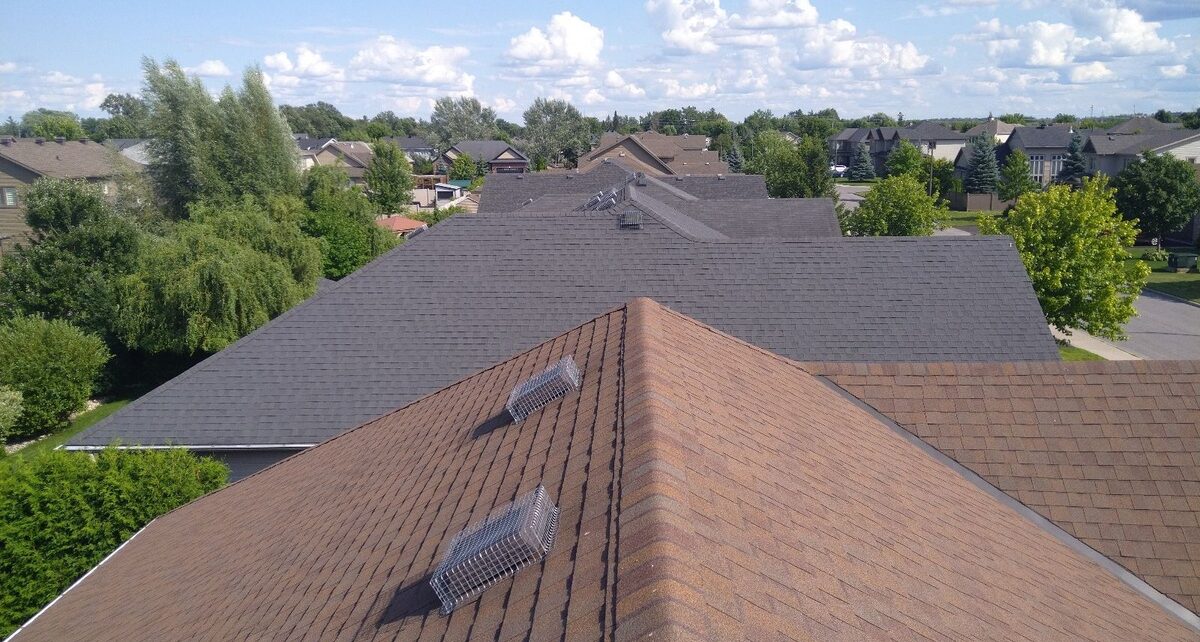
Shared Rooflines Can Complicate Wildlife Entry
From the street, a semi-detached building may look like two clearly separate homes. Above the ceilings, however, the layout may be less obvious. Roof sections, eaves, and exterior finishes can meet in ways that require a closer look when wildlife activity is suspected.
An animal entering near one unit’s roof edge may be accessing a space that extends towards the adjoining home. Whether it can continue farther depends on the barriers and openings inside. A continuous roofline alone does not establish an open route.
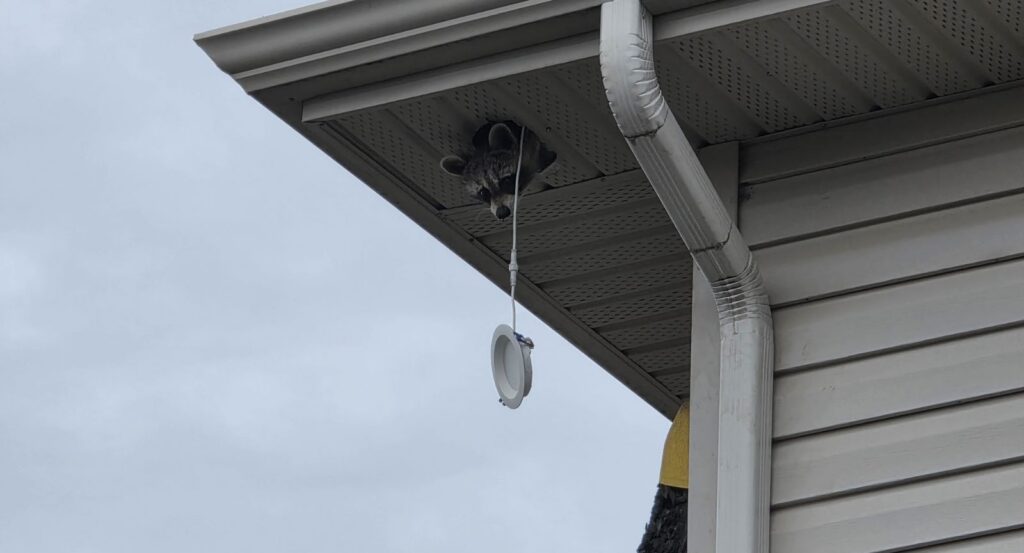
Soffits deserve particular attention. These are the surfaces beneath the roof overhang. Where soffit spaces connect and effective barriers are absent or damaged, animals may have access beyond the opening visible outdoors.
An inspection may consider:
- Damaged soffit panels and loose fascia.
- Roof intersections and changes in roof height.
- Vent covers and the materials around them.
- Connections between original construction and additions.
- Previous repairs near the junction between units.
The entrance may be difficult to see from the ground or concealed behind a roof feature. That is why checking only the area directly above a reported noise can leave important questions unanswered.
Homeowners can photograph visible concerns from a safe location. Leave roof access and the assessment of concealed connections to trained professionals.
Party Walls and Attic Separations: What Actually Connects?
A party wall is the wall separating adjoining homes. It helps explain why two properties can share part of a building without sharing an accessible interior space.
The details vary between properties. An attic may have a substantial separation between units, while other areas require closer assessment to understand how the building is divided. Previous renovations, service installations, and damaged materials can also affect what an inspector finds.
For wildlife to move between units, there must be a usable route. Depending on the animal and the building, concerns might include gaps around services, damaged barriers, or connected spaces near the eaves.
This distinction matters when discussing animals in shared attic spaces. Hearing noises on both sides does not prove that the attic is open from end to end. Likewise, an exterior opening beside the adjoining wall does not reveal where that opening leads.
An assessment should establish:
- Which spaces are physically connected.
- Whether visible openings provide animal access.
- Where evidence of activity is present.
- Whether damaged separations require further evaluation.
Repairs around adjoining homes must preserve necessary building functions, including ventilation and fire separation. A wildlife repair should never involve creating a passage through a separating wall. If an inspection identifies a concern with an important building separation, an appropriately qualified building professional may also be needed.
Why Animals May Enter One Side but Be Heard in the Other
Scratching sounds can feel surprisingly precise. You may be convinced an animal is directly above a bedroom corner or behind a particular section of wall. Yet the location where a sound is loudest does not always identify its source.
Framing and other building materials can carry sound. An animal moving nearby may therefore seem to be in a different part of the structure. Mechanical equipment, plumbing, and ordinary building movement can also produce noises that need to be distinguished from wildlife activity.
A second possibility is actual animal movement through a connected space. For example, a squirrel might enter through damaged material near one unit’s eaves and travel farther along an accessible roof cavity. This is a possible scenario, rather than something that can be confirmed by listening alone.
Useful observations include:
- The room where noises are most noticeable.
- The time and frequency of the sounds.
- Whether the apparent location changes.
- Animal sightings near the building.
- Visible damage around possible entrances.
- Similar observations from the adjoining household.
A neighbour’s account can add useful context. Perhaps you hear movement in the morning while they repeatedly see an animal near the roof at the same time.
Share those observations during an inspection. Avoid opening walls, disturbing insulation, or repeatedly knocking on surfaces to force an animal to move.
When Homeowners and Landlords Should Coordinate
Wildlife in semi-detached homes can become a neighbourly issue before anyone knows exactly what is happening. One household hears noises, another finds damage, and both may have different ideas about where the activity began.
Start by sharing observations without assigning blame. The location of an entrance does not establish why it developed or who is responsible for every part of the work.
Coordination becomes especially useful when an inspection identifies a possible connection between properties. Access to both sides may help clarify the route, assess additional openings, and plan repairs. It does not automatically mean both homes need the same service.
Before an appointment, adjoining owners can:
- Compare the dates and locations of reported activity.
- Share photographs of visible exterior damage.
- Identify who can authorize access to each property.
- Explain any relevant roof work or renovations.
- Arrange a practical way to exchange inspection findings.
For rental properties, tenants should report recurring noises, sightings, and damage to the landlord or property manager. Owners can then coordinate inspection access and appropriate work.
If the adjoining unit has a different owner, their permission is needed before inspection or repairs on their property. Keep access arrangements clear.
Questions about payment should be discussed using the actual findings and proposed scope. There is no reason to assume that costs must be divided equally simply because the homes are attached.
Why Sealing One Visible Opening May Leave the Problem Unresolved
Finding an opening can make the solution seem straightforward: close the gap and stop the visits. However, a suspected active entrance needs assessment before it is permanently sealed.
Animals may still be inside. Depending on the species and season, dependent young may also be present. Closing an occupied opening too soon can leave animals trapped within the building.
There may also be other entrances. Repairing one damaged soffit panel will not prevent access through a separate opening farther along the roofline. In an adjoining building, the full route may extend beyond the area initially reported.
A coordinated plan considers:
- Current activity and possible occupancy.
- Confirmed entrances and other access concerns.
- Relevant connections between building spaces.
- The presence of dependent young.
- The sequence of humane removal and repairs.
Trying to push animals towards the neighbouring unit creates another unresolved problem. The aim should be to address access to the building and remove animals humanely.
Homeowners can still manage ordinary maintenance, such as keeping stored materials away from inspection areas and noting deteriorated exterior finishes. When an opening shows signs of animal use, leave the timing and repair approach to the assessment.
Effective exclusion means securing the relevant access points with suitable materials while preserving ventilation, drainage, and other necessary functions.
How Inspection and Humane Exclusion Protect Adjoining Homes
Professional wildlife removal in Ottawa begins with understanding the activity and the property. In a semi-detached home, that includes considering how the two units meet.
An inspection can bring together the evidence: reported sounds, animal sightings, exterior damage, accessible interior areas, and possible travel routes. These findings help determine whether the issue is confined to one unit or requires coordination across both.
The scope should follow the evidence. One home may need removal and repairs while the adjoining property needs only an assessment of a specific connection. In other cases, access concerns may affect both sides.
A humane removal and prevention plan may include:
- Identifying the animal and assessing occupancy.
- Evaluating relevant exterior openings.
- Checking accessible connected spaces.
- Planning removal around dependent young when present.
- Repairing entry points with durable materials.
- Assessing affected insulation or contamination where warranted.
At Skedaddle Humane Wildlife Control, we consider the access concerns that allow activity to continue alongside the animals already using the building. For homeowners in Ottawa, Nepean, and Kanata, the goal is a plan suited to the property’s construction and the evidence found.
Ongoing maintenance supports that work. Roof repairs, renovations, and new service installations can change the building exterior. Checking those areas afterward and reporting new signs promptly helps keep prevention part of regular property care.
Frequently Asked Questions
Does every semi-detached home have a shared attic?
No. Adjoining homes can have separate attic spaces even when the roof appears continuous from outside. Internal walls, barriers, and other construction details affect whether animals can move between units. An inspection is needed to understand the actual layout rather than assuming that both homes share an open space.
Can scratching on my side come from wildlife next door?
Yes, sound can travel through building materials and seem to originate somewhere other than its source. Animals may also move through connected spaces where openings exist. Listening alone cannot distinguish those possibilities. Recurring sounds, sightings, visible damage, and an assessment of the building provide a better basis for identifying the cause.
Does my neighbour need wildlife removal if I do?
Not necessarily. Activity in one home does not automatically establish that animals occupy the adjoining unit. An inspection may identify a reason to assess both properties, but the findings should determine what work is needed. Each side may have different access concerns, repair requirements, or evidence of activity.
What should I do if I rent a semi-detached home?
Record where and when you notice noises, sightings, or damage, and notify your landlord or property manager. Share photographs taken from safe, accessible locations. Avoid opening concealed spaces or sealing suspected entrances yourself. The property owner can coordinate access, professional assessment, and communication with the adjoining owner where needed.
Can I seal a wildlife opening on my side of the building?
Have a suspected active entrance assessed before permanently sealing it. Animals or dependent young may still be inside, and other access points may remain elsewhere. Openings near adjoining structures also need careful evaluation so repairs address the wildlife route while preserving necessary ventilation and building separations.
Understand the Connection Before Closing the Gap
Wildlife activity in a semi-detached home does not always stop neatly at the property line. The entrance, the sheltering space, and the room where someone hears scratching may be in different locations. Understanding the building helps connect those clues.
When findings involve both properties, cooperation between neighbours or landlords can help support a coordinated solution. The goal is humane removal followed by repairs that address the relevant access points.
If you suspect wildlife in your semi-detached home, contact Skedaddle Humane Wildlife Control serving Ottawa, Nepean, and Kanata. Our team can assess the activity and recommend a removal and exclusion plan suited to your property.

 Loading...